 +86-13646196162
 info@hysonindustry.com




 русский
 عربى



Flat Formwork Panels for Precise, Efficient, and Reusable Concrete Construction
 2026.10.31
Content
- 1 1. Understanding Flat Formwork
- 2 2. Main Design Characteristics
- 3 3. Advantages Compared with Conventional and Less-Standardized Alternatives
- 4 4. Precision Manufacturing Process
- 5 5. Company Manufacturing Strengths
- 6 6. Application Scenarios
- 7 7. Technical and Operational Benefits
- 8 8. Installation and Use Recommendations
- 9 9. Maintenance, Storage, and Service Life
- 10 10. How to Select the Appropriate Flat Formwork System
- 11 11. Quality Assurance and Customer Support
- 12 12. Flat Formwork as a Sustainable Construction Choice
- 13 13. Why Work with an Experienced Heavy Steel Manufacturer?
- 14 14. Frequently Asked Questions
- 14.1 Q1: What is flat formwork used for?
- 14.2 Q2: What is the main advantage of steel flat formwork?
- 14.3 Q3: Can flat formwork be customized?
- 14.4 Q4: Is flat formwork suitable for precast concrete?
- 14.5 Q5: How does flat formwork improve construction efficiency?
- 14.6 Q6: Can the panels be used with different support systems?
- 14.7 Q7: What manufacturing processes are used?
- 14.8 Q8: What standards does the manufacturer follow?
- 14.9 Q9: How can customers extend panel service life?
- 14.10 Q10: What information is needed for a quotation?
- 14.11 Q11: Can flat formwork be used for large infrastructure projects?
- 14.12 Q12: Does the company offer OEM service?
- 15 15. Conclusion
- 16 References
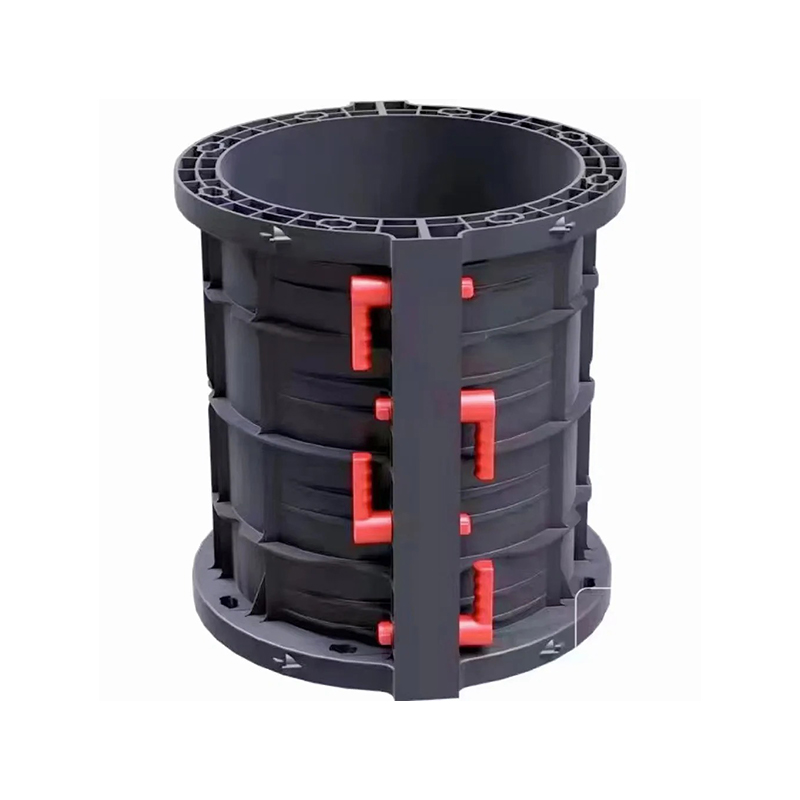
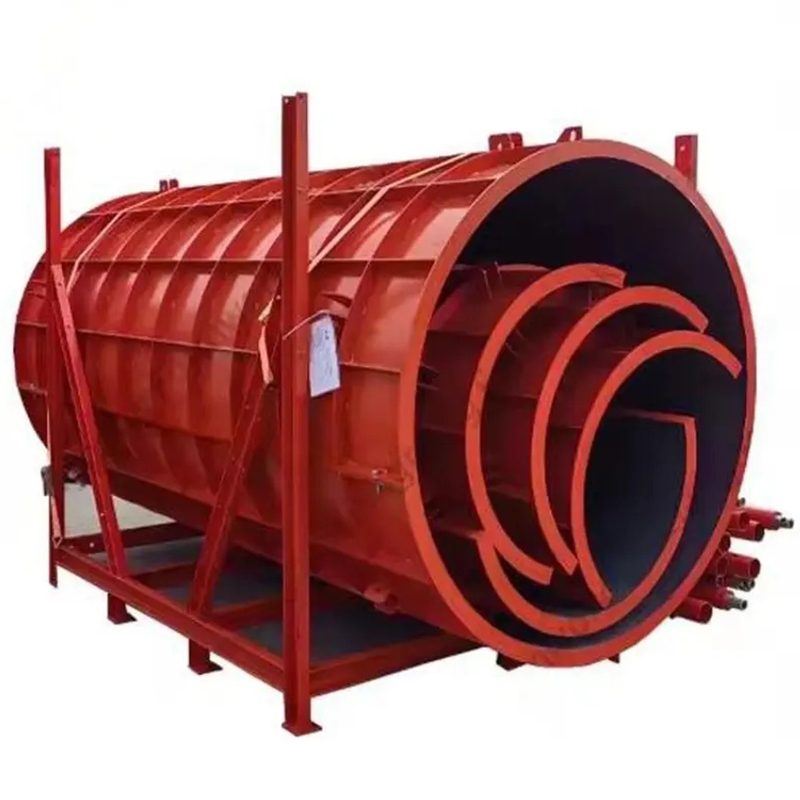
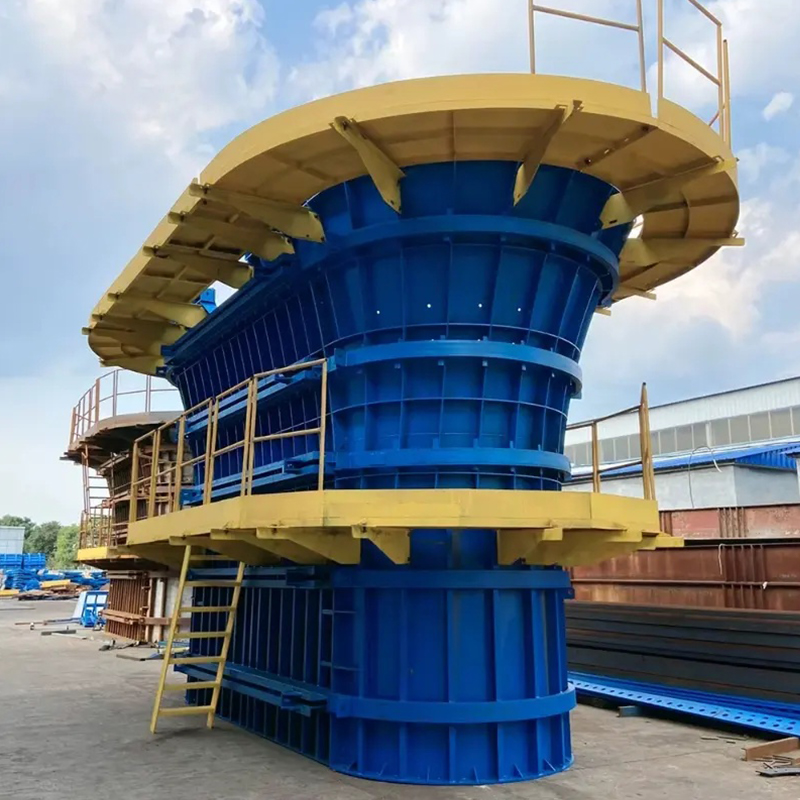
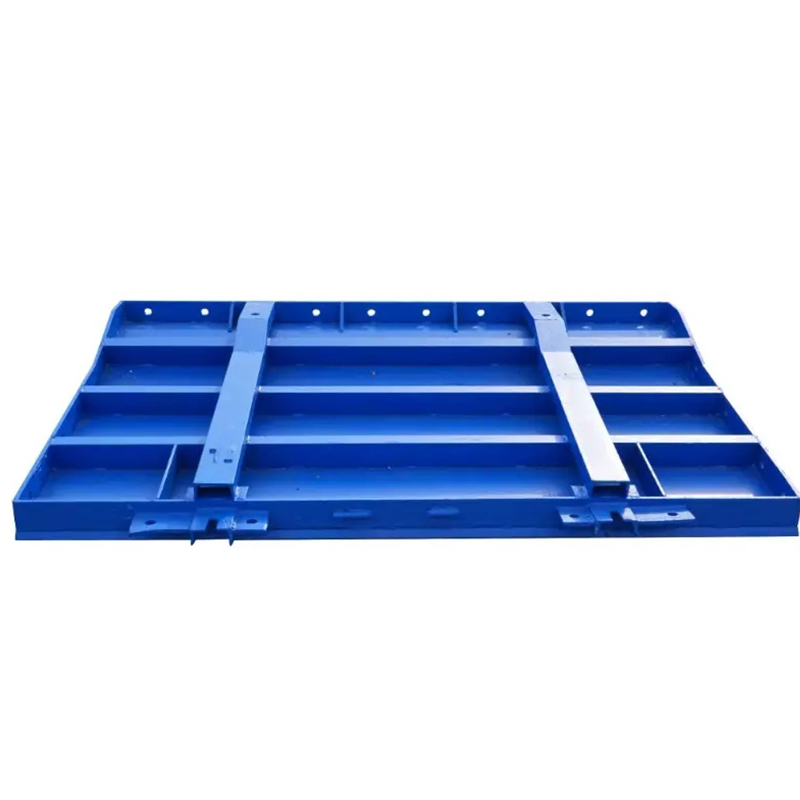
- 17 Product: Flat Formwork
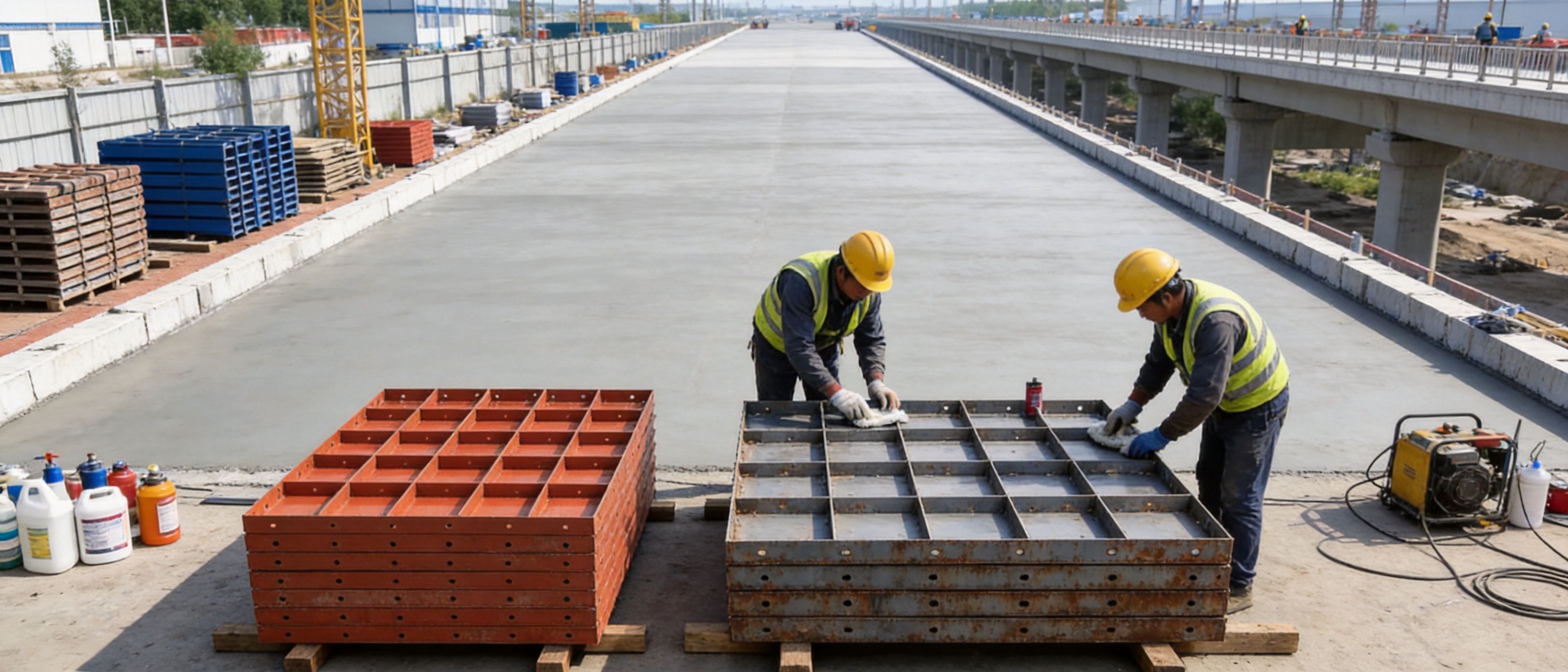
Flat formwork is a standardized steel formwork system developed for the efficient construction of planar concrete structures. It provides a stable, smooth, and accurately shaped surface against which fresh concrete can be poured and cured. Compared with improvised timber shuttering or poorly standardized panel systems, properly manufactured flat formwork improves dimensional consistency, reduces surface defects, accelerates installation, and supports repeated use across multiple projects.
Modern construction projects increasingly require formwork that combines precision, durability, flexibility, and cost control. Floor slabs, ground slabs, roof decks, bridge decks, tunnel slabs, subway platforms, precast panels, industrial floors, and hydraulic base slabs all depend on reliable support during concrete placement. A flat formwork system must withstand concrete pressure, construction loads, vibration, repeated handling, changing weather conditions, and frequent assembly and dismantling. It must also maintain a sufficiently smooth face to help produce high-quality concrete surfaces.
Manufactured by Nantong Hyson Road And Bridge Formwork Co., Ltd., flat formwork is produced as part of a broader portfolio of steel formwork, bridge and infrastructure formwork, scaffolding, steel structures, and custom metal fabrication. The company combines CNC cutting, professional welding, reinforced steel construction, surface treatment, and full-process inspection to supply standardized and customized flat panels for civil building and industrial applications.
The result is a practical solution for contractors, precast manufacturers, rental companies, infrastructure builders, and engineering contractors that need dependable formwork for repetitive or large-scale flat concrete work.
1. Understanding Flat Formwork
Flat formwork consists of steel panels and supporting components arranged to create a planar mold for concrete. The panel face contacts the concrete, while the rear structure provides stiffness and distributes external loads. Depending on the project, the panels may be used with adjustable props, beams, walers, frames, scaffolding systems, or other temporary support arrangements.
The basic purpose of the system is simple: to hold fresh concrete in the required position until the material gains sufficient strength to support itself. However, the engineering demands are significant. A formwork system must remain stable under pressure, preserve its designed geometry, prevent excessive deflection, and allow construction teams to work safely and efficiently.
Unlike a one-time timber arrangement, standardized steel flat formwork is designed for repeated use. Its modular dimensions and connection points allow panels to be combined into different working areas. This makes it suitable for projects where similar slabs or planar structures are poured in stages.
The system can be configured for both prefabrication and on-site construction. In a precast facility, flat panels can create repeatable molds for floor slabs, wall panels, platform sections, and other components. On a building site, panels can be assembled over a support system to form slabs, roofs, foundations, or other horizontal concrete elements.
2. Main Design Characteristics
2.1 Standardized Modular Construction
The modular design is one of the most important characteristics of flat formwork. Panels are manufactured according to controlled dimensions and standardized connection arrangements. This allows workers to combine several panels without fabricating a new mold for every pour.
Standardization improves planning in several ways. Contractors can calculate the number of panels required for a pour, establish an efficient installation sequence, and prepare storage and transport procedures in advance. Rental companies can also maintain a more versatile inventory because the same panel types can serve different projects.
Modular panels can be arranged in repeated patterns or combined with specially sized units when a project includes openings, edge conditions, columns, walls, or irregular boundaries. The standard panel provides the main working area, while compatible accessories or customized components address special locations.
2.2 Steel Panel Face
The panel face is manufactured to provide a smooth and stable contact surface for concrete. A properly processed steel face helps reduce unwanted texture, joint marks, and dimensional irregularities. When the panels are correctly aligned, sealed, and treated with a suitable release agent, the finished concrete can achieve a clean surface with limited remedial work.
Steel has an important advantage over many temporary formwork materials because it offers consistent geometry and strong resistance to wear. A high-quality steel face is less likely to warp due to moisture absorption, and it can maintain its shape during repeated handling when properly supported and maintained.
2.3 Reinforced Rear Structure
Behind the panel face, reinforcing ribs, frames, or stiffeners increase rigidity and control deformation. These components are designed to distribute pressure across the panel and transfer loads toward the support and connection points.
Reinforcement is essential because fresh concrete exerts pressure on the formwork, particularly when the placement rate is high or when mechanical vibration is used. The rear structure also helps the panel withstand lifting, stacking, transportation, and repeated installation.
The balance between stiffness and weight is important. An excessively light panel may be easy to move but could lack adequate rigidity. An excessively heavy panel may be strong but difficult and expensive to handle. Professional design and fabrication seek to provide sufficient structural performance while maintaining practical site handling characteristics.
2.4 Standardized Bolt Holes and Positioning Features
Connection points, bolt holes, positioning devices, and compatible accessories help workers assemble panels quickly and accurately. Standardized connection details reduce the need for field drilling, cutting, or modification, which protects the panel and saves labor.
Accurate positioning also supports tight joints. The closer the panel alignment, the lower the risk of leakage, misalignment, and visible marks on the finished concrete. Proper connection design improves the repeatability of the construction process, particularly on projects with multiple similar pours.
2.5 Compatibility with Support Systems
Flat formwork is not used as an isolated component. It operates with a support arrangement selected according to span, load, height, site conditions, and construction sequence. Possible supporting arrangements include steel props, beams, frames, scaffolding towers, adjustable supports, and specialized temporary works systems.
The panel system is designed to work with different support configurations, allowing contractors to adapt the formwork to building slabs, bridge decks, precast beds, industrial platforms, and other planar structures. Before use, the complete temporary works arrangement must be checked by qualified technical personnel to confirm load capacity, stability, bracing, bearing conditions, and safe access.
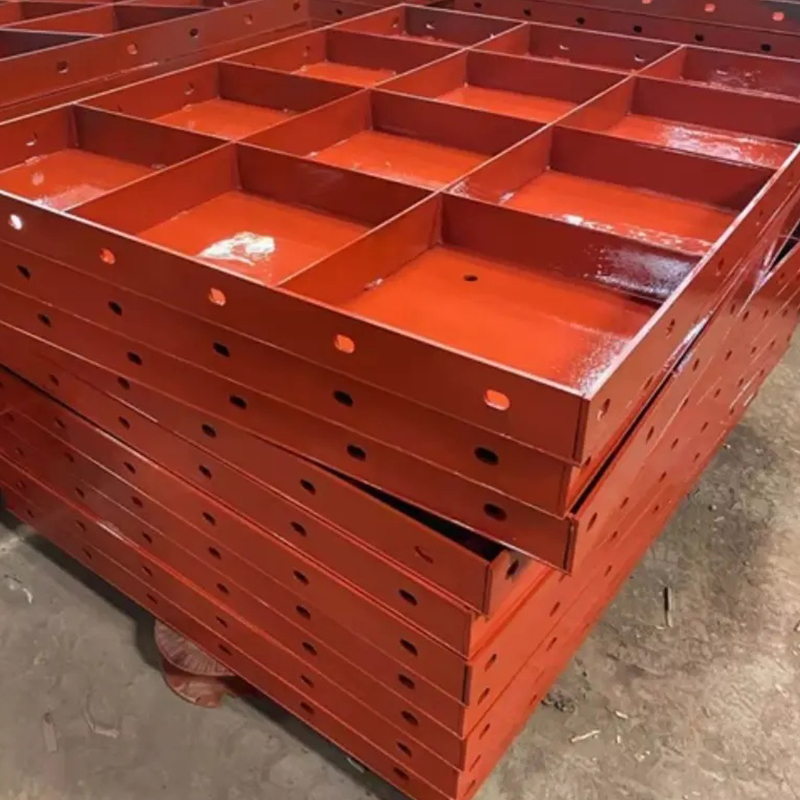
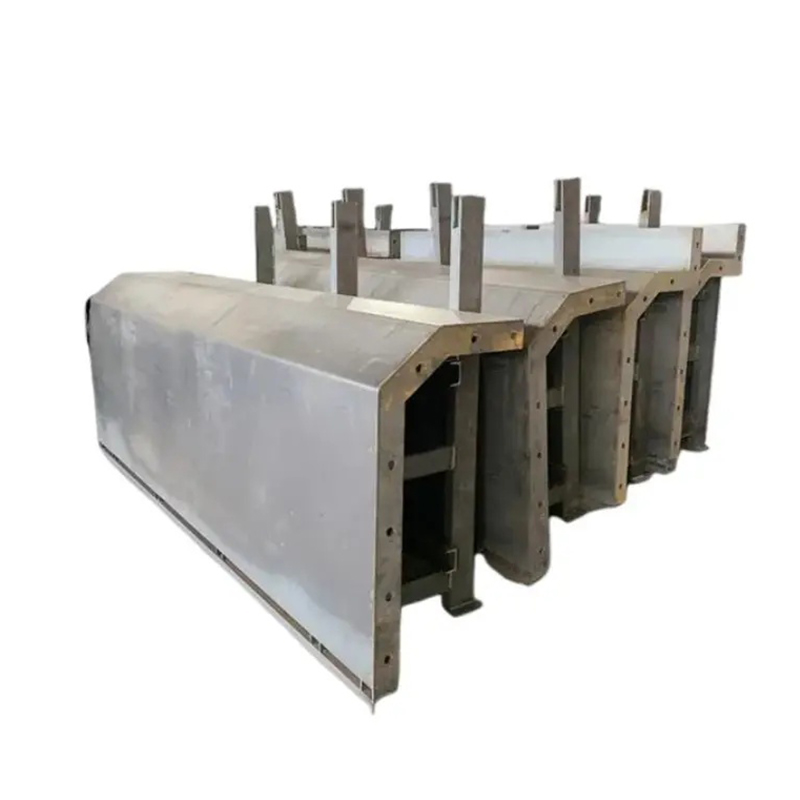
Flat Formwork
3. Advantages Compared with Conventional and Less-Standardized Alternatives
3.1 More Consistent Concrete Surfaces
One of the clearest advantages of steel flat formwork is the consistency of the contact face. Timber boards and improvised materials may have variable thickness, surface texture, moisture content, or dimensional stability. These differences can be transferred to the concrete surface.
Precision-manufactured steel panels provide a more uniform mold. When panel joints are properly closed and the formwork is correctly supported, the concrete surface is more likely to be flat and visually consistent. This can reduce patching, grinding, and other secondary finishing activities.
For projects that require a fair-faced or architectural concrete appearance, panel quality becomes especially important. Although the final result also depends on concrete mix design, reinforcement placement, vibration, curing, release agent application, and workmanship, a smooth and accurately fabricated form face provides a strong foundation for achieving the required finish.
3.2 Improved Dimensional Accuracy
Flat structures may appear simple, but small deviations in level, alignment, or thickness can create significant problems. Uneven slabs may require correction before flooring or waterproofing work. Misaligned bridge deck formwork can affect subsequent surfacing and drainage. In precast production, dimensional variation may prevent components from fitting together.
Steel panels manufactured through CNC processing and controlled welding help maintain repeatable dimensions. Their rigidity reduces the likelihood of deformation during handling and concrete placement. This improves the dimensional reliability of the finished structure and reduces the risk of rework.
3.3 Faster Assembly and Dismantling
Standardized panels can be installed according to a planned layout rather than fabricated from raw materials at the job site. Workers can use familiar connection methods and repeat the same sequence across multiple pours.
Faster assembly reduces the time required before concrete placement. After the concrete reaches the specified stripping strength, the panels can be removed, inspected, cleaned, and transferred to the next location. This supports shorter construction cycles, particularly when the same floor plan or slab geometry is repeated.
Efficient dismantling also reduces disruption to other trades. Formwork can be cleared from the work area sooner, allowing reinforcement installation, mechanical services, waterproofing, or finishing activities to proceed according to schedule.
3.4 Lower Long-Term Cost
The purchase price is only one part of formwork economics. Contractors should also evaluate labor, installation time, cleaning, repair, storage, transport, concrete finishing, and expected reuse. A durable steel system may provide a better total cost over its service life even when its initial cost is higher than that of disposable or short-life alternatives.
Repeated use spreads the manufacturing cost across multiple pours. Reduced surface repair lowers labor and material expenses. Standardized components simplify inventory management and can reduce the need for project-specific fabrication.
For rental companies, durability and versatility are particularly important. Panels that can be used across multiple construction environments generate more rental cycles and reduce the frequency of replacement. For contractors with their own equipment, a reusable panel inventory can provide long-term value across building, infrastructure, and industrial projects.
3.5 Better Resistance to Construction Conditions
Construction sites expose formwork to impact, vibration, moisture, dust, temperature changes, cement residue, and repeated lifting. Steel panels with reinforced structures are better suited to these conditions than many temporary materials, provided they are handled and maintained correctly.
Professional surface treatment can help resist corrosion caused by wet concrete, rain, humidity, and general site exposure. The precise treatment should be selected according to the intended environment and storage conditions. Regular cleaning, timely repair, and proper storage remain necessary for preserving the panels.
3.6 More Predictable Inventory and Logistics
Standard dimensions simplify loading plans, stacking, counting, and replacement. The contractor can identify panels by size or configuration and organize them for the next work area. This is more efficient than managing a collection of irregularly cut timber pieces or heavily modified temporary molds.
Predictable component sizes also help with transport planning. Panels can be bundled, protected, and loaded according to a defined sequence. This reduces the time spent locating components on site and helps maintain a cleaner and safer work area.
4. Precision Manufacturing Process
The performance of flat formwork begins with manufacturing quality. A panel that is poorly cut, inaccurately welded, or insufficiently inspected may create problems during installation even if the general design is suitable. Nantong Hyson Road And Bridge Formwork Co., Ltd. applies an integrated manufacturing process for steel formwork and custom fabricated components.
4.1 Material Preparation
Production starts with the selection and preparation of steel materials suitable for the design requirements. Material preparation includes receiving, identification, dimensional checking, surface inspection, and controlled storage.
Proper material handling helps prevent the use of damaged or unsuitable steel. It also supports traceability throughout production. Depending on the project, material documentation and inspection requirements can be established before fabrication begins.
4.2 CNC Cutting
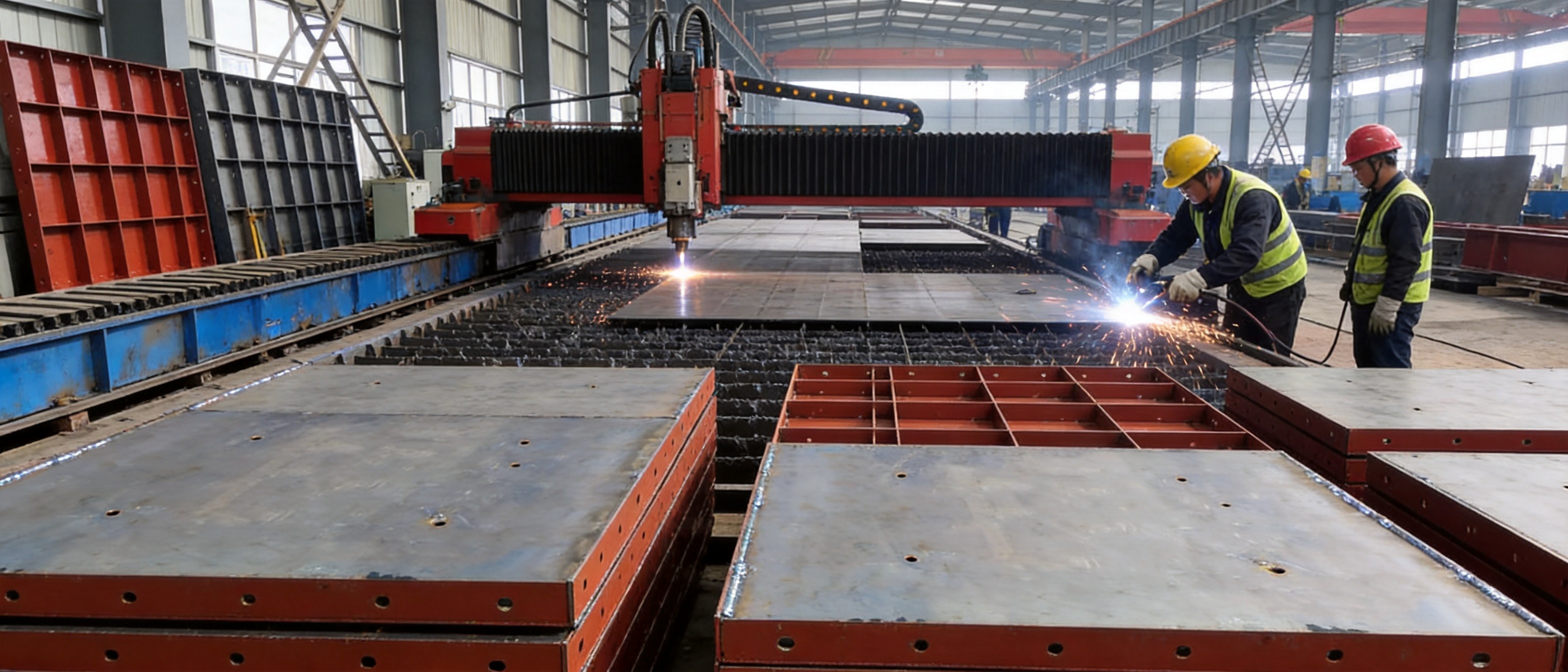
CNC cutting provides accurate and repeatable processing of steel plates and components. Compared with manual cutting, computer-controlled equipment can improve dimensional consistency, edge quality, and production efficiency.
Accurate cutting is important for the panel face, reinforcing ribs, frames, connection plates, and special components. Correct dimensions help ensure that the assembled panel remains square and that adjoining panels align properly.
CNC processing also supports custom production. Although flat formwork uses standardized modules, projects may require edge panels, access openings, non-standard lengths, or compatible connection elements. Digital cutting equipment allows these components to be produced with controlled geometry rather than extensive manual adjustment.
4.3 Forming and Fabrication
After cutting, components may be bent, formed, positioned, and assembled according to the approved drawings. The fabrication sequence is planned to control distortion and maintain the intended relationship between the panel face and the rear reinforcement.
Jigs, fixtures, and positioning tools can help maintain consistency during assembly. Controlled fabrication is particularly valuable when a large number of similar panels must be produced. It reduces variation between units and improves interchangeability at the construction site.
4.4 Professional Welding
Welding joins the panel face, reinforcing ribs, frames, brackets, and other structural components. The quality of these welds directly affects the stiffness, durability, and safety of the formwork.
Hyson applies professional welding practices aligned with AWS and EN-related craftsmanship requirements. Welding procedures, welder competence, joint preparation, heat control, and inspection are important parts of a reliable production system.
Good welding practice helps control distortion. Excessive heat or an unsuitable sequence can cause the panel to lose flatness or develop residual deformation. A controlled process supports smooth panel geometry and stable structural performance.
4.5 Grinding and Surface Preparation
Following welding, selected areas may be ground, cleaned, or prepared to remove unwanted weld spatter, sharp edges, and surface irregularities. The panel face must be treated carefully because defects on this surface can be transferred to the concrete.
Surface preparation also supports the effectiveness of protective coatings or other corrosion-resistant treatments. Clean and properly prepared steel provides a more stable base for finishing operations.
4.6 Surface Treatment
Formwork is exposed to moisture, cement paste, release agents, and outdoor conditions. Surface treatment helps improve resistance to corrosion and extends the useful service period of the panels.
The selected treatment depends on the required service environment, expected reuse frequency, storage conditions, and customer requirements. The objective is to protect the steel while maintaining a suitable concrete contact surface and making the panels easier to clean after stripping.
4.7 Inspection and Quality Control
Quality control should cover the complete production process rather than only the final product. Typical inspection points include raw material condition, cut dimensions, panel flatness, squareness, weld appearance, connection hole position, reinforcement alignment, surface condition, and overall dimensions.
A full-process quality approach helps identify deviations before delivery. It also provides documentation that can assist with customer acceptance, project records, and future replacement orders.
Nantong Hyson Road And Bridge Formwork Co., Ltd. operates under ISO 9001 quality management principles and applies controlled production procedures to its steel formwork and heavy fabrication work. The company also reports 12 utility patents and experience supplying major infrastructure-related projects.
5. Company Manufacturing Strengths
Nantong Hyson Road And Bridge Formwork Co., Ltd. is a professional manufacturer of custom steel formwork, ringlock scaffolding, steel props, heavy-duty steel structures, and OEM metal fabrication. Its product capabilities allow flat formwork to be produced within a broader heavy-steel manufacturing environment rather than as an isolated product.
5.1 Integrated Laser Cutting, Bending, and Welding
Many construction projects require a combination of flat panels, support elements, edge components, brackets, frames, and non-standard steel parts. An integrated manufacturing capability makes it easier to coordinate these components under one production program.
Laser and CNC cutting support detailed plate processing. Bending equipment forms components where required, while professional welding joins the parts into finished assemblies. This integrated approach reduces dependence on multiple suppliers and can simplify communication regarding tolerances, interfaces, packaging, and delivery.
5.2 Experience with Non-Standard Steel Components
Standard flat formwork meets many applications, but complex construction projects often include special conditions. Examples include unusual slab dimensions, bridge edge geometry, access openings, embedded items, variable support points, and connections to other temporary works systems.
Experience in non-standard fabrication enables the manufacturer to interpret engineering drawings, identify production challenges, and supply customized steel components while preserving the core advantages of the modular system.
5.3 Infrastructure Project Experience
Hyson has supplied solutions for major projects associated with CCCC, CRCC, and other central state-owned enterprises. Its reported project experience includes the Sutong Yangtze River Bridge, Taizhou Bridge, and Sudan Thermal Power Plant.
Infrastructure projects generally demand strict control over safety, dimensions, fabrication quality, delivery timing, and documentation. Experience in these environments can strengthen the manufacturer’s ability to apply disciplined production standards to building, precast, and industrial formwork orders.
5.4 International Standards and Quality Orientation
The company’s manufacturing information references AWS and EN welding craftsmanship, ISO 9001 quality management, and BS1139 and EN74 standards for relevant scaffolding products. These references demonstrate an orientation toward internationally recognized production and quality expectations.
Standards must always be applied according to the specific product, design, project specification, and destination-market requirements. Nevertheless, a manufacturer familiar with international standards is better positioned to support overseas contractors and engineering companies with technical documentation and controlled production.
5.5 OEM and Custom Service
OEM production is valuable when a customer has an established design, a proprietary connection system, a project-specific panel layout, or a requirement to manufacture under a private label. Custom service may include drawing review, panel dimensions, connection holes, reinforcement arrangement, surface treatment, packaging, and delivery coordination.
Before production, customers should provide drawings, loading requirements, intended use, preferred steel grades, surface requirements, tolerances, and applicable standards. The manufacturer can then confirm feasibility, clarify technical details, and prepare a production plan.
6. Application Scenarios
6.1 Residential and Commercial Buildings
Flat formwork is suitable for floor slabs, roof slabs, ground floors, transfer areas, and other planar concrete elements in residential and commercial buildings. Standardized panels can support repeated floor layouts and help contractors maintain a consistent construction sequence.
For high-rise construction, the formwork arrangement must be coordinated with the building’s structural grid, vertical transportation system, edge protection, reinforcement work, and concrete placement plan. Panel size and weight should be selected with the available lifting and handling equipment in mind.
6.2 Factory and Industrial Buildings
Industrial projects often require large floor areas, equipment foundations, platforms, and structural slabs. Flat formwork can help create planar surfaces that support machinery, storage systems, production equipment, and internal traffic.
Where a factory includes repeated bays or standardized areas, reusable panels can improve construction efficiency. The formwork should be coordinated with embedded plates, service penetrations, drainage channels, and other industrial details.
6.3 Bridge Decks
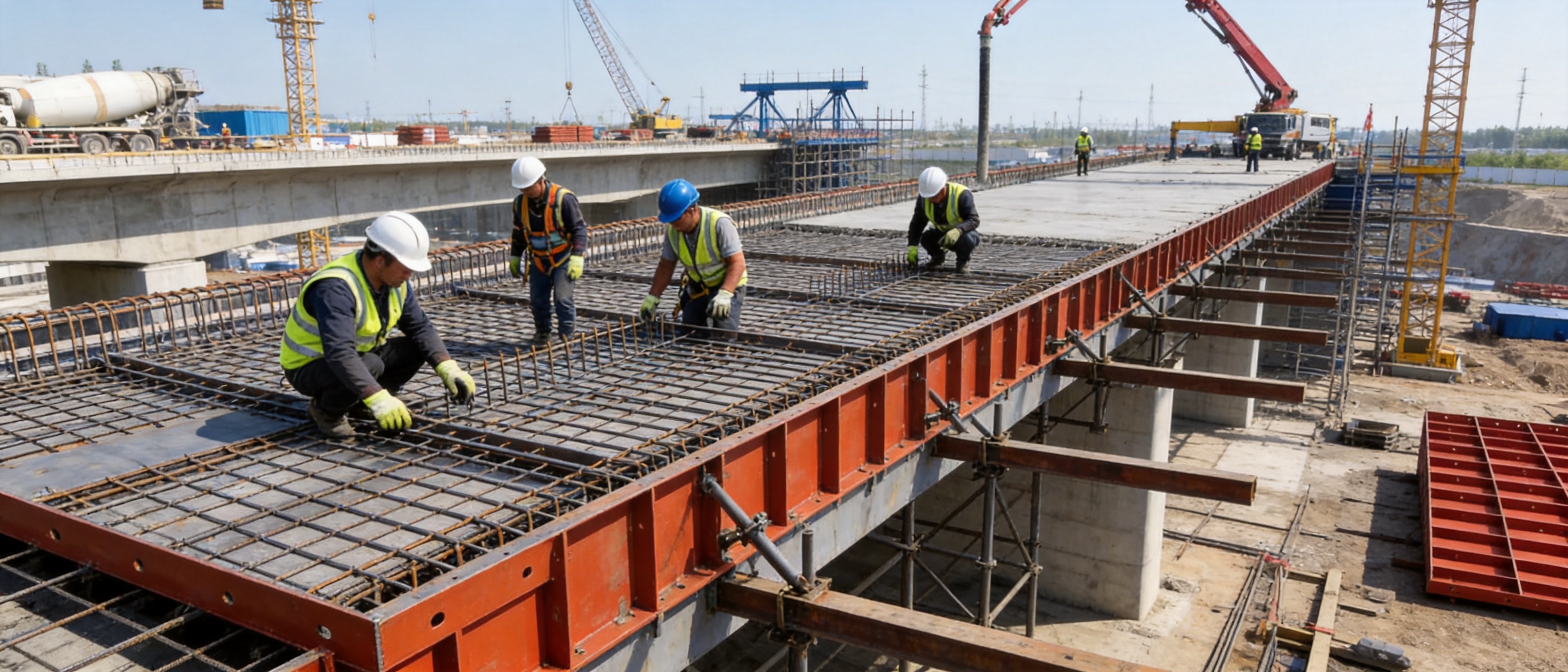
Bridge decks require formwork that maintains alignment and elevation while supporting concrete placement, reinforcement, workers, and construction equipment. Steel flat panels can be integrated with bridge-specific beams, brackets, supports, and edge formwork.
Bridge work often involves strict requirements for surface quality, thickness, camber, drainage, and dimensional control. The formwork design must account for the project’s geometry and the loads imposed during construction. A qualified temporary works engineer should verify the complete arrangement.
6.4 Tunnel and Subway Construction
Flat formwork can be used for tunnel slabs, invert slabs, platform slabs, station floors, and other planar structures. Underground construction may involve restricted access, high humidity, limited working space, and complicated logistics.
Modular panels can help organize repeated work areas and reduce the need to fabricate molds underground. Surface treatment and cleaning procedures are especially important in damp environments.
6.5 Precast Component Production
Precast plants benefit from repeatability. A flat mold can be used to manufacture floor panels, wall panels, platform sections, covers, and other standardized components. Stable panel dimensions help improve component interchangeability and reduce variation between production batches.
In a precast environment, the formwork layout can be combined with lifting anchors, embedded parts, reinforcement cages, insulation layers, and controlled curing procedures. The mold must be designed around the complete production cycle, including stripping, turning, cleaning, and preparation for the next unit.
6.6 Hydraulic Engineering
Hydraulic facilities often include base slabs, channels, platforms, pump station floors, and other flat concrete structures. Such work may occur in wet or exposed conditions, making durability and corrosion protection important considerations.
Flat formwork can provide the stable and accurate mold required for large planar pours. Project-specific requirements may include water-tight construction joints, embedded items, drainage details, and high surface quality.
6.7 Power and Energy Facilities
Power stations, thermal plants, substations, and energy infrastructure commonly include equipment foundations, operating platforms, floors, and structural slabs. These elements may require accurate dimensions to support heavy machinery, cable systems, pipes, and access equipment.
Steel formwork supplied by an experienced heavy fabrication manufacturer can be coordinated with structural steel components and other fabricated elements used within the same facility.
6.8 Transportation and Logistics Facilities
Warehouses, terminals, loading platforms, parking structures, and transportation hubs use extensive concrete floors and slabs. Flat panels can support efficient construction where large areas must be completed with consistent levels and surface quality.
For such facilities, the final concrete surface may need to meet requirements related to abrasion, flatness, forklift operation, drainage, and equipment installation. Formwork is one part of the quality chain, alongside concrete design, placement, finishing, and curing.
7. Technical and Operational Benefits
| Performance Area | Contribution of Flat Steel Formwork | Practical Result |
|---|---|---|
| Dimensional control | CNC-processed panels and reinforced structures help maintain planned geometry. | More consistent slab thickness, levels, and panel alignment. |
| Surface quality | Smooth steel contact faces and tight joints reduce surface irregularities. | Less grinding, patching, and secondary repair. |
| Construction speed | Standardized modules and connection details simplify installation. | Shorter preparation and dismantling cycles. |
| Reuse | Durable steel construction supports repeated assembly and stripping. | Lower cost per use across multiple pours. |
| Inventory management | Standard panel sizes are easier to identify, count, store, and transport. | Improved logistics and more efficient rental fleets. |
| Customization | CNC cutting and heavy fabrication capabilities support special components. | Better adaptation to project-specific geometry. |
| Site efficiency | Reduced field fabrication limits cutting, drilling, and welding at the worksite. | Cleaner, safer, and more predictable site operations. |
8. Installation and Use Recommendations
8.1 Review the Formwork Layout
Before installation, the contractor should review the panel layout, support arrangement, access routes, lifting plan, edge conditions, openings, construction joints, and interfaces with reinforcement. The layout should identify standard panels and special components clearly.
The supporting structure must be placed on a stable bearing surface. Settlement, uneven support, or inadequate bracing can affect the finished concrete regardless of the quality of the panels.
8.2 Inspect Panels Before Assembly
Each panel should be checked for deformation, damaged edges, blocked bolt holes, weld damage, excessive rust, contamination, or other conditions that could affect performance. Damaged panels should be repaired or removed from service until their suitability has been confirmed.
Panel faces should be cleaned before applying release agent. Concrete residue left from a previous pour can create uneven contact and may make dismantling more difficult.
8.3 Assemble with Correct Connections
Workers should use the specified bolts, pins, clamps, or other connection components. Improvised fasteners may not provide adequate capacity or alignment. Connections should be tightened in the correct sequence, and joints should be checked for gaps or displacement.
Where required, joints can be sealed using an approved method to reduce cement paste leakage. Excessive leakage may create fins, staining, or voids on the concrete surface and can make panel removal more difficult.
8.4 Apply Release Agent Correctly
A suitable release agent should be applied evenly to the concrete contact face. Excessive application can stain the concrete or interfere with finishing, while insufficient application may cause adhesion and damage during stripping.
The release agent must be compatible with the concrete, the desired surface finish, and any subsequent coating or finishing operation.
8.5 Verify Level and Alignment
Before concrete placement, the installed formwork should be checked for level, line, elevation, squareness, thickness, support condition, and openings. Survey instruments or other approved measurement tools should be used where necessary.
Any deviation should be corrected before pouring. Once concrete has been placed, correcting formwork displacement becomes difficult and expensive.
8.6 Control Concrete Placement
Concrete should be placed according to the approved method statement. Pour rate, pour direction, lift thickness, vibration, and worker movement should be controlled to prevent excessive local pressure or impact on the formwork.
The formwork and supports should be observed during placement. Signs of movement, abnormal deflection, leakage, or connection distress require immediate attention and, where necessary, suspension of the pour until the issue is resolved.
8.7 Strip at the Correct Time
Removal should take place only after the concrete has achieved the strength required by the project specifications and applicable engineering instructions. Premature stripping can damage edges, reduce structural safety, or cause excessive deflection.
Panels should be removed without uncontrolled impact. After stripping, workers should clean the contact face, inspect the panel, apply approved maintenance treatment, and store it in a way that prevents deformation.
9. Maintenance, Storage, and Service Life
9.1 Cleaning After Each Use
Concrete residue should be removed as soon as practical after stripping. Hardened concrete can interfere with panel alignment, reduce surface quality, and increase the force required for subsequent removal.
Cleaning methods should avoid damaging the steel face or protective coating. Sharp tools, uncontrolled impact, or inappropriate chemicals can create scratches and local corrosion.
9.2 Repair of Damaged Areas
Small defects should be assessed promptly. Bent edges, distorted frames, damaged bolt holes, cracked welds, and deep surface damage can affect the fit and structural performance of the panel.
Repairs should be performed by qualified personnel using appropriate procedures. After repair, the panel should be checked for flatness, alignment, and connection compatibility before returning to service.
9.3 Protection from Corrosion
Panels should be stored away from standing water and, where possible, protected from prolonged exposure to severe weather. Drainage should be provided in storage areas, and panels should not be placed directly on contaminated or wet ground.
Protective coatings should be maintained according to the product and environmental requirements. Scratched or exposed areas should be evaluated and treated before corrosion spreads.
9.4 Organized Storage
Panels should be stacked on stable supports with appropriate separation and protection. Excessive or uneven stacking can cause deformation. Components should be grouped by size and type so that workers can locate them quickly for the next operation.
Good storage practices extend panel life and reduce handling damage. They also improve site safety by minimizing loose materials and unplanned lifting operations.
10. How to Select the Appropriate Flat Formwork System
Selection should begin with the concrete structure rather than the panel alone. The buyer should define the required slab dimensions, support spacing, pour sequence, concrete pressure, construction height, access limitations, reuse frequency, surface finish, and applicable standards.
10.1 Project Geometry
Panel dimensions should match the working area and the planned construction sequence. A larger panel may reduce the number of joints, while smaller modules may be easier to transport and adapt to irregular spaces. The best arrangement depends on lifting capacity, access, labor, and repetition.
10.2 Load and Support Conditions
The formwork design must be compatible with the weight of fresh concrete, reinforcement, workers, equipment, impact, vibration, and other construction loads. Support spacing and bracing must be determined by engineering calculations or approved system data.
Flat panels should not be selected solely on the basis of appearance or nominal dimensions. Their capacity depends on panel thickness, reinforcement arrangement, connection design, steel properties, span, support conditions, and the complete temporary works system.
10.3 Surface Finish Requirements
If the project requires a high-quality exposed concrete surface, the customer should communicate this requirement before production. Panel face flatness, joint treatment, release agent, cleaning, concrete mix, vibration, and curing must all be considered together.
10.4 Reuse Frequency
A reusable steel system is particularly attractive where panels will be used for many pours. Customers should estimate the number of cycles, handling conditions, cleaning arrangements, and storage environment. Rental companies may prioritize interchangeability and repairability, while a single-project contractor may prioritize delivery speed and customization.
10.5 Custom Components
Special edges, openings, lifting points, brackets, embedded-item interfaces, and connection arrangements should be identified during the design stage. Early coordination helps prevent field modifications that could weaken the system or reduce surface quality.
11. Quality Assurance and Customer Support
A reliable formwork supplier contributes more than steel panels. Technical communication before production is essential for confirming drawings, tolerances, material requirements, welding expectations, surface treatment, packaging, and inspection documentation.
During production, the customer may require dimensional inspection, welding inspection, coating checks, assembly verification, or photographic records. The exact inspection plan should be agreed before manufacturing begins.
For overseas customers, clear documentation can simplify customs, receiving inspection, and project approval. Packing lists, component identification, assembly drawings, maintenance instructions, and inspection records can help the contractor organize the equipment after delivery.
Hyson provides OEM and customized steel fabrication services for global clients. Its manufacturing base in Rugao City, Nantong, Jiangsu, supports production of formwork and other heavy steel components for construction, mining, agricultural, transportation, and industrial applications.
12. Flat Formwork as a Sustainable Construction Choice
Reusable steel formwork can contribute to more efficient material use. Unlike many disposable molds, a durable panel system can be used repeatedly, reducing the quantity of temporary material consumed for each concrete pour.
Reuse also reduces the volume of construction waste associated with frequent timber cutting and disposal. Standardized panels can be repaired, reorganized, and transferred between projects, extending the productive life of the steel.
Environmental performance depends on the full life cycle, including steel production, transport, cleaning, coating, repair, and eventual recycling. Nevertheless, long service life and multiple reuse cycles can improve the resource efficiency of the formwork operation.
Efficient installation and reduced surface repair can provide additional benefits by lowering labor consumption, minimizing rework, and shortening the time that temporary works occupy the construction site. These advantages support more controlled project delivery.
13. Why Work with an Experienced Heavy Steel Manufacturer?
Flat formwork may be a standardized product, but construction requirements are rarely identical. An experienced heavy steel manufacturer can combine repeatable production with project-specific engineering coordination.
For contractors, this means access to panels that are easier to install, inspect, reuse, and maintain. For engineering companies, it means a supplier capable of producing both standard modules and special components. For rental companies, it means stronger inventory consistency and improved repair support.
A manufacturer with experience in bridge formwork, scaffolding, structural steel, and OEM fabrication also understands the relationship between individual components and complete temporary works systems. This broader understanding can improve the coordination of panels, supports, access systems, lifting points, and site logistics.
Nantong Hyson Road And Bridge Formwork Co., Ltd. combines these capabilities with experience in major infrastructure projects, controlled steel processing, professional welding, and international customer support. Its approach is suited to customers seeking a long-term manufacturing partner rather than a simple one-time material supplier.
14. Frequently Asked Questions
Q1: What is flat formwork used for?
Flat formwork is used to create planar concrete structures such as floor slabs, roofs, ground floors, bridge decks, tunnel slabs, subway platforms, precast panels, industrial floors, hydraulic base slabs, and equipment platforms.
Q2: What is the main advantage of steel flat formwork?
The main advantage is the combination of dimensional stability, surface quality, durability, and repeatability. Steel panels can be reused many times when properly handled and maintained, while their standardized design supports faster assembly and more consistent concrete results.
Q3: Can flat formwork be customized?
Yes. Standard panels can be supplemented with customized sizes, edge panels, openings, brackets, connection plates, lifting points, and other components. Custom requirements should be communicated with drawings and technical specifications before production.
Q4: Is flat formwork suitable for precast concrete?
Yes. It is suitable for precast floor slabs, wall panels, platform sections, covers, and other planar components. The mold layout should be coordinated with reinforcement, embedded items, lifting devices, curing, and stripping procedures.
Q5: How does flat formwork improve construction efficiency?
Standardized panels reduce field fabrication and simplify installation. Workers can assemble and dismantle panels using repeatable connection methods, while reusable components support repeated pours. Reduced surface defects can also lower the amount of finishing and repair work.
Q6: Can the panels be used with different support systems?
Flat panels can be integrated with compatible props, beams, frames, scaffolding, and other support systems. The selected arrangement must be checked against the project loads, span, height, bearing conditions, and applicable temporary works requirements.
Q7: What manufacturing processes are used?
Typical processes include steel material preparation, CNC or laser cutting, bending and forming, fixture-based assembly, professional welding, grinding, surface preparation, protective treatment, dimensional inspection, and final quality control.
Q8: What standards does the manufacturer follow?
Nantong Hyson Road And Bridge Formwork Co., Ltd. operates under ISO 9001 quality management principles and applies AWS and EN-related welding practices. BS1139 and EN74 are also referenced within the company’s scaffolding product standards. Specific requirements should be confirmed according to the product and project specification.
Q9: How can customers extend panel service life?
Customers should clean panels after each use, prevent concrete buildup, inspect welds and edges, repair damage promptly, protect the steel from corrosion, use suitable release agents, and store panels on stable supports away from standing water.
Q10: What information is needed for a quotation?
Useful information includes panel dimensions, quantity, application, concrete thickness, support arrangement, expected reuse frequency, surface finish, steel requirements, connection details, customization needs, delivery destination, applicable standards, and technical drawings.
Q11: Can flat formwork be used for large infrastructure projects?
Yes. It can be used for bridge decks, tunnel slabs, subway platforms, hydraulic structures, power facilities, and other infrastructure applications. Large projects require project-specific structural checks, detailed drawings, controlled production, and coordinated delivery.
Q12: Does the company offer OEM service?
Yes. The company provides OEM and custom metal fabrication services for global customers. This can include production based on customer drawings, project-specific components, customized connection details, surface treatment, packaging, and delivery coordination.
15. Conclusion
Flat formwork provides a reliable and scalable method for constructing planar concrete structures. Its standardized modular design, reinforced steel construction, smooth contact face, accurate connections, and compatibility with multiple support systems make it suitable for buildings, infrastructure, precast production, hydraulic works, industrial facilities, and transportation projects.
Compared with improvised or short-life alternatives, high-quality steel flat formwork can improve concrete surface consistency, dimensional accuracy, construction speed, inventory management, and long-term cost performance. Its value is especially clear when the same components are reused across multiple pours or projects.
The manufacturing process is central to performance. CNC cutting, controlled forming, professional welding, surface treatment, and full-process inspection help produce panels that are stable, durable, and suitable for demanding construction environments. The ability to combine standard modules with customized components further increases the system’s practical value.
Nantong Hyson Road And Bridge Formwork Co., Ltd. supports these advantages with experience in custom steel formwork, heavy fabrication, scaffolding, steel structures, and infrastructure manufacturing. Its OEM capability, international quality orientation, and integrated processing services make it a suitable partner for contractors, precast producers, rental companies, engineering firms, and industrial clients seeking dependable flat formwork solutions.
When selecting a system, customers should evaluate not only the panel itself but also the complete temporary works arrangement, manufacturing controls, support requirements, maintenance procedures, technical documentation, and expected reuse cycle. With appropriate engineering, installation, and care, flat steel formwork can provide accurate, efficient, and economical service throughout demanding concrete construction programs.
References
1. American Welding Society. Structural Welding Practice and Quality Control Principles.
2. International Organization for Standardization. ISO 9001 Quality Management Systems: Requirements.
3. European Committee for Standardization. EN 74 Couplers, Spigot Pins and Baseplates for Use in Falsework and Scaffolds.
4. British Standards Institution. BS 1139 Metal Scaffolding: General Requirements and Related Components.
5. ACI Committee 347. Guide to Formwork for Concrete.
6. European Committee for Standardization. General Principles for Temporary Works and Construction Equipment Safety.
7. Project materials supplied for flat steel formwork manufacturing, construction applications, and company capabilities.
Product: Flat Formwork



- Location
- Group 3, Fangzhuang Village, Rucheng Subdistrict, Rugao City, Nantong, Jiangsu, China
- Follow us
- Phone
- +86-13646196162
- info@hysonindustry.com
