 +86-13646196162
 info@hysonindustry.com




 русский
  عربى
عربى 


Cuplock Scaffolding: High-Load Modular Support for Modern Construction
 2026.08.10
Content
- 1 What Is Cuplock Scaffolding?
- 2 Core Components of the System
- 3 Why the Cup-Locking Mechanism Matters
- 4 Advantages Compared with Conventional Scaffolding Systems
- 5 Applications in Bridge Formwork and Infrastructure
- 6 Support for Curved and Irregular Structures
- 7 Industrial Maintenance and High-Altitude Access
- 8 General Building and Masonry Work
- 9 Materials and Manufacturing Quality
- 10 Forged Connectors and Impact Resistance
- 11 Advanced Fabrication Capabilities
- 12 Quality Control from Raw Material to Shipment
- 13 Experience in Major Infrastructure Projects
- 14 OEM and Customization Services
- 15 Engineering Considerations for Safe Use
- 16 Benefits for Rental Companies
- 17 Benefits for Contractors and Project Owners
- 18 Storage, Maintenance, and Service Life
- 19 How to Select the Right Cuplock System
- 20 Questions and Answers
- 20.1 What is the main difference between Cuplock scaffolding and tube-and-fitting scaffolding?
- 20.2 Can Cuplock scaffolding be used for bridge formwork?
- 20.3 How many horizontal members can connect at one node?
- 20.4 Does the system require nuts, bolts, or wedges?
- 20.5 Why are forged connectors used?
- 20.6 Can Cuplock scaffolding follow curved walls or tanks?
- 20.7 What steel grades are used?
- 20.8 Is Cuplock scaffolding suitable for rental fleets?
- 20.9 Can the manufacturer produce custom steel components?
- 20.10 What quality standards support production?
- 20.11 How can the product achieve a long service life?
- 20.12 Can one system support both access and formwork applications?
- 21 Why Integrated Manufacturing Creates Additional Value
- 22 Conclusion
- 23 References
- 24 Product: Cuplock Scaffolding
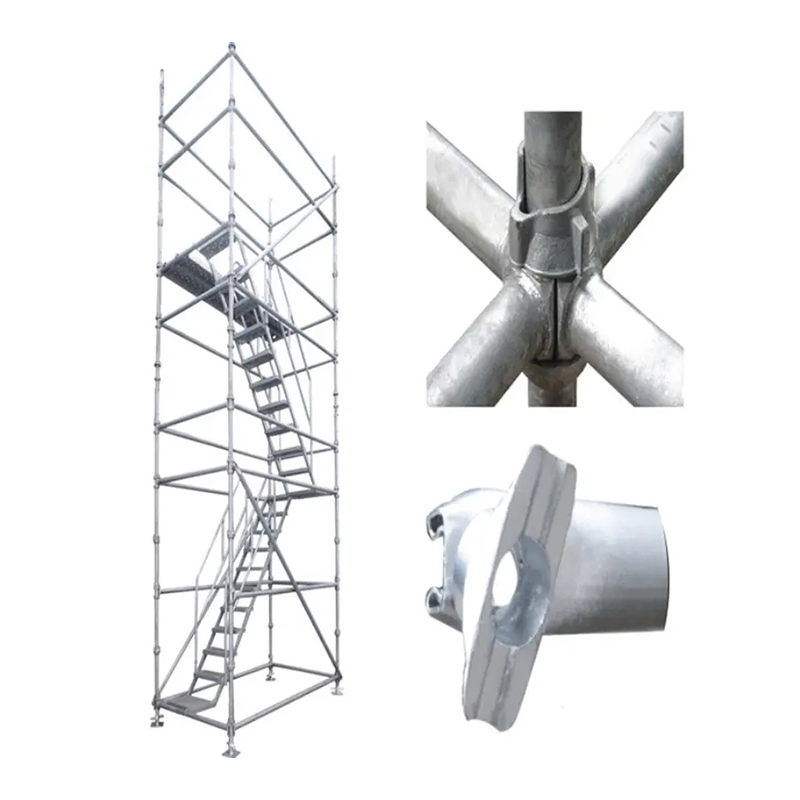
Cuplock scaffolding is a multi-purpose modular steel scaffolding system developed for construction, bridge formwork support, industrial maintenance, and general access applications. Its defining feature is a cup-shaped node-locking mechanism that connects vertical standards and horizontal ledgers without relying on conventional nuts, bolts, or loose wedges. This simple but highly effective connection principle gives the system a strong combination of speed, stability, adaptability, and reduced component loss.
In demanding construction environments, scaffolding is not merely a temporary access arrangement. It is a structural working platform, a temporary support system, and an important part of site safety management. The equipment must carry workers, tools, materials, formwork, and—in some applications—substantial concrete loads. It must also be erected quickly, adjusted to changing conditions, transported efficiently, and reused over many project cycles. Cuplock scaffolding is designed around these requirements.
Manufactured from high-strength Q235 or Q345 carbon steel, the system is suitable for projects where dependable load-bearing performance and repeated service are essential. Its modular geometry enables contractors to create working platforms, access towers, shoring assemblies, bridge support structures, and maintenance platforms using a relatively standardized range of components. The result is a flexible system that can be adapted to both regular and irregular construction layouts.
The system is especially valuable for contractors, rental companies, infrastructure builders, and industrial maintenance teams that need reliable equipment with low loss rates and efficient site handling. Compared with traditional tube-and-fitting scaffolding, Cuplock scaffolding can reduce the number of loose components, simplify assembly, and provide more consistent node connections. Compared with systems that rely on cast connectors or complex bolted assemblies, its forged connection components and integrated locking arrangement offer a robust alternative for high-risk work environments.
Cuplock Scaffolding
What Is Cuplock Scaffolding?
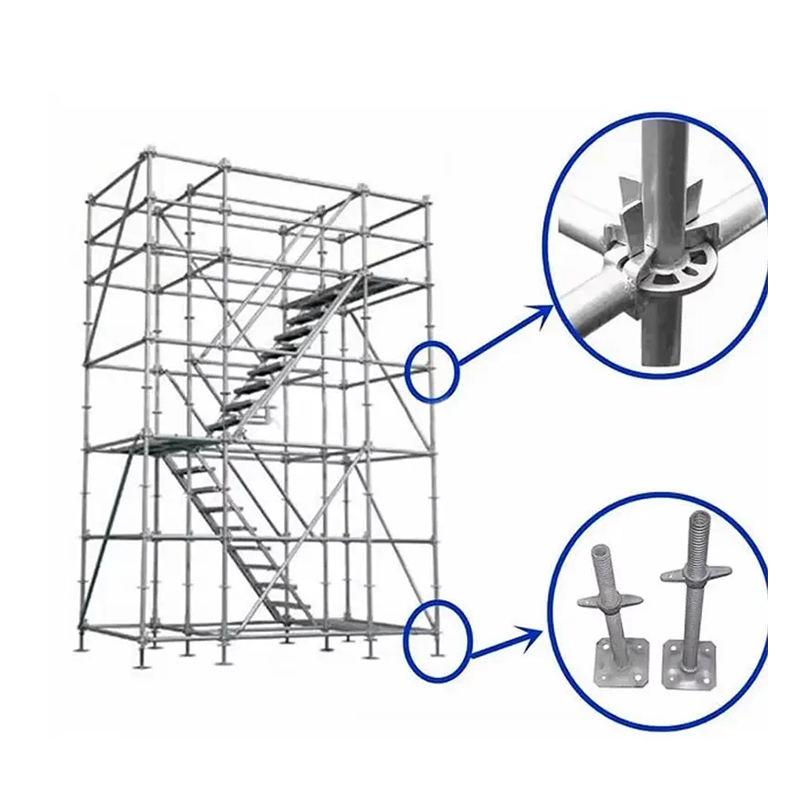
Cuplock scaffolding is a modular steel system built from vertical standards, horizontal ledgers, transoms, base components, and related accessories. The vertical standards are fitted with fixed lower cups at regular intervals. A movable upper cup is placed above the connecting ends of the horizontal members. When the upper cup is driven downward, it locks the ledgers and transoms against the lower cup, creating a rigid connection at the node.
A single node can connect up to four horizontal components. This makes the system efficient for forming square, rectangular, or more complex support grids. The connection is secured by a hammer strike rather than by tightening multiple nuts and bolts. The absence of small detachable fastening parts is one of the main reasons why Cuplock scaffolding is attractive for rental fleets and large construction sites.
The system can be configured for several purposes. In access scaffolding, it provides working platforms for masonry, exterior finishing, installation, inspection, and maintenance. In shoring and formwork support, it creates a vertical load-transfer structure beneath slabs, beams, bridge decks, and other heavy concrete elements. In industrial facilities, it can be assembled around tanks, towers, pipework, machinery, and plant structures where fast access and frequent modification are important.
Its modular nature also enables efficient storage and transportation. Components can be stacked and grouped according to size, reducing the volume of mixed loose equipment. Since the locking cups remain attached to the standards and no large collection of nuts, bolts, or wedges is needed, inventory inspection becomes faster and more straightforward.
Core Components of the System
Vertical Standards
Vertical standards are the primary load-carrying members of a Cuplock assembly. They transfer vertical forces from the working platform, formwork, or supported structure down to the base plates, adjustable jacks, or other foundation components. The welded cup arrangements along the standards provide connection points for ledgers and transoms at predetermined intervals.
Standard spacing allows the system to be erected in a repeatable and organized manner. Depending on the project design, standards can be arranged in rows, grids, towers, or continuous support lines. The vertical members should be positioned on a properly prepared foundation and checked for plumbness during erection.
Ledgers and Transoms
Ledgers are horizontal members that connect the standards along the length of the scaffold. They contribute to the overall stiffness of the structure and support platform components. Transoms connect standards across the width of the assembly and can support scaffold boards, steel decking, formwork bearers, or other platform elements.
The ability to connect multiple horizontal members at one node is a major functional advantage. It enables the system to form a stable three-dimensional framework without requiring separate fastening operations for every intersection. Properly installed ledgers and transoms also help distribute loads across multiple standards.
Base Components and Adjustment Equipment
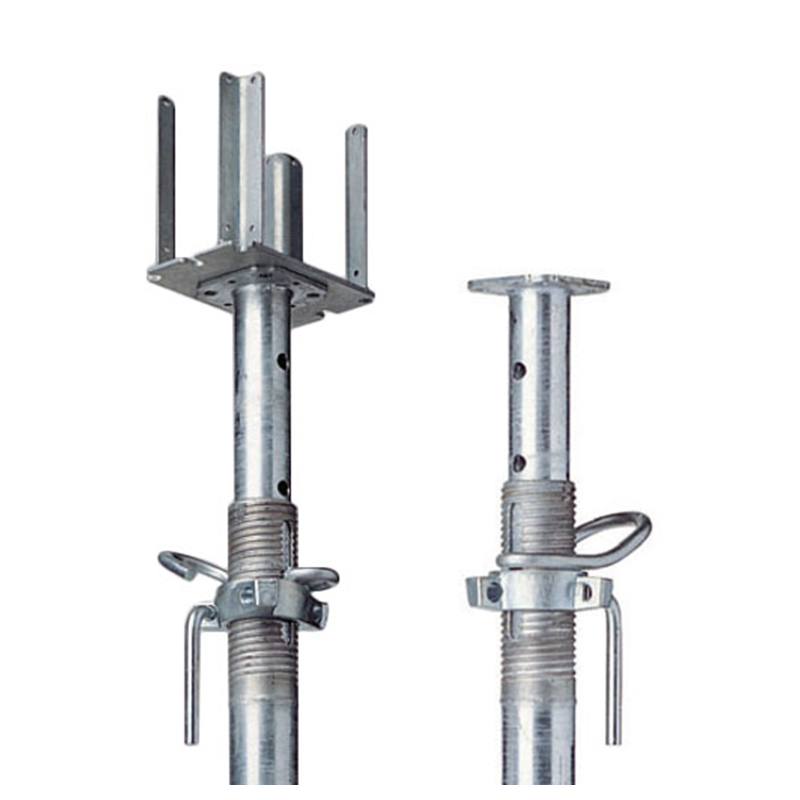
Base plates, base jacks, U-head jacks, screw jacks, and related components are used to transfer loads safely to the supporting surface and to adjust the height of the assembly. These components are particularly important in bridge formwork and slab-support applications, where accurate leveling is required.
Adjustment equipment allows contractors to compensate for moderate variations in ground level or to achieve the correct elevation for beams, decks, and formwork. However, adjustment components must be selected and used according to the approved design because excessive extension can reduce stability and affect load-bearing performance.
Working Platforms and Access Accessories
Depending on the project, the system may include steel planks, scaffold boards, stair units, guardrails, toe boards, access ladders, braces, and platform brackets. These accessories transform the basic structural grid into a complete work platform or access tower.
For high-altitude work, platform layout, guardrail installation, access planning, and fall-protection measures are as important as the strength of the primary scaffold members. Cuplock scaffolding provides the modular foundation for these arrangements, while project-specific design and site procedures determine the final safe configuration.
Why the Cup-Locking Mechanism Matters
The cup connection is the central engineering feature of the system. Traditional tube-and-fitting scaffolding depends on individual clamps that must be positioned and tightened around each connection. This approach is flexible, but it can require substantial labor, careful torque control, and extensive handling of small components. A bolted system may provide a secure connection, but assembling and disassembling large numbers of bolts and nuts can be time-consuming.
Cuplock scaffolding uses an integrated connection arrangement. The lower cup is fixed to the standard, while the upper cup is movable. Horizontal components are placed into the lower cup, the upper cup is positioned over them, and a hammer blow locks the node. This process reduces the number of assembly steps and provides a repeatable connection method.
The mechanism also improves site organization. Loose nuts, bolts, wedges, and clamps can be dropped, misplaced, damaged, or mixed with other equipment. Because Cuplock components retain their principal connection features on the standards, the number of detachable items is reduced. This is particularly beneficial where equipment is moved between multiple work areas or rented to different contractors.
The node design creates a coherent structural grid. When the cups are correctly locked and the members are properly aligned, the resulting frame offers good resistance to movement in several directions. Bracing, base conditions, platform loads, height-to-width ratios, and anchorage remain important, but the node itself provides a reliable foundation for building a stable scaffold structure.

Advantages Compared with Conventional Scaffolding Systems
Faster Assembly and Dismantling
One of the most frequently recognized advantages of Cuplock scaffolding is its rapid erection process. A single hammer strike can secure up to four horizontal members at one node. This is considerably more efficient than tightening multiple fittings or installing several bolts at every connection. Depending on the project configuration, site organization, worker experience, and access conditions, the system can increase erection efficiency by approximately 30 to 50 percent compared with conventional tubular scaffolding.
Faster assembly can have a direct effect on total project cost. Labor hours are reduced, work areas become available sooner, and contractors can move crews to subsequent activities more quickly. In bridge and infrastructure projects, where temporary support structures often influence the construction sequence, improved erection speed can help maintain the planned schedule.
Dismantling is also simplified. Workers can release the upper cups and remove the horizontal members without sorting through large quantities of small fasteners. This reduces the time required to clear a work area and prepares the equipment for relocation, inspection, or storage.
Lower Risk of Missing Components
Rental companies and large contractors often manage thousands of scaffold components. The loss of small fittings can become a significant operating expense, particularly when equipment is transferred among different job sites. Cuplock scaffolding reduces this risk by using fixed and integrated connection components rather than relying on numerous loose bolts, nuts, and wedges.
Lower component loss also improves project readiness. Crews are less likely to stop work because a particular fitting is missing. Warehouse personnel can inspect and count the main standards, ledgers, and transoms more efficiently. Equipment returns can be processed with fewer disputes and less manual sorting.
This advantage does not eliminate the need for inspection. Cups, welds, standards, ledgers, and accessories must still be checked for deformation, corrosion, cracks, unauthorized modification, and excessive wear. However, the simplified connection arrangement makes inspection and inventory control more manageable.
Reliable Node Security
A properly engaged cup node is mechanically restrained by the upper and lower cup arrangement. The connection is not dependent on a small threaded fastener being correctly tightened at every point. When the components are seated correctly and the upper cup is driven into position, the joint provides a stable connection for the horizontal members.
The circular node arrangement also allows several members to meet at the same level. This creates an efficient load-distribution network and reduces the need for separate connection hardware. In applications exposed to vibration or movement, a secure node can help maintain the integrity of the scaffold grid.
High Load-Bearing Potential
Cuplock scaffolding is well suited to applications that require more than a basic access platform. It can be configured as a heavy-duty shoring system for bridge decks, beams, slabs, and other temporary support structures. High-strength Q235 and Q345 carbon steel provide the material basis for demanding service, while the modular arrangement allows loads to be distributed through multiple standards.
The actual capacity of any scaffold assembly depends on standard dimensions, wall thickness, spacing, height, bracing, base conditions, connection quality, eccentricity, environmental loads, and the approved structural design. Product selection should therefore be based on engineering calculations and project requirements rather than on material grade alone.
Adaptability to Complex Layouts
Construction sites are rarely perfectly rectangular. Curved walls, circular tanks, towers, bridge geometry, irregular elevations, and restricted industrial spaces can make rigid access systems difficult to use. Cuplock nodes permit horizontal members to be arranged at different angles, enabling the scaffold to follow curved or irregular building forms without extensive pipe bending.
This adaptability reduces fabrication work on site and allows contractors to use a standardized inventory across more applications. A rental company can serve a wider range of projects without maintaining a separate custom system for every building shape.
Durability for Repeated Use
Steel scaffolding is expected to withstand repeated loading, handling, transport, erection, dismantling, and exposure to changing weather conditions. Cuplock components are manufactured for repeated service and can deliver a long working life when correctly used, stored, inspected, and maintained.
The use of forged steel for key top connectors provides increased resistance to impact compared with brittle cast components. This is particularly important because scaffold fittings are often exposed to hammer blows during assembly and may experience accidental impacts during transport and site operations. Forged construction helps the connectors resist cracking under demanding handling conditions.
| Performance Consideration | Cuplock Scaffolding | Conventional Tube-and-Fitting Scaffolding | Practical Benefit |
|---|---|---|---|
| Connection method | Integrated cup-locking node | Separate clamps, bolts, or fittings | Fewer assembly steps and less loose hardware |
| Assembly speed | Multiple horizontal members can be secured with one hammer strike | Each fitting normally requires individual positioning and tightening | Reduced erection labor and faster project progress |
| Component management | Fixed cups and fewer detachable parts | Many small fittings must be counted and controlled | Lower risk of loss during rental, transfer, and return |
| Heavy-duty use | Suitable for engineered shoring and formwork support | Possible, but often requires more fittings and detailed assembly | Efficient formation of repetitive support grids |
| Adaptability | Nodes permit angled horizontal connections | Highly flexible but may require more manual adjustment | Better efficiency around curved and irregular structures |
| Connector construction | Forged steel top connectors for impact resistance | Performance varies by fitting type and material | Improved durability in demanding handling conditions |
Applications in Bridge Formwork and Infrastructure
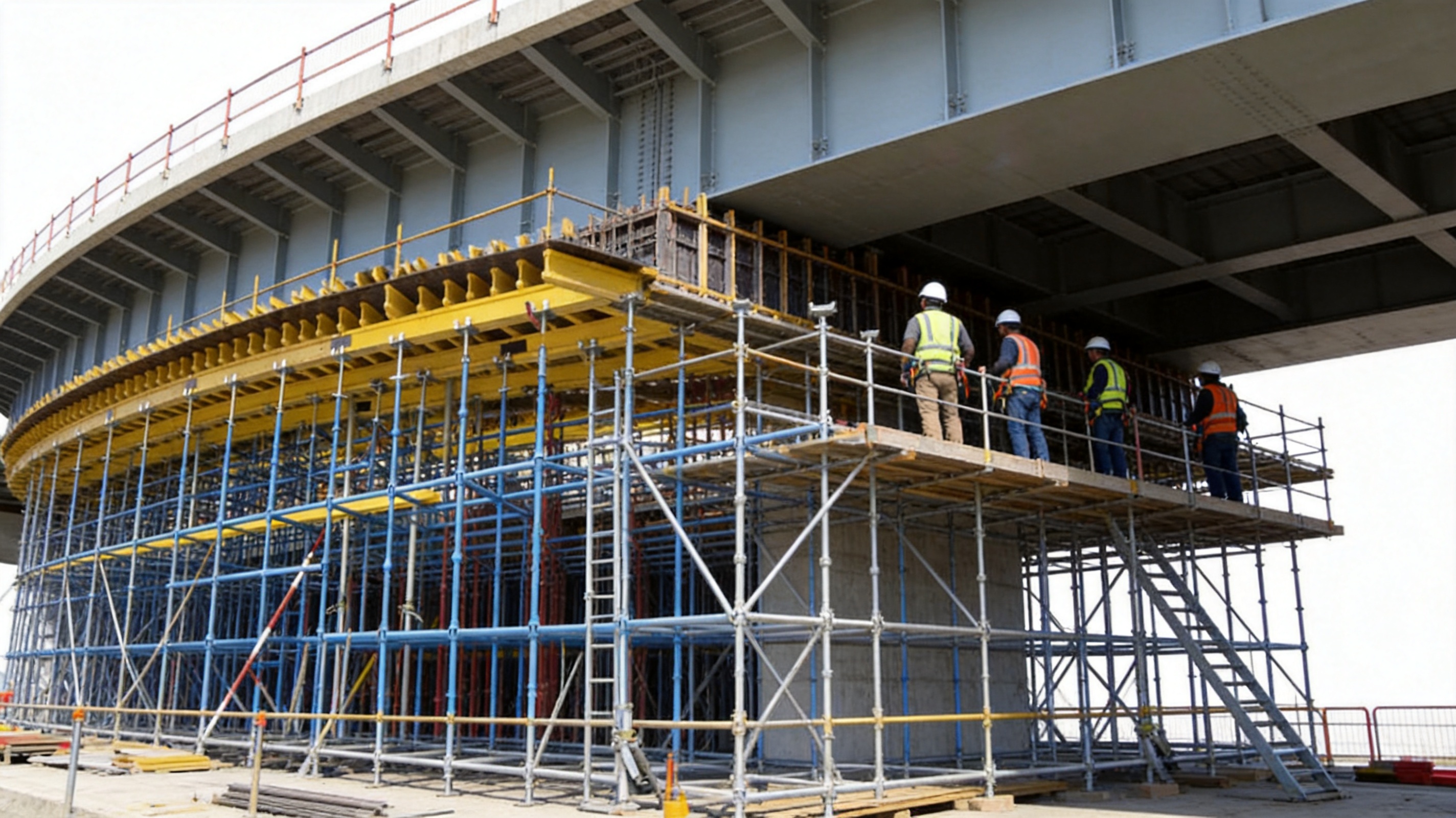
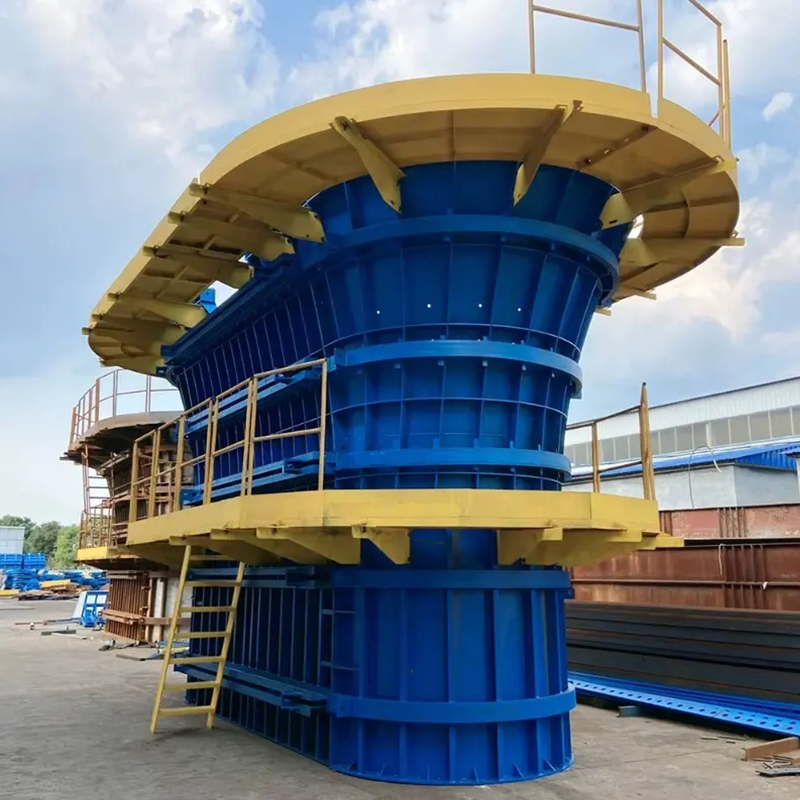
Bridge construction is one of the most demanding applications for temporary support systems. A scaffold or shoring arrangement may be required to support heavy concrete decks, beams, pier caps, formwork, reinforcement, access platforms, and construction personnel. The temporary structure must remain stable throughout installation, pouring, curing, adjustment, and dismantling.
Cuplock scaffolding is suitable for creating dense support grids beneath bridge formwork. Standards can be arranged according to the engineered load path, while ledgers and transoms tie the system together at multiple elevations. Screw jacks and U-head components can be used to achieve the required formwork elevation and distribute loads into the supporting foundation.
The system is also useful where bridge geometry changes along the alignment. Curved bridge sections, varying deck widths, sloped surfaces, and complex pier arrangements may require a support structure that can be adjusted without extensive custom fabrication. The cup node allows the horizontal members to be positioned in practical orientations while maintaining a modular construction method.
Infrastructure projects often involve long construction periods and multiple work zones. Equipment that can be erected, dismantled, inspected, and reused efficiently offers significant logistical value. Cuplock components can be redeployed from one bridge section to another, helping contractors maximize equipment utilization.
For major transportation projects, temporary support must be designed and checked by qualified engineers. The scaffold should not be treated as a generic arrangement simply because the components are modular. Load calculations, foundation bearing capacity, lateral stability, wind exposure, pouring sequence, access, and emergency procedures must all be considered.
Support for Curved and Irregular Structures
Modern construction increasingly involves curved architectural forms, cylindrical tanks, towers, circular walls, and industrial equipment with non-rectangular footprints. Conventional rigid frames can create gaps between the scaffold and the working face or require extensive modification. Cuplock scaffolding provides a practical alternative because its nodes allow horizontal members to rotate and connect in different directions.
For a circular water tank, for example, standards can be arranged around the perimeter and connected with horizontal members that follow the curve. For a curved wall, platform levels can be established at regular heights while the plan arrangement changes around the building. For a tower or industrial vessel, the scaffold can be adapted to the equipment profile and access requirements.
This flexibility has several benefits. It reduces the need for field-bent tubes, minimizes improvised connections, and allows the same core inventory to support multiple structures. It can also improve worker access by allowing platforms to be positioned closer to the working surface.
Irregular geometry still requires careful planning. The scaffold must maintain adequate platform width, safe clearance, bracing, guardrails, and access routes. Where the structure changes direction or where standards cannot be installed in a regular grid, the design should be reviewed before erection.
Industrial Maintenance and High-Altitude Access
Industrial facilities such as oil refineries, power plants, chemical installations, cement plants, steel mills, and processing factories frequently require temporary access around complex equipment. Maintenance work may involve inspection, cleaning, coating, welding, insulation replacement, valve servicing, pipe repairs, or equipment installation.
In these environments, speed is important because shutdown periods can be expensive. A modular system that can be installed quickly allows maintenance teams to begin work sooner and dismantle the access structure when the task is complete. The reduced number of loose fasteners is also beneficial in areas where strict housekeeping and material control are required.
Cuplock scaffolding can be arranged around columns, vessels, towers, pipe racks, and machinery. The system’s multi-directional node connections help crews work around obstacles and create access platforms at different elevations. Additional guardrails, toe boards, stair units, and controlled access points can be incorporated into the layout.
Industrial sites may present special hazards, including heat, chemicals, restricted access, moving equipment, electrical systems, explosive atmospheres, and high wind exposure. The scaffolding design and erection method must be coordinated with the facility’s permit-to-work system and safety procedures. The steel system provides the structural framework, but safe industrial use depends on complete task planning and site control.
General Building and Masonry Work
Cuplock scaffolding is suitable for routine building activities such as bricklaying, blockwork, plastering, painting, cladding, window installation, exterior decoration, and repair. It can be assembled as a façade scaffold, freestanding access tower, stair tower, or localized work platform.
For masonry work, the system provides a stable platform for workers and materials at different elevations. Its regular modular levels simplify the arrangement of platforms and guardrails. For exterior finishing, the scaffold can be positioned along building elevations and adjusted to follow changes in façade geometry.
When used as an access scaffold rather than a heavy-duty shoring system, the configuration may be lighter, but the same principles remain important. The base must be stable, standards must be plumb, horizontal members must be locked correctly, and the assembly must be braced or tied as required. Platform loading must remain within the approved limit, and materials should not be concentrated in one small area.
Materials and Manufacturing Quality
The performance of steel scaffolding begins with material selection. The system is manufactured using Q235 and Q345 carbon steel, grades commonly used for structural steel components in construction and industrial applications. The selected grade must be matched to the design requirements, component dimensions, fabrication method, and applicable project standards.
Material traceability is an important part of professional manufacturing. Steel should be received, identified, inspected, and allocated according to production requirements. Fabrication personnel need consistent material information to ensure that standards, ledgers, cups, transoms, and connectors meet the intended specifications.
Dimensional accuracy is equally important. Small deviations in cup position, member length, connector geometry, or welding alignment can affect erection efficiency and structural fit. Standardized production lines help control these dimensions and provide greater consistency from one batch to the next.
Weld quality is another essential consideration. Welded cups, end connectors, and structural attachments must provide dependable force transfer during assembly and service. The manufacturing process uses standardized welding procedures and certified AWS and EN welding craftsmanship, supported by inspection and process control. Welding quality management helps reduce the risk of incomplete fusion, excessive spatter, undercut, distortion, or other defects that could affect product performance.
Forged Connectors and Impact Resistance
Scaffolding components are exposed to demanding conditions. Workers may use hammers during assembly, components may be dropped or dragged, and equipment may be loaded onto trucks or moved around crowded sites. Connector materials must therefore resist impact as well as static force.
Key top connectors in the Cuplock system are made from forged steel rather than brittle cast iron. Forging forms the steel under controlled pressure, producing a dense structure with good mechanical continuity. This construction is valuable where the connector must withstand repeated hammering, accidental impact, and heavy operational loads.
Forged construction does not mean that components are indestructible. A connector that has been bent, cracked, deeply gouged, heavily corroded, or subjected to unauthorized repair should be removed from service. Proper inspection remains necessary. The benefit of forged construction is that it provides a stronger and more impact-resistant component when compared with less suitable brittle materials.
The upper cup must also be compatible with the standard, correctly positioned, and fully engaged. A damaged or partially seated cup can compromise the connection. Workers should never rely on appearance alone; every node should be checked according to the erection procedure.
Advanced Fabrication Capabilities
The manufacturer behind this product combines scaffolding production with custom steel formwork, heavy steel structures, steel plate cutting, bending, welding, and OEM metal fabrication. This integrated capability is particularly valuable for clients who require more than standard scaffold components.
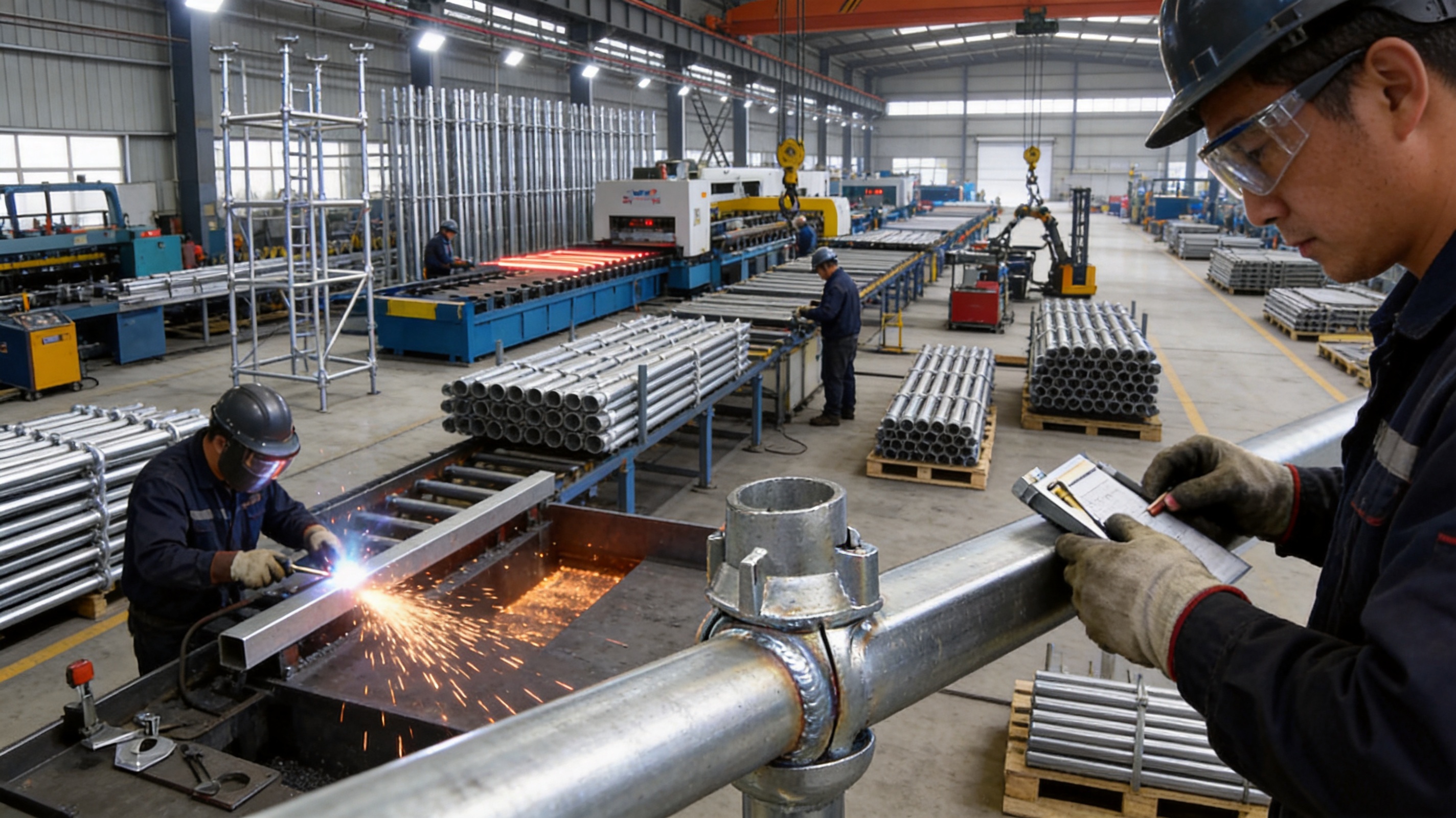
Advanced laser cutting equipment enables accurate processing of steel plates and profiles. CNC-based cutting can produce repeatable shapes, openings, brackets, gussets, base plates, connection plates, and customized structural parts. Consistent cutting reduces fit-up problems during assembly and supports the manufacture of non-standard components.
Laser cutting also improves production flexibility. When a project requires a custom bracket, special support frame, access platform, formwork element, or connection detail, digital cutting data can be transferred into production with limited manual marking. This helps reduce variation and supports faster response to OEM requirements.
Bending equipment is used to form steel plates and components according to engineered dimensions. Controlled bending can improve the accuracy of curved or folded parts while reducing the need for improvised fabrication on the job site. In complex infrastructure projects, the ability to combine cutting, bending, and welding under one manufacturing system can simplify procurement and quality management.
Welding is performed according to standardized AWS and EN practices. Skilled welding teams, supported by production documentation and inspection procedures, can fabricate both standard products and custom heavy-duty assemblies. This is important for clients who need ready-to-install components rather than unfinished steel parts that require extensive site modification.
The company’s production system is supported by ISO 9001 quality management, 12 utility patents, and compliance with BS1139 and EN74 international scaffolding standards as stated in the supplied company information. These systems and standards provide a framework for process control, product consistency, documentation, and continuous improvement.
Quality Control from Raw Material to Shipment
Reliable scaffolding depends on full-process quality control rather than a single final inspection. A professional manufacturing process begins with incoming material verification. Steel grades, dimensions, surface condition, and documentation should be checked before production begins.
During cutting and forming, dimensions are monitored to ensure that components meet approved drawings and production tolerances. Fixtures and jigs help maintain alignment during welding. Welded assemblies are inspected for visible defects, dimensional accuracy, and correct positioning of cups, end connectors, and other attachments.
Surface treatment and finishing should be applied according to the intended use and customer requirements. Coating, galvanizing, or other protective systems can help improve resistance to corrosion during storage and service. The final treatment should be continuous and free from excessive runs, bare areas, peeling, or contamination.
Before shipment, components should be sorted, counted, packaged, and protected against transport damage. Proper packing reduces the risk of bent members, damaged cups, and coating deterioration. Clear identification also helps the customer organize the material when it arrives at the project site.
For customized products, quality documentation may include drawings, material information, welding records, inspection reports, dimensional records, and packing lists. These documents help contractors integrate the products into their project quality systems and support future maintenance or replacement decisions.
Experience in Major Infrastructure Projects
The manufacturer has supplied formwork, scaffolding, steel structures, and custom components for major infrastructure and industrial projects. Its project experience includes work associated with the Sutong Yangtze River Bridge, Taizhou Bridge, and Sudan Thermal Power Plant, as well as cooperation with large state-owned infrastructure enterprises such as CCCC and CRCC.
Experience with large projects helps a manufacturer understand the practical requirements of construction contractors. These requirements include reliable delivery, consistent batch quality, traceable documentation, compatibility with project standards, responsive technical communication, and the ability to handle non-standard designs.
Large infrastructure projects also require strict coordination between design, fabrication, logistics, site erection, and inspection. A product may be technically sound but still create problems if the components arrive late, are poorly labeled, or do not match the approved drawings. Integrated manufacturing and project support help reduce these risks.
By applying mega-project manufacturing principles to standard and custom products, the company aims to provide equipment that is suitable for demanding construction environments while remaining practical for rental fleets, local contractors, and industrial users.
OEM and Customization Services
Although Cuplock scaffolding is based on standardized modular components, some projects require customized elements. These may include special platform brackets, non-standard support frames, bridge formwork components, access structures, steel beams, custom base assemblies, transition frames, or components designed to interface with existing equipment.
OEM manufacturing allows customers to provide drawings, samples, technical specifications, or performance requirements. The manufacturer can then review the design, confirm material and production feasibility, prepare fabrication drawings where required, and produce the components using laser cutting, bending, welding, and finishing equipment.
Customization is valuable when the project includes unusual geometry or when the customer wants to integrate Cuplock scaffolding with another temporary works system. For example, a bridge contractor may require a special head frame to support a particular formwork beam. An industrial client may need a platform that follows the shape of a vessel. A rental company may require accessories compatible with its current fleet.
Before custom production, critical information should be confirmed. This includes dimensions, working loads, connection details, steel grade, surface treatment, applicable standards, inspection requirements, packaging, and expected service conditions. Clear technical communication reduces the possibility of costly revisions after production.
Engineering Considerations for Safe Use
Cuplock scaffolding is a structural system and must be erected according to an approved design or competent erection procedure. The product’s modular nature does not remove the need for engineering judgment. A safe installation begins with a suitable foundation or supporting surface that can carry the anticipated loads without excessive settlement.
Standards should be arranged according to the design grid and kept vertical. Base plates and adjustable jacks must be fully supported. Where the ground is uneven or soft, suitable sole boards, foundations, or engineered support measures may be necessary.
Ledgers and transoms should be installed at the specified levels, and every cup node must be properly seated and locked. Bracing should be installed where required to resist lateral movement. Tall or exposed structures may need ties to the permanent building, additional bracing, or other stabilization measures.
Loads should be distributed as intended by the design. Concentrated storage of bricks, concrete, steel reinforcement, machinery, or other heavy materials can exceed local platform capacity even when the overall scaffold appears stable. Workers should follow the specified load class and avoid unauthorized modifications.
Weather conditions must also be considered. Wind, rain, ice, flooding, and poor visibility can affect scaffold stability and worker safety. High-altitude operations should include appropriate guardrails, toe boards, access routes, fall protection, and emergency arrangements.
Before each shift, the scaffold should be inspected for displaced members, unlocked cups, damaged components, excessive corrosion, missing braces, unstable bases, unauthorized alterations, and unsafe platform conditions. After severe weather, impact, or a significant change in loading, a further inspection should be completed.
Benefits for Rental Companies
Rental companies need products that are durable, easy to count, quick to inspect, and suitable for multiple customer applications. Cuplock scaffolding addresses these needs through its integrated cup arrangement and relatively small number of loose connection parts.
A rental fleet can be assembled from standardized components and supplied to contractors for façade work, bridge support, industrial maintenance, or general access. When equipment returns, staff can check the main components more efficiently than they could with a large collection of mixed clamps, bolts, and wedges.
Durability is also important because rental equipment may be erected and dismantled repeatedly by different crews. Forged connectors and robust steel members can help resist the impact and handling associated with frequent circulation. Of course, damaged or deformed parts must be removed from service rather than returned to the fleet.
Standardized components can improve fleet utilization. A ledger or standard that serves several types of projects is more valuable than a specialized part that has limited use. The system’s adaptability to curved and irregular structures further expands the range of work for which the rental inventory can be offered.
Benefits for Contractors and Project Owners
Contractors benefit from faster erection, reduced labor requirements, simplified component management, and the ability to use one modular system across several construction activities. This can be particularly useful for companies working on multiple bridges, industrial plants, commercial buildings, or infrastructure sites at the same time.
Project owners benefit when temporary works are installed efficiently and remain stable throughout the construction process. A well-managed scaffold system can support productivity by providing reliable access and formwork support, reducing delays related to missing fittings or repeated adjustment, and helping create a more organized worksite.
For international buyers, the manufacturer’s integrated capabilities provide an additional advantage. Instead of sourcing standard scaffolding from one supplier and custom steel components from another, customers may be able to coordinate both requirements through one production partner. This can simplify communication, quality documentation, shipping, and technical coordination.
Storage, Maintenance, and Service Life
Proper storage is essential for preserving scaffold components. Standards, ledgers, transoms, and accessories should be stacked on firm, level ground and protected from standing water. Components should be separated by type and length to make inspection and future assembly easier.
After use, mud, concrete residue, paint, oil, and other contaminants should be removed. Cups and connectors should be checked for distortion or damage. Welded areas should be examined for visible cracking, while steel members should be inspected for bends, dents, severe corrosion, or unauthorized holes.
Components should not be repaired by heating, cutting, drilling, or welding unless the modification has been reviewed and approved by a qualified technical authority. Uncontrolled site repairs can change the strength and geometry of the original product.
Coated or galvanized components should be stored in a way that limits damage to the protective layer. Where coating damage occurs, repair procedures should follow the applicable coating specification. Good maintenance extends service life, reduces replacement cost, and helps ensure predictable performance.
How to Select the Right Cuplock System
Selection should begin with the intended application. A façade access scaffold, a bridge shoring tower, and an industrial maintenance platform may use the same basic cup-lock principle but require different spacing, accessories, bracing, foundation arrangements, and design checks.
The buyer should confirm the required working height, platform dimensions, vertical loads, horizontal loads, environmental exposure, foundation condition, access requirements, and frequency of relocation. The required standard length, ledger length, transom arrangement, base adjustment range, platform type, and safety accessories can then be determined.
Material grade and surface treatment should be selected according to the operating environment. Projects near the coast, in humid climates, or in chemically aggressive facilities may require enhanced corrosion protection. Customers should also confirm applicable standards, inspection documentation, packaging requirements, and spare-component recommendations.
For large projects, it is useful to request a component schedule and layout drawing. This helps the contractor verify quantities, plan logistics, estimate erection labor, and identify special components before production. For custom projects, drawings should clearly indicate dimensions, loads, weld requirements, tolerances, and connection interfaces.
Questions and Answers
What is the main difference between Cuplock scaffolding and tube-and-fitting scaffolding?
The main difference is the connection method. Cuplock scaffolding uses integrated fixed and movable cups to secure horizontal members to vertical standards, while tube-and-fitting scaffolding generally uses separate clamps that must be positioned and tightened individually. Cuplock assembly is therefore usually faster and involves fewer loose components.
Can Cuplock scaffolding be used for bridge formwork?
Yes. It can be configured as a heavy-duty support system beneath bridge decks, beams, slabs, and other formwork. The final arrangement must be designed for the actual loads, geometry, foundation, bracing, and construction sequence by qualified technical personnel.
How many horizontal members can connect at one node?
The cup-lock node can connect up to four horizontal components at one level. The exact arrangement depends on the layout and the requirements of the approved scaffold design.
Does the system require nuts, bolts, or wedges?
The principal cup-lock connection does not require loose nuts, bolts, or wedges. A fixed bottom cup and movable top cup secure the horizontal members. Other project-specific accessories may use their own fastening arrangements.
Why are forged connectors used?
Forged steel connectors offer good impact resistance and are less prone to brittle cracking than unsuitable cast components. They are able to withstand the repeated impacts associated with assembly and demanding site handling, provided that they are used and inspected correctly.
Can Cuplock scaffolding follow curved walls or tanks?
Yes. The nodes allow horizontal members to be connected at different angles, which helps the scaffold follow curved façades, circular tanks, towers, and other irregular structures. The layout must still provide adequate stability, platform access, and fall protection.
What steel grades are used?
The product is manufactured using Q235 or Q345 carbon steel, depending on the component and project requirements. The selected material should be confirmed in the technical documentation supplied for the order.
Is Cuplock scaffolding suitable for rental fleets?
Yes. The reduced number of loose parts, durable steel construction, modular design, and broad application range make it suitable for rental companies. Regular inspection, cleaning, sorting, and removal of damaged components remain essential.
Can the manufacturer produce custom steel components?
Yes. The manufacturing capabilities include laser cutting, steel plate processing, bending, welding, custom formwork, heavy steel structures, and OEM metal fabrication. Customers can discuss custom brackets, frames, platforms, support assemblies, and other non-standard products according to drawings or technical requirements.
What quality standards support production?
The supplied company information identifies ISO 9001 quality management, AWS and EN welding craftsmanship, and compliance with BS1139 and EN74 international standards. The applicable standards for a specific order should be confirmed during technical and commercial review.
How can the product achieve a long service life?
Long service life depends on proper design, correct erection, suitable loading, regular inspection, careful handling, and dry, organized storage. Components with cracks, severe corrosion, distortion, or unauthorized modifications should be removed from service.
Can one system support both access and formwork applications?
Yes. The same modular principle can be used for access scaffolding, work platforms, bridge formwork support, industrial maintenance towers, and general construction. However, the configuration, accessories, loading, bracing, and engineering requirements vary by application.
Why Integrated Manufacturing Creates Additional Value
A scaffolding supplier with integrated steel fabrication capability can offer more than a catalog of standard members. It can help customers address the complete temporary works requirement, including standard scaffold components, custom support frames, formwork, steel structures, brackets, and fabricated accessories.
This integrated approach can reduce interface problems. When cutting, bending, welding, finishing, inspection, and packing are coordinated within one manufacturing organization, responsibility for dimensional compatibility is clearer. Customers can also receive a more consistent quality package for standard and custom components.
Advanced production equipment improves repeatability, but equipment alone is not enough. Skilled personnel, approved procedures, quality records, engineering review, and disciplined inspection are necessary to convert machinery capability into reliable products. The combination of automated processing and certified welding practices supports the production of precise non-standard steel components.
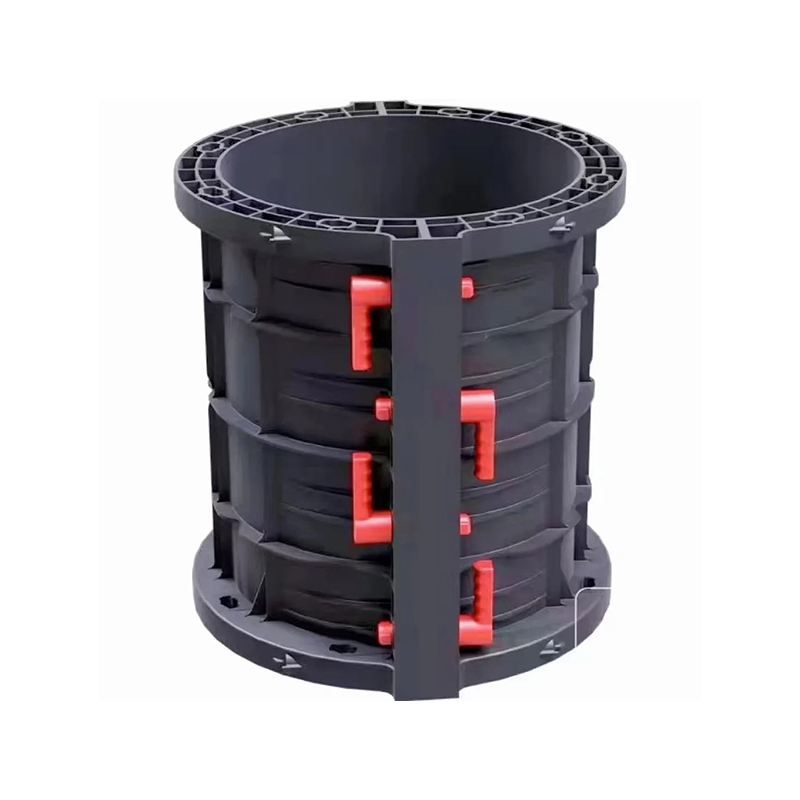
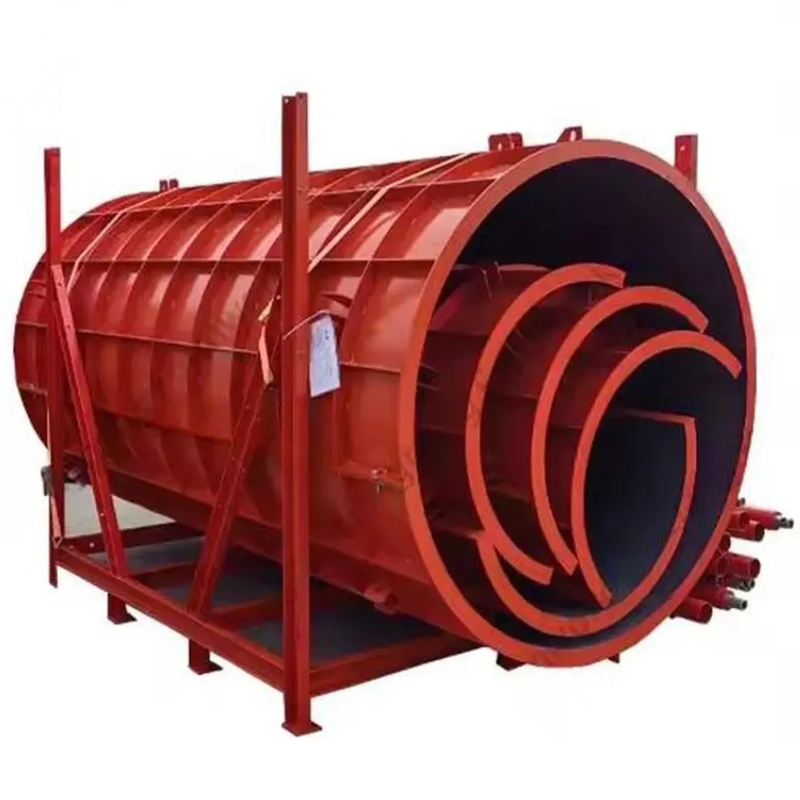
The company’s experience serving major infrastructure clients demonstrates its ability to work with demanding project requirements. Its product range covers custom bridge and infrastructure formwork, hydraulic tunnel trolleys, certified scaffolding, steel props, industrial steel structures, and heavy steel OEM fabrication. This broader capability allows the company to support construction, mining, agriculture, transportation, and industrial projects.
Conclusion
Cuplock scaffolding is a practical modular steel system for projects that require fast assembly, dependable structural connections, flexible configuration, and repeated use. Its cup-shaped locking mechanism reduces the need for loose fasteners, allowing crews to connect multiple horizontal members with a simple hammer operation. This can improve erection speed, lower labor requirements, simplify inventory control, and reduce losses for rental companies and contractors.
The system’s high-strength Q235 and Q345 carbon steel construction supports demanding access and shoring applications. Forged steel top connectors provide improved impact resistance, while the adjustable node arrangement enables the scaffold to follow curved walls, circular structures, towers, industrial equipment, and other irregular forms.
Its value is further strengthened by advanced manufacturing capabilities, including CNC laser cutting, steel plate processing, bending, standardized welding, custom fabrication, and full-process quality control. Supported by ISO 9001, AWS and EN welding practices, BS1139 and EN74 compliance information, utility patents, and experience in major infrastructure projects, the manufacturer can supply both standard scaffolding and customized heavy steel solutions.
For bridge construction, industrial maintenance, masonry, façade work, and general building applications, Cuplock scaffolding offers a balanced combination of efficiency, adaptability, durability, and structural reliability. Correct design, erection, inspection, loading, and maintenance remain essential, but with professional manufacturing and responsible site management, the system can provide a dependable foundation for high-altitude work and temporary structural support.
References
1. Manufacturer Product Information: Cuplock Scaffolding, Bowl-Shaped Scaffolding Series.
2. Manufacturer Corporate Information: Custom Steel Formwork, Scaffolding, Heavy Steel Structures, and OEM Metal Fabrication Capabilities.
3. BS1139, Metal Scaffolding: General Requirements and Relevant Component Provisions.
4. EN74, Couplers, Spigot Pins and Base-Plates for Use in Working Scaffolds and Falsework.
5. ISO 9001, Quality Management Systems: Requirements.
6. AWS Welding Practice and Structural Welding Quality Principles.
7. General Engineering Principles for Temporary Works, Formwork Support, Scaffolding Stability, and Construction Load Management.
Product: Cuplock Scaffolding


- Location
- Group 3, Fangzhuang Village, Rucheng Subdistrict, Rugao City, Nantong, Jiangsu, China
- Follow us
- Phone
- +86-13646196162
- info@hysonindustry.com
