 +86-13646196162
 info@hysonindustry.com




 русский
 عربى



Accropod Formwork for High-Precision Coastal Protection Blocks
 2026.09.25
Content
- 1 Introduction
- 2 The Role of Accropod Blocks in Coastal Protection
- 3 Product Overview
- 4 Precision CNC Laser Cutting and Dimensional Control
- 5 Symmetrical Split Design for Reliable Demolding
- 6 Structural Strength and Service Durability
- 7 Comparison with Conventional and Low-Precision Molds
- 8 Manufacturing Process
- 8.1 1. Engineering Review and Technical Confirmation
- 8.2 2. Digital Modeling and Production Data
- 8.3 3. Steel Material Preparation
- 8.4 4. CNC Laser Cutting
- 8.5 5. Forming, Fit-Up, and Tack Welding
- 8.6 6. Controlled Welding
- 8.7 7. Grinding and Interior Surface Treatment
- 8.8 8. Trial Assembly and Inspection
- 8.9 9. Surface Protection, Marking, and Packing
- 9 Quality Control and Manufacturing Strengths
- 10 Application Scenarios
- 11 Benefits for Precast Production Efficiency
- 12 Installation and Operating Recommendations
- 13 Maintenance and Lifecycle Value
- 14 Customization and OEM Support
- 15 Why Manufacturing Capability Matters
- 16 Selection Guide for Project Buyers
- 17 Frequently Asked Questions
- 17.1 What is an Accropod formwork mold used for?
- 17.2 Why is mold precision important?
- 17.3 How does the symmetrical split design improve demolding?
- 17.4 What are Type A and Type B models?
- 17.5 Can the mold be customized?
- 17.6 What steel processing methods are used?
- 17.7 How can concrete edge damage be reduced?
- 17.8 How long can the formwork be used?
- 17.9 What inspection should be completed before delivery?
- 17.10 Why work with a heavy steel fabrication manufacturer?
- 18 Conclusion
- 19 References
- 20 Product: Accropod Formwork/Mold
Introduction
Coastal infrastructure is exposed to constantly changing environmental forces. Waves, tides, storm surges, currents, saltwater corrosion, and seabed movement can gradually weaken shorelines, port facilities, breakwaters, and reclaimed land. In locations where conventional concrete walls are not sufficient, specially shaped concrete armor units provide a more flexible and effective method of dissipating wave energy. Among these solutions, Accropod and Accropod Twist blocks are recognized for their complex interlocking geometry, high stability, and ability to reduce the direct impact of waves on coastal structures.
However, manufacturing these blocks requires much more than ordinary concrete casting equipment. The three-dimensional form of an Accropod block contains multiple inclined surfaces, intersecting angles, narrow transitions, and irregular contact areas. If the steel mold is inaccurate, poorly aligned, or difficult to open, the concrete may adhere to the mold, the edges may break during demolding, and the finished unit may fail to achieve the required interlocking performance. For this reason, the formwork or mold is one of the most important production tools in an Accropod manufacturing system.
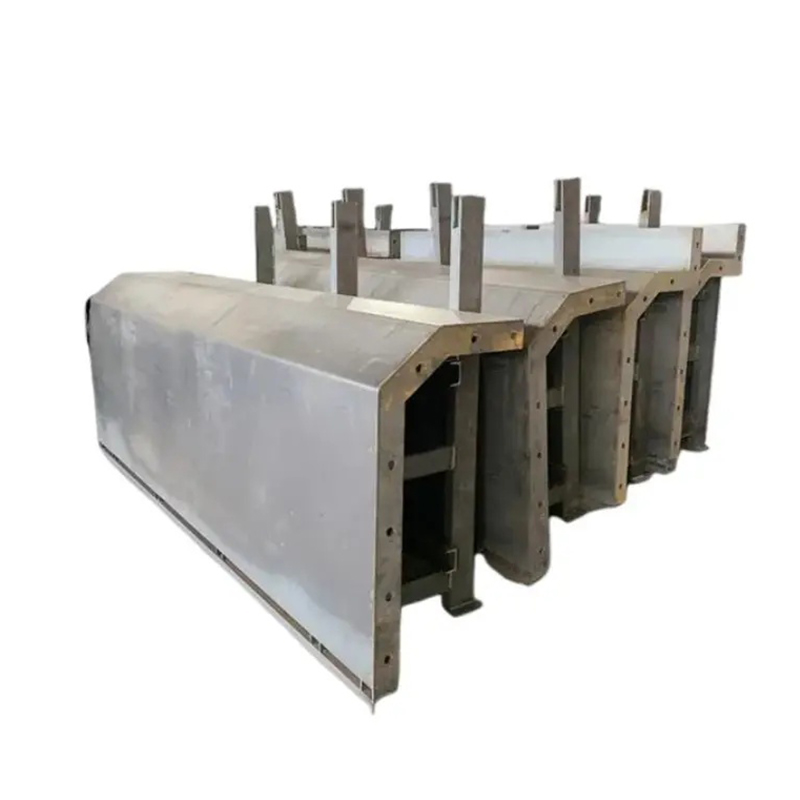
The Accropod Formwork/Mold is a specialized steel casting mold developed for the production of coastal protection blocks. It combines precision steel fabrication, CNC laser cutting, carefully controlled welding, reinforced structural design, and a symmetrical split configuration. This combination enables precast manufacturers to produce complex armor units with repeatable dimensions, smooth demolding, and reliable structural quality.
Unlike basic welded molds that depend heavily on manual fitting and post-welding correction, this type of formwork is designed around accurate geometry from the beginning of the manufacturing process. Every major component is produced according to controlled drawings and dimensional requirements. The result is a mold that supports stable production, reduces concrete damage, improves labor efficiency, and helps coastal contractors maintain consistent block quality across large projects.
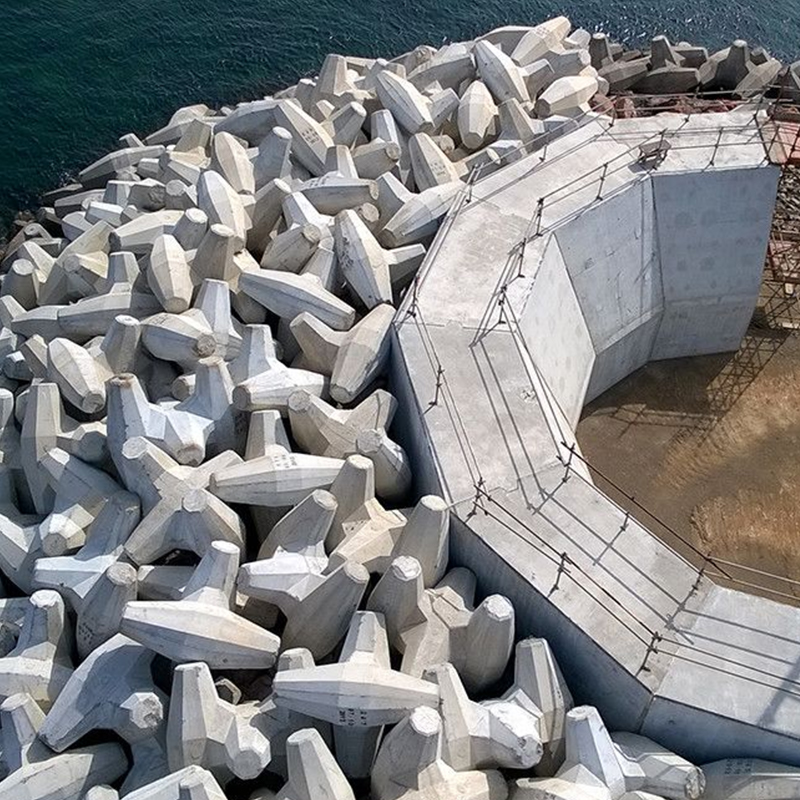
Accropod Formwork/Mold
The Role of Accropod Blocks in Coastal Protection
Breakwaters and revetments are designed to reduce the energy transmitted by waves before that energy reaches protected infrastructure. A conventional sloped embankment may use rock, concrete armor units, or a combination of materials. The outer armor layer must remain stable under repeated hydraulic loading. It must resist displacement while also allowing water movement through the spaces between individual units.
Accropod blocks are engineered to work as a partially interlocking armor layer. Their irregular geometry creates contact points between adjacent units, helping distribute wave forces through the armor layer instead of allowing one block to absorb the entire load. The voids between the blocks also contribute to energy dissipation by disturbing and slowing the movement of water.
The performance of the completed armor layer depends on several factors, including unit weight, concrete quality, placement accuracy, foundation preparation, wave conditions, slope angle, and block geometry. Even when the concrete mix and installation process are properly controlled, inaccurate block dimensions can affect the way the units interlock. A defective casting mold can therefore create risks that may not become visible until the blocks are placed in service.
A precise mold supports the production of blocks with consistent external dimensions and repeatable contact surfaces. This consistency is valuable during installation because it allows contractors to plan lifting, transport, and placement operations more efficiently. It also helps ensure that the armor units work together as a designed system rather than as unrelated concrete pieces.
The mold must also withstand repeated production cycles. It is exposed to vibration, fresh concrete pressure, cleaning operations, handling equipment, moisture, and, in some environments, aggressive marine conditions. A well-designed steel mold balances dimensional accuracy with sufficient rigidity and durability. It should be strong enough to retain its shape but practical enough for workers to open, clean, inspect, and reassemble between castings.
Product Overview
The Accropod Formwork/Mold is manufactured as a precision steel mold for casting interlocking coastal armor units. Its design is adapted to the complex three-dimensional configuration of Accropod and related breakwater blocks. The mold can be supplied in different configurations according to project requirements, including Type A and Type B models for different block sizes, casting arrangements, and protection applications.
The basic construction consists of accurately cut steel plates, formed sections, reinforcing members, connection hardware, and a split-opening system. The steel panels create the external shape of the concrete block, while the frame and reinforcement maintain alignment during concrete placement. Hinges, clamps, locking components, or other connection details can be arranged to permit controlled opening and closing.
The formwork is not simply a hollow container. It is a coordinated assembly in which every panel, joint, corner, and support member contributes to the final accuracy of the concrete product. The split line must be positioned carefully so that the mold can open without damaging the cast block. The interior surfaces must be smooth enough to reduce adhesion. The structural frame must limit distortion when concrete is poured and vibrated.
Depending on the project, the mold can be adapted to required unit dimensions, handling points, lifting arrangements, reinforcement details, and site production methods. Customization may include modifications to the opening direction, locking mechanism, base support, lifting lugs, surface treatment, and identification markings. These options allow the mold to be integrated into a contractor’s existing casting yard rather than forcing the project to adopt an unsuitable standard arrangement.
Main Product Characteristics
High dimensional accuracy is the first major characteristic. The mold geometry is created from controlled technical drawings and processed using CNC laser cutting technology. Accurate cutting reduces variation between matching panels and improves the fit of components during assembly.
The symmetrical split design is another important characteristic. By dividing the mold into balanced sections, the opening movement can be distributed more evenly. This helps prevent one side of the mold from pulling against the concrete while the other side remains closed. A well-planned split also makes it easier for operators to inspect and clean the mold after each casting cycle.
Rigid steel construction provides stability during filling and vibration. If a mold flexes under pressure, the resulting block may have uneven surfaces or dimensional deviations. Reinforced panels and support members help preserve the intended geometry over repeated use.
The mold is also designed for practical operation. Production workers need to position, close, lock, open, and clean the mold without excessive effort. A formwork system that is accurate but difficult to operate can reduce overall productivity. The Accropod mold therefore combines precision with an emphasis on accessible joints, manageable sections, and repeatable assembly.
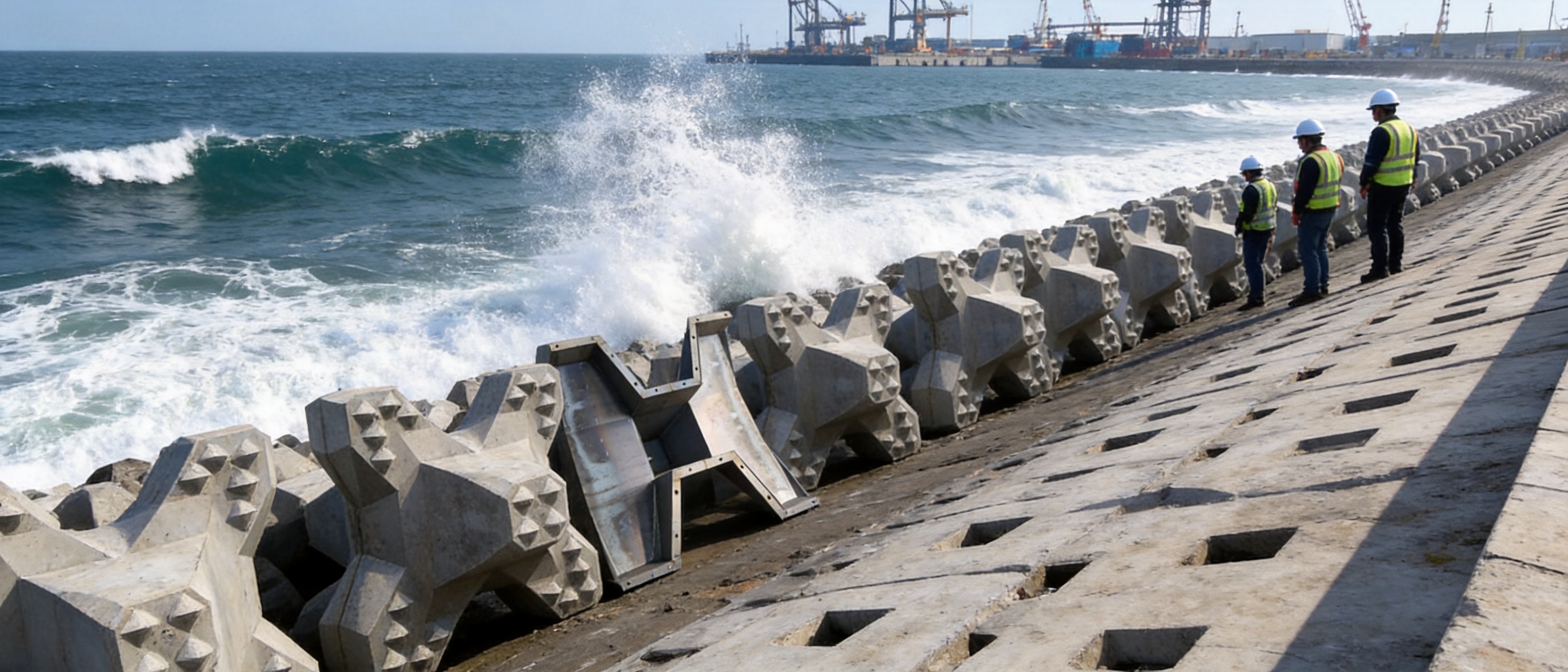
Precision CNC Laser Cutting and Dimensional Control
The accuracy of a complex steel mold begins with material preparation. Traditional manual cutting methods can introduce variations in edge position, angularity, and hole location. These variations may appear small on individual parts but become significant when several panels are assembled into a three-dimensional mold. CNC laser cutting provides a more controlled alternative.
Laser cutting follows digital production data and allows steel plates to be processed with consistent dimensions. The cutting head follows programmed paths, producing clean edges and repeatable profiles. This is especially useful for Accropod formwork because many surfaces meet at unusual angles. Accurate edges reduce the amount of manual grinding, correction, and forced fitting required during assembly.
Controlled cutting also improves the relationship between mating components. When two panels are intended to meet at a precise angle, dimensional variation at the edge can create gaps, steps, or local stress points. These imperfections may affect the concrete surface and may also make the mold more difficult to close. By producing components to a controlled tolerance, CNC processing helps maintain the intended shape throughout the complete assembly.
Laser processing is complemented by inspection at different stages. Before cutting, material specifications and plate thickness are checked. During production, components can be compared with approved drawings or digital templates. After assembly, critical dimensions, angles, diagonals, opening clearances, and contact surfaces should be verified. This full-process approach is more reliable than checking only the finished exterior.
For large or non-standard coastal armor units, dimensional control is particularly important because the molds may be difficult to correct after welding. A small error in one component can be magnified when multiple sections are joined. Accurate preparation reduces the need for corrective work and helps protect the surface quality of the finished mold.
Advantages of Laser-Processed Components
Clean and accurate cutting supports better weld preparation. Consistent edge conditions help fabricators achieve more uniform weld joints, which contributes to frame strength and dimensional stability.
Laser cutting also improves repeatability. If a project requires several molds, the same digital production data can be used to produce corresponding components. This helps ensure that all molds generate blocks with comparable dimensions and reduces the risk of production differences between mold sets.
Another advantage is reduced material waste. Carefully programmed nesting can arrange components efficiently on steel plates. Better utilization of raw material can reduce manufacturing costs and support more economical project planning.
Because laser cutting is compatible with complex profiles, it is suitable for the irregular geometry required by Accropod blocks. The process reduces dependence on manual templates and makes it easier to manufacture customized formwork when a project has specific unit dimensions or structural requirements.
Symmetrical Split Design for Reliable Demolding
Demolding is one of the most difficult stages in the production of complex concrete armor units. A block can be structurally sound yet still be damaged when the steel mold is opened. Sharp re-entrant areas, deep contact surfaces, and uneven release forces may cause concrete to chip, crack, or remain attached to the mold. Repeated damage can reduce the service quality of the blocks and increase repair costs.
The symmetrical split design addresses this problem by dividing the formwork into balanced sections. Instead of forcing the entire block out through one narrow opening, the mold can separate in a controlled manner around the cast unit. The release movement is distributed across corresponding sides, reducing the risk of concentrated stress at corners and edges.
A balanced split also supports more predictable operation. Operators can follow a consistent opening sequence and avoid improvised prying or impact methods. This protects both the concrete product and the steel mold. Excessive force during demolding may deform a panel, damage a hinge, loosen a connection, or create a permanent alignment problem. A properly designed opening system reduces the need for such force.
The split lines are positioned to limit visible marks on important concrete surfaces and to avoid unnecessary interference with the interlocking geometry. Joints are designed to remain stable during casting while still allowing the mold sections to separate after the concrete has gained sufficient strength. The practical result is a smoother production cycle and less risk of edge breakage.
Reduced Concrete Adhesion
Concrete adhesion can occur when cement paste enters small gaps, rough weld areas, surface imperfections, or poorly aligned joints. If the mold is opened before the adhesion is released, the concrete may tear or chip. If workers must hammer or pry the mold repeatedly, both the block and the formwork can be damaged.
Accurate panel fitting, smooth interior surfaces, and appropriate release-agent application work together to reduce this problem. The design does not eliminate the need for proper casting practice, but it provides a more favorable surface and opening condition. Regular cleaning is also easier when the mold has accessible sections and fewer irregular areas that trap hardened concrete.
Lower adhesion improves the useful production cycle. Workers spend less time correcting damaged blocks, removing concrete residue, or repairing mold components. Over a large coastal project involving hundreds or thousands of units, these small improvements can produce substantial savings in labor and schedule time.
Structural Strength and Service Durability
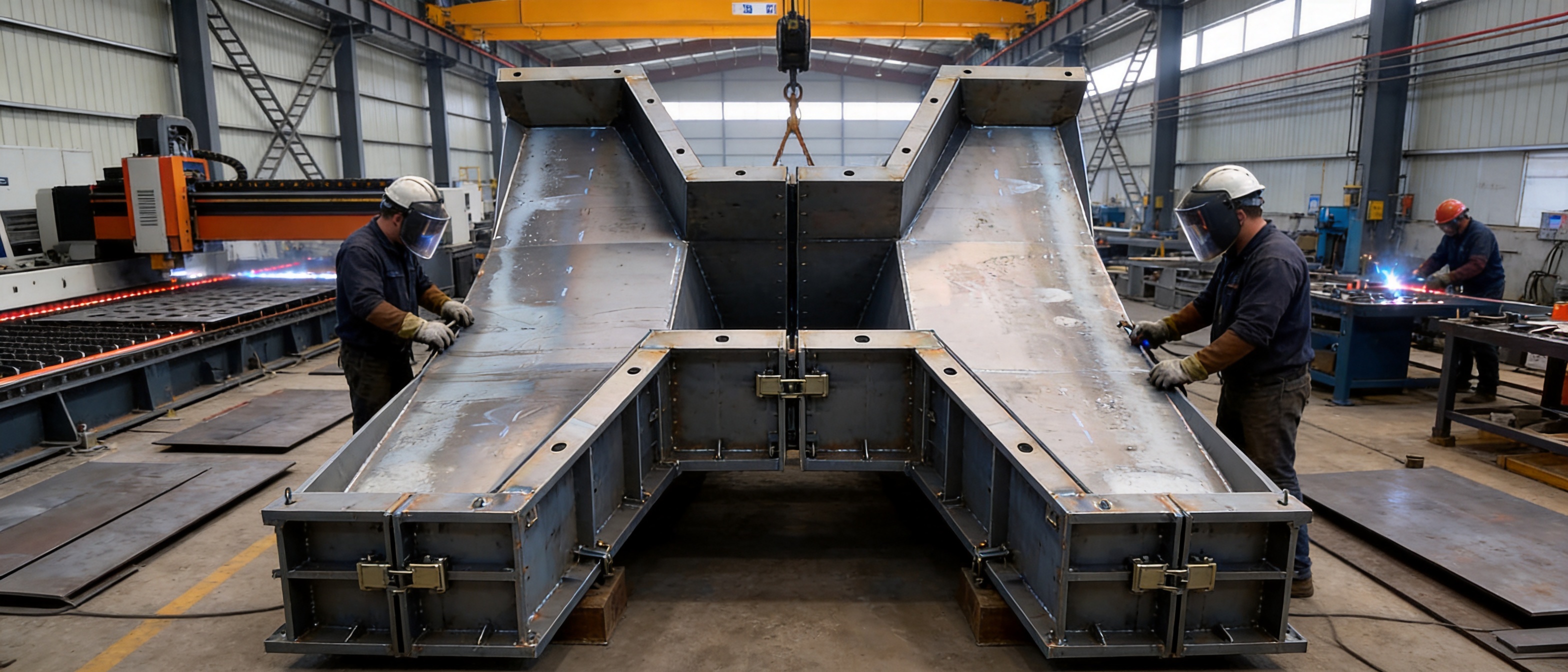
A casting mold must remain stable during repeated filling, vibration, lifting, movement, and storage. The weight of fresh concrete can be considerable, and vibration may amplify local stresses at connections and support points. If the mold is not sufficiently rigid, its panels may move or distort, changing the dimensions of the block.
The Accropod mold uses reinforced steel construction to support the casting process. Structural members are placed according to the geometry and load paths of the assembly. Reinforcement can be added around large panels, corners, hinge areas, locking points, and lifting attachments. These details help maintain alignment and extend the practical service life of the equipment.
Welding quality is essential to the performance of the mold. Uneven or incomplete welds can reduce strength and create surface irregularities. Professional fabrication practices include suitable joint preparation, controlled welding parameters, qualified procedures, and visual inspection. For critical components, additional inspection methods may be applied according to project requirements.
Nantong Hyson Road And Bridge Formwork Co., Ltd. applies AWS and EN welding craftsmanship within its manufacturing operations. Its quality system is supported by ISO 9001 practices, while its broader product experience includes steel formwork, scaffolding, heavy steel structures, bridge components, and industrial fabrication. This cross-sector experience is valuable because complex mold production requires both precision fabrication and a practical understanding of construction-site use.
Surface treatment can be selected according to the intended service environment. Coating systems may be applied to exposed steel surfaces to help resist rust during storage, transportation, and repeated use. Particular attention should be given to weld zones, corners, underside areas, and locations where water may collect. In marine or coastal environments, corrosion protection is an important part of the overall equipment life-cycle strategy.
Durability should also be considered in terms of repairability. Wear parts, clamps, hinges, and selected reinforcement components should be accessible for inspection and maintenance. A mold that can be repaired without complete reconstruction offers greater value over the duration of a project.
Comparison with Conventional and Low-Precision Molds
Many basic steel molds are produced using general fabrication methods. Such molds may be adequate for simple rectangular or cylindrical products, but they can present serious limitations when used for complex interlocking armor units. Manual cutting and fitting can produce inconsistent angles. Excessive welding distortion can affect the final shape. Poorly located split lines can make demolding difficult.
The principal difference between a precision Accropod mold and a low-precision alternative is the integration of design, processing, assembly, and quality control. Precision is not created by laser cutting alone. It is maintained through the entire manufacturing chain, from digital drawings and material preparation to welding, inspection, trial assembly, and final delivery.
| Evaluation Item | Precision Accropod Formwork | Basic Low-Precision Mold |
|---|---|---|
| Geometry control | Based on controlled drawings and CNC-processed components | Often dependent on manual templates and fitting |
| Panel alignment | Designed mating surfaces and controlled assembly | May require repeated adjustment during assembly |
| Demolding method | Symmetrical split structure for balanced release | May rely on prying, impact, or forced separation |
| Concrete edge protection | Reduced adhesion and controlled opening movement | Higher risk of chipping, cracking, and edge damage |
| Repeatability | Suitable for multiple molds and repeated production cycles | Greater variation between units or mold sets |
| Manufacturing efficiency | Less corrective work and more predictable assembly | More grinding, adjustment, and repair may be required |
| Customization | Adaptable to project-specific dimensions and handling needs | Customization may be limited by fabrication methods |
| Long-term value | Designed for maintenance, repeated use, and stable production | May experience early deformation or connection wear |
The comparison does not mean that every conventional mold is unsuitable. A well-built traditional mold can perform satisfactorily when its design, materials, and fabrication quality are properly controlled. The advantage of the Accropod formwork approach is that it is specifically optimized for the combination of complex geometry, repeated casting, and controlled demolding required by coastal armor production.
Manufacturing Process
1. Engineering Review and Technical Confirmation
Manufacturing begins with a review of the required block geometry, nominal dimensions, weight category, casting method, and operating conditions. The supplier and customer confirm the technical drawings, mold type, number of sections, opening sequence, lifting method, and any required project-specific features.
This stage is important because the mold must match the way the contractor intends to produce and handle the concrete units. A casting yard using overhead cranes may require lifting points different from a yard using forklifts or mobile lifting equipment. The required concrete strength and demolding time may also influence the opening arrangement and support design.
2. Digital Modeling and Production Data
After technical confirmation, the design is converted into production information. Panel profiles, connection points, reinforcement positions, and opening clearances are defined. The digital data helps identify possible interference between components before steel fabrication begins.
Digital preparation also supports repeat production. When multiple molds are ordered, common components can be processed using consistent data. This reduces variation and makes replacement parts easier to produce if required during a long project.
3. Steel Material Preparation
Steel plates and structural sections are selected according to the required strength, thickness, weldability, and service conditions. Material identification and basic quality checks are performed before processing. Plates should be free from excessive distortion, deep surface defects, and contamination that could affect cutting or welding.
Material thickness is selected to balance stiffness, handling weight, and fabrication practicality. Overly thin panels may deform, while unnecessarily heavy panels can increase cost and make daily operation more difficult. The design therefore considers both structural performance and production-yard ergonomics.
4. CNC Laser Cutting
Steel plates are cut using CNC laser equipment according to approved production data. The process creates the complex profiles required for the mold panels and connection components. Cut edges are inspected, and any burrs or localized irregularities are removed before assembly.
Proper cutting sequence and heat management help reduce distortion. When a part contains multiple openings or narrow sections, the order of cutting can influence its final shape. Experienced operators and controlled machine settings are therefore important to achieving reliable results.
5. Forming, Fit-Up, and Tack Welding
Cut components are positioned on fixtures or assembly platforms. Critical angles and reference dimensions are checked before permanent welding. Tack welds hold the assembly in place while the fabricators confirm that panels, supports, hinges, and locking parts align correctly.
Fit-up is a critical quality stage. If an error is discovered before final welding, it can usually be corrected with limited effort. If the same error is discovered after the entire assembly has been welded, correction may involve cutting, heating, grinding, or replacing components. Careful fit-up therefore improves both quality and manufacturing efficiency.
6. Controlled Welding
Permanent welding is performed using suitable procedures for the selected steel materials and joint configurations. Welding sequences are planned to reduce heat concentration and distortion. Opposing sides may be welded in a balanced order so that shrinkage forces do not pull the mold out of alignment.
Welds are cleaned and visually inspected. Particular attention is given to hinges, lifting lugs, locking brackets, frame intersections, and other areas that experience repeated loads. Where required by the project or applicable standards, additional non-destructive examination can be arranged for critical welds.
7. Grinding and Interior Surface Treatment
Interior surfaces are finished to reduce rough areas that might trap concrete. Excess weld spatter, sharp projections, and unnecessary irregularities are removed. The goal is not merely visual appearance; smooth and accessible surfaces support release, cleaning, and repeated production.
Care must be taken not to remove excessive material from structural welds. Finishing work should improve the contact surface without weakening the connection. The final surface condition is checked before coatings or release-agent preparation are applied.
8. Trial Assembly and Inspection
The mold is assembled in the factory to verify its opening and closing movement. The sections are checked for alignment, connection fit, locking action, clearances, and interference. Critical dimensions are measured against the approved drawings.
A trial assembly can reveal practical issues that may not be obvious in a two-dimensional drawing. For example, a worker may need additional access space to operate a clamp, or a lifting point may require repositioning to avoid interference with another component. Resolving these issues before shipment reduces installation delays at the project site.
9. Surface Protection, Marking, and Packing
After inspection, appropriate surface protection is applied to exposed steel areas. Components are marked to identify their position and assembly sequence. This is particularly useful when a mold consists of several similar-looking sections.
For transportation, movable parts are secured and vulnerable edges are protected. Packing is designed to reduce impact and deformation during handling. Assembly instructions, inspection records, and recommended operating information can be supplied with the equipment according to customer requirements.
Quality Control and Manufacturing Strengths
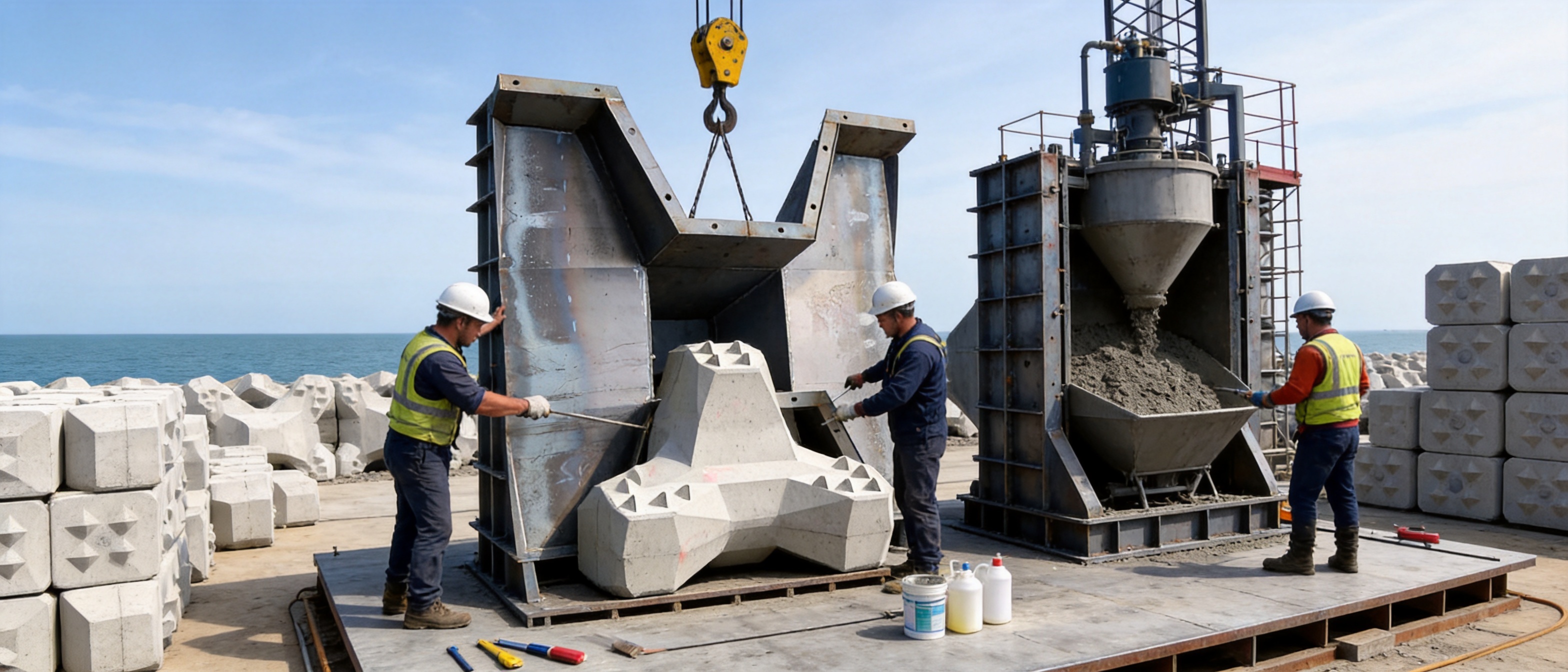
The quality of a complex steel mold depends on coordinated control rather than one isolated inspection. Nantong Hyson Road And Bridge Formwork Co., Ltd. combines automated processing with experienced steel fabrication. Its production capabilities include laser cutting, bending, welding, structural assembly, and custom OEM manufacturing.
The company operates under an ISO 9001 quality management framework and has experience supplying steel products for infrastructure and industrial projects. Its welding practices are aligned with AWS and EN requirements, and its broader product range includes bridge formwork, tunnel construction equipment, steel scaffolding, steel props, industrial structures, and heavy metal components.
This manufacturing background provides several advantages for Accropod mold production. First, the company understands that formwork must be used in real construction environments, not merely displayed as a fabricated steel object. Second, experience with heavy structural components supports appropriate reinforcement and connection design. Third, experience with non-standard OEM products helps the manufacturer adapt molds to project-specific requirements.
The company has also supplied products for major infrastructure projects and has worked with large engineering and construction organizations. Such experience encourages a disciplined approach to drawings, inspection, traceability, delivery planning, and customer communication. Coastal protection projects often involve strict schedules and large quantities, so a stable manufacturing system is as important as the individual mold design.
Quality control may include raw material checks, dimensional inspection after cutting, welding inspection, assembly verification, coating inspection, and final documentation. The precise inspection plan can be adjusted to the customer’s technical specification, purchase order, and project quality requirements.
Application Scenarios
Deep-Water Breakwaters
Deep-water breakwaters face strong wave action and may require heavy armor units on their outer slopes. Accropod blocks produced with accurate molds can form an interlocking armor layer designed to resist displacement and dissipate wave energy. The mold supports consistent unit production for projects where the outer armor must be installed systematically along a large length of breakwater.
Because deep-water construction can involve difficult lifting and placement operations, dimensional consistency is valuable. Uniform units are easier to identify, transport, store, and place according to the contractor’s installation plan. Accurate molds also reduce the number of rejected or repaired blocks that might interrupt marine construction work.
Port Expansion and Reclamation Projects
Port expansion projects often include newly reclaimed land, cargo terminals, access channels, and protective breakwaters. These facilities must remain operational while construction continues, making protection against waves and currents essential. Accropod armor units can be used around exposed sections of new port infrastructure.
A reliable mold supply helps the contractor maintain a steady production rate near the project site. The formwork can be adapted to the available casting area, crane capacity, and storage arrangement. Where production must continue in demanding weather or limited space, a practical split design can improve daily handling efficiency.
Coastal Erosion Defense
Coastal roads, urban shorelines, industrial facilities, and public infrastructure may require revetment systems to reduce erosion. Interlocking concrete units can be used on sloped protection layers where natural rock is unavailable, difficult to transport, or insufficient for the expected hydraulic conditions.
The mold supports the production of units with stable geometry and durable concrete surfaces. Properly designed and installed, the resulting revetment can help protect the shoreline from wave attack while allowing the structure to accommodate some settlement and local movement better than a rigid vertical wall.
River Mouths and Estuary Structures
Although Accropod blocks are commonly associated with marine works, similar hydraulic challenges can occur at river mouths, estuaries, navigation channels, and tidal embankments. Currents and combined wave action may erode exposed slopes and threaten nearby infrastructure. The formwork can be considered for these applications when the engineering design specifies compatible armor units and installation conditions.
Benefits for Precast Production Efficiency
A formwork system should be evaluated by its influence on the entire production cycle rather than only its purchase price. The main cycle includes mold preparation, assembly, release-agent application, concrete placement, vibration, curing, opening, cleaning, inspection, and preparation for the next casting.
The symmetrical split structure can shorten the demolding stage by reducing the need for impact or manual prying. Better dimensional control can reduce the number of defective blocks. Smooth internal surfaces can reduce cleaning time. Robust connections can limit maintenance interruptions. Together, these improvements can increase the number of usable blocks produced per shift.
Production stability is especially important for large coastal projects. If a contractor must cast thousands of armor units, a small defect rate can create a substantial quantity of rejected concrete. A mold that reduces edge breakage and shape variation supports better use of cement, aggregates, labor, crane time, and storage space.
Multiple molds can be operated in parallel when project schedules require higher output. Because CNC-based manufacturing supports repeatable component production, additional molds can be designed to match the first set. This simplifies operator training and reduces variation in the finished blocks.
The equipment can also support better worker safety. A controlled opening mechanism is preferable to improvised tools and excessive force. Accessible connection points and clear assembly procedures reduce the risk associated with awkward lifting, uncontrolled movement, and sudden release of the mold sections.
Installation and Operating Recommendations
Before the first casting cycle, the mold should be placed on a stable and level support surface. Uneven support can transfer distortion into the panels and affect the dimensions of the concrete block. The support arrangement should also allow workers to access locking devices and cleaning areas.
All connection points should be checked before concrete placement. Hinges, clamps, bolts, pins, and locking components must be fully engaged. The operator should confirm that the split sections are seated correctly and that there are no visible gaps likely to permit excessive leakage of cement paste.
The interior should be cleaned and coated with a suitable release agent. Release agent should be applied evenly and in the recommended quantity. Excessive application may affect the concrete surface, while insufficient application can increase adhesion. Product compatibility should be confirmed before use.
Concrete should be placed according to the approved mix design and casting procedure. Excessive vibration can increase pressure on the mold and may cause segregation or leakage. Insufficient vibration can create voids and honeycombing. The casting team should follow the project’s concrete quality requirements and avoid treating the steel mold as a substitute for proper concrete practice.
Demolding should take place only after the concrete reaches the required handling strength. Operators should open the mold in the planned sequence and avoid forcing a section that remains attached. If resistance is encountered, the cause should be investigated rather than overcome with uncontrolled impact.
After demolding, residual concrete should be removed using methods that do not damage the steel surface. The mold should be inspected for distortion, cracks, loose hardware, damaged coating, or accumulated material. Early maintenance is usually simpler and less expensive than repairing a problem after it affects several production cycles.
Maintenance and Lifecycle Value
Routine maintenance is essential for preserving mold accuracy. A maintenance schedule may include daily cleaning, periodic dimensional checks, lubrication of moving components, inspection of welds and locking points, and renewal of protective coatings where necessary.
Concrete residue should not be allowed to build up along split lines or connection surfaces. Hardened material can prevent full closure and create increasing gaps during later castings. It can also place excessive stress on clamps and hinges. Regular removal protects both the geometry and the operating mechanism.
Dimensional checks should focus on the locations most likely to experience wear or deformation. These may include panel corners, base supports, hinge brackets, lifting lugs, and locking points. If the mold is dropped, overloaded, or struck by equipment, a complete inspection should be conducted before it returns to production.
Protective coating maintenance is particularly important in coastal casting yards. Salt, humidity, wet concrete, and frequent washing can accelerate corrosion. Damaged coating should be cleaned and repaired according to the coating supplier’s recommendations. Internal surfaces should be kept smooth and free from corrosion products that could mark the concrete.
A durable mold produces value over many casting cycles. Its initial cost should therefore be considered together with concrete waste, labor, repair frequency, production speed, and expected service life. A precision mold may provide a lower total cost of ownership when it reduces rejected blocks and avoids frequent reconstruction or replacement.
Customization and OEM Support
Coastal projects differ in unit size, wave conditions, site access, production capacity, lifting equipment, and installation method. For this reason, a standard mold may not always be sufficient. OEM customization allows the formwork to be adapted to the contractor’s technical and operational requirements.
Customization can involve the overall block dimensions, Type A or Type B configuration, split arrangement, support frame, lifting points, locking hardware, working height, coating system, and identification markings. The number of mold sets can also be planned according to the required production rate and construction schedule.
Technical cooperation is important during customization. The customer should provide available block drawings, concrete specifications, handling methods, and any relevant project standards. The manufacturer can then review the information and identify practical details that may influence fabrication or operation.
Nantong Hyson Road And Bridge Formwork Co., Ltd. provides OEM steel fabrication supported by laser cutting, bending, welding, and assembly capabilities. Its experience with custom bridge formwork and large steel structural components allows it to support projects that require non-standard dimensions or integrated steel solutions.
OEM support is also useful when a contractor needs replacement panels, additional mold sets, modified locking parts, or compatible accessories after the initial order. Maintaining consistent production data can simplify future additions and help preserve dimensional consistency across the project.
Why Manufacturing Capability Matters
The performance of an Accropod formwork system is closely connected to the manufacturer’s ability to control heavy steel fabrication. A design can appear correct on paper but fail in operation if the steel is distorted, welds are inconsistent, joints are inaccessible, or the opening sequence has not been verified.
A manufacturer with integrated processing equipment can control more of the production chain internally. CNC laser cutting establishes accurate component profiles. Bending and forming equipment supports controlled panel geometry. Welding teams join the components with suitable procedures. Assembly and inspection confirm that the finished equipment functions as intended.
Integrated manufacturing also improves communication. When technical changes are required, engineering, cutting, welding, and assembly personnel can coordinate within one production system. This can reduce delays associated with outsourcing multiple stages to separate suppliers.
Hyson’s experience in heavy metal fabrication, industrial structures, scaffolding, bridge formwork, and infrastructure products provides a broad technical foundation for producing specialized steel molds. Its quality management practices, project experience, and OEM orientation support customers that require both standard products and customized engineering solutions.
Selection Guide for Project Buyers
When selecting an Accropod formwork supplier, buyers should first confirm that the manufacturer understands the complete production process. The supplier should be able to discuss not only steel thickness and dimensions but also concrete placement, demolding, cleaning, maintenance, and site handling.
Buyers should request technical drawings and clarify the nominal dimensions of the block, tolerance requirements, mold sections, opening direction, and locking system. The number of expected casting cycles should also be considered because it influences reinforcement, wear protection, and maintenance planning.
Welding and inspection capability should be reviewed. A supplier should be able to explain how distortion is controlled, how critical dimensions are verified, and what quality records can be provided. If the project requires AWS, EN, ISO, or customer-specific standards, these requirements should be confirmed before production starts.
Transportation and installation should also be considered. The mold must be practical to unload, assemble, and position at the casting yard. Lifting points, total weight, section dimensions, and packing arrangements should be coordinated with the customer’s equipment.
Finally, the buyer should evaluate after-sales support. Replacement parts, technical guidance, maintenance recommendations, and future customization can influence the overall project value. A supplier that remains available after delivery can help the contractor maintain production continuity.
Frequently Asked Questions
What is an Accropod formwork mold used for?
It is used to cast complex interlocking concrete armor units for breakwaters, revetments, port protection, coastal erosion control, and related hydraulic structures. The mold creates the three-dimensional shape required for the finished block.
Why is mold precision important?
Accropod blocks contain multiple angles and interlocking surfaces. Dimensional errors can cause concrete adhesion, edge breakage, poor fit between units, and inconsistent armor-layer performance. Precision helps produce repeatable blocks with stable geometry.
How does the symmetrical split design improve demolding?
The mold separates into balanced sections around the cast block. This distributes release movement and reduces concentrated pulling forces on corners and edges. It also reduces the need for impact tools or excessive manual force.
What are Type A and Type B models?
They are two standard mold configurations intended to meet different project requirements. The specific dimensions, unit weights, and application suitability should be confirmed against the project drawings and engineering specifications.
Can the mold be customized?
Yes. Customization may include block dimensions, mold configuration, split arrangement, lifting points, locking devices, support frames, surface treatment, and other features required by the casting yard or project.
What steel processing methods are used?
The main processes include CNC laser cutting, forming or bending, fit-up, controlled welding, grinding, trial assembly, dimensional inspection, and surface protection. The exact process depends on the mold design and customer requirements.
How can concrete edge damage be reduced?
Edge damage can be reduced through accurate mold geometry, smooth interior surfaces, appropriate release-agent application, adequate concrete strength before demolding, and a controlled opening sequence. Operators should never force a mold section that remains attached.
How long can the formwork be used?
Service life depends on steel quality, reinforcement, casting frequency, concrete practices, cleaning, storage, corrosion protection, and maintenance. A properly operated and maintained mold can support repeated production over the duration of a major project.
What inspection should be completed before delivery?
Inspection may include material verification, weld inspection, dimensional checks, opening and closing tests, locking verification, surface-condition inspection, coating checks, and trial assembly. The inspection scope can be adjusted to project standards.
Why work with a heavy steel fabrication manufacturer?
Complex molds require accurate cutting, controlled welding, structural reinforcement, and practical assembly design. A manufacturer experienced in heavy steel structures and infrastructure formwork is better positioned to manage these requirements as one coordinated production process.
Conclusion
The Accropod Formwork/Mold is a specialized production tool for one of the most demanding categories of precast concrete products. Its purpose is not merely to contain concrete but to reproduce a complex interlocking geometry accurately, repeatedly, and safely. The quality of the mold directly influences the quality of the armor units, the efficiency of the casting yard, and the reliability of the completed coastal protection system.
Its principal advantages include precision CNC laser-cut components, controlled steel fabrication, a symmetrical split structure, smoother demolding, reduced concrete adhesion, stronger dimensional repeatability, and adaptability to different project requirements. These features help reduce edge breakage, rework, production interruptions, and maintenance problems compared with poorly fitted or low-precision alternatives.
Manufacturing capability is equally important. Through laser cutting, bending, welding, inspection, surface protection, and trial assembly, Nantong Hyson Road And Bridge Formwork Co., Ltd. provides a coordinated OEM solution for specialized steel molds and related heavy fabrication. Its experience in infrastructure formwork, steel structures, scaffolding, and industrial components supports the production of equipment intended for real construction-site conditions.
For deep-water breakwaters, port expansion, coastal erosion defense, river-mouth protection, and other hydraulic projects, a properly engineered Accropod mold can improve both production consistency and long-term project value. When supported by suitable concrete technology, careful demolding, disciplined maintenance, and accurate installation, it becomes an important part of a reliable coastal protection manufacturing system.
References
1. Coastal Engineering Manual, U.S. Army Corps of Engineers.
2. Rock Manual: The Use of Rock in Hydraulic Engineering, CIRIA, CUR, and CETMEF.
3. Concrete Manual, U.S. Bureau of Reclamation.
4. ISO 9001, Quality Management Systems—Requirements.
5. EN 1090, Execution of Steel Structures and Aluminium Structures.
6. EN 74, Couplers, Spigot Pins and Baseplates for Use in Falsework and Scaffolds.
7. AWS D1.1, Structural Welding Code—Steel.
8. Principles of Coastal Sediment Processes and Coastal Protection Engineering, standard coastal engineering references.
9. Technical guidance for precast concrete production, mold design, concrete curing, and demolding practice.
Product: Accropod Formwork/Mold



- Location
- Group 3, Fangzhuang Village, Rucheng Subdistrict, Rugao City, Nantong, Jiangsu, China
- Follow us
- Phone
- +86-13646196162
- info@hysonindustry.com
