 +86-13646196162
 info@hysonindustry.com




 русский
 عربى



Heavy-Duty Steel Structures and Large Structural Components for Modern Infrastructure
 2026.09.29
Content
- 1 Introduction to Industrial Steel Structure Manufacturing
- 2 What Is an Industrial Steel Structure?
- 3 Core Advantages of Heavy-Duty Steel Structures
- 4 Integrated Heavy Metal Fabrication Capabilities
- 5 Manufacturing Process Overview
- 6 Competitive Advantages Over General Fabrication Suppliers
- 7 Engineering and Design Coordination
- 8 Safety, Reliability, and Service Performance
- 9 Applications Across Multiple Industries
- 10 How to Select a Steel Structure Manufacturer
- 11 Information Required for an Accurate Quotation
- 12 Why Factory-Fabricated Steel Can Reduce Project Risk
- 13 Maintenance and Lifecycle Considerations
- 14 Commitment to Customized Steel Solutions
- 15 Frequently Asked Questions
- 15.1 What types of steel structures can be manufactured?
- 15.2 Can steel components be produced according to customer drawings?
- 15.3 What cutting technology is available?
- 15.4 Why is welding quality important in a steel structure?
- 15.5 What standards are associated with the products?
- 15.6 Can the supplier provide surface treatment and packaging?
- 15.7 How does factory fabrication improve installation?
- 15.8 Can large steel components be divided into transportable modules?
- 15.9 What information should be included in an inquiry?
- 15.10 What makes an experienced heavy-metal fabricator different from a general workshop?
- 16 Conclusion
- 17 References
- 18 Product: Steel Structure
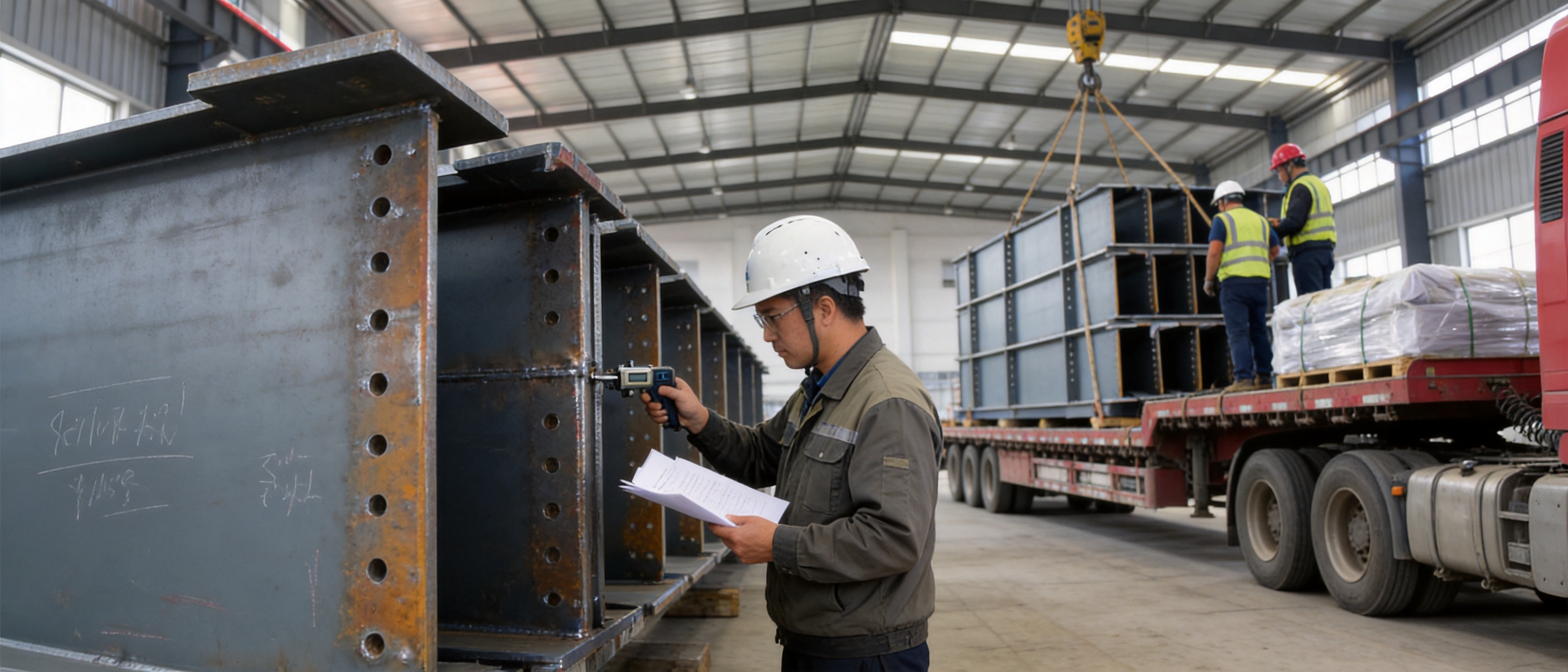
Introduction to Industrial Steel Structure Manufacturing
Steel structures are essential to modern construction, infrastructure, manufacturing, logistics, energy, agriculture, mining, and transportation. From industrial workshops and warehouses to bridge components, equipment platforms, processing plants, and large public facilities, steel provides the strength, adaptability, and construction efficiency required for demanding projects. However, the performance of a steel structure depends on far more than the raw material. Engineering accuracy, plate quality, fabrication capability, welding control, dimensional inspection, corrosion protection, packaging, and project coordination all influence the final result.
For this reason, buyers increasingly seek a manufacturing partner capable of producing complete, customized, and ready-to-install steel components rather than purchasing isolated steel parts from multiple suppliers. A reliable supplier must understand the relationship between design drawings, fabrication tolerances, connection details, site installation, load transfer, and long-term service conditions. It must also be able to process heavy plates, manufacture large components, and maintain consistent quality across repeated production batches.
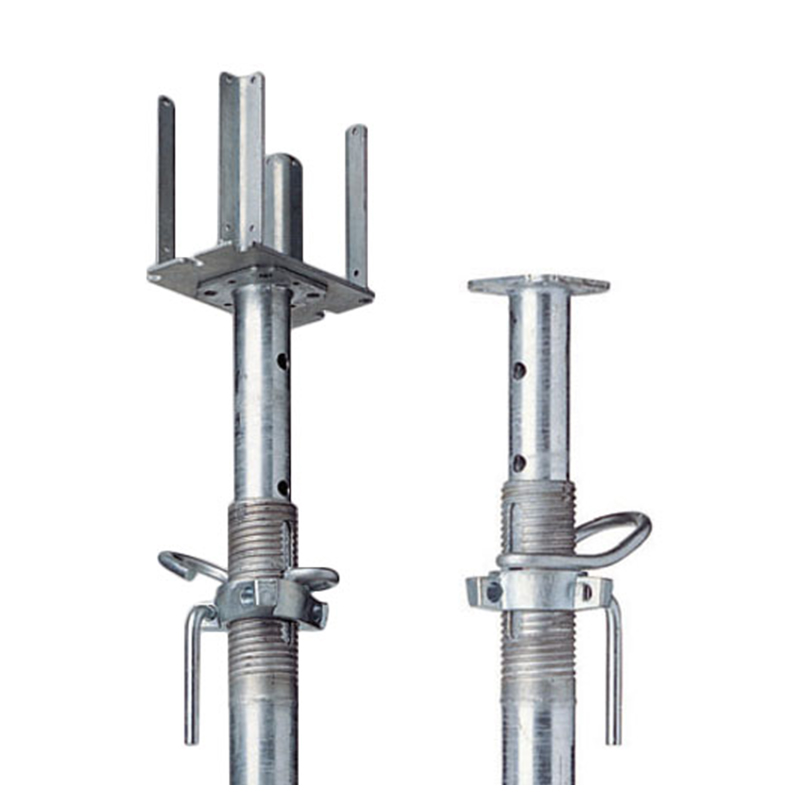
Nantong Hyson Road And Bridge Formwork Co., Ltd. provides custom steel structures and heavy metal fabrication for international construction and industrial applications. Its product capabilities cover industrial steel structures, large structural components, bridge and infrastructure steelwork, steel formwork, scaffolding-related components, and OEM fabrication. By combining automated processing equipment with experienced fabrication teams, the company supplies structural components designed for efficient transportation, installation, and long-term use.
The company’s manufacturing approach integrates CNC steel plate cutting, precision bending, assembly, welding, inspection, and finishing. Its experience in large infrastructure projects has helped establish production procedures suitable for non-standard and heavy-duty components. Supported by ISO 9001 quality management, AWS and EN welding craftsmanship, and products associated with BS1139 and EN74 requirements where applicable, the manufacturer focuses on stable quality and dependable performance.
This article explains the characteristics of industrial steel structures, the manufacturing processes used to produce them, the advantages of purchasing from an experienced heavy-metal fabrication supplier, and the factors that should be considered when selecting a customized steel structure partner.
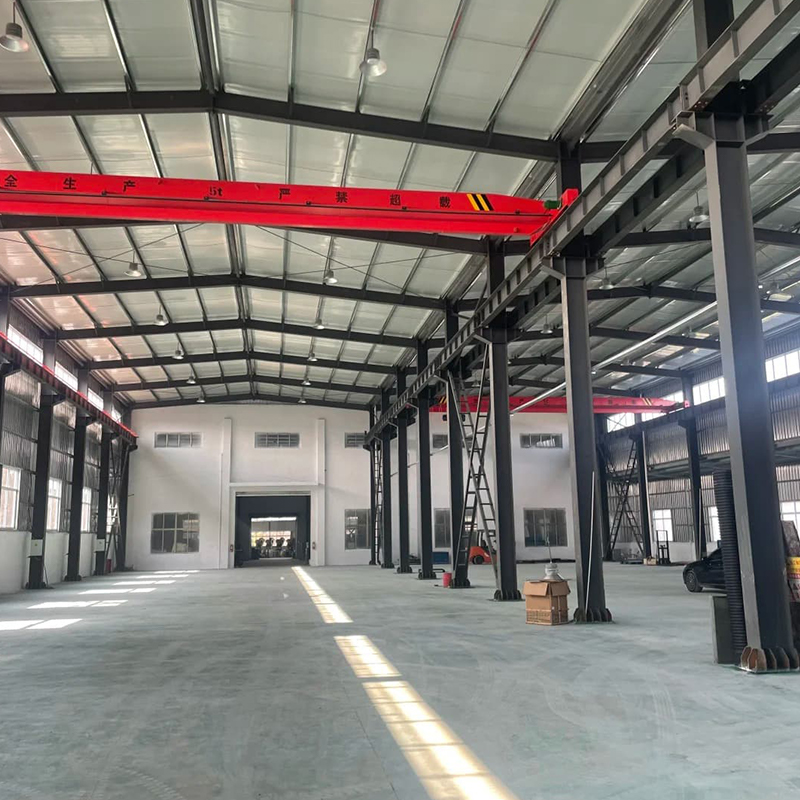
Steel Structure
What Is an Industrial Steel Structure?
An industrial steel structure is an engineered assembly of steel members, plates, connection components, and supporting elements designed to carry loads and create a stable built environment. Depending on the project, the structure may include columns, beams, trusses, frames, braces, platforms, equipment supports, roof systems, stairways, walkways, base plates, embedded parts, and special connection assemblies.
Unlike standardized consumer products, structural steelwork is frequently manufactured according to project-specific drawings. Dimensions, plate thicknesses, connection arrangements, hole positions, weld sizes, surface treatments, and packaging requirements may vary from one project to another. A structure designed for a warehouse may have different requirements from one used in a bridge approach, thermal power facility, mining installation, agricultural processing plant, or transport terminal.
Steel structures can be designed as primary load-bearing systems or as secondary components connected to concrete, masonry, equipment, or existing steel frames. They may be supplied as individual parts, partially assembled modules, or complete structural packages. The appropriate supply method depends on transportation limitations, site conditions, available lifting equipment, installation sequence, and the project schedule.
Typical Steel Structure Applications
Industrial workshops and warehouses commonly use steel columns, roof frames, purlins, bracing systems, mezzanines, loading platforms, and equipment supports. These components allow large column-free spaces and can be adapted to different production layouts. If the internal use of a building changes, steel frames are often easier to modify or extend than heavy conventional structures.
Infrastructure projects may require steel girders, maintenance platforms, access systems, bridge components, embedded steel parts, temporary construction structures, and special-purpose support frames. These components must often be fabricated to demanding dimensional and connection requirements because they interact with concrete, bearings, mechanical equipment, or other structural systems.
Energy and industrial facilities use steel structures for pipe racks, machinery bases, service platforms, stair towers, maintenance walkways, support frames, and enclosure systems. These applications require attention to vibration, equipment alignment, access, operating temperatures, maintenance loads, and environmental exposure.
Mining, agriculture, and transportation projects may require heavy frames, hopper supports, conveyor structures, storage systems, loading platforms, machine bases, and large structural assemblies. In such applications, strength and durability must be combined with practical installation and maintenance considerations.
Core Advantages of Heavy-Duty Steel Structures
High Strength-to-Weight Ratio
Steel offers a high strength-to-weight ratio, allowing engineers to design strong structural members without using excessive material. This can reduce the dead load imposed on foundations and supporting systems. It may also simplify transportation, lifting, and installation when the structure is divided into practical modules.
The strength of steel is especially valuable when a project requires long spans, elevated platforms, heavy equipment support, or large open areas. Properly designed steel frames can carry substantial loads while maintaining an efficient geometry. The final performance depends on the selected grade, member dimensions, connection design, welding procedure, and overall structural engineering.
Design Flexibility
Steel can be cut, bent, drilled, assembled, welded, and modified into a wide range of shapes. This flexibility supports customized solutions for unusual site layouts, non-standard equipment, complex connection zones, and phased construction. Manufacturers can combine plates, rolled sections, box members, tubular elements, stiffeners, brackets, and embedded parts to create a complete structural assembly.
Design flexibility also supports future expansion. A workshop may require additional crane beams, a warehouse may need a mezzanine, or an industrial facility may need new service platforms. When the original steelwork is properly documented and engineered, modifications can often be integrated more efficiently.
Fast Site Installation
Much of the fabrication work can be completed in a controlled factory environment before components arrive at the construction site. This reduces the amount of cutting, drilling, fitting, and welding required on site. Pre-fabricated components can be labeled, packed by installation sequence, and delivered with drawings and inspection records.
Factory production can also reduce exposure to weather-related delays. Although site conditions still affect erection, a higher degree of prefabrication generally improves schedule control and reduces the risk of inconsistent field workmanship.
Long-Term Durability
Steel structures can provide long service life when material selection, fabrication, welding, corrosion protection, drainage, and maintenance are properly addressed. Surface preparation and coating systems can be selected according to indoor, outdoor, coastal, chemical, industrial, or high-humidity environments.
Durability is not achieved by coating alone. Water traps, incomplete welds, sharp edges, unsealed cavities, damaged transport surfaces, and poor drainage can shorten service life. A capable manufacturer considers these factors during detailing and fabrication, helping the customer receive a structure that is practical to maintain.
Efficient Quality Control
Factory production allows material identification, cutting accuracy, welding control, dimensional inspection, and final documentation to be managed through a defined quality system. Components can be checked before shipment, reducing the possibility of discovering major errors after delivery.
A controlled manufacturing environment also supports repeatability. When a project involves multiple identical frames, brackets, columns, or platforms, standardized procedures help maintain consistent dimensions and connection positions across the entire order.
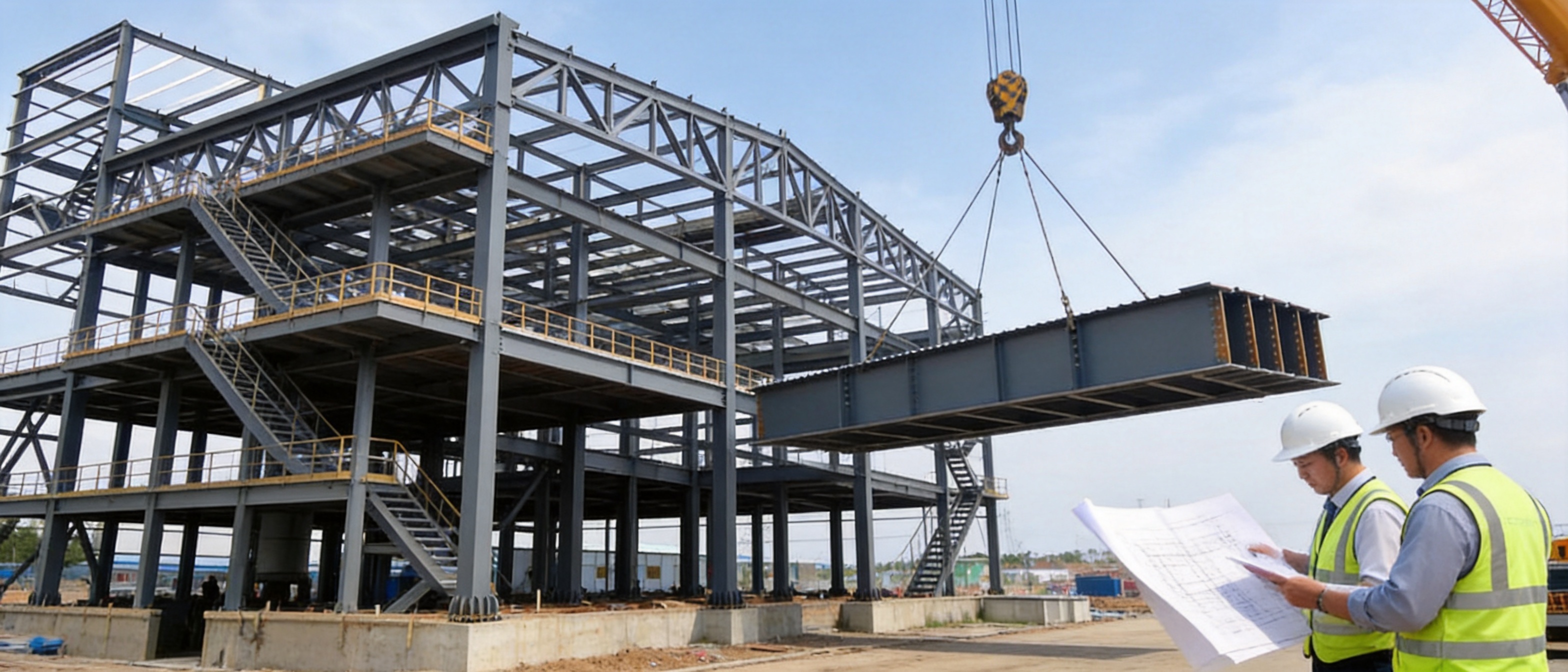
Integrated Heavy Metal Fabrication Capabilities
The quality of a completed steel structure is strongly influenced by the relationship between each production stage. If cutting is inaccurate, assembly becomes difficult. If bending is inconsistent, connections may not align. If welding is poorly controlled, dimensional distortion and structural defects may occur. If inspection is incomplete, problems may only be discovered during installation.
Hyson integrates multiple fabrication processes within its production system. This enables the company to manage steel plate cutting, component forming, assembly, welding, inspection, and packaging as connected stages rather than unrelated services.
CNC Steel Plate Cutting
CNC cutting is used to produce plates and profiles with controlled dimensions and repeatable shapes. Depending on material thickness and project requirements, cutting may be performed using suitable thermal cutting equipment, including laser-based systems for applications requiring high precision and clean edges.
Accurate cutting is particularly important for base plates, gussets, stiffeners, flange plates, connection plates, brackets, and components with multiple bolt holes or weld interfaces. Digital cutting programs can help reduce manual layout errors and improve material utilization. Before cutting, the production team must confirm the drawing revision, material specification, plate thickness, part identification, and required tolerances.
Laser cutting can be advantageous for detailed parts and thinner or medium-thickness plates requiring precise profiles. For larger and heavier plates, the selected cutting method must be matched to material thickness, heat input, edge quality, and production efficiency. A professional manufacturer selects the process according to the actual component rather than applying one method to every order.
Material Preparation and Traceability
Material preparation begins with the review of purchase specifications and production drawings. Steel plates, sections, pipes, and accessories should be checked for grade, thickness, dimensions, surface condition, and identification. Material traceability helps connect the final component with its original material documentation.
Traceability is important for infrastructure and industrial projects where clients may require inspection records, mill certificates, welding documentation, or quality dossiers. It also supports troubleshooting if a component requires future modification, repair, or replacement.
Forming and Bending
Some steel components must be formed into curved, angled, or folded profiles. Controlled bending helps produce brackets, channels, stiffeners, curved plates, support components, and special connection parts. The forming process must account for material thickness, bend radius, springback, grain direction where relevant, and the final dimensional requirements.
Accurate forming reduces the need for forced fitting during assembly. Forced fitting can introduce residual stress, misalignment, or unnecessary welding adjustments. By producing components close to their intended geometry, the manufacturer helps improve assembly efficiency and finished accuracy.
Assembly and Fit-Up
During fit-up, individual parts are positioned and temporarily secured according to approved drawings. Assembly fixtures, jigs, reference points, and measuring tools may be used to control alignment. Important checks include overall length, width, height, squareness, diagonal dimensions, hole positions, flange alignment, and connection interfaces.
Effective fit-up is essential for large structures because even small errors can accumulate across long beams, frames, or modular assemblies. The production team must also consider weld shrinkage and distortion before final welding. Tack welds, temporary supports, balanced welding sequences, and controlled heat input can help maintain the required geometry.
Welding and Welding Quality
Welding joins the main structural members and transfers forces through the completed assembly. Welding procedures must be selected according to steel grade, thickness, joint type, position, service conditions, and applicable standards. Operators must understand joint preparation, preheating requirements where applicable, electrode or wire control, shielding, heat input, interpass temperature, and post-weld inspection.
Hyson applies AWS and EN welding craftsmanship in its manufacturing activities. These frameworks provide recognized approaches to welding procedure control, welder competence, joint quality, inspection, and documentation. The specific requirements for each project should be confirmed through the approved drawings, technical specifications, and quality plan.
Welding quality involves both visible and internal characteristics. Visual inspection may identify undercut, overlap, cracks, excessive spatter, incomplete profile, or dimensional problems. Depending on project requirements, additional non-destructive testing may be applied to selected welds. The inspection method should correspond to the importance of the joint, the loading condition, and the governing specification.
Dimensional Inspection
Large structural components require systematic dimensional inspection. Measurements may include member length, plate thickness, assembly diagonals, hole spacing, flange position, verticality, flatness, and connection alignment. Inspection is most effective when performed during production rather than only after the entire assembly is complete.
For components that must connect to concrete foundations or other fabricated modules, interface dimensions deserve particular attention. Anchor locations, base plates, embedded parts, bolt groups, and equipment mounting points should be checked against the latest approved drawings. Proper interface inspection helps reduce site modification and installation delays.
Surface Treatment and Protection
Surface treatment may include cleaning, degreasing, mechanical preparation, primer application, intermediate coating, finishing coats, galvanizing, or other specified systems. The choice depends on the environment, project specification, expected service life, appearance requirements, and maintenance plan.
Before coating, steel surfaces should be prepared to remove contaminants, loose scale, rust, oil, and other substances that could reduce adhesion. Coating thickness, curing time, environmental conditions, and repaired areas should be controlled and recorded when required.
Packaging and Shipment Preparation
Steel structures must be packaged in a way that protects connection surfaces, painted areas, machined interfaces, and smaller accessories during handling and transportation. Components may be grouped by erection zone, sequence, or assembly number. Proper labeling helps the installation team identify each piece without repeatedly opening every package.
Packaging also requires attention to lifting points, center of gravity, load stability, moisture protection, container limitations, and loading efficiency. Large structural components may need to be divided into transportable modules. The manufacturer and buyer should agree on shipment dimensions, weight limits, unloading methods, and site storage conditions before production is finalized.
Manufacturing Process Overview
The following table summarizes a typical production sequence for customized steel structures.
| Production Stage | Main Activities | Quality Focus | Customer Benefit |
|---|---|---|---|
| Engineering review | Drawing review, specification confirmation, connection analysis, production planning | Correct revision, materials, tolerances, and interfaces | Fewer design-related production errors |
| Material preparation | Receiving, identification, inspection, storage, and traceability | Grade, thickness, condition, and documentation | Reliable material consistency |
| CNC cutting | Plate profiling, part marking, hole preparation, and edge processing | Dimensions, cut quality, and part identification | Accurate and repeatable components |
| Forming and bending | Press forming, bending, shaping, and correction | Angle, radius, springback, and final geometry | Better fit-up and reduced site adjustment |
| Assembly | Positioning, tack welding, fixturing, and alignment | Squareness, diagonals, hole locations, and interfaces | Stable module geometry |
| Welding | Structural welding, reinforcement, attachments, and repairs | Procedure compliance, weld profile, and distortion control | Dependable load transfer |
| Inspection | Visual, dimensional, and specified non-destructive testing | Conformity with drawings and quality plans | Lower installation and operation risk |
| Surface treatment | Cleaning, coating, curing, and touch-up | Surface preparation and coating performance | Improved corrosion resistance |
| Packaging | Labeling, bundling, protection, and loading | Transport stability and component identification | Efficient delivery and installation |
Competitive Advantages Over General Fabrication Suppliers
Experience With Complex, Non-Standard Components
Many general metal workshops are equipped to fabricate simple brackets, frames, and light structural members. Heavy infrastructure and industrial projects require a broader capability. Components may be oversized, irregularly shaped, heavily welded, closely toleranced, or required to connect with concrete, bridges, machinery, or existing structures.
Hyson’s experience in road, bridge, and infrastructure-related manufacturing supports the production of non-standard components. Its background includes solutions associated with major projects such as the Sutong Yangtze River Bridge, Taizhou Bridge, and Sudan Thermal Power Plant. Experience with demanding projects can help a manufacturer understand the importance of documentation, repeatability, delivery coordination, and installation interfaces.
One Supplier for Multiple Processes
Using separate suppliers for cutting, bending, welding, inspection, and finishing can create communication gaps. Drawing revisions may not be transferred correctly, tolerances may be interpreted differently, and responsibility for dimensional problems may become unclear.
An integrated supplier can coordinate the complete manufacturing route. The same production team can review how a cut plate will be bent, how it will connect to another component, and how the final module will be transported. This improves accountability and makes it easier for the customer to receive a coordinated production package.
Combination of Automation and Skilled Craftsmanship
Automation improves repeatability, speed, and cutting accuracy. However, automated equipment alone cannot solve every structural fabrication challenge. Large assemblies still require experienced fitters, welders, inspectors, and production engineers who can recognize distortion, alignment risks, access limitations, and practical installation concerns.
Hyson combines automated processing equipment with skilled welding and assembly practices. This balance is valuable for projects that include both repetitive components and unique heavy assemblies. Digital production improves consistency, while experienced personnel handle the practical details that arise during fabrication.
Quality Management and International Orientation
International buyers often require a supplier to work with formal procedures, inspection records, approved drawings, material documents, and clear communication. ISO 9001 quality management provides a structured framework for controlling processes, responsibilities, records, and corrective actions.
Hyson also references BS1139 and EN74 requirements for applicable scaffolding and related products. While every steel structure must be evaluated according to its own governing standards, familiarity with international requirements helps support cooperation with overseas contractors, engineering firms, and procurement departments.
Infrastructure-Level Manufacturing Discipline
Supplying central state-owned enterprises and participating in large projects requires disciplined production and delivery. Large projects often involve multiple contractors, strict schedules, formal approvals, and significant consequences if components arrive late or cannot be installed as planned.
Manufacturing discipline developed through such projects can benefit private industrial customers as well. A warehouse extension, equipment platform, or agricultural processing facility may not have the same scale as a bridge, but it still requires correct dimensions, reliable connections, and predictable delivery.
OEM Customization
OEM customers may provide drawings, samples, digital models, performance requirements, or only a general concept. A capable manufacturer should be able to clarify missing details, identify production risks, recommend practical modifications, and deliver components according to the customer’s brand, packaging, marking, and documentation requirements.
Customization can include material grade, plate thickness, structural geometry, connection type, surface finish, module size, inspection scope, packaging method, and delivery sequence. The more clearly these requirements are defined before production, the more efficiently the manufacturer can prepare a suitable quotation and manufacturing plan.
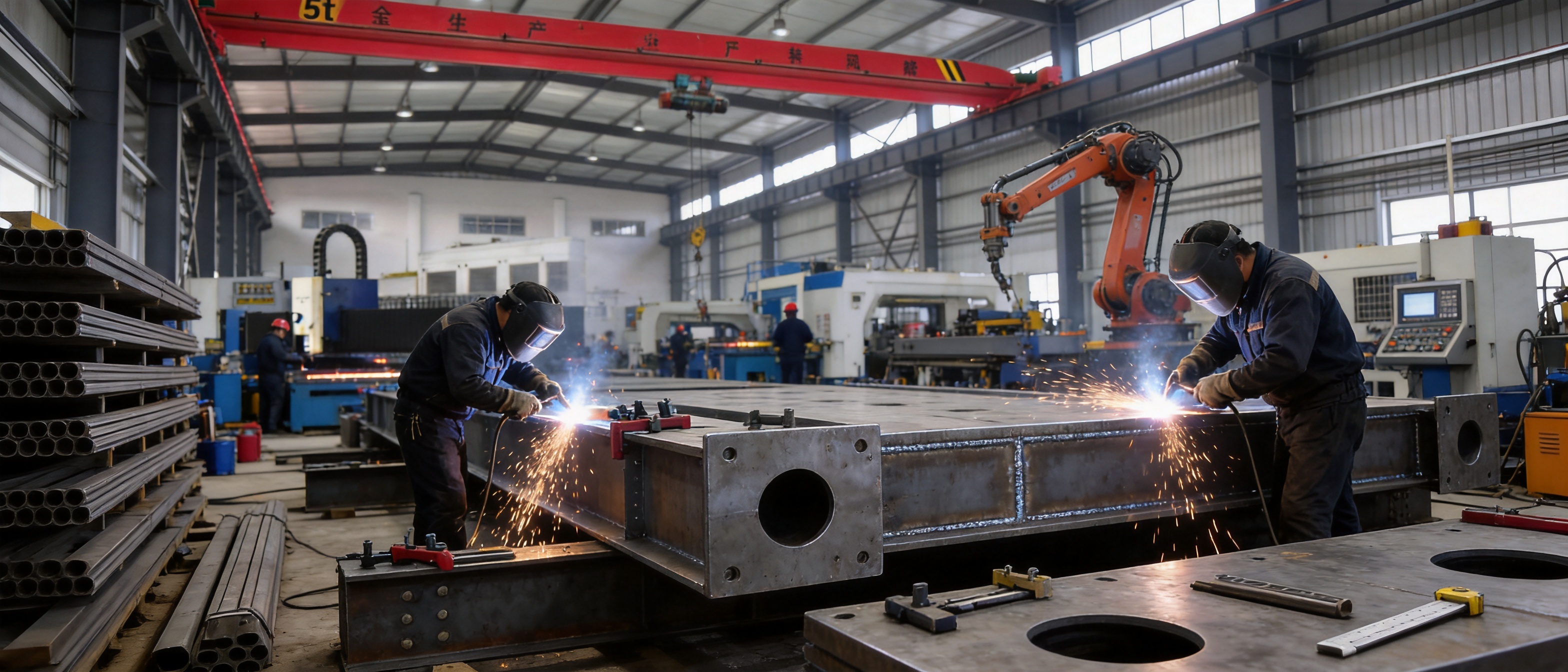
Engineering and Design Coordination
Successful steel fabrication begins with accurate information. Customers should provide the latest approved drawings, relevant design calculations, applicable standards, material requirements, corrosion conditions, load information, and expected service environment. If the supplier is responsible for engineering or shop drawings, the scope of responsibility should be clearly defined.
Drawing Review
A drawing review should examine overall dimensions, member sizes, plate thicknesses, weld symbols, bolt holes, connection details, lifting points, drainage features, access requirements, and assembly sequence. It should also identify whether parts are suitable for the selected cutting, forming, welding, and transport methods.
Design details that appear acceptable on paper may create practical fabrication problems. For example, a weld may be inaccessible after assembly, a stiffener may prevent coating access, a lifting point may not support the actual center of gravity, or a module may exceed the available transport envelope. Early review allows these issues to be addressed before material is cut.
Tolerance Management
Every steel structure includes dimensional tolerances. Tolerances should be realistic for the manufacturing method and appropriate for the connection type. Excessively tight tolerances may increase cost without improving performance, while loose tolerances may create installation problems.
Critical interfaces deserve specific tolerances. These may include base plates, anchor bolt groups, bearing seats, machinery mounting holes, splice connections, embedded components, and connections between factory-made modules. The manufacturer and engineering team should identify these locations and define how they will be inspected.
Welding Distortion Control
Welding introduces heat, and uneven heat distribution can cause distortion. The risk increases with long welds, thick plates, asymmetrical assemblies, restrained joints, and complex frame geometries. Distortion can be managed through joint preparation, welding sequence, balanced heat input, temporary fixtures, pre-setting, intermittent weld planning where permitted, and inspection after each major stage.
Corrective work should be controlled carefully. Excessive flame straightening, impact correction, or unauthorized cutting can affect material properties and structural integrity. Any significant correction should follow an approved procedure and be documented when required by the project quality plan.
Safety, Reliability, and Service Performance
Steel structures must be designed and fabricated with safety as the primary consideration. Load-bearing members, welds, bolts, base plates, and connections all contribute to the behavior of the completed system. A visually attractive component is not necessarily a reliable component if its materials, welds, connections, or load paths are inadequate.
Manufacturing quality supports structural reliability in several ways. Accurate member geometry ensures that loads are transferred as intended. Correct weld sizes help maintain connection capacity. Properly positioned holes allow bolts to be installed without forced alignment. Controlled surface treatment reduces corrosion risk. Clear markings reduce the possibility of incorrect assembly.
For structures supporting machinery, vibration and repeated loading should be considered. For outdoor structures, wind, rain, temperature changes, ultraviolet exposure, and corrosion should be evaluated. For industrial plants, chemicals, dust, heat, and maintenance access may influence the design and protective system.
Safety also includes handling and installation. Components should have suitable lifting points or clearly defined lifting methods. Heavy assemblies should be stable during transport and temporary storage. Packaging should protect workers from sharp edges and prevent unexpected movement during unloading.
Applications Across Multiple Industries
Construction and Building Projects
Steel frames, workshops, warehouses, stairways, platforms, canopies, mezzanines, and equipment supports can be manufactured for commercial and industrial buildings. Steel construction is particularly useful when a project requires rapid erection, open floor areas, future expansion, or integration with existing facilities.
Bridge and Infrastructure Projects
Infrastructure applications may include bridge components, construction support systems, access platforms, embedded steel parts, maintenance structures, and temporary or permanent support frames. These projects typically require careful coordination with civil works, concrete placement, road closures, lifting operations, and inspection procedures.
Energy Facilities
Power plants and energy facilities use structural steel for service platforms, pipe racks, equipment bases, access stairs, maintenance walkways, and support frames. These components must be designed around operating equipment and may need special corrosion, temperature, fire, or vibration considerations.
Mining and Heavy Industry
Mining facilities and heavy industrial plants require steel structures that can support equipment, conveyors, hoppers, chutes, platforms, and maintenance systems. Heavy plate fabrication and robust welded assemblies are often necessary because these environments involve impact, abrasion, dust, vibration, and high operational loads.
Agricultural and Storage Facilities
Agricultural buildings, storage warehouses, processing facilities, drying systems, and material handling installations use steel structures for large spans, equipment support, platforms, and service areas. Corrosion protection and ease of cleaning may be especially important in humid or dusty environments.
Transportation and Logistics
Logistics centers, terminals, loading areas, vehicle maintenance facilities, and transport infrastructure require durable structural components that support material flow and operational access. Steel frames can be customized for conveyors, loading platforms, shelters, lifting systems, and storage equipment.
How to Select a Steel Structure Manufacturer
Price is an important procurement factor, but it should not be the only consideration. A low initial quotation may become expensive if it excludes engineering review, inspection, coating, packaging, documentation, or correction of dimensional problems. Buyers should evaluate total project value, including manufacturing reliability and installation efficiency.
Review Production Capability
Ask whether the supplier can process the required plate thicknesses, member sizes, weld types, assembly dimensions, and surface treatments. Confirm whether cutting, bending, welding, inspection, and finishing are completed in-house or subcontracted. Subcontracting is not automatically a problem, but responsibilities and quality controls should be transparent.
Confirm Quality Systems
Review the supplier’s quality management system, inspection procedures, material traceability, welding qualifications, calibration practices, and document control. If the project requires international standards, confirm the manufacturer’s experience with the relevant specifications.
Evaluate Project Experience
Experience with comparable components is more useful than general claims about manufacturing capacity. Buyers should ask about previous bridge, industrial, energy, warehouse, mining, agricultural, or transportation projects with similar size, weight, complexity, and quality requirements.
Assess Communication and Engineering Support
Clear communication is essential when drawings change, site conditions differ, or installation details require clarification. A responsive supplier should identify technical questions early and provide organized feedback. Delayed communication can affect procurement, production, and construction schedules.
Check Packaging and Delivery Planning
Confirm how components will be marked, bundled, protected, and loaded. The delivery plan should consider container dimensions, road restrictions, port handling, crane capacity, site access, and installation sequence. Good packaging can significantly reduce receiving and erection time.
Information Required for an Accurate Quotation
Customers can improve quotation accuracy by providing complete technical information. Useful documents include general arrangement drawings, fabrication drawings, three-dimensional models, material specifications, quantity schedules, weld requirements, coating specifications, inspection requirements, packing instructions, delivery location, and desired production schedule.
When drawings are not yet complete, the customer should provide approximate dimensions, expected loads, application, environmental conditions, required standards, and preferred material. The supplier can then identify the information still needed before confirming a final price and production schedule.
The quotation should distinguish between raw material, cutting, forming, assembly, welding, inspection, coating, packaging, engineering, transportation, and optional services. It should also state assumptions, exclusions, validity period, payment terms, delivery conditions, and the process for handling design changes.
Why Factory-Fabricated Steel Can Reduce Project Risk
Factory fabrication transfers a significant portion of construction activity from an uncontrolled site environment to a controlled production facility. This allows better access to equipment, stable working conditions, repeatable procedures, and dedicated inspection resources.
Factory production can also reduce congestion at the construction site. Instead of bringing raw plate, welding equipment, cutting tools, and multiple fabrication teams to the project location, the site receives identified components prepared for erection. This may improve safety, reduce waste, and shorten the time required for structural installation.
Another advantage is the possibility of staged quality approvals. Customers can inspect materials, review trial assemblies, check weld quality, approve coatings, and examine final dimensions before shipment. Early approval reduces the risk of discovering major defects after the components have been delivered.
Maintenance and Lifecycle Considerations
Steel structures should be designed and manufactured with maintenance in mind. Areas that collect water, dust, chemicals, or debris may require special detailing. Access for inspection and repainting should be considered. Bolted connections, weld zones, drainage points, support interfaces, and coating damage are common inspection areas.
Routine maintenance may include cleaning, checking for corrosion, inspecting welds and connections, repairing damaged coatings, tightening accessible bolts when required, and monitoring deformation or unusual vibration. A maintenance schedule should reflect the environment and the importance of the structure.
Proper documentation supports lifecycle management. Drawings, material records, inspection reports, coating information, and component identification can help owners plan repairs or extensions. A professional manufacturer should be able to provide the documentation agreed in the purchase contract.
Commitment to Customized Steel Solutions
Hyson’s steel structure offering is built around customized manufacturing rather than a single fixed structural product. The company serves customers requiring heavy steel components, industrial frames, bridge-related structures, equipment supports, and integrated OEM fabrication. Its capabilities allow it to adapt production to project drawings and technical requirements.
The company combines steel plate laser cutting and other fabrication processes with AWS and EN welding practices. Its quality system, patent-supported manufacturing experience, and involvement in major infrastructure projects contribute to a production model focused on precision, safety, and repeatability.
For global buyers, this integrated capability can simplify procurement. Instead of coordinating separate suppliers for plate cutting, fabrication, welding, and finishing, customers can work with one manufacturing partner for a complete steel component package. This can improve communication, reduce interface risks, and support more predictable delivery.
Each project still requires proper engineering review and agreement on applicable standards. The final structure must be designed for its intended loads, environment, connections, and installation method. The manufacturer’s role is to convert approved technical requirements into accurately fabricated, inspected, protected, and deliverable components.
Frequently Asked Questions
What types of steel structures can be manufactured?
Customized industrial frames, workshops, warehouses, platforms, stairways, equipment supports, bridge-related components, embedded parts, pipe racks, heavy welded assemblies, machinery bases, and other non-standard steel components can be manufactured according to drawings and specifications.
Can steel components be produced according to customer drawings?
Yes. OEM production can be based on fabrication drawings, general arrangement drawings, three-dimensional models, samples, or agreed technical specifications. A drawing review should be completed before production to confirm materials, dimensions, tolerances, connections, inspection, coating, and packaging requirements.
What cutting technology is available?
The manufacturing process includes advanced CNC steel plate processing and laser cutting capabilities suitable for producing accurately profiled plates and structural parts. The appropriate method depends on plate thickness, geometry, edge requirements, quantity, and project specifications.
Why is welding quality important in a steel structure?
Welds transfer forces between structural members. Defective or incorrectly sized welds can reduce connection performance, create fatigue risks, and lead to distortion. Proper welding procedures, qualified personnel, controlled heat input, and suitable inspection help ensure dependable structural behavior.
What standards are associated with the products?
The company applies ISO 9001 quality management and references AWS and EN welding craftsmanship. BS1139 and EN74 requirements are also associated with applicable scaffolding and related products. The governing standard for a specific steel structure should be confirmed in the project specification.
Can the supplier provide surface treatment and packaging?
Yes. Surface preparation, coating systems, touch-up, labeling, bundling, protective packaging, and shipment preparation can be included according to project requirements. The environmental exposure and delivery method should be confirmed before production.
How does factory fabrication improve installation?
Factory fabrication allows components to be cut, assembled, welded, inspected, and marked before they reach the site. This reduces field cutting and fitting, improves erection organization, and can shorten the time required for installation.
Can large steel components be divided into transportable modules?
Large assemblies can often be designed and fabricated as modules based on road, container, port, lifting, and site limitations. Modularization should be planned during engineering so that temporary connections, lifting points, splice details, and installation sequence are properly coordinated.
What information should be included in an inquiry?
An inquiry should include drawings, quantities, material requirements, dimensions, application, standards, surface treatment, inspection level, packaging instructions, delivery destination, and desired schedule. If some information is unavailable, approximate project details can still help begin the technical discussion.
What makes an experienced heavy-metal fabricator different from a general workshop?
An experienced heavy-metal fabricator is better prepared to manage thick plates, large assemblies, complex welds, dimensional control, transport planning, formal documentation, and project-specific inspection. It can also identify practical production and installation risks before they become costly problems.
Conclusion
Industrial steel structures provide an efficient foundation for modern buildings, infrastructure, equipment systems, energy facilities, warehouses, transport projects, and heavy industrial operations. Their advantages include high strength, design flexibility, fast installation, durability, adaptability, and the ability to support customized engineering requirements.
These advantages can only be achieved when fabrication quality is controlled from beginning to end. Accurate CNC cutting, reliable material traceability, controlled forming, precise fit-up, qualified welding, dimensional inspection, suitable surface protection, and secure packaging all contribute to the performance of the final product.
Nantong Hyson Road And Bridge Formwork Co., Ltd. combines heavy steel fabrication experience with automated processing, international quality practices, and project-oriented production management. Its ability to provide custom steel structures and large structural components through an integrated manufacturing process gives buyers a practical alternative to fragmented sourcing.
For customers seeking a dependable OEM partner, the most important evaluation points are production capability, quality systems, engineering coordination, welding competence, inspection procedures, delivery planning, and experience with comparable projects. When these factors are properly addressed, factory-fabricated steel structures can deliver reliable performance, efficient installation, and long-term value across a wide range of industries.
References
American Welding Society. Structural Welding Code—Steel, AWS D1.1/D1.1M. Technical reference for structural steel welding requirements and quality practices.
European Committee for Standardization. EN welding and steel construction standards. General reference for welding procedures, fabrication quality, and structural steelwork.
International Organization for Standardization. ISO 9001: Quality Management Systems—Requirements. Framework for controlled production processes, documentation, and continual improvement.
British Standards Institution. BS1139, Metal Scaffolding. Reference standard for applicable scaffolding-related products and components.
European Committee for Standardization. EN74, Couplers, Spigot Pins and Baseplates for Use in Falsework and Scaffolds. Reference standard for applicable scaffold connection components.
International Organization for Standardization. ISO 3834, Quality Requirements for Fusion Welding of Metallic Materials. General reference for welding quality management and fabrication control.
American Institute of Steel Construction. Specification for Structural Steel Buildings. General reference for structural steel design, fabrication, erection, and quality considerations.
Product: Steel Structure



- Location
- Group 3, Fangzhuang Village, Rucheng Subdistrict, Rugao City, Nantong, Jiangsu, China
- Follow us
- Phone
- +86-13646196162
- info@hysonindustry.com
