 +86-13646196162
 info@hysonindustry.com




 русский
  عربى
عربى 


Flat Formwork Panels for Precise, Efficient, and Reusable Concrete Construction
 2026.08.02
Content
- 1 1. Understanding Flat Formwork
- 2 2. Why Flat Formwork Is Important in Modern Construction
- 3 3. Main Structural Components of Flat Formwork Panels
- 4 4. Key Advantages of Modular Flat Formwork
- 5 5. Comparison with Conventional Formwork Solutions
- 6 6. Advanced Manufacturing Process
- 7 7. Manufacturing Strengths and Quality Assurance
- 8 8. Application Scenarios
- 9 9. Installation and Operating Recommendations
- 10 10. Maintenance, Storage, and Reuse
- 11 11. How to Select the Right Flat Formwork
- 12 12. Custom OEM Flat Formwork Services
- 13 13. Flat Formwork for Rental Companies
- 14 14. Sustainability and Lifecycle Value
- 15 15. Advantages of Choosing an Experienced Steel Manufacturer
- 16 16. Frequently Asked Questions
- 16.1 16.1 What is flat formwork used for?
- 16.2 16.2 Is flat formwork suitable for building projects?
- 16.3 16.3 Can flat formwork be customized?
- 16.4 16.4 How does steel flat formwork compare with timber formwork?
- 16.5 16.5 Can the panels produce fair-faced concrete?
- 16.6 16.6 Are the panels compatible with different support systems?
- 16.7 16.7 How many times can flat formwork be reused?
- 16.8 16.8 What manufacturing technologies are used?
- 16.9 16.9 What information is needed for a quotation?
- 16.10 16.10 Can the manufacturer supply related steel products?
- 16.11 16.11 How should flat formwork be maintained?
- 16.12 16.12 Does a strong panel eliminate the need for engineering design?
- 17 17. Practical Purchasing Checklist
- 18 18. Conclusion
- 19 References
- 20 Product: Flat Formwork
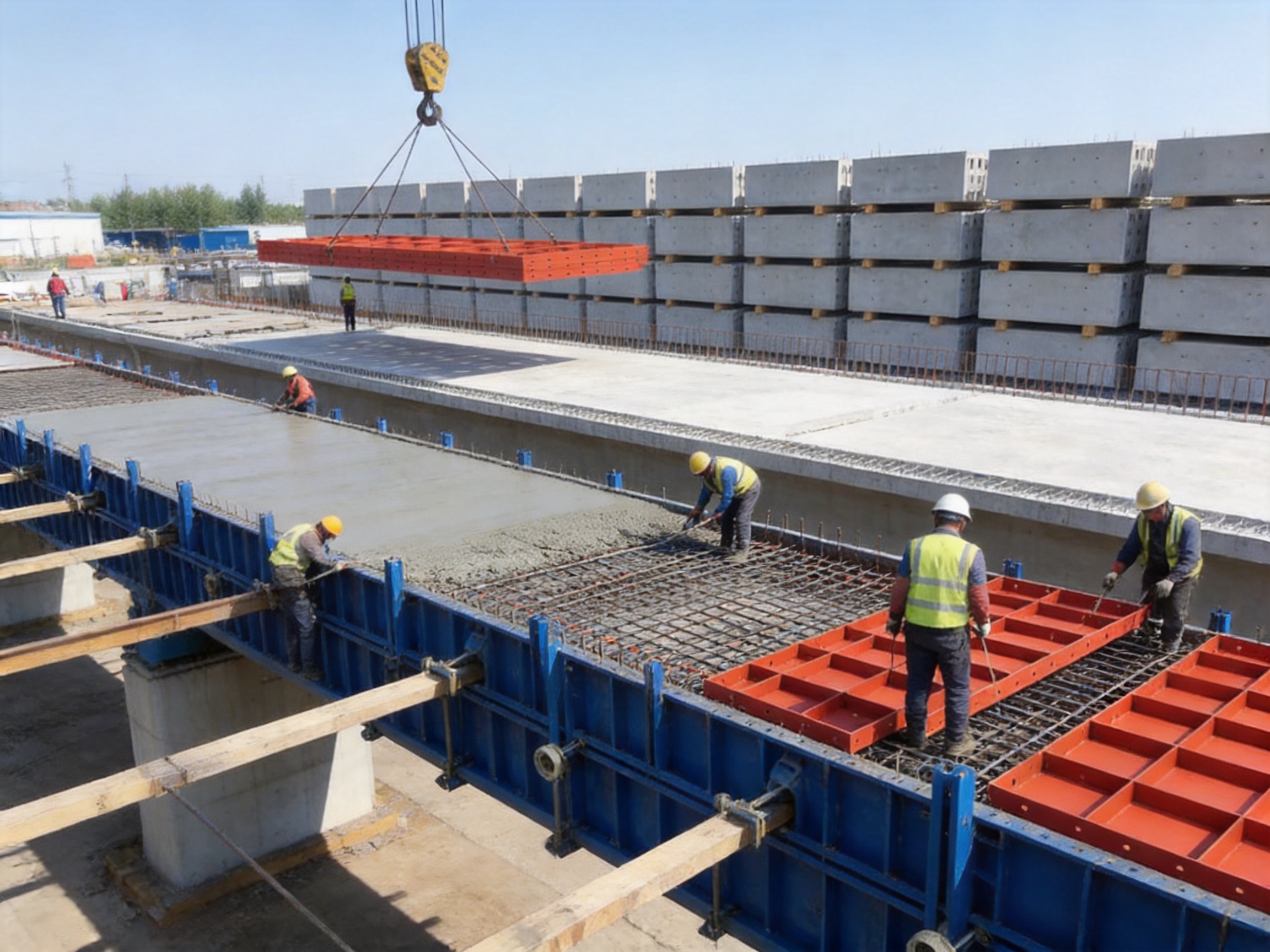
Flat formwork is a standardized steel formwork solution developed for the efficient casting of flat and regular concrete structures. It is used in building construction, infrastructure projects, precast production, hydraulic engineering, and industrial facilities where dimensional accuracy, surface quality, structural stability, and repeated use are important. By combining modular panel dimensions, high-strength steel, reinforced ribs, precision fabrication, and practical connection details, flat formwork provides contractors with a dependable alternative to improvised timber systems and inconsistent low-grade panels.
Modern construction projects require more than a temporary surface for containing fresh concrete. Formwork must maintain its geometry under pressure, support repeated assembly and dismantling, connect efficiently with supporting systems, and produce a concrete surface that meets project specifications. It must also be easy to transport, store, inspect, repair, and reuse. Flat formwork addresses these requirements through a standardized and adaptable design intended for flat concrete pouring.
This article examines the structure, manufacturing process, performance advantages, applications, selection factors, and quality considerations of modular flat formwork panels. It also explains how advanced steel processing, CNC cutting, professional welding, surface treatment, and process control contribute to reliable formwork performance in demanding construction environments.
1. Understanding Flat Formwork
Flat formwork is a modular panel system used to create a temporary mold for planar concrete structures. The panels are positioned horizontally or vertically according to the construction requirement and are supported by appropriate props, frames, beams, brackets, or other compatible support systems. Once the concrete reaches the required strength, the formwork can be removed, cleaned, inspected, and reused in another section of the project.
The term “flat formwork” generally refers to panels intended for regular, planar concrete surfaces rather than curved, heavily angled, or highly specialized geometries. Typical examples include floor slabs, roof slabs, ground slabs, bridge decks, tunnel slabs, station platforms, precast floor units, and industrial foundation surfaces.
The design is based on modularity. Each panel has standardized dimensions and connection points, allowing multiple units to be combined into larger pouring areas. This reduces the need to fabricate a completely new form for every project section. Contractors can use the same panel family for different dimensions by changing the layout, adding edge components, or integrating supplementary panels.
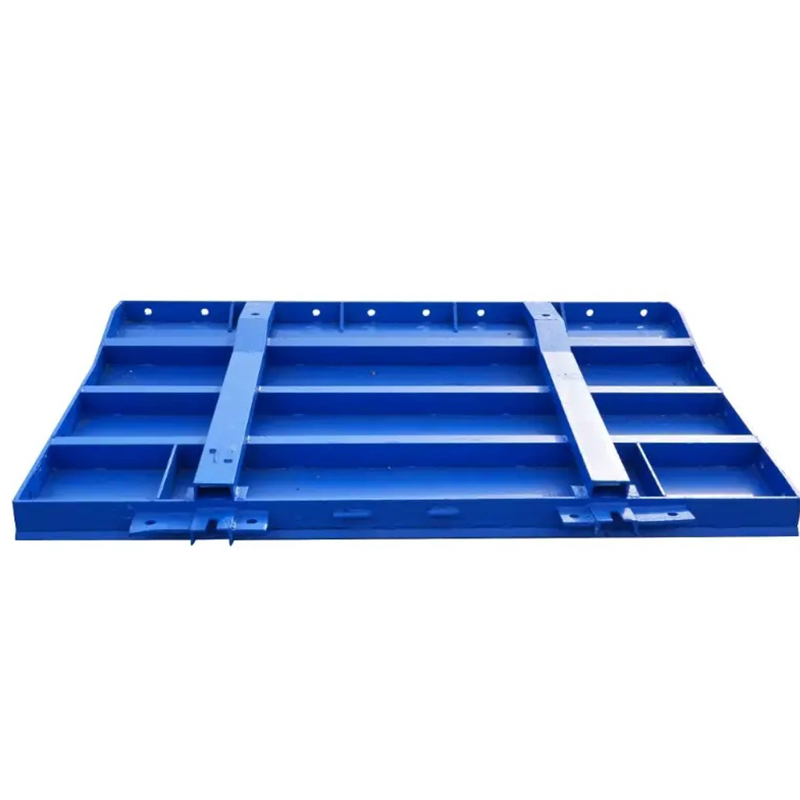
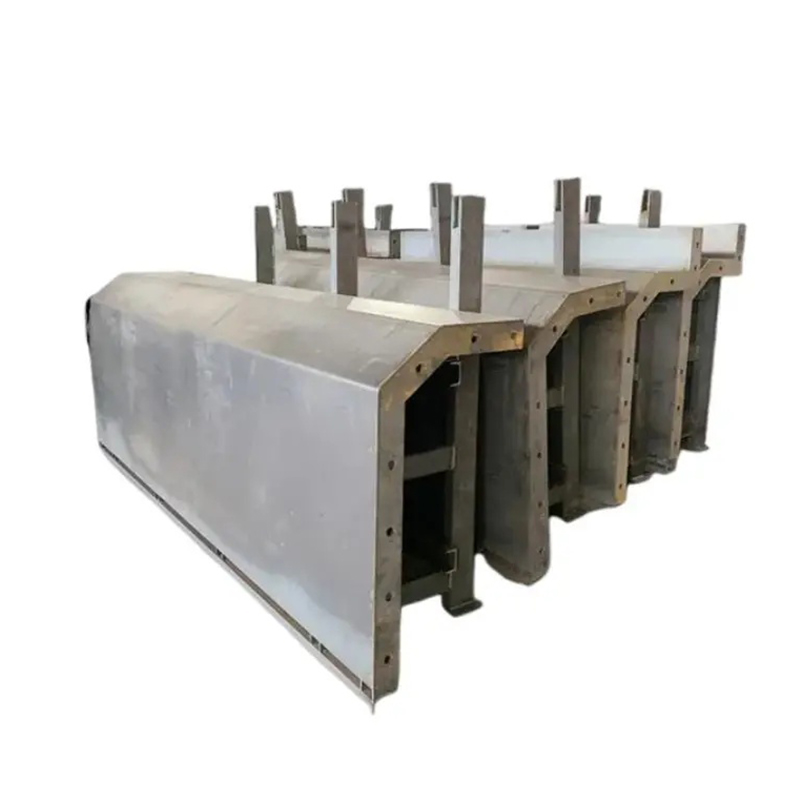
A high-quality flat formwork panel normally consists of a steel face plate, perimeter framing, internal reinforcement ribs, connection components, and protective surface treatment. The face plate contacts the concrete and determines the final surface quality. The frame and ribs provide stiffness, resist deformation, and transfer loads to the support system. Connection details allow individual panels to operate as a unified formwork surface.
2. Why Flat Formwork Is Important in Modern Construction
Concrete construction is highly dependent on the accuracy and reliability of the temporary works used during casting. Fresh concrete exerts pressure on the formwork, while workers, equipment, vibration, weather, and repeated loading can introduce additional stress. If the formwork moves, bends, leaks, or separates, the finished structure may suffer from poor alignment, uneven surfaces, honeycombing, dimensional errors, or costly repairs.
Traditional site-built timber formwork can be useful for irregular shapes and small projects, but it often requires extensive cutting, nailing, adjustment, and manual measurement. Timber may absorb moisture, deform, wear quickly, and provide inconsistent surface results. The labor required to assemble and modify timber forms can also increase project duration.
Flat steel formwork provides a more repeatable solution. Its standardized dimensions support faster layout and installation. Its rigid steel frame helps maintain the intended geometry. Its smooth face plate can produce a cleaner concrete surface, while its reusability reduces the amount of disposable material used on the project.
For contractors, the main value of flat formwork lies in the combination of productivity and consistency. A reliable panel system can shorten preparation time, reduce corrective work, improve labor utilization, and contribute to a more predictable construction schedule. For rental companies, durable panels with standardized connection arrangements can be used across several projects, improving inventory utilization and return on investment.
3. Main Structural Components of Flat Formwork Panels
3.1 Steel Face Plate
The steel face plate is the working surface of the panel. It comes into direct contact with fresh concrete and therefore has a major influence on the appearance and flatness of the finished surface. A properly manufactured plate should have consistent thickness, a smooth surface, accurate dimensions, and minimal distortion.
The face plate must also withstand repeated cleaning, handling, vibration, and contact with concrete release agents. High-quality steel and controlled fabrication help prevent premature wear, dents, and local deformation. When the plate remains flat during use, it reduces the likelihood of visible ridges, offsets, and irregularities on the concrete surface.
3.2 Perimeter Frame
The perimeter frame surrounds the face plate and provides the primary structural boundary of the panel. It improves edge strength, protects the plate during handling, and creates a reliable interface between adjacent panels. The frame also contains connection holes or other positioning features used during assembly.
A well-designed perimeter frame helps maintain joint alignment. When panels are connected correctly, the frame transfers loads across the assembly and reduces the risk of local movement. Strong edges are especially important when panels are repeatedly dismantled, stacked, transported, and reinstalled.
3.3 Reinforcing Ribs
Internal reinforcing ribs increase the stiffness of the panel without requiring an unnecessarily thick face plate. Their arrangement is selected according to panel size, expected loading, handling conditions, and connection requirements. Properly welded ribs help distribute pressure across the panel and reduce deflection during pouring.
Reinforcement must be designed and welded carefully. Excessive welding heat can cause distortion, while insufficient weld quality can weaken the structural connection. Professional fabrication methods help maintain both the geometric accuracy and the load-bearing performance of the panel.
3.4 Connection and Positioning Details
Standardized bolt holes, positioning devices, clamps, or related connection features allow individual panels to be combined into a continuous formwork surface. These details should be easy to understand and operate, enabling workers to assemble and dismantle the system after appropriate training.
Accurate hole positioning is essential. If connection holes are misaligned, workers may need to force panels into position, enlarge holes, or use improvised fasteners. Such practices reduce productivity and may compromise joint strength. Precision CNC cutting and controlled fabrication help ensure that connection details remain consistent from panel to panel.
3.5 Surface Protection
Steel formwork is exposed to moisture, cement residue, abrasion, and outdoor storage conditions. A suitable surface treatment helps reduce corrosion and protects the panel during repeated use. The exact treatment may depend on project requirements, service environment, storage conditions, and customer specifications.
Surface protection is not a substitute for proper maintenance. Panels should still be cleaned after use, stored away from standing water, inspected for damage, and handled carefully. However, a professional protective finish provides an important additional barrier against the construction environment and can extend the useful service life of the formwork.
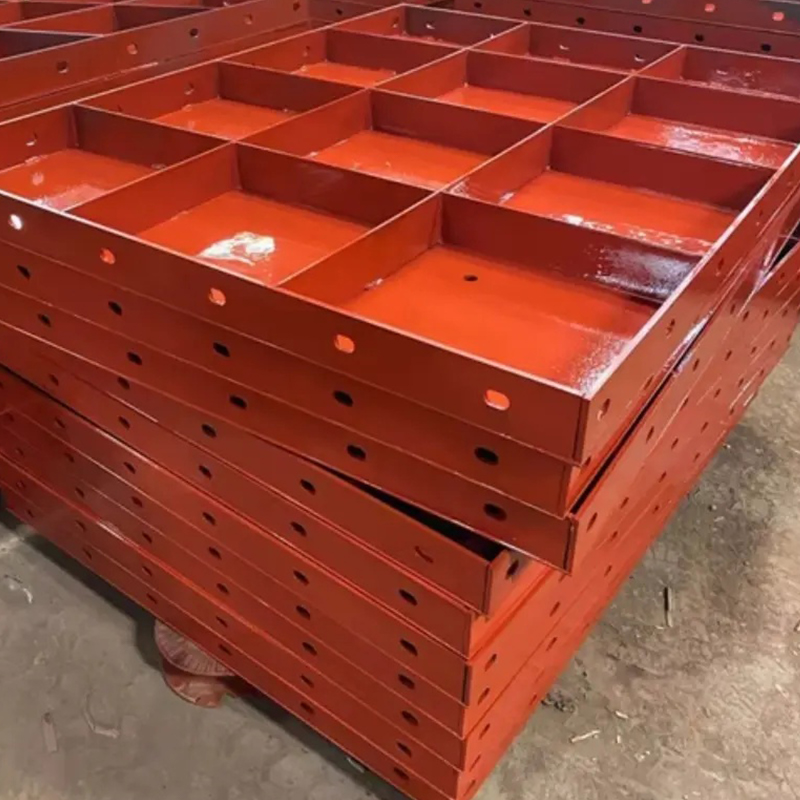
Flat Formwork
4. Key Advantages of Modular Flat Formwork
4.1 Standardized Design and High Versatility
The most important advantage of modular flat formwork is its standardized design. Instead of creating an entirely new form for each slab, deck, or platform, contractors can combine standard panels according to the required pouring area. This allows the same panel inventory to support different building floors, bridge sections, precast components, or industrial platforms.
Modularity also improves project planning. The formwork layout can be prepared in advance, panel quantities can be calculated more systematically, and installation sequences can be organized according to the construction schedule. Standard panel dimensions reduce uncertainty and make it easier to coordinate formwork with reinforcement, embedded parts, access routes, and concrete placement operations.
Compared with non-standard panels made for a single use, modular panels provide better long-term flexibility. A contractor or rental company can redeploy the same units to different projects instead of treating them as disposable components. This can reduce material waste and improve the economic value of the initial investment.
4.2 High Dimensional Accuracy
Flat concrete structures require reliable dimensions and alignment. Variations in formwork size or panel position may affect slab thickness, edge lines, opening locations, and connections with adjacent structural elements. High-precision fabrication helps reduce these risks.
Precision CNC cutting produces consistent panel components and connection openings. When cutting data, assembly procedures, and inspection standards are controlled, the finished panels can maintain tighter dimensional consistency than manually fabricated alternatives. This consistency supports faster assembly and reduces the amount of field adjustment required.
Accurate panels also improve interchangeability. A replacement unit can be installed in the same position as an existing panel with less modification. This is particularly valuable for large projects where many panels are used and where repeated cycles must be completed within a limited schedule.
4.3 Smooth and Uniform Concrete Surfaces
The face plate of a steel formwork panel can provide a smooth and stable contact surface. When the plate is flat, clean, and correctly treated with release agent, it can help produce a uniform concrete finish. Tight panel joints reduce leakage of cement paste and minimize visible joint marks.
A cleaner initial surface can reduce secondary grinding, patching, and repair. This is valuable for fair-faced concrete, exposed architectural surfaces, bridge decks, station platforms, and other areas where appearance and flatness are important. Reducing corrective work can also lower labor consumption and allow finishing teams to focus on essential activities rather than repairing formwork-related defects.
Concrete quality still depends on many factors, including mix design, reinforcement placement, vibration, curing, weather, and worker skill. Nevertheless, formwork is one of the basic controllable factors. A flat, accurately connected, and properly maintained panel system creates a stronger foundation for consistent concrete results.
4.4 Efficient Assembly and Dismantling
Flat formwork panels with standardized bolt holes and positioning devices can be installed using repeatable procedures. Workers can learn the connection sequence, panel layout, inspection points, and dismantling method more quickly than they might learn a completely customized system.
Faster assembly reduces the time between reinforcement completion and concrete placement. Faster dismantling allows panels to move to the next work area sooner. On projects with repeated floor layouts or long bridge segments, these time savings can accumulate into a significant productivity advantage.
Easy dismantling also reduces the possibility of damage. If workers do not need to force panels apart with excessive impact, the face plate, frame, connection holes, and protective coating are more likely to remain in good condition. Proper procedures therefore support both immediate productivity and long-term reuse.
4.5 Strong Resistance to Deformation
Fresh concrete pressure can cause formwork to bulge or deflect if the panel is too thin, poorly reinforced, or inadequately supported. Steel construction with reinforced ribs provides a robust structure capable of resisting normal construction loads when the system is correctly designed and installed.
Resistance to deformation helps maintain the intended slab or deck profile. It also protects joint alignment and reduces the risk of uneven surface transitions between adjacent panels. For large pouring areas, panel stiffness is especially important because small deflections can become visible across long distances.
The formwork should always be used together with a suitable support system. Panel strength alone does not replace correct prop spacing, bracing, anchoring, load assessment, or site inspection. A complete formwork solution combines strong panels with a properly engineered temporary works arrangement.
4.6 Durability and Reusability
Steel formwork is designed for repeated use. A durable panel can complete many cycles when it is correctly handled, cleaned, inspected, and stored. Reusability reduces the need for repeated purchases and limits the amount of temporary construction waste.
Durability is influenced by steel quality, plate thickness, rib design, weld integrity, coating performance, edge protection, and maintenance practices. It is also affected by how panels are transported and removed. Dropping panels, dragging them across abrasive surfaces, or leaving concrete residue on the face can shorten their service life.
For rental fleets, long service life is especially important. Panels must withstand frequent handling by different crews and operate across multiple projects. Standardized construction and robust surface treatment help rental operators maintain a more reliable inventory and reduce the frequency of major repairs.
4.7 Better Cost Control
The purchase price of a formwork panel is only one part of its total cost. Contractors should also consider labor, installation time, concrete repair, maintenance, storage, transport, replacement frequency, and the number of reuse cycles. A modular steel panel may provide a stronger overall value when these factors are considered together.
Improved surface quality can reduce finishing and repair costs. Faster assembly can reduce labor hours. Repeated use can spread the initial investment across several projects. Standardized components can simplify storage and inventory planning. These combined benefits make flat formwork particularly suitable for contractors seeking predictable cost control rather than the lowest initial purchase price alone.
5. Comparison with Conventional Formwork Solutions
Different formwork materials have different strengths. Timber can be convenient for one-off irregular shapes, aluminum can provide low weight in certain systems, and plastic panels may be suitable for selected applications. Flat steel formwork is distinguished by its balance of rigidity, surface quality, modularity, durability, and compatibility with demanding construction conditions.
| Evaluation Factor | Modular Flat Steel Formwork | Site-Built Timber Formwork | Lightweight Alternative Panels |
|---|---|---|---|
| Dimensional consistency | High when precision-manufactured | Dependent on site workmanship and material condition | Varies according to material and design |
| Surface finish | Generally smooth and uniform | May show joints, grain, or local irregularities | Can be smooth but may be less resistant to impact |
| Reuse potential | High with proper maintenance | Limited to moderate depending on moisture and damage | Varies according to wear resistance |
| Resistance to deformation | Strong when correctly reinforced and supported | Can change with moisture, loading, and repeated use | Depends on material stiffness and temperature |
| Assembly method | Standardized connections and repeatable layout | Requires cutting, fitting, and site adjustment | Usually modular but may require specialized accessories |
| Inventory management | Convenient for standardized rental and project fleets | More difficult to standardize across projects | Depends on the system and available components |
| Long-term value | Supported by durability and repeated cycles | Often influenced by replacement and labor costs | Dependent on service conditions and impact resistance |
The comparison does not mean that one formwork type is suitable for every construction task. Irregular geometry, restricted access, weight limitations, and project-specific conditions must be considered. However, for regular flat structures, modular steel panels offer a strong combination of technical performance and operational efficiency.
Compared with manually made timber forms, standardized steel panels reduce dependence on individual cutting and fitting skills. Compared with less rigid panels, steel offers better resistance to impact and dimensional change. Compared with single-purpose systems, modular flat formwork can be adapted to different layouts and reused across a broader range of applications.
6. Advanced Manufacturing Process
6.1 Engineering and Design Review
Manufacturing begins with a review of the required panel dimensions, face plate specifications, reinforcement arrangement, connection pattern, support interfaces, lifting requirements, and surface treatment. The design should be matched to the intended concrete pressure, reuse frequency, transportation method, and project environment.
For custom orders, technical communication is particularly important. Customers may provide drawings, panel schedules, site dimensions, connection requirements, or performance expectations. The manufacturer evaluates these inputs and confirms critical details before production. This helps prevent dimensional conflicts and reduces changes during fabrication.
A structured design review also supports standardization. Where possible, custom requirements can be integrated into a modular panel family instead of producing isolated components. This gives the customer greater flexibility for future work and simplifies spare-part management.
6.2 Material Preparation
Steel plates, profiles, reinforcement members, and connection components are prepared according to approved production documents. Material identification and incoming inspection help confirm dimensions, surface condition, and suitability for the intended application.
Material preparation affects the entire production chain. Plates with excessive distortion may be difficult to cut and assemble accurately. Profiles with inconsistent dimensions may create gaps or alignment problems. Organized material control allows the factory to trace components and maintain consistent production quality.
6.3 CNC Steel Plate Cutting
CNC cutting is used to produce face plates, frame parts, connection plates, and other components with repeatable dimensions. Automated cutting improves productivity and reduces variation between individual panels. It also supports efficient nesting of parts, which can reduce material waste.
Laser cutting and other advanced cutting methods can produce precise edges and accurate holes when applied according to the material thickness and design requirements. Precise cutting is especially important for bolt holes and positioning features because even small deviations may affect assembly speed and joint alignment.
After cutting, components may be checked for burrs, heat-affected deformation, edge quality, and dimensional accuracy. Proper post-cutting inspection helps prevent small defects from becoming assembly problems later in the production process.
6.4 Forming and Component Preparation
Where the design requires bending or formed sections, controlled forming equipment is used to achieve the specified geometry. Accurate forming ensures that perimeter frames and support members fit the face plate correctly and maintain the intended structural profile.
Component preparation may include edge trimming, hole verification, surface cleaning, marking, and temporary positioning. These steps improve assembly efficiency and help ensure that the correct parts are used in the correct location.
6.5 Professional Welding
Welding connects the face plate, perimeter frame, ribs, brackets, and other structural components. The welding process must provide adequate strength while limiting distortion. Welding sequence, heat input, joint preparation, and fixture use all influence the final flatness of the panel.
Professional welding craftsmanship is essential because the formwork must withstand repeated loading and handling. Inadequate welds may create cracks, loose ribs, local deformation, or premature failure. Excessive heat or an unsuitable welding sequence may also distort the face plate and reduce concrete surface quality.
Hyson applies certified AWS and EN welding craftsmanship as part of its manufacturing capability. These practices support consistent welding procedures and provide a structured basis for producing reliable custom steel components. Welding inspection can include visual checks, dimensional checks, and additional examination methods when required by the project or customer.
6.6 Assembly and Dimensional Inspection
After welding, the panel is checked for overall dimensions, squareness, flatness, connection-hole alignment, rib position, weld appearance, and edge condition. Inspection fixtures and calibrated measuring tools can improve repeatability, especially for large production batches.
Dimensional inspection is not limited to the outside length and width. The relationship between the face plate and frame, the spacing of ribs, the location of holes, and the alignment of adjacent connection points are equally important. These details determine whether the panel will assemble smoothly on site.
Panels that do not meet the specified requirements should be corrected, reworked, or rejected according to the factory quality procedure. A disciplined inspection process reduces the chance that nonconforming panels will reach the construction site.
6.7 Surface Treatment
Surface treatment is applied to improve resistance to corrosion and construction-related exposure. Depending on the specification, preparation may include cleaning, removal of contaminants, coating, painting, or other protective processes.
The concrete-contacting surface should be suitable for the intended release-agent system. Excessive coating thickness, roughness, or contamination can affect concrete appearance and panel cleaning. Therefore, surface treatment must be coordinated with both corrosion protection and concrete finishing requirements.
6.8 Final Inspection, Packing, and Delivery
Before shipment, finished panels are checked against the order documents. Identification marks, quantities, accessories, connection components, and packing arrangements are verified. Proper packing protects corners, face plates, and coated surfaces during handling and transportation.
Large steel components require practical logistics planning. Panels may be stacked with separators, bundled according to installation sequences, or packed with accessories in clearly marked groups. Organized delivery helps the customer identify each component and reduces time spent sorting materials at the project site.
7. Manufacturing Strengths and Quality Assurance
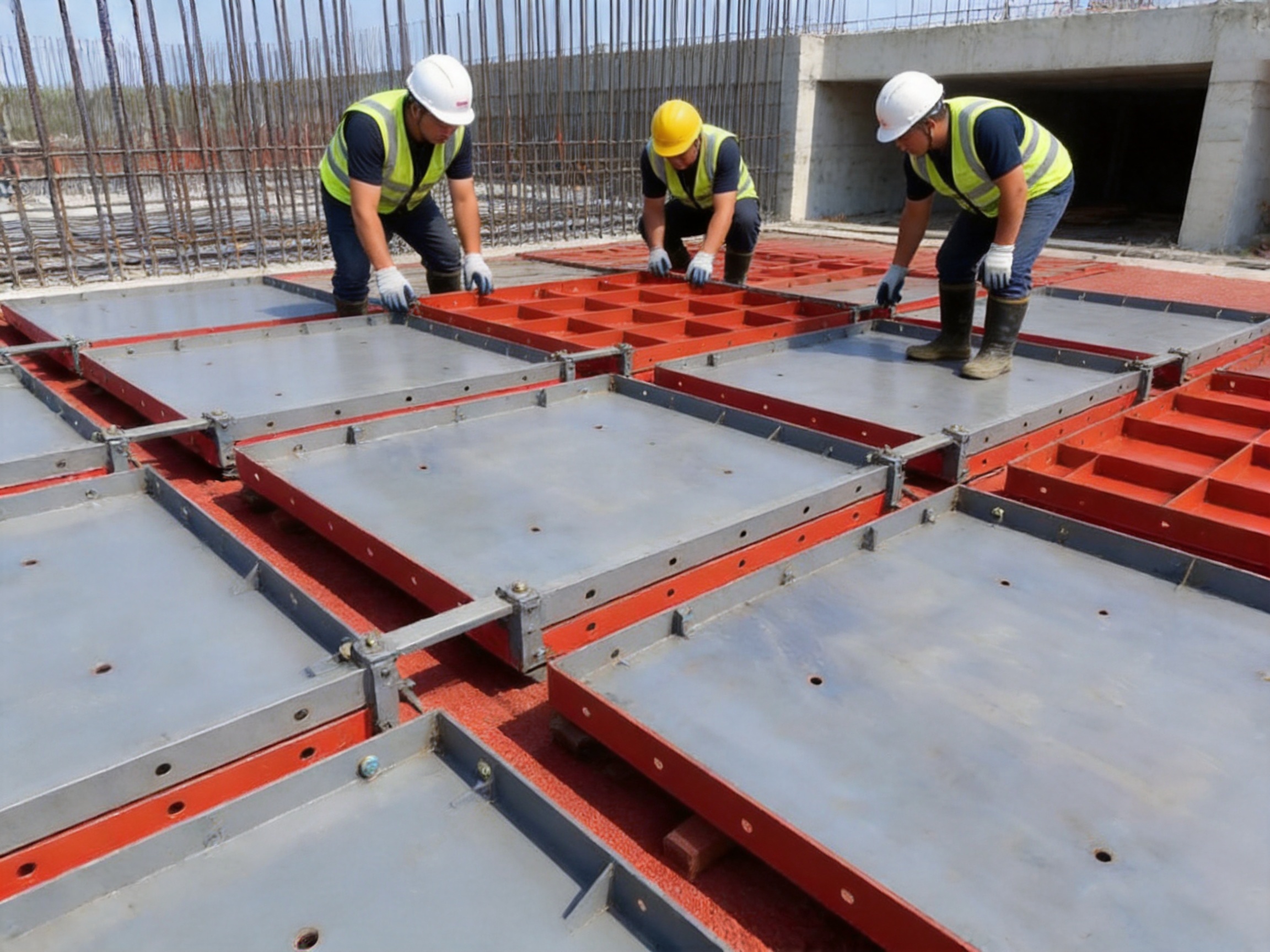
Nantong Hyson Road And Bridge Formwork Co., Ltd. is a professional manufacturer of custom steel formwork, ringlock scaffolding, heavy-duty steel structures, and OEM metal fabrication. Its production capabilities include advanced laser cutting equipment, standardized production lines, bending, welding, and integrated processing for non-standard steel components.
The company combines automated processing with certified AWS and EN welding craftsmanship. This combination is important for flat formwork because the product requires both precision in individual components and reliable workmanship in the completed assembly. Automated cutting supports repeatable dimensions, while qualified welding practices support structural integrity and durability.
Hyson operates under ISO 9001 quality management requirements and has developed 12 utility patents. These capabilities reflect an emphasis on organized manufacturing, process improvement, and product development. Quality control is applied throughout the production flow rather than only at the final inspection stage.
For custom flat formwork, full-process control may include material inspection, drawing review, cutting verification, component identification, welding inspection, dimensional measurement, surface treatment checks, packing inspection, and delivery documentation. Each stage contributes to the final performance of the panel.
The company’s experience as a strategic supplier for CCCC, CRCC, and other central state-owned enterprises provides exposure to demanding infrastructure manufacturing requirements. Its solutions have supported major projects such as the Sutong Yangtze River Bridge, Taizhou Bridge, and Sudan Thermal Power Plant. Experience in large projects helps establish a practical understanding of schedule control, traceability, coordination, and quality consistency.
Although each project must be evaluated on its own technical requirements, experience in bridge, infrastructure, industrial, and energy projects can be valuable when developing customized flat formwork. Such projects often require reliable delivery, high repeatability, robust structures, and clear communication between the manufacturer, contractor, and engineering team.
8. Application Scenarios
8.1 Building Construction
Flat formwork is widely used for floor slabs, roof slabs, ground floors, podium decks, and other planar concrete components in residential, commercial, and industrial buildings. Its modular arrangement allows panels to be laid out across repeated floor zones and adjusted around columns, walls, openings, and perimeter edges.
In multi-story construction, repeated floor plans create an opportunity to reuse the same formwork many times. Standardized panels can be moved from one level to another, while consistent dimensions help maintain alignment between floors. Faster cycle times can support the overall project schedule.
Flat formwork can also be used in factories and warehouses where large floor areas and equipment foundations require a smooth and stable concrete surface. The appropriate support system and panel arrangement should be determined according to span, thickness, load, and site conditions.
8.2 Bridge and Infrastructure Engineering
Bridge decks, approach slabs, tunnel slabs, subway station platforms, retaining structure bases, and other infrastructure elements often require high flatness and controlled geometry. Flat steel formwork is suitable for these applications because the panels can be arranged over large regular areas and supported by engineered temporary works.
Infrastructure projects commonly involve demanding schedules, outdoor exposure, heavy equipment, and repeated construction sections. Durable steel panels are better suited to repeated handling and challenging environments than many temporary materials with limited impact resistance.
For bridge deck or platform applications, the formwork layout should account for drainage slopes, edge beams, embedded elements, construction joints, and access requirements. Modular flat panels can serve as the main planar surface while supplementary components address project-specific details.
8.3 Precast Concrete Production
Precast plants use formwork repeatedly to produce standardized components under controlled conditions. Flat formwork panels can be used to manufacture precast floor slabs, wall panels, covers, platforms, and other planar elements.
In a factory setting, the durability and repeatability of steel formwork are especially valuable. Panels can be integrated into production tables or arranged into fixed and adjustable molds. A smooth contact surface contributes to consistent product appearance, while accurate dimensions support the interchangeability of precast components.
Precast operations also benefit from easier cleaning and inspection. Since the same panels may be used many times in a controlled environment, maintenance procedures can be standardized and defects can be identified before they affect a large production batch.
8.4 Hydraulic Engineering
Hydraulic facilities often include large base slabs, platforms, channels, equipment foundations, and other planar concrete structures. These components may be exposed to moisture, temperature changes, and demanding construction conditions.
Steel flat formwork offers a durable solution for repeated or large-area casting. Its rigid structure helps maintain surface geometry, while surface protection supports service life in humid environments. Careful sealing and support are required to prevent grout leakage and maintain the specified concrete profile.
8.5 Industrial Facilities
Industrial plants require concrete platforms, machinery bases, storage floors, loading areas, and structural slabs. These surfaces may later support heavy equipment, production lines, vehicles, or storage systems. Flatness and dimensional accuracy can therefore affect subsequent installation work.
Modular formwork helps contractors create repeatable sections and coordinate concrete construction with steel structures, embedded plates, anchor bolts, and mechanical installations. Customized panels can be developed when standard dimensions must be adapted to equipment foundations or complex project interfaces.
9. Installation and Operating Recommendations
9.1 Review the Layout Before Assembly
Before installation, the site team should review the approved formwork layout, panel schedule, support arrangement, access route, lifting method, and safety requirements. Panel identification marks should be matched with the installation plan to prevent unnecessary movement and rework.
The supporting surface should be stable, clean, and capable of carrying the expected loads. Props, frames, beams, braces, and connectors should be checked before the panels are placed. Any damaged or distorted component should be separated for inspection rather than installed without evaluation.
9.2 Use the Correct Support System
Flat panels rely on a suitable support system to resist vertical and horizontal loads. Support spacing, bracing, base conditions, and connection details must be determined according to the engineering design and project requirements.
Panels should not be overloaded or used beyond their intended configuration. Changes in slab thickness, concrete density, pouring speed, vibration method, or support spacing may affect formwork loading. When site conditions differ from the original assumptions, the temporary works design should be reviewed.
9.3 Check Joints and Alignment
Adjacent panels should be positioned accurately and connected using the specified bolts, clamps, or accessories. Joints should be checked for gaps, offsets, loose fasteners, and contamination. Properly aligned joints reduce grout leakage and improve the appearance of the finished concrete.
Edges around columns, walls, openings, and construction joints may require supplementary pieces. These components should be fitted without damaging the main panels or creating unsupported gaps. The final surface should be inspected before reinforcement and concrete placement make access more difficult.
9.4 Apply Release Agent Correctly
A suitable release agent can make dismantling easier and help protect the face plate. It should be applied evenly and according to the product instructions. Excessive release agent may stain concrete or affect subsequent finishing, while insufficient application may cause concrete to adhere to the panel.
The formwork face should be clean and free from hardened concrete, rust scale, oil contamination, and loose coating before the release agent is applied. Consistent cleaning and application procedures contribute to more uniform concrete results.
9.5 Inspect Before Concrete Placement
A pre-pour inspection should confirm panel position, support stability, connection tightness, surface cleanliness, edge details, openings, embedded items, and access for concrete placement. Any correction should be completed before pouring begins.
During pouring, concrete should be placed in a controlled sequence. Excessive local accumulation, uncontrolled discharge, or overly aggressive vibration can impose unnecessary loads on the formwork. The site team should observe for movement, leakage, unusual noise, or other signs of instability and respond immediately if they occur.
9.6 Dismantle Carefully
Formwork should be removed only after the concrete has reached the required condition and the responsible project personnel have approved dismantling. Panels should be released without striking the face plate or levering against vulnerable edges.
After removal, concrete residue should be cleaned while it is manageable. Panels should be inspected for bent edges, damaged holes, cracked welds, coating loss, and face-plate dents. Early maintenance prevents small defects from becoming larger problems during the next use cycle.
10. Maintenance, Storage, and Reuse
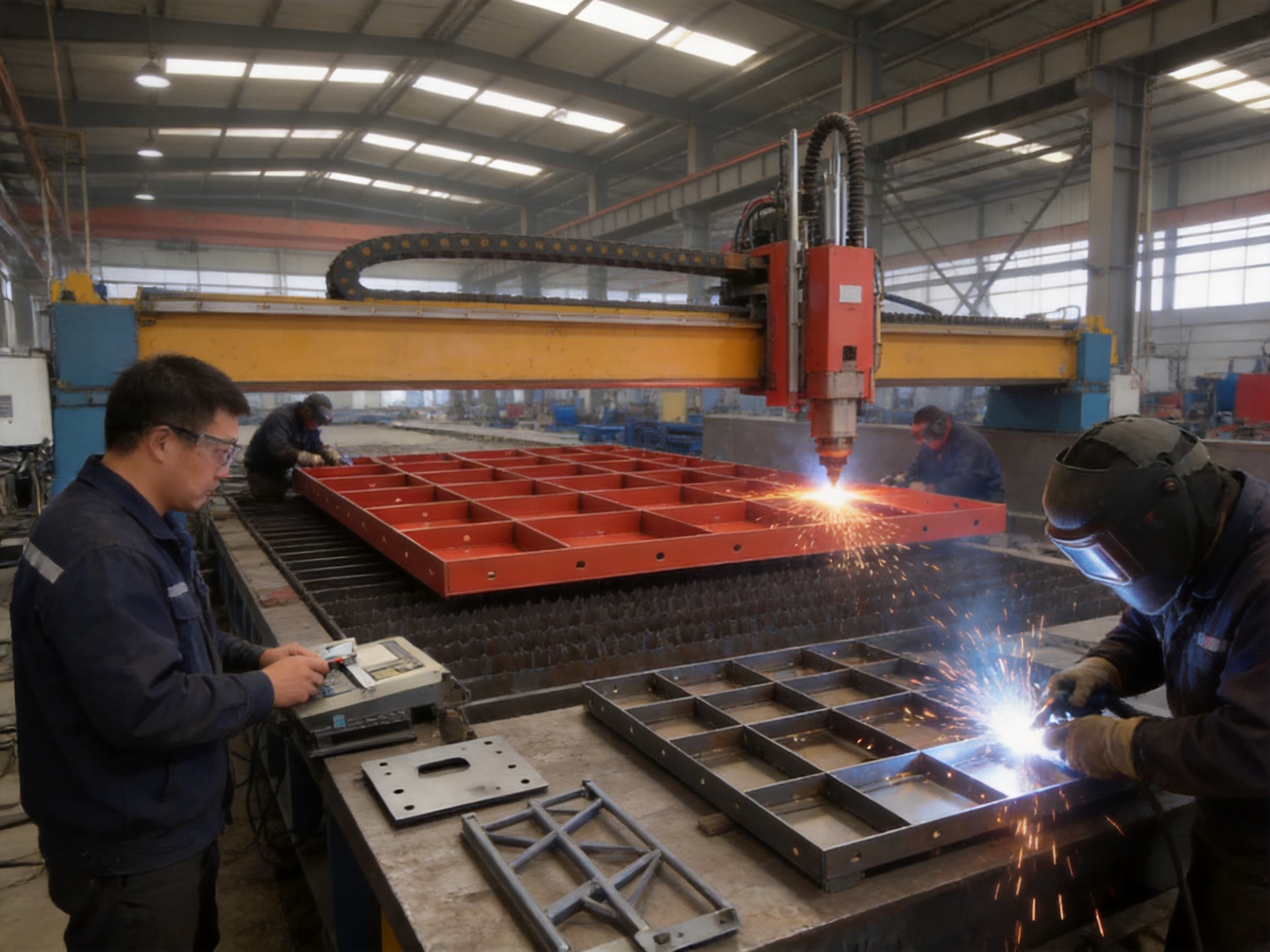
Correct maintenance is essential for protecting the investment in steel formwork. After each use, the face plate should be cleaned with suitable tools that do not cause unnecessary scratches or dents. Hardened concrete should not be removed by uncontrolled impact that could distort the panel.
Connection holes and edge areas should be checked for concrete buildup. Blocked holes can delay assembly and may force workers to use incorrect fasteners. Damaged bolts, clamps, and positioning accessories should be replaced or repaired according to the manufacturer’s recommendations.
Panels should be stored on stable supports rather than directly on wet ground. Stacking should prevent face-to-face abrasion and protect corners from impact. If panels are stored outdoors, water should not be allowed to remain trapped between units. Good ventilation and drainage help reduce corrosion risk.
Rental companies and large contractors may benefit from a panel tracking system. Identification numbers, project usage records, repair history, inspection results, and storage locations can be recorded to improve inventory control. Tracking helps determine which panels are ready for use and which require maintenance before shipment.
Before reuse, panels should be inspected for flatness, frame condition, weld integrity, connection-hole accuracy, coating damage, and surface cleanliness. A panel that appears acceptable visually may still require dimensional verification if it has experienced heavy impact or unusual loading.
11. How to Select the Right Flat Formwork
11.1 Project Geometry
The first selection factor is the geometry of the concrete structure. Buyers should define slab dimensions, thickness, edge conditions, openings, construction joints, slopes, and any interfaces with columns or walls. Standard panels are most efficient for regular flat areas, while special infill or edge components may be needed for non-standard zones.
11.2 Expected Load and Support Arrangement
The formwork system must be matched to concrete pressure, worker loading, equipment loading, vibration, pouring rate, and support spacing. The panel, connectors, beams, props, and braces should be considered as one temporary works system rather than separate products.
11.3 Reuse Frequency
A contractor planning only one small project may prioritize simple handling and transport. A rental company or infrastructure contractor with repeated projects should focus more heavily on durability, standardized dimensions, repairability, and inventory compatibility.
11.4 Surface Finish Requirements
If the concrete will be covered by finishes, moderate surface requirements may be acceptable. If fair-faced concrete or a highly uniform surface is required, the buyer should pay close attention to face-plate flatness, joint design, coating condition, release-agent compatibility, and cleaning procedures.
11.5 Connection Compatibility
The panel should be compatible with the available support system and accessories. Connection holes, clamps, bolts, positioning devices, lifting points, and edge components should be reviewed before ordering. Compatibility prevents costly site modifications and helps workers use familiar installation procedures.
11.6 Manufacturing and Quality Documentation
Customers should evaluate the manufacturer’s production capacity, inspection system, welding qualifications, material control, surface treatment, packing procedure, and ability to provide customized drawings. ISO 9001 quality management, AWS and EN welding practices, and experience with major infrastructure projects may provide useful confidence when selecting a supplier.
12. Custom OEM Flat Formwork Services
Although standardized panels provide broad versatility, some projects require customized dimensions, connection layouts, edge profiles, lifting arrangements, or integration with other steel components. OEM manufacturing allows the formwork to be adapted to the customer’s drawings and construction method.
Custom production may include special panel sizes, non-standard bolt-hole patterns, reinforced sections for heavy loading, corner panels, infill panels, perimeter edge components, embedded-part openings, or panels designed to work with a particular support frame. The objective is to preserve the advantages of modular production while meeting project-specific requirements.
An effective OEM process begins with technical communication. The customer should provide available drawings, concrete dimensions, design loads, reuse expectations, support details, required surface finish, delivery schedule, and applicable standards. The manufacturer can then review the information, identify potential conflicts, and prepare production drawings for confirmation.
Hyson provides custom steel formwork and OEM metal fabrication services supported by laser cutting, bending, and welding capabilities. Its broader product range includes bridge and infrastructure formwork, hydraulic tunnel trolleys, certified scaffolding and steel props, industrial steel structures, and heavy steel components. This integrated capability can be useful when a project requires several related steel products from one manufacturing partner.
For global customers, supplier coordination is also important. Clear drawings, confirmed tolerances, inspection records, packing lists, and delivery communication reduce misunderstandings across different locations. A manufacturer with experience in international OEM production can help organize these requirements into a repeatable workflow.
13. Flat Formwork for Rental Companies
Rental companies need equipment that can withstand frequent use, varied site conditions, and different levels of operator experience. Modular steel flat formwork is well suited to rental operations because standard panels can serve multiple customers and project types.
Durability is central to rental-fleet performance. Strong frames and ribs help resist handling damage, while protective surface treatment helps reduce corrosion during storage and transport. Standardized sizes simplify counting, stacking, and dispatch. Consistent connection details make it easier to provide installation guidance to different rental customers.
Rental operators should establish inspection procedures before and after each rental cycle. Panels may be classified according to condition, with separate categories for ready-to-use units, units requiring cleaning, and units requiring repair. Maintaining accurate records can reduce unexpected shortages and improve fleet utilization.
Clear identification markings are also valuable. Panel numbers, sizes, and compatible accessories can be labeled in a durable manner. When customers receive clearly organized sets, they can assemble the system more efficiently and return the equipment with fewer missing components.
14. Sustainability and Lifecycle Value
Steel formwork supports more sustainable construction primarily through reuse and durability. Unlike disposable formwork materials, a well-maintained steel panel can be used repeatedly across many concrete placements. This reduces the demand for replacement materials and can lower the volume of temporary construction waste.
Modular design further improves lifecycle value. Panels can be rearranged for different areas, repaired when individual components are damaged, and integrated into future projects. A damaged accessory or connection component may be replaced without discarding the entire panel.
Efficient manufacturing also contributes to resource management. CNC cutting can improve material utilization through optimized nesting. Standardized production reduces unnecessary variations and supports more predictable use of steel, welding consumables, coatings, and packing materials.
Sustainability performance depends on the complete lifecycle, including raw material production, factory processing, transportation, site use, maintenance, and eventual recycling. Steel has the advantage of being recyclable at the end of its service life, while long reuse periods can distribute the environmental impact of manufacturing across many construction cycles.
15. Advantages of Choosing an Experienced Steel Manufacturer
Flat formwork performance depends on more than the nominal material. It is affected by design, cutting accuracy, welding quality, reinforcement layout, surface treatment, inspection, packing, and after-sales technical communication. An experienced manufacturer is better positioned to coordinate these factors as one integrated process.
A manufacturer with heavy steel fabrication experience can also understand the challenges of large components, non-standard dimensions, lifting, transport, and installation. This is valuable for infrastructure and industrial projects where formwork may be larger, heavier, or more highly loaded than ordinary building panels.
Hyson’s background in custom formwork, steel structures, scaffolding, and OEM fabrication provides a broad manufacturing base. The company’s production lines and advanced processing equipment support projects requiring laser-cut parts, bent components, welded assemblies, and ready-to-install steel products.
Its stated experience serving CCCC, CRCC, and other major enterprises demonstrates familiarity with demanding procurement and project environments. The company’s project background includes bridge, infrastructure, and industrial applications, which are closely related to the conditions in which high-performance flat formwork is required.
For customers, the practical benefit is a more complete supply chain. Instead of coordinating separate suppliers for cutting, fabrication, welding, and finishing, a customer can request an integrated manufacturing solution. This can simplify technical communication and improve responsibility for the finished product.
16. Frequently Asked Questions
16.1 What is flat formwork used for?
Flat formwork is used to cast regular planar concrete structures such as floor slabs, roofs, ground slabs, bridge decks, tunnel slabs, subway station platforms, precast floor units, industrial platforms, and hydraulic base slabs.
16.2 Is flat formwork suitable for building projects?
Yes. It is suitable for residential, commercial, factory, warehouse, and other building projects where large or repeated flat concrete areas must be poured with consistent dimensions and surface quality.
16.3 Can flat formwork be customized?
Yes. Customization may include panel dimensions, connection holes, reinforcement arrangements, edge details, openings, lifting points, and compatibility with a customer’s support system. Technical drawings should be reviewed before production.
16.4 How does steel flat formwork compare with timber formwork?
Steel flat formwork generally offers better dimensional consistency, stronger resistance to deformation, smoother surfaces, and greater reuse potential. Timber may remain useful for irregular or one-time structures, but it typically requires more site cutting and adjustment.
16.5 Can the panels produce fair-faced concrete?
They can help produce a smooth and uniform concrete surface when the face plates are flat and clean, joints are properly connected, release agent is correctly applied, and concrete placement and vibration are well controlled. The final finish also depends on mix design, curing, reinforcement, and workmanship.
16.6 Are the panels compatible with different support systems?
The modular design allows compatibility with various support arrangements, but the exact connection details must be confirmed. Props, beams, frames, brackets, braces, and fastening systems should be selected according to the panel design and project engineering requirements.
16.7 How many times can flat formwork be reused?
The number of reuse cycles depends on steel quality, panel design, coating, handling, cleaning, storage, loading, and maintenance. There is no universal number for every project. Regular inspection and careful dismantling are essential for maximizing service life.
16.8 What manufacturing technologies are used?
Typical processes include CNC steel plate cutting, precision hole cutting, bending, component preparation, professional welding, dimensional inspection, surface treatment, packing, and final quality verification. Advanced equipment helps improve accuracy and repeatability.
16.9 What information is needed for a quotation?
Useful information includes panel dimensions, quantity, face-plate requirements, concrete dimensions, support arrangement, connection details, required accessories, surface treatment, applicable standards, packing preferences, delivery destination, and expected production schedule.
Hyson’s product range includes custom bridge and infrastructure formwork, hydraulic tunnel trolleys, ringlock scaffolding, steel props, industrial steel structures, heavy steel components, and OEM metal fabrication. Related products should be reviewed according to the project’s technical and certification requirements.
16.11 How should flat formwork be maintained?
Panels should be cleaned after each use, checked for deformation and weld damage, protected from standing water, stored on stable supports, and handled without dropping or dragging. Connection holes and accessories should be kept free of concrete residue.
16.12 Does a strong panel eliminate the need for engineering design?
No. A strong panel must still be used with a correctly designed and installed support system. Load conditions, support spacing, bracing, pouring sequence, concrete pressure, and site safety requirements must be reviewed by qualified project personnel.
17. Practical Purchasing Checklist
Before placing an order, the buyer should confirm the exact panel dimensions and tolerances. Standardized sizes are useful only when they match the planned layout and support system. If the project contains repeated areas, the panel schedule should identify the number of standard units and the quantity of edge or infill components.
The buyer should also confirm the steel grade or material specification, face-plate thickness, reinforcement arrangement, frame profile, connection-hole dimensions, welding requirements, surface treatment, and identification method. These details affect both performance and long-term maintenance.
Quality documentation should be discussed before production. Depending on the project, this may include material records, welding procedure information, inspection reports, dimensional records, coating information, packing lists, and photographs of completed products. Clear documentation supports traceability and helps the project team verify that the delivered goods match the approved specification.
Delivery planning should include panel weight, package dimensions, loading method, container utilization, unloading equipment, and storage location. Proper logistics reduce the risk of damage and help the site team organize installation as soon as the materials arrive.
Finally, customers should clarify technical support. Installation instructions, connection details, maintenance recommendations, and responses to site questions can make a significant difference to the actual performance of the formwork system.
18. Conclusion
Modular flat formwork panels provide a reliable solution for regular flat concrete construction. Their standardized design, precision manufacturing, strong steel structure, smooth face plate, practical connection details, and reuse potential make them suitable for building projects, bridges, tunnels, precast plants, hydraulic facilities, and industrial construction.
Compared with improvised formwork, the system can improve dimensional consistency, surface quality, assembly efficiency, durability, and cost control. Its advantages become especially clear on projects with repeated layouts, demanding concrete finishes, large planar areas, or the need for long-term equipment utilization.
The quality of flat formwork depends on the complete manufacturing process. CNC cutting supports accuracy, professional welding protects structural integrity, reinforced frames resist deformation, and surface treatment improves durability. Inspection at every stage helps ensure that panels arrive ready for efficient site use.
Nantong Hyson Road And Bridge Formwork Co., Ltd. combines custom steel formwork production with laser cutting, bending, welding, steel structure fabrication, and OEM manufacturing. Supported by ISO 9001 quality management, AWS and EN welding craftsmanship, utility patents, standardized production lines, and experience in major infrastructure projects, the company provides customized steel solutions for contractors, precast manufacturers, rental companies, and industrial clients.
When properly designed, manufactured, installed, and maintained, flat formwork is more than a temporary mold. It is a reusable construction asset that supports better concrete quality, faster project execution, improved labor productivity, and more predictable lifecycle costs.
References
1. American Welding Society, Structural Welding Quality and Practice Guidance.
2. European Committee for Standardization, EN Welding and Steel Construction Quality Principles.
3. International Organization for Standardization, ISO 9001 Quality Management Systems — Requirements.
4. British Standards Institution, BS 1139 Scaffolding and Related Component Requirements.
5. European Committee for Standardization, EN 74 Couplers, Spigot Pins and Base-Plates for Use in Falsework and Scaffolds.
6. General principles of reinforced concrete formwork design, temporary works planning, and construction site safety practice.
7. Manufacturer-provided product information for modular flat formwork panels and custom steel fabrication services.
Product: Flat Formwork


- Location
- Group 3, Fangzhuang Village, Rucheng Subdistrict, Rugao City, Nantong, Jiangsu, China
- Follow us
- Phone
- +86-13646196162
- info@hysonindustry.com
