 +86-13646196162
 info@hysonindustry.com




 русский
  عربى
عربى 


Cuplock Scaffolding: High-Load Modular Support for Construction, Infrastructure, and Industrial Projects
 2026.07.29
Content
- 1 What Is Cuplock Scaffolding?
- 2 Core Structural Components
- 3 How the Cup-Shaped Locking Mechanism Works
- 4 Advantages Compared with Conventional Scaffolding Systems
- 5 Material Selection and Mechanical Performance
- 6 Advanced Manufacturing Process
- 7 Quality Control and Traceability
- 8 Applications in Bridge Formwork Support
- 9 Applications in Curved and Irregular Structures
- 10 Applications in Industrial Maintenance
- 11 Applications in General Building Construction
- 12 Comparison with Ringlock, Tube-and-Clamp, and Frame Systems
- 13 Safety and Engineering Requirements
- 14 Installation Workflow
- 15 Rental Fleet and Lifecycle Benefits
- 16 Why Manufacturing Capability Matters
- 17 OEM and Customization Services
- 18 Purchasing Checklist for Cuplock Scaffolding
- 19 Frequently Asked Questions
- 19.1 What is the main advantage of cuplock scaffolding?
- 19.2 Can cuplock scaffolding be used for heavy concrete formwork?
- 19.3 Is cuplock scaffolding suitable for curved buildings?
- 19.4 How does it compare with tube-and-clamp scaffolding?
- 19.5 Are forged cups better than cast cups?
- 19.6 Can cuplock components be reused?
- 19.7 What steel grades are commonly used?
- 19.8 Does the locking mechanism require bolts or nuts?
- 19.9 How should cuplock scaffolding be inspected?
- 19.10 Can a manufacturer provide custom components?
- 19.11 What information should be provided when requesting a quotation?
- 20 Conclusion
- 21 References
- 22 Product: Cuplock Scaffolding
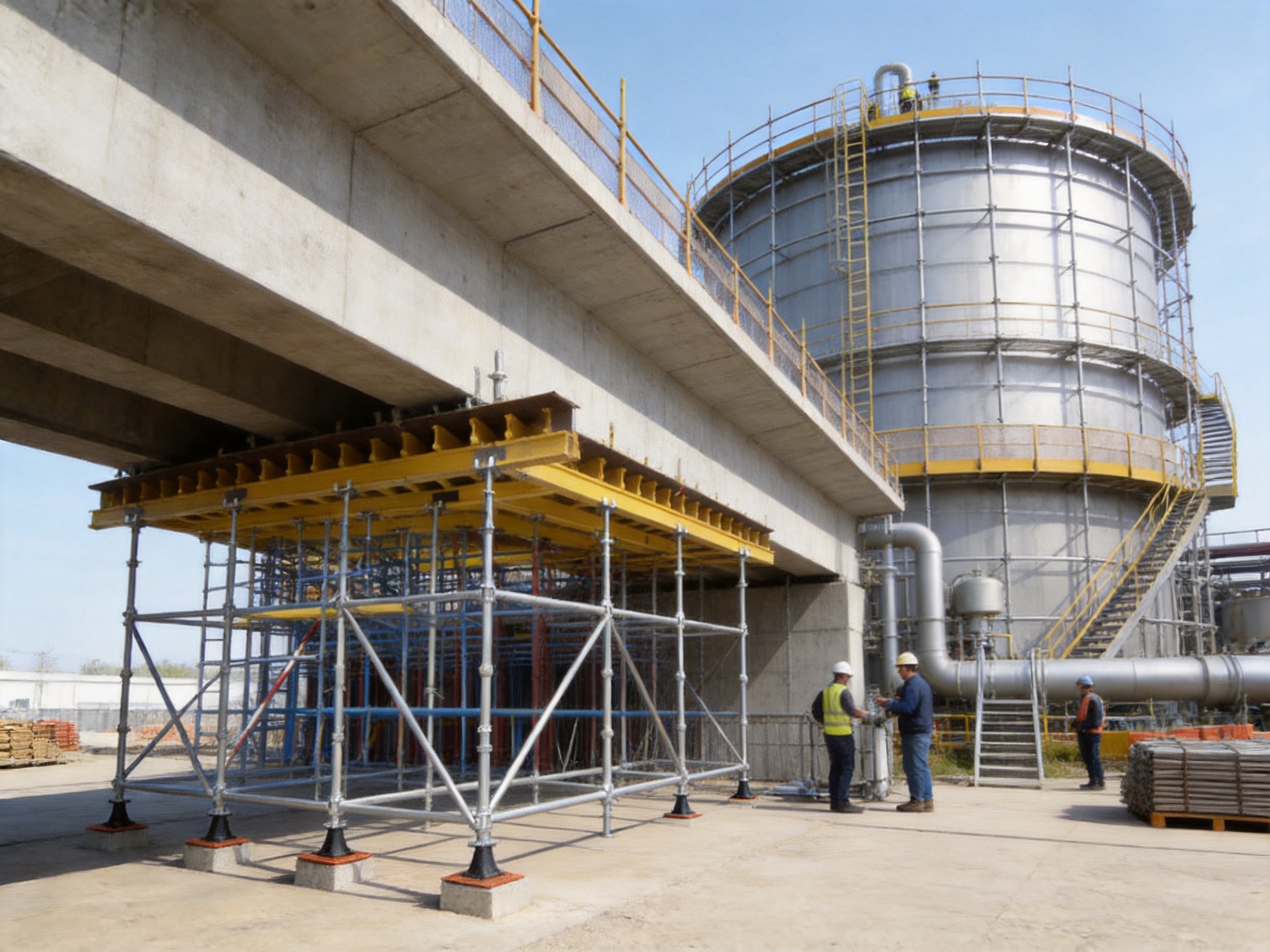
Cuplock scaffolding is a multi-purpose modular steel scaffolding system engineered for fast assembly, dependable load-bearing performance, and flexible adaptation to demanding construction environments. Its defining feature is the cup-shaped node connection, which locks horizontal and diagonal members to vertical standards without relying on loose nuts, bolts, or wedges. This design creates a stable structural grid while simplifying erection, dismantling, transport, inspection, and inventory control.
Manufactured from high-strength Q235 or Q345 carbon steel, cuplock scaffolding is suitable for building construction, bridge formwork support, industrial maintenance, masonry, exterior finishing, and many other elevated work applications. Its combination of mechanical simplicity and structural efficiency makes it particularly valuable where projects require repeated installation, changing working elevations, high load capacity, or rapid deployment.
For contractors, rental companies, infrastructure specialists, and industrial maintenance teams, the system offers more than a conventional access platform. It is a reusable engineering solution that can be configured for straight, curved, circular, irregular, and heavy-duty applications. When correctly designed, installed, inspected, and used within approved load limits, cuplock scaffolding can improve site productivity while maintaining a high standard of operational safety.
What Is Cuplock Scaffolding?
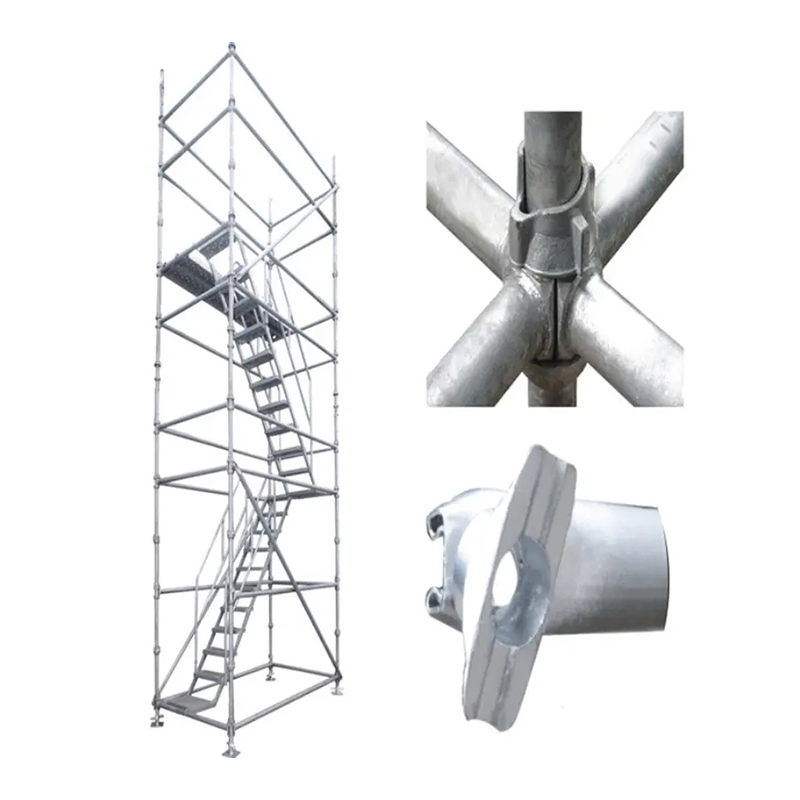
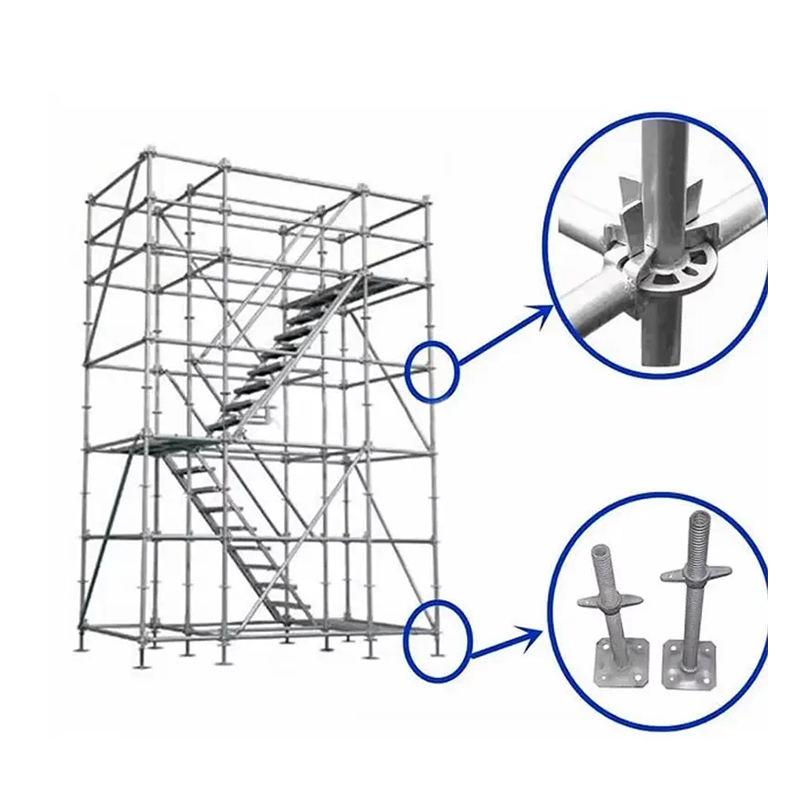
Cuplock scaffolding is a modular steel system composed primarily of vertical standards, horizontal ledgers, transoms, diagonal braces, base components, jacks, platforms, guardrails, and access accessories. The vertical standards are fitted with fixed lower cups at predetermined intervals. A movable upper cup is placed above the connection point. Horizontal or diagonal members are positioned into the lower cup, and the upper cup is then lowered and secured, normally with a controlled hammer strike.
The node connection can secure up to four horizontal members at one level. This allows the system to form a rigid and organized scaffold bay with fewer individual fastening operations than traditional tube-and-clamp arrangements. The result is a repeatable assembly process that can be learned quickly by trained crews and carried out efficiently across large work areas.
Unlike systems dependent on multiple small fastening parts, cuplock scaffolding integrates the principal locking function into the structural components. This reduces the number of loose accessories that must be carried, counted, stored, and replaced. It also minimizes the possibility that a missing bolt, nut, or wedge will delay installation or compromise an incomplete connection.
The system is not limited to access scaffolding. With appropriate engineering design, component selection, bracing, foundations, and load distribution, it can be used as a temporary support structure for concrete formwork, beams, slabs, bridge decks, industrial equipment maintenance, and other heavy-duty applications. The same modular principle allows the system to be dismantled and reconfigured for different projects.
Core Structural Components
Vertical Standards
Vertical standards transfer loads from working platforms, ledgers, transoms, and formwork into the base jacks and supporting ground or foundation. Their dimensions, wall thickness, steel grade, node spacing, and end connections influence the permissible height and load capacity of the assembled scaffold.
Standards must be installed on a suitable base arrangement. Depending on the project, this may include base plates, adjustable base jacks, sole boards, timber sleepers, steel grillages, or engineered foundations. A level and adequately supported base is essential because even a high-quality scaffold can become unstable if the underlying surface settles, tilts, or fails under compression.
Horizontal Ledgers and Transoms
Ledgers connect the standards horizontally and establish the length and width of each bay. Transoms provide intermediate support for platforms, formwork, boards, and other components. These members also help maintain the geometry of the scaffold and distribute loads between adjacent standards.
The cup connection allows several horizontal members to meet at one node. This is especially useful when creating regular grids for bridge support or large working platforms. It also simplifies the formation of different bay arrangements where access, equipment, and construction geometry require adjustments.
Diagonal Braces
Diagonal braces improve longitudinal and transverse stability. They resist racking forces caused by wind, movement, uneven loading, construction activity, and accidental impact. Brace locations must follow the approved scaffold design rather than being selected only for convenience.
For tall, wide, or externally exposed scaffolds, additional ties to permanent structures may be required. In temporary support applications, the engineer may specify additional bracing frames, tie beams, horizontal restraint, or special anchorage. The modular connection system provides the framework, but stability depends on the complete design and installation arrangement.
Base Jacks, U-Heads, and Support Accessories
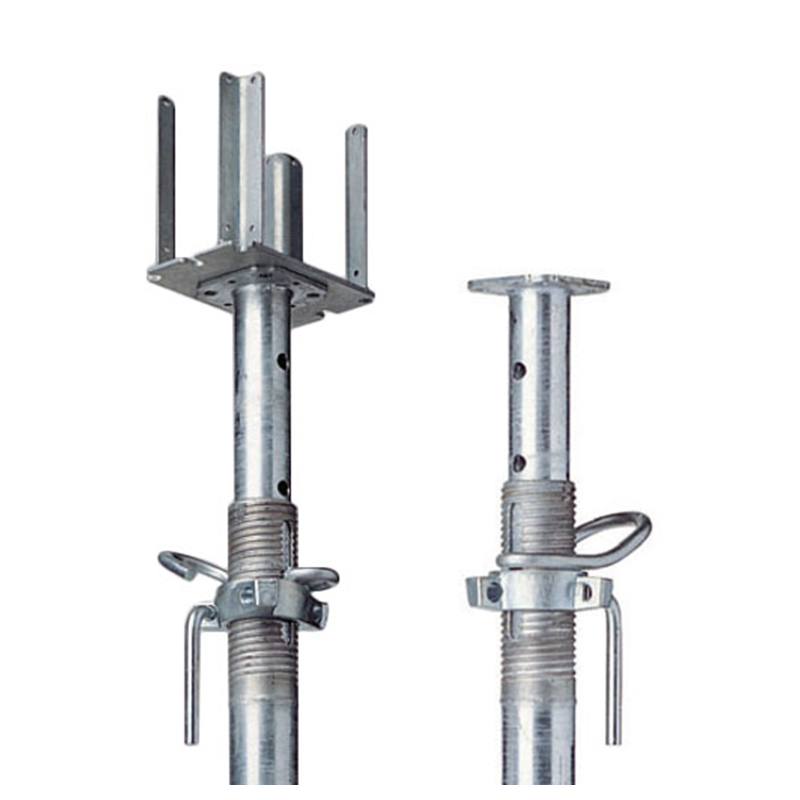
Adjustable base jacks allow the scaffold to be leveled on uneven ground within their approved adjustment range. U-head jacks or top support components can carry timber beams, steel beams, formwork bearers, or other load-distribution members. These accessories are particularly important in bridge formwork and slab-support projects, where the scaffold must accommodate changing elevations and transfer concentrated loads safely.
Platforms, stair units, guardrails, toe boards, access ladders, and safety gates can be added according to the intended use. A complete system should be treated as an engineered assembly rather than a collection of unrelated steel tubes.
How the Cup-Shaped Locking Mechanism Works
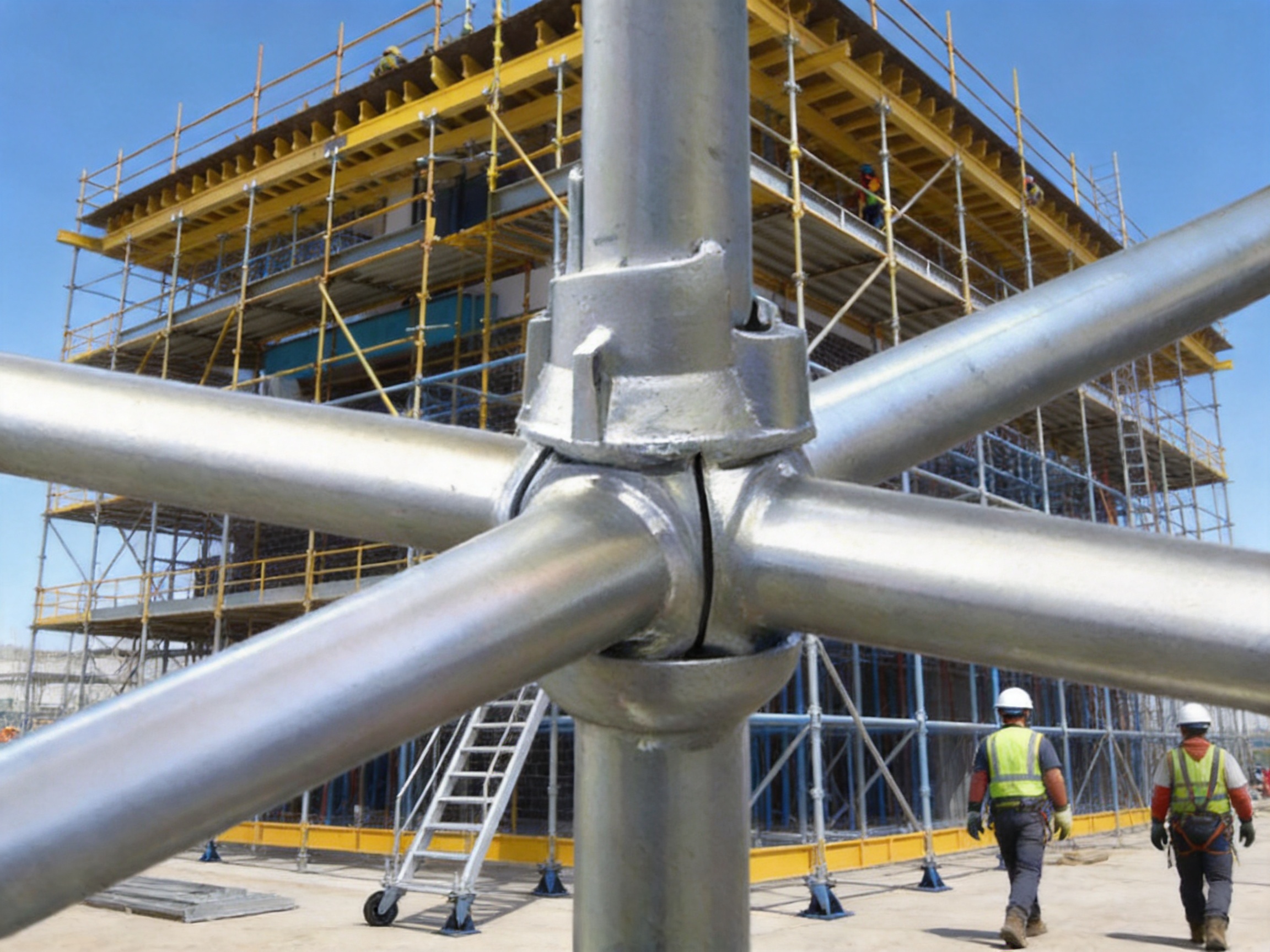
The cuplock node is designed to create a secure connection through a simple mechanical locking action. The ends of the ledgers or transoms are placed in the lower cup around the standard. The upper cup is then positioned over the connection and driven downward. The resulting pressure holds the component blades in place and creates a strong node connection.
This arrangement has several practical advantages. First, it reduces the need for separate fasteners. Second, it enables multiple members to be connected at one level. Third, it provides a visual and physical connection point that can be checked during inspection. Finally, it accelerates repeated assembly because the same sequence is used at each node.
The connection is not merely a convenience feature. It contributes to the overall behavior of the scaffold by creating an organized and consistent load path. Loads applied to platforms and formwork are transferred through transoms and ledgers into the standards, then through base components into the supporting structure. Correctly engaged cups help maintain the intended geometry of this load path.
All locking points should be fully engaged. Workers should never assume that a partially seated cup or incorrectly positioned ledger will perform as a complete connection. Visual inspection, hammer engagement where specified, and compliance with the supplier’s assembly instructions are necessary before the scaffold is loaded.
Cuplock Scaffolding
Advantages Compared with Conventional Scaffolding Systems
Faster Assembly and Dismantling
One of the most important advantages of cuplock scaffolding is its speed of erection. Traditional tube-and-clamp scaffolding requires workers to position and tighten separate clamps at many connection points. Each clamp must be selected, aligned, tightened, and checked. On large projects, these repeated operations consume significant labor time.
With cuplock scaffolding, a single locking action can secure up to four horizontal members at a node. This can increase erection productivity by approximately 30 to 50 percent compared with conventional tubular scaffolding, depending on crew experience, site conditions, design complexity, access, and material handling arrangements.
Faster erection can shorten the time required to create a working platform or temporary support structure. It may also reduce the duration of work at height, lower labor expenditure, and help contractors coordinate more efficiently with concrete, steel, mechanical, and finishing trades.
Fewer Loose Parts
Conventional systems often depend on numerous bolts, nuts, swivel couplers, right-angle couplers, sleeve couplers, and wedges. These parts can be misplaced during transport, lost during installation, or mixed with components from other projects. Missing accessories create delays and may encourage unsafe substitutions.
The cuplock system integrates its main locking mechanism into the standards and ledgers. This reduces the number of loose parts that must be controlled. Rental companies can benefit from simpler stock management, faster return inspections, and lower replacement costs. Contractors can also spend less time sorting small components before each installation.
Reliable Node Strength
High-quality cuplock systems use forged steel cups and connectors rather than brittle cast components for critical connection points. Forged construction generally provides improved toughness, impact resistance, and resistance to cracking under heavy service conditions. This is especially significant when equipment is handled frequently or when scaffolding is used for bridge support and other high-load applications.
Material quality alone does not determine the capacity of a scaffold. The full structural performance depends on steel grade, member dimensions, weld quality, node geometry, bay size, bracing, height, base conditions, eccentric loading, and the applicable design standard. Nevertheless, robust forged nodes provide an important foundation for reliable system performance.
Adaptability to Irregular Structures
Cuplock nodes allow members to be connected at several orientations around the standard. This flexibility supports applications involving curved facades, circular tanks, towers, silos, water-retaining structures, and irregular industrial equipment. Contractors can often adjust the scaffold layout without bending tubes or fabricating large numbers of special pieces.
This adaptability is valuable in renovation and maintenance projects, where existing structures rarely provide a perfectly rectangular work area. A modular bay can be arranged around columns, pipes, tanks, machinery, and architectural features while maintaining a coherent access and support system.
Improved Reusability
Cuplock components are designed for repeated use. When made from suitable steel and protected against corrosion, standards, ledgers, braces, and accessories can be deployed across many projects. Their modular dimensions make it possible to create different configurations from the same basic inventory.
Reusable equipment reduces the need to purchase a new temporary structure for every project. It also supports more predictable rental operations because components can be standardized, inspected, repaired, and returned to service efficiently.
Material Selection and Mechanical Performance
Q235 and Q345 carbon steels are commonly used for cuplock scaffolding components. Q235 provides a practical combination of strength, weldability, and cost efficiency for many general scaffolding applications. Q345 offers higher yield strength and may be selected for components or systems requiring increased load-bearing performance, subject to the approved design and manufacturing specification.
Steel tubes must be manufactured with controlled outside diameter, wall thickness, straightness, and dimensional tolerance. Variations in these characteristics can affect fit-up, alignment, welding, and structural capacity. Raw material inspection should include material certificates, heat or batch traceability, dimensional checks, and visual examination for surface defects.
Critical connection components require careful control because the node is exposed to repeated impact during assembly and dismantling. Forging, machining, heat treatment where applicable, and surface finishing should be controlled to achieve consistent geometry and toughness. A cup that is too loose, too tight, distorted, or poorly aligned can affect the connection’s performance and ease of installation.
Corrosion protection is also important. Depending on the intended service environment, components may be painted, powder coated, electro-galvanized, or hot-dip galvanized. Surface treatment should be selected according to humidity, exposure to rain, salt, chemicals, storage conditions, and expected service life.
Advanced Manufacturing Process
Engineering and Production Planning
A reliable cuplock product begins with controlled engineering. Manufacturing teams review component drawings, material specifications, node spacing, weld details, dimensional tolerances, surface treatment requirements, packaging arrangements, and inspection criteria before production begins.
For customized projects, production planning may also consider special bay lengths, adjustable components, unusual loading requirements, non-standard access arrangements, or compatibility with existing inventory. A clear bill of materials reduces the risk of omissions and helps ensure that standards, ledgers, braces, jacks, platforms, and safety accessories are supplied as a coordinated package.
Laser Cutting and Precision Processing
Advanced laser cutting equipment can be used to process steel plates, connection blades, brackets, base components, gussets, and other fabricated parts. Laser cutting provides accurate profiles, repeatable dimensions, and clean edges. It also supports efficient production of non-standard components for custom scaffolding and steel fabrication projects.
Compared with less controlled cutting methods, CNC laser processing can reduce dimensional variation and improve the consistency of parts before forming and welding. Accurate preparation is especially important for components that must fit into cups, sleeves, base jacks, and structural connections.
Bending, Forming, and Component Shaping
Steel plates and profiles may be formed using controlled bending equipment. Proper bending parameters help maintain the intended radius, angle, and material integrity. Inaccurate forming can create residual stress, distortion, or poor fit-up during assembly.
Components used around circular or curved structures may require specialized dimensions or orientations. A manufacturer with integrated bending capability can provide more complete support for projects that combine standard scaffolding with custom steel access or support structures.
Forging and Node Production
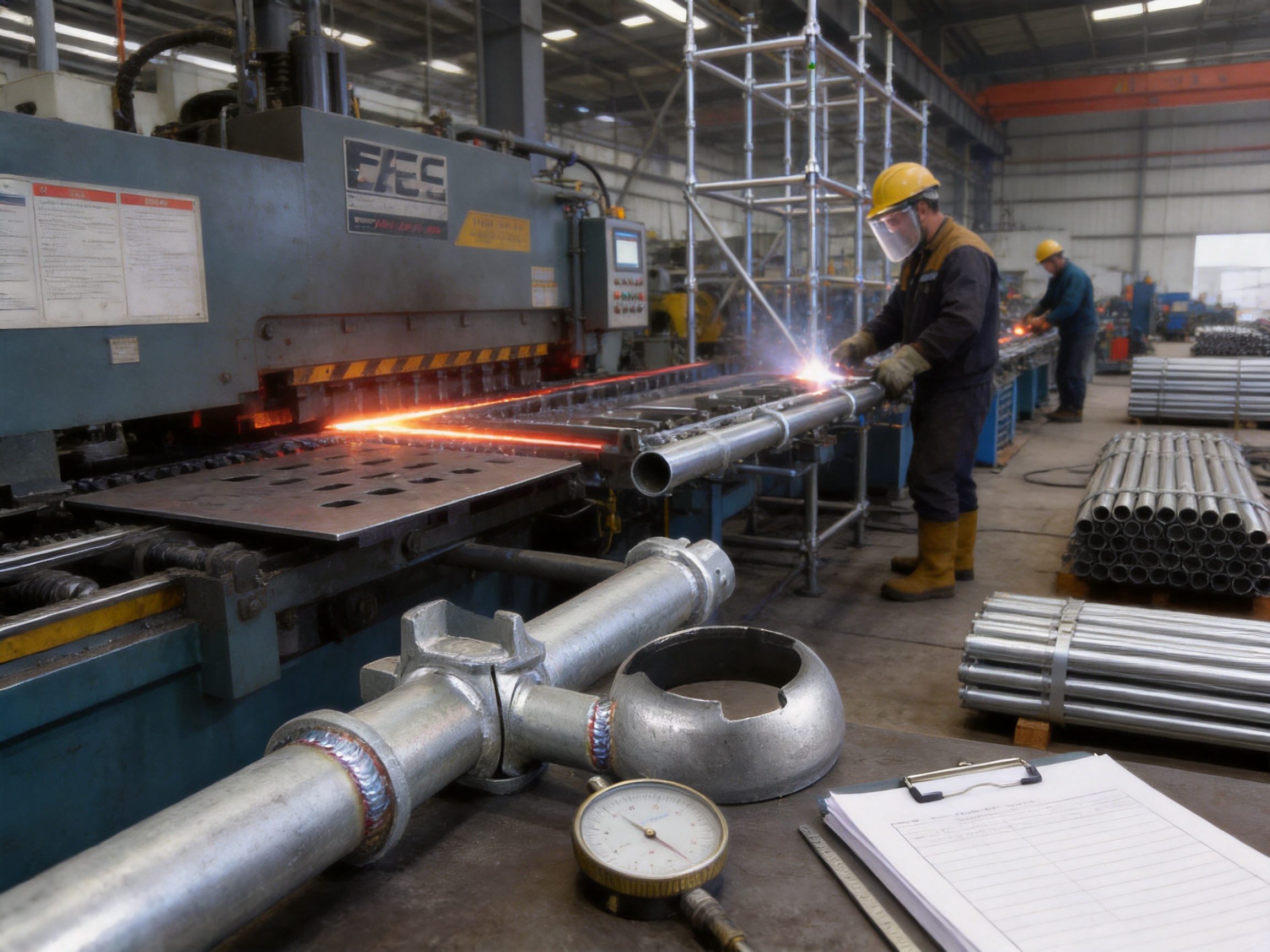
Forged node components are produced by shaping heated steel under controlled pressure. This process can improve the continuity of the material structure and create components capable of resisting repeated impact. After forging, the parts may undergo trimming, machining, drilling, cleaning, dimensional inspection, and surface treatment.
Node manufacturing requires consistent tooling and process control. The inner and outer cup surfaces, locking edges, contact faces, and connection geometry must be maintained within the specified tolerance. Each part should be checked for cracks, incomplete forming, excessive deformation, and other defects before it is incorporated into a scaffold component.
Welding and Assembly
Welding connects blades, sleeves, collars, brackets, and other fittings to the steel tubes. Consistent welding is essential because the welds transfer forces between the tube and the connection component. Automated or semi-automated production can improve repeatability, while qualified manual welding remains important for complex assemblies and customized products.
Professional manufacturers may apply AWS and EN welding practices, supported by qualified welding procedures, trained operators, suitable filler materials, controlled heat input, and inspection records. Welding inspection may include visual examination, dimensional verification, and non-destructive testing where required by the project specification.
Weld areas should be free from visible cracks, unacceptable undercut, incomplete fusion, excessive spatter, and other defects. Components should be checked for straightness and distortion after welding. Corrective work must be controlled so that repairs do not reduce the intended strength or interfere with assembly.
Surface Treatment
After fabrication, steel components may be cleaned through shot blasting or other approved preparation methods. The selected surface treatment should provide suitable adhesion for paint or an appropriate base for galvanizing. Coating thickness, surface coverage, curing, and appearance should be checked before dispatch.
Hot-dip galvanizing can provide durable corrosion protection for scaffolding used in wet, coastal, industrial, or long-term rental environments. Painted systems may offer a cost-effective solution for general applications when maintained properly. Regardless of the treatment, damaged surfaces should be repaired according to the manufacturer’s procedure.
Final Inspection and Packing
Final inspection typically includes dimensional checks, visual examination, component quantity verification, surface treatment inspection, and packaging review. Critical dimensions may include tube length, outside diameter, wall thickness, cup spacing, connector position, blade orientation, and base-jack adjustment range.
Components should be bundled and labeled according to type and length. Proper packing prevents deformation during loading and reduces sorting time at the construction site. For export shipments, packaging should also consider moisture protection, container utilization, lifting safety, and destination handling practices.
Quality Control and Traceability
Quality control should cover the entire manufacturing process rather than relying only on final inspection. Incoming material inspection verifies that the steel matches the required grade and specification. In-process checks confirm that cutting, forming, forging, welding, and coating remain within established parameters.
Traceability allows production personnel to connect finished components with raw material batches, production dates, welding records, inspection results, and surface treatment records. This information is valuable for large infrastructure projects, rental fleets, and clients who require documented quality assurance.
A manufacturer operating under an ISO 9001 quality management system can use documented procedures, corrective actions, internal audits, and continuous improvement methods to support consistent output. Compliance with recognized scaffolding standards such as BS 1139 and EN 74 may further assist clients in evaluating product suitability, provided that the exact supplied configuration and certification scope are verified.
Product quality should never be judged only by appearance or price. Buyers should review material grades, component drawings, permissible loads, test documentation, welding qualifications, coating specifications, inspection procedures, packing lists, and after-sales technical support. A professional supplier should be able to explain how the product is manufactured and how it should be used safely.
Applications in Bridge Formwork Support
Bridge construction often requires temporary support systems capable of carrying substantial concrete, reinforcement, formwork, workers, equipment, and construction loads. Cuplock scaffolding is well suited to this role because its modular grid can be assembled beneath bridge decks, crossheads, beams, and other structural elements.
The system can accommodate changes in elevation through adjustable jacks and can form wide support towers using repeated standards, ledgers, transoms, and braces. Its node connections help create a stable three-dimensional arrangement while reducing the number of separate clamps required.
Bridge projects may involve long spans, uneven terrain, water crossings, traffic restrictions, or limited access. These conditions require detailed engineering. The temporary works designer must consider foundation capacity, settlement, lateral stability, wind, construction sequence, concrete placement, impact risk, and removal procedures.
Cuplock scaffolding can also support staged construction. Sections may be erected in phases, adjusted to the required deck level, and adapted as the bridge geometry changes. This flexibility can reduce the need for extensive custom fabrication while maintaining a consistent component inventory.
Applications in Curved and Irregular Structures
Many industrial and architectural structures are not rectangular. Circular tanks, cooling towers, curved walls, silos, towers, domes, and process vessels require access systems that can follow changing radii and elevations. The multi-directional cuplock node allows ledgers and braces to be arranged around such structures more flexibly than rigid frame systems.
A curved arrangement should still be designed with appropriate bay dimensions and clearances. The scaffold must remain stable and provide safe access without placing excessive eccentric loads on standards or forcing components into unsuitable positions. Where standard components cannot achieve the required geometry, custom brackets, cantilever arrangements, or supplemental access systems may be required.
The advantage is that many irregular layouts can be achieved through coordinated modular connections instead of cutting and bending large quantities of tube on site. This improves repeatability and can make dismantling and reconfiguration more efficient.
Applications in Industrial Maintenance
Oil refineries, power plants, manufacturing facilities, warehouses, and processing plants frequently require temporary elevated access around pipes, vessels, pumps, turbines, cable trays, and structural steel. Maintenance windows may be short, and the work platform may need to be moved or altered as inspection and repair tasks progress.
Cuplock scaffolding supports rapid installation in these time-sensitive environments. Its modular components can be arranged around equipment while retaining clear access routes, working platforms, guardrails, and toe boards. The system is also suitable for repeated use by maintenance contractors and rental companies.
Industrial environments may expose scaffolding to oil, chemicals, heat, vibration, dust, and corrosive atmospheres. Material selection, coating, inspection frequency, housekeeping, and component segregation are therefore important. Contaminated or damaged components should be cleaned, assessed, and repaired before reuse.
Applications in General Building Construction
In masonry and building construction, cuplock scaffolding can serve as a working platform for bricklaying, blockwork, plastering, painting, cladding, window installation, and exterior decoration. Platforms can be arranged at different elevations, while guardrails and toe boards provide essential edge protection when correctly installed.
The system is useful for both new construction and renovation. Its flexible bay arrangement can accommodate setbacks, balconies, columns, projecting slabs, and changes in facade geometry. Internal scaffolds can be configured for atriums, stairwells, large halls, and industrial buildings.
For access scaffolding, the design should consider platform width, worker movement, material storage, loading points, access ladders, stair towers, falling-object protection, ties, and emergency access. Scaffolding should not be overloaded with bricks, blocks, bags of cement, or other materials beyond its rated capacity.
Comparison with Ringlock, Tube-and-Clamp, and Frame Systems
| Characteristic | Cuplock Scaffolding | Tube-and-Clamp | Frame Scaffolding | Ringlock Scaffolding |
|---|---|---|---|---|
| Primary connection | Cup-shaped node with integrated locking action | Separate clamps, bolts, and nuts | Prefabricated frame connections | Rosette and wedge connection |
| Loose parts | Relatively few for the main structure | Many couplers and fastening parts | Moderate, depending on accessories | Few, with wedges and fittings |
| Erection speed | High for repeated modular bays | Generally slower because each clamp is tightened separately | High in regular layouts | High in modular layouts |
| Adaptability | Good for straight, curved, and irregular arrangements | Excellent flexibility but labor intensive | Best for regular facade geometry | Very good for complex three-dimensional structures |
| Heavy support use | Well suited when engineered correctly | Possible but requires detailed connection control | More limited for complex heavy-duty support | Well suited when engineered correctly |
| Inventory control | Simple component families and low small-part loss | More difficult because of many couplers | Easy for standard frame fleets | Relatively simple |
| Typical advantage | Balanced speed, strength, and adaptability | Maximum local flexibility | Fast installation on repetitive facades | High flexibility and multi-directional connection |
Each scaffolding system has a suitable field of application. Tube-and-clamp equipment may be advantageous for highly customized repairs or isolated obstructions. Frame scaffolding can be efficient for repetitive, low- to medium-rise facade work. Ringlock systems provide strong modular flexibility. Cuplock scaffolding is particularly attractive when the project requires a combination of fast node assembly, heavy support capability, low loose-part loss, and broad reusability.
The correct choice should be based on engineering requirements, worker training, available inventory, local regulations, project geometry, load conditions, rental economics, and supplier support. A system should not be selected solely because it appears faster or less expensive in an unassembled state.
Safety and Engineering Requirements
Scaffolding safety begins with design. A competent temporary works engineer or qualified scaffolding professional should determine the required configuration, permissible loads, foundation arrangement, bracing, ties, access, platforms, and sequence of erection and dismantling.
Before use, components should be inspected for bent standards, cracked welds, damaged cups, distorted blades, excessive corrosion, missing locking parts, contaminated surfaces, and illegible identification. Damaged components must be removed from service until they are evaluated and repaired or replaced.
The scaffold should be erected on a firm and level base. Adjustable jacks must remain within their permitted extension range, and sole boards or other load-spreading measures should be used where required. Standards should be plumb, ledgers properly connected, braces installed as designed, and platforms fully supported.
Working platforms should include suitable guardrails, midrails, toe boards, safe access, and protection against falling objects where necessary. Workers should not climb on ledgers or braces unless the system has been specifically designed for that purpose. Unauthorized removal of braces, ties, guardrails, or transoms can significantly reduce stability.
Weather conditions must be considered. High winds, heavy rain, ice, lightning, flooding, and poor visibility may make scaffold use unsafe. External scaffolds should be assessed for wind exposure, while temporary support scaffolds should be protected from impact by vehicles, lifting equipment, and construction machinery.
Loads must be distributed as specified. Concentrated loads from pallets, concrete, steel beams, machinery, or lifting operations require special analysis. Materials should not be stored near unprotected edges or stacked in a way that creates eccentric loading or obstructs escape routes.
Installation Workflow
1. Review the Design
Confirm the approved drawings, bay dimensions, elevations, working loads, support conditions, bracing layout, ties, access points, and erection sequence. Verify that the supplied components match the design.
2. Prepare the Base
Clear debris, evaluate ground bearing capacity, install sole boards or foundations where required, and position base plates or adjustable jacks. Check levels and establish reference lines before installing the first standards.
3. Install the First Lift
Place the standards, ledgers, transoms, and initial braces. The first lift establishes the geometry of the complete scaffold, so alignment and level should be checked carefully.
4. Engage the Cups
Position ledger and transom blades fully into the lower cups. Lower the upper cups and secure them according to the manufacturer’s instructions. Check that each connection is fully seated and not obstructed by dirt, deformation, or incorrect component placement.
5. Add Bracing and Access
Install diagonal braces, platforms, stair units, ladders, guardrails, toe boards, and ties as the scaffold rises. Do not leave a partially erected scaffold accessible to unauthorized personnel.
6. Inspect Before Loading
A competent person should inspect the completed installation and confirm that it is stable, properly tied or braced, correctly founded, and suitable for the intended load. Inspection should also occur after alteration, severe weather, impact, prolonged inactivity, or any event that could affect stability.
Rental Fleet and Lifecycle Benefits
Cuplock scaffolding is well suited to rental operations because its principal components are durable, recognizable, and reusable. The reduced number of loose fastening parts simplifies counting and sorting. Rental operators can organize standards by length, ledgers by bay size, braces by configuration, and accessories by function.
A standardized fleet also makes it easier to prepare quotations and packing lists. Clients can receive a system that is compatible across multiple projects rather than a mixture of components from different connection families. Consistency improves training, erection speed, inspection, and maintenance.
After each rental cycle, components should be cleaned and inspected. Mud, concrete residue, paint, oil, and chemical deposits may conceal damage or interfere with connection engagement. Welds, cups, tubes, end blades, base jacks, and platform components should be checked before the equipment is returned to stock.
Repair procedures should be controlled. Straightening, welding, grinding, drilling, or heating a structural component without authorization may alter its capacity. Components that cannot be restored to the original specification should be permanently removed from service.
Why Manufacturing Capability Matters
The performance of a scaffolding system depends not only on its design but also on the consistency of its production. A manufacturer with integrated laser cutting, bending, forging, welding, surface treatment, inspection, and packing capabilities can better control the complete supply chain.
Integrated production reduces dependence on multiple uncontrolled subcontractors. It can improve communication between engineering and manufacturing teams, shorten lead times for customized components, and make it easier to investigate quality issues. It also allows the supplier to support projects requiring both standard scaffolding and large fabricated steel components.
Advanced fabrication capacity is particularly valuable for infrastructure projects. Bridge formwork, tunnel access, industrial platforms, steel supports, and non-standard temporary works may require components that are not available from an ordinary stock catalog. CNC plate cutting and precision welding can produce brackets, base frames, special transitions, support beams, and other accessories to match project drawings.
The manufacturer behind this product specializes in custom steel formwork, modular scaffolding, heavy-duty steel structures, and OEM metal fabrication. Its production capabilities include automated laser processing, controlled bending, and welding carried out under AWS and EN-oriented practices. The company also operates with ISO 9001 quality management and supplies products aligned with recognized standards such as BS 1139 and EN 74, subject to the specific product and order documentation.
Its experience serving major infrastructure contractors and large engineering projects demonstrates the value of applying strict manufacturing controls to temporary works. Projects involving major bridges, transportation infrastructure, industrial plants, and power facilities require careful documentation, reliable delivery, and the ability to produce both standard and customized steel components.
OEM and Customization Services
Different markets may require different tube dimensions, cup spacing, surface treatments, platform types, base arrangements, packaging methods, labels, and inspection documents. An OEM-capable supplier can adapt production to the customer’s approved specifications while maintaining control over the manufacturing process.
Customization may include special standard lengths, heavy-duty members, adjustable jacks, stair towers, formwork support heads, custom platforms, bridge support frames, protective coatings, branded packaging, and project-specific component identification. Before production, the customer should provide drawings, loading information, quantity schedules, applicable standards, delivery conditions, and any required testing or certification.
Technical communication is essential. A supplier should confirm assumptions regarding design loads, working heights, environmental exposure, connection compatibility, allowable tolerances, and intended use. The final product should be manufactured against an approved specification rather than an informal description alone.
Purchasing Checklist for Cuplock Scaffolding
Buyers should evaluate the following points before placing an order:
Material: Confirm the steel grade, tube dimensions, wall thickness, and traceability documentation.
Node quality: Ask whether the critical cups and connectors are forged, how they are inspected, and what dimensional tolerances apply.
Welding: Review welding procedures, operator qualifications, weld inspection methods, and repair controls.
Surface protection: Select paint, galvanizing, or another coating based on the project environment and expected service life.
Load information: Request rated capacities and design limitations for standards, ledgers, transoms, jacks, platforms, and complete scaffold configurations.
Compatibility: Ensure that all components, including accessories, are designed to work together and are not mixed with incompatible systems.
Documentation: Confirm drawings, packing lists, inspection records, material certificates, installation instructions, and maintenance guidance.
Production capacity: Verify whether the manufacturer can supply the required quantities on schedule and maintain consistent quality across repeat orders.
After-sales support: Determine whether technical assistance, replacement components, training materials, and troubleshooting support are available.
Frequently Asked Questions
What is the main advantage of cuplock scaffolding?
The principal advantage is its integrated cup-shaped node connection. It allows horizontal and diagonal members to be locked rapidly without the large number of loose bolts, nuts, and wedges used in many conventional systems. This improves erection speed, reduces small-part losses, and supports repeatable modular assembly.
Can cuplock scaffolding be used for heavy concrete formwork?
Yes, it can be used for bridge formwork and other heavy temporary support applications when the system is properly engineered. The design must account for concrete weight, reinforcement, formwork, workers, equipment, impact, wind, foundation capacity, buckling, bracing, and construction sequence. The scaffold must never be loaded beyond the approved design capacity.
Is cuplock scaffolding suitable for curved buildings?
Its multi-directional node arrangement makes it suitable for many curved and irregular structures, including tanks, curved walls, towers, and industrial vessels. The exact layout should be designed to maintain safe clearances, stable geometry, proper bracing, and acceptable load distribution.
How does it compare with tube-and-clamp scaffolding?
Tube-and-clamp scaffolding offers excellent local flexibility but requires many individual clamp connections. Cuplock scaffolding generally provides faster erection and easier inventory management while retaining good adaptability. Tube-and-clamp may still be preferred for highly isolated obstructions or unusual details that cannot be addressed with standard modular components.
Are forged cups better than cast cups?
Forged steel cups are generally valued for their toughness and resistance to impact and cracking. However, the complete product must still be evaluated through material control, dimensional inspection, welding quality, load testing where required, and compliance with the applicable standard. A forged component is not a substitute for proper design and inspection.
Can cuplock components be reused?
Yes. The system is designed for repeated assembly and dismantling. Reuse depends on proper handling, storage, cleaning, corrosion protection, regular inspection, and controlled repair. Bent, cracked, severely corroded, or otherwise damaged components should not be reused without professional assessment.
What steel grades are commonly used?
Q235 and Q345 carbon steels are commonly specified for this type of product. The final selection depends on the component, design requirements, applicable standard, and customer specification. Material certificates and batch traceability should be requested for projects with formal quality documentation requirements.
Does the locking mechanism require bolts or nuts?
The main cuplock node does not require separate bolts and nuts for its normal connection. The upper cup locks the ledger or transom blades into the lower cup. Certain accessories, ties, brackets, platforms, or special assemblies may use additional fasteners, depending on the design.
How should cuplock scaffolding be inspected?
Inspection should verify foundations, plumbness, level, cup engagement, member condition, bracing, ties, platforms, guardrails, toe boards, access, loading, and environmental conditions. Inspections should be conducted before first use and after alteration, severe weather, impact, or any event that may affect the structure.
Can a manufacturer provide custom components?
An experienced OEM steel fabricator can produce customized standards, ledgers, braces, jacks, brackets, platforms, support frames, and formwork accessories. Custom work should be based on approved drawings and clearly defined requirements for dimensions, materials, loads, welding, coating, inspection, and packaging.
What information should be provided when requesting a quotation?
Customers should provide the required quantities, component list, dimensions, steel grade, surface treatment, design loads, working height, application, applicable standards, delivery destination, packaging requirements, inspection documentation, and any customization needs. Clear information helps the manufacturer provide an accurate and technically appropriate proposal.
Conclusion
Cuplock scaffolding provides a practical balance of speed, load-bearing performance, modular flexibility, and lifecycle economy. Its cup-shaped locking mechanism reduces loose parts and simplifies the connection of multiple members. Forged steel node components, controlled welding, precision processing, and suitable surface treatment contribute to dependable service in construction, infrastructure, industrial maintenance, and formwork support.
Compared with conventional tube-and-clamp systems, it can significantly reduce repetitive fastening work. Compared with rigid frame systems, it offers broader adaptability to changing elevations and irregular structures. Compared with other modular systems, its value lies in the combination of simple node operation, heavy-duty potential, reusable component families, and efficient rental-fleet management.
The product’s ultimate performance depends on more than the locking mechanism. Safe and successful use requires correct engineering, appropriate foundations, complete bracing, qualified erection crews, regular inspection, controlled loading, and compliance with local regulations. Equally important is the capability of the manufacturer. Advanced laser cutting, forging, bending, welding, quality management, surface treatment, and OEM support help ensure that the supplied components perform consistently from project to project.
For contractors and infrastructure specialists seeking reliable temporary access and support equipment, a professionally manufactured cuplock system can provide a durable foundation for efficient construction. With the right design and disciplined site practices, it can support demanding projects ranging from building facades and masonry platforms to bridge formwork, curved industrial structures, and complex maintenance operations.
References
1. BS 1139, Metal Scaffolding: Technical requirements and general guidance for scaffold components.
2. EN 74, Couplers, spigot pins and baseplates for use in falsework and scaffolds.
3. ISO 9001, Quality Management Systems: Requirements.
4. AWS Structural Welding Standards and recommended practices for steel fabrication.
5. Temporary Works Forum, Principles of temporary works design and management.
6. Occupational safety guidance for the inspection, erection, alteration, and dismantling of scaffolding.
7. Manufacturer technical information for modular cuplock scaffolding systems, forged node components, adjustable supports, and steel formwork accessories.
Product: Cuplock Scaffolding


- Location
- Group 3, Fangzhuang Village, Rucheng Subdistrict, Rugao City, Nantong, Jiangsu, China
- Follow us
- Phone
- +86-13646196162
- info@hysonindustry.com
