 +86-13646196162
 info@hysonindustry.com




 русский
  عربى
عربى 


Box Girder Formwork: Advanced Steel Solutions for High-Precision Bridge Construction
 2026.07.27
Content
- 1 1. The Role of Formwork in Box Girder Construction
- 2 2. Product Configuration and Structural Design
- 3 3. Main Advantages Compared with Conventional Formwork
- 4 4. Manufacturing Process and Quality Control
- 5 5. Manufacturing Strengths of the Supplier
- 6 6. Application Scenarios
- 7 7. Efficiency, Cost, and Lifecycle Value
- 8 8. Installation and Operating Recommendations
- 9 9. Safety Considerations
- 10 10. Comparison with Alternative Formwork Systems
- 11 11. Customization Options
- 12 12. Quality Documentation and Project Support
- 13 13. Environmental and Sustainability Benefits
- 14 14. Selecting the Right Box Girder Formwork Supplier
- 15 15. Frequently Asked Questions
- 15.1 15.1 What is Box Girder Formwork used for?
- 15.2 15.2 Which steel materials are used?
- 15.3 15.3 Can the formwork be used for different girder sizes?
- 15.4 15.4 Is a hydraulic system included as standard?
- 15.5 15.5 How many times can the formwork be reused?
- 15.6 15.6 Does the formwork prevent concrete leakage?
- 15.7 15.7 Can the formwork be used in marine environments?
- 15.8 15.8 How does hydraulic demolding improve efficiency?
- 15.9 15.9 What manufacturing capabilities does the supplier provide?
- 15.10 15.10 Can the formwork be supplied as an OEM product?
- 15.11 15.11 What information is needed for a quotation?
- 15.12 15.12 How should the formwork be maintained?
- 16 16. Conclusion
- 17 References
- 18 Product: Box Girder Formwork
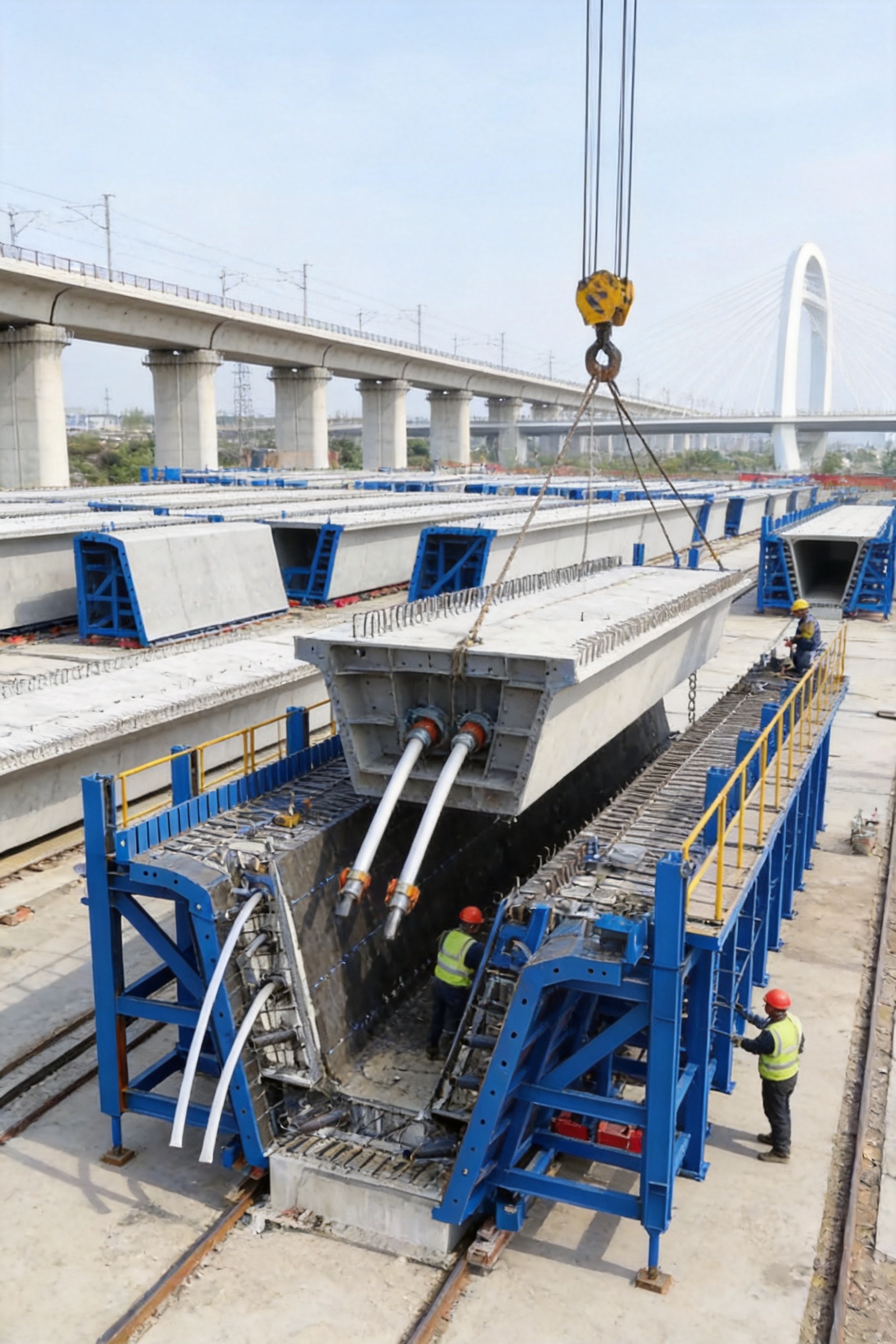
Box girder construction is a central method in modern bridge engineering, particularly for high-speed railways, elevated highways, urban viaducts, interchanges, and sea-crossing infrastructure. The method combines structural efficiency, long spans, strong torsional performance, and a relatively clean visual appearance. However, these benefits depend heavily on the quality, precision, and adaptability of the formwork used during concrete casting. A formwork system that lacks rigidity, sealing performance, adjustment capability, or manufacturing accuracy can result in dimensional errors, grout leakage, surface defects, delayed turnover, and increased project costs.
Box Girder Formwork is engineered as a professional steel forming system for the demanding requirements of large-scale bridge construction. It is designed to support both mass production in prefabrication yards and cast-in-place work carried out directly at the construction site. Through the combination of high-strength structural steel, reinforced frames, hydraulic adjustment, modular panels, precision machining, and strict quality control, the system provides a reliable forming platform for producing accurate and durable concrete box girders.
The formwork is suitable for standardized single-track and double-track railway girders, highway viaducts, ramp structures, continuous beams, segmental box girders, and large bridge components constructed in challenging environments. Its adaptable configuration enables contractors to respond to different beam lengths, cross-sections, curves, and construction sequences without replacing the complete system. This flexibility gives it an important advantage over basic fixed formwork systems that are designed for only one structural specification.
Manufactured by Nantong Hyson Road And Bridge Formwork Co., Ltd., the product reflects more than 15 years of experience in bridge formwork production and large infrastructure applications. The company has supplied solutions for major projects, including the Sutong Yangtze River Bridge and Taizhou Bridge, and applies advanced fabrication practices used in demanding transportation and industrial projects. The result is a steel formwork system that combines practical construction efficiency with the dimensional control required by modern bridge standards.
1. The Role of Formwork in Box Girder Construction
A box girder is a hollow structural member with one or more internal cells. Its closed or semi-closed geometry provides excellent resistance to bending, torsion, and dynamic loading. This makes box girders suitable for bridges exposed to heavy traffic, wind, vibration, complex alignments, and long-term environmental stress. During production, however, the structure requires accurate control of its external surfaces, internal cavity, deck geometry, web thickness, diaphragm openings, and connection zones.
Formwork creates the temporary mold that defines these dimensions while fresh concrete is being placed and compacted. It must retain its shape under the pressure of wet concrete, resist vibration forces, maintain alignment during the curing period, and release from the finished girder without damaging edges or surfaces. The formwork must also allow reinforcement cages, ducts, embedded components, drainage details, and lifting arrangements to be installed efficiently.
In a prefabrication yard, the formwork is often used repeatedly in a highly organized production cycle. The speed of stripping, cleaning, repositioning, reinforcement placement, concrete casting, curing, and inspection directly affects the daily output of the yard. In cast-in-place construction, the same formwork must adapt to restricted access, variable working conditions, changing span arrangements, and the need for safe adjustment at height or over water.
These requirements mean that box girder formwork cannot be treated as a simple steel mold. It is an integrated construction tool. Its design must consider structural strength, operability, worker safety, logistics, maintenance, dimensional tolerances, and compatibility with the contractor’s production process. Box Girder Formwork is developed around this complete construction cycle rather than focusing only on the initial shape of the mold.
2. Product Configuration and Structural Design
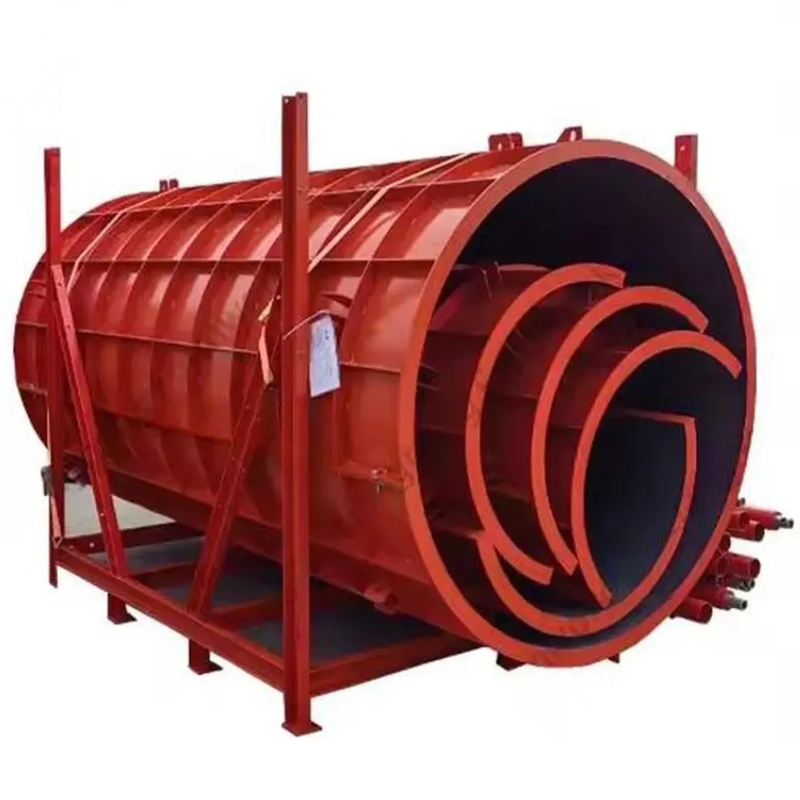
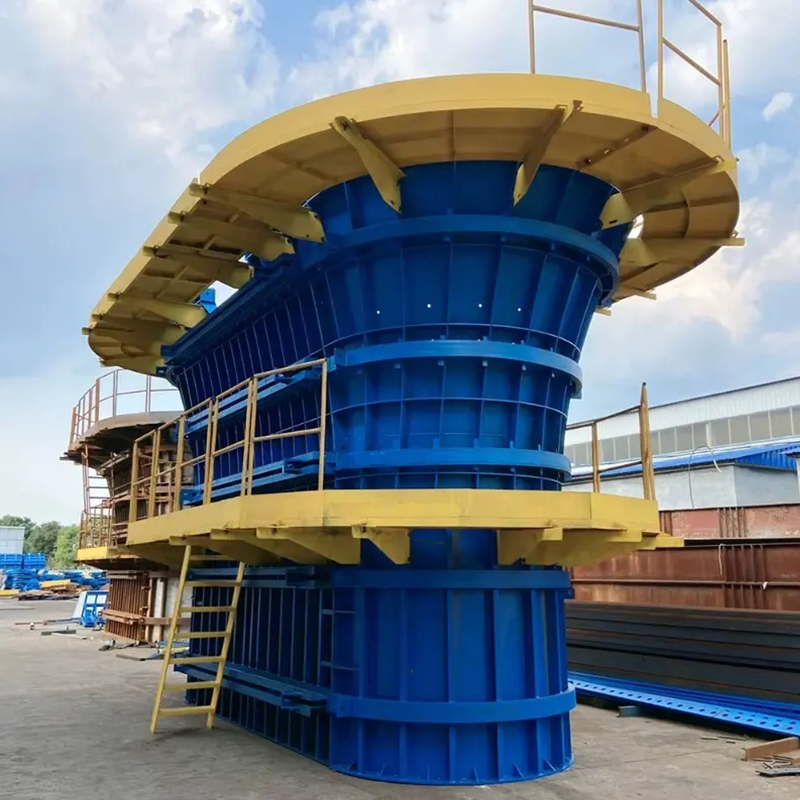
A typical Box Girder Formwork system consists of an external form, an internal form, support frames, adjustable panels, working platforms, access components, alignment devices, sealing interfaces, and hydraulic or mechanical operating equipment. The exact arrangement can be customized according to the girder geometry, production method, project sequence, lifting capacity, and available site space.
The external form defines the side webs, bottom edges, deck edges, and other visible surfaces of the girder. The internal form creates the hollow cavity and controls the internal dimensions. Reinforced steel frames support the panels and transfer concrete pressure to the foundation, support structure, or temporary brackets. The system can be arranged as a fixed casting bed, a movable assembly, a segmental formwork line, or a site-adjustable installation.
The primary structural members are manufactured from Q235B or Q345 steel, selected according to loading requirements and component function. Q235B provides dependable weldability and general structural performance, while Q345 offers increased strength for heavily loaded frames and reinforcement members. The steel selection can be adjusted according to engineering calculations, environmental conditions, lifting requirements, and customer specifications.
Steel stiffeners, transverse ribs, longitudinal beams, connection plates, and reinforced support members are arranged to minimize deflection under concrete pressure. The design is intended to keep the forming surface stable during pouring and vibration. By limiting deformation, the system helps protect the specified girder dimensions and reduces the risk of uneven web thickness, deck level variation, or internal cavity distortion.
Connection components are standardized where possible. This enables panels and support members to be assembled in a logical sequence and makes replacement or modification easier. Quick-locking pins, guide rails, bolts, alignment plates, and adjustable interfaces reduce the time required for installation while helping workers maintain consistent positioning between adjacent components.
For projects involving variable cross-sections or multiple beam lengths, the formwork can incorporate replaceable panels and adjustable parts. Instead of producing a completely new mold for every variation, contractors can modify selected components while retaining the main support structure. This reduces equipment investment and improves the utilization rate of the formwork throughout the project.
3. Main Advantages Compared with Conventional Formwork
3.1 High Strength and Resistance to Deformation
Fresh concrete produces substantial lateral and vertical pressure, especially when placed quickly or compacted using mechanical vibration. If a formwork panel or support frame deflects under this pressure, the finished box girder may develop dimensional deviations, bulging, misaligned edges, or irregular surfaces. Repeated loading can also cause fatigue, loosened connections, and progressive damage to weaker systems.
Box Girder Formwork uses reinforced Q235B or Q345 steel construction to provide the necessary load-bearing capacity. The support arrangement distributes pressure through the panel, ribs, and frame instead of concentrating it at a small number of points. This design improves stability during casting and provides a stronger margin against expansion, twisting, and local deformation.
Compared with lightweight or improvised formwork, the heavy-duty steel configuration is better suited to large box girders and repeated industrial production. Its rigidity supports more consistent dimensional control, which is particularly valuable when girders must be installed in sequence and connected to other bridge components with limited tolerance for deviation.
3.2 Hydraulic Adjustment and Faster Demolding
Manual movement of internal forms can be labor-intensive and may require repeated crane operations. Such work increases cycle time, exposes workers to additional handling risks, and makes it more difficult to achieve repeatable positioning. An optional integrated hydraulic system addresses these problems by allowing controlled movement of the internal mold.
Hydraulic cylinders can assist with expansion, contraction, adjustment, and demolding. After the concrete has reached the required strength, the internal form can be released from the hardened girder in a controlled sequence. The form can then be repositioned for the next casting cycle with reduced manual effort. Hydraulic adjustment also supports more precise alignment than makeshift mechanical methods.
The hydraulic system can be configured to suit the project’s operating method. Depending on the application, controls may be arranged as a centralized system or as coordinated operating points. Safety procedures, pressure limits, locking arrangements, and visual indicators should be included in the final engineering design to ensure that movement is performed only under controlled conditions.
Reduced crane dependence is another practical advantage. Cranes remain essential for many bridge construction operations, but limiting their use for routine formwork adjustment can improve site logistics. It allows lifting equipment to serve reinforcement, concrete, material handling, and segment installation activities rather than being occupied by every demolding operation.
3.3 Precision Sealing and Surface Quality
Grout leakage is one of the most common causes of poor concrete appearance and localized defects. When cement paste escapes through gaps between panels, around corners, or at the internal form interface, the concrete may develop honeycombing, exposed aggregate, fins, voids, or staining. These defects require repair and can compromise the appearance and durability of the structure.
Box Girder Formwork uses precision-machined interfaces and sealing arrangements intended to minimize leakage during casting. Close-fitting panel joints, carefully aligned connection areas, controlled weld finishing, and appropriate sealing materials help maintain a stable mold boundary. The system is designed to keep cement paste inside the formwork during placement and vibration.
A well-sealed formwork system improves more than appearance. It reduces the need for patching, grinding, plastering, and other corrective activities. This can shorten the finishing stage, lower material consumption, and help the contractor maintain a consistent production schedule. Smooth concrete surfaces also support easier inspection and reduce the risk that surface irregularities will interfere with waterproofing, bearings, expansion joints, or other bridge components.
The finished girder can generally achieve a clean and uniform surface when the formwork is correctly assembled, cleaned, sealed, and maintained. In many applications, the smooth finish reduces or eliminates secondary plastering and extensive repair. Final results still depend on concrete mix design, reinforcement congestion, vibration, curing, temperature, and operator practice, but accurate formwork provides a strong foundation for quality control.
3.4 Modular Adaptability
Bridge projects frequently use more than one girder configuration. A route may include standard spans, transition areas, ramps, curved alignments, variable-depth sections, or different deck arrangements. A fixed mold designed for only one geometry can become underutilized once the standard production phase is complete.
The modular design of Box Girder Formwork allows selected components to be replaced, repositioned, or adjusted. Standardized connection parts simplify the modification process, while adjustable panels accommodate variations in beam width, length, depth, and internal cavity arrangement. This gives contractors greater flexibility when project conditions change or when the same equipment is intended for use on multiple bridge sections.
Modularity also improves transportation and storage. Large formwork systems can be divided into manageable assemblies that are easier to load, move, inspect, and reassemble. A modular system may reduce the need for oversized transport and enable a more organized storage plan in a prefabrication yard.
For equipment rental companies and contractors working across several projects, adaptability increases asset value. A formwork system that can serve different structural specifications is more useful than a single-purpose mold. The ability to replace high-wear panels or selected connection components further extends the practical service life of the investment.
3.5 Quick Assembly and Alignment
Assembly time has a direct influence on the project schedule. Delays during initial installation, relocation, or modification can affect reinforcement work, concrete delivery, crane planning, and the overall casting sequence. Box Girder Formwork incorporates quick-locking pins, alignment guide rails, and organized connection points to simplify these operations.
Guide rails help workers bring adjacent components into the correct position before final locking. This reduces repeated measurement and manual adjustment. Connection elements are positioned to support a logical assembly sequence, allowing the formwork to be installed by trained crews using standard lifting and hand tools where appropriate.
Correct alignment is essential for controlling the girder’s width, height, deck level, web geometry, and internal cavity. A formwork system that is easy to align encourages workers to complete the setup carefully rather than bypassing time-consuming adjustment procedures. Clear assembly documentation, identification marks, inspection points, and measurement references can further improve installation consistency.
3.6 Long Service Life and High Turnover
Bridge formwork is a capital asset that should be evaluated across its complete operating life rather than only by purchase price. A low-cost system may become expensive if it requires frequent repairs, has limited reuse cycles, or produces defects that require labor-intensive correction. A robust steel formwork system can provide better lifecycle value through repeated use and maintainable construction.
With appropriate cleaning, storage, inspection, lubrication, sealing replacement, and surface protection, the formwork can be reused approximately 200 to 500 times, depending on the configuration, operating conditions, maintenance quality, and construction method. This range is an application-oriented estimate rather than a universal guarantee. Actual performance depends on loading, handling, weather, impact, chemical exposure, and the discipline of the maintenance program.
Durability is supported by carefully processed steel components, reinforced frames, protected surfaces, replaceable wear parts, and repairable connections. When a panel or accessory eventually reaches the end of its useful life, it may be possible to replace that component without discarding the complete system. This approach reduces waste and preserves the value of the main structural frame.
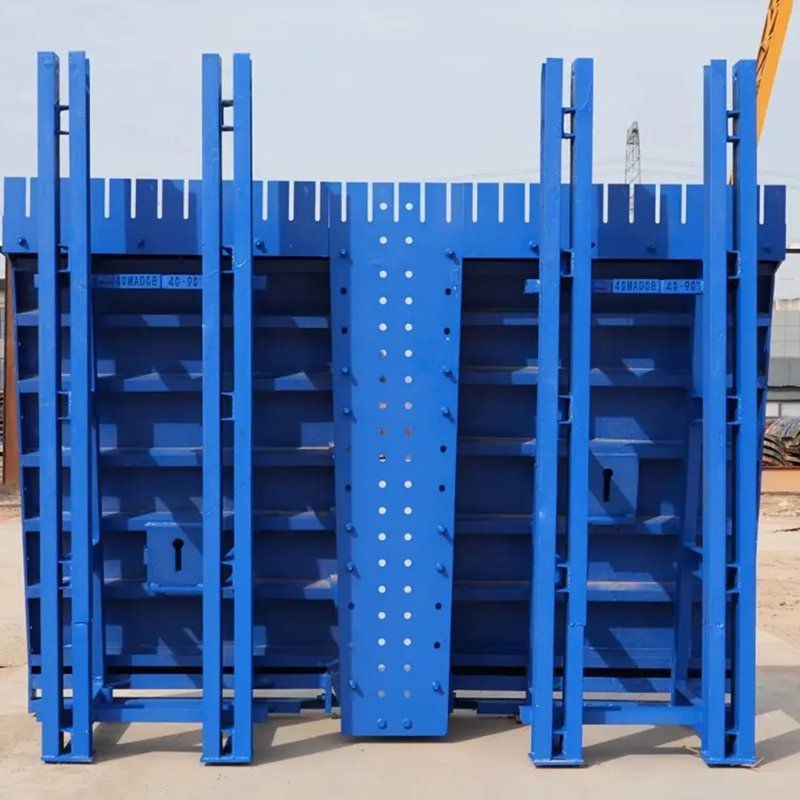
Box Girder Formwork
4. Manufacturing Process and Quality Control
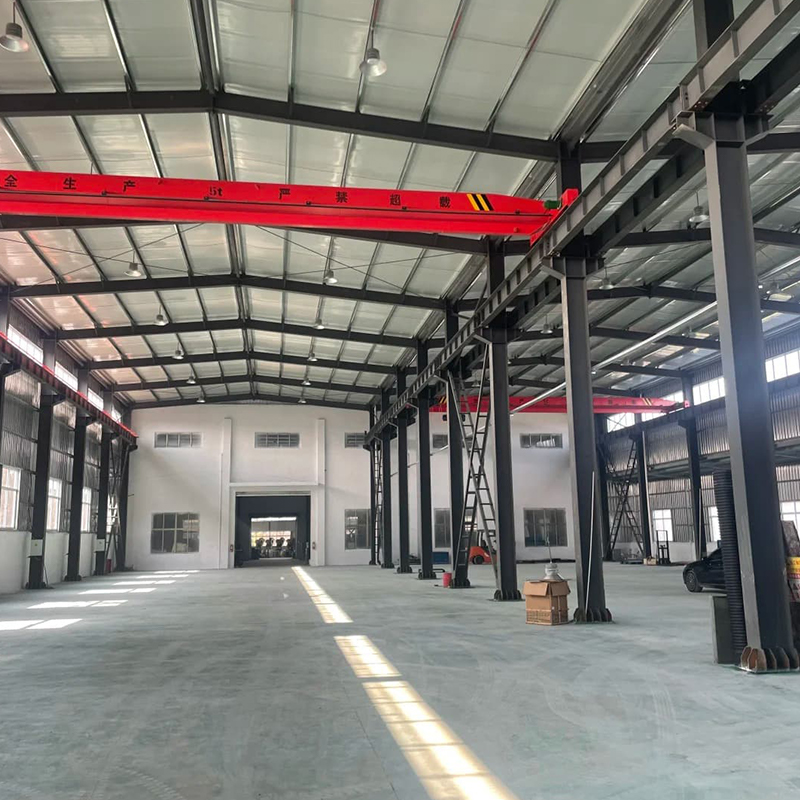
The performance of bridge formwork begins with the manufacturing process. Engineering design, material selection, cutting accuracy, welding quality, dimensional inspection, surface treatment, assembly verification, and packaging all influence how the system performs on site. Nantong Hyson Road And Bridge Formwork Co., Ltd. applies an integrated production approach for custom steel formwork and large structural components.
4.1 Engineering Review and Custom Design
Before fabrication begins, project information is reviewed to determine the girder geometry, expected concrete pressure, casting method, lifting arrangement, hydraulic requirements, turnover schedule, and site constraints. The design team considers whether the system will be used in a prefabrication yard, on a launching structure, over a pier, or in another cast-in-place environment.
Important inputs include beam length, overall width, deck thickness, web thickness, internal cavity dimensions, diaphragm locations, curvature, crossfall, construction joints, reinforcement access, embedded items, and required concrete finish. The design may also need to account for temperature changes, marine exposure, restricted access, transport limitations, and the customer’s existing equipment.
Engineering drawings are developed to define the main assemblies, adjustment ranges, interfaces, hydraulic positions, support points, lifting lugs, platforms, and maintenance areas. Where necessary, the design can be coordinated with the contractor’s reinforcement cages, concrete delivery system, curing arrangement, and production management plan.
4.2 CNC Laser Cutting and Plate Processing
Accurate steel cutting is essential for producing panels and frames that fit together correctly. The company is equipped with advanced laser cutting equipment that supports the production of high-precision plates and non-standard steel components. CNC-controlled cutting helps maintain consistent dimensions and reduces manual marking errors.
Laser cutting is particularly useful for connection plates, stiffeners, access openings, brackets, gussets, reinforcement components, and shaped panel parts. Digital drawings can be transferred into controlled cutting programs, improving repeatability across multiple components. Accurate cutting also reduces the amount of grinding and correction required before assembly.
After cutting, components can undergo deburring, edge treatment, identification, and dimensional inspection. Proper edge preparation is important for welding quality and worker safety. Plate processing may also include bending, forming, drilling, machining, and the preparation of bolt holes or hydraulic connection interfaces.
4.3 Welding and Structural Assembly
Welding transforms individual plates and profiles into rigid frames capable of resisting concrete pressure and repeated construction loads. The company applies certified AWS and EN welding craftsmanship, supported by qualified procedures and trained personnel. Welding parameters are selected according to material grade, thickness, joint type, and structural function.
Critical welded areas include longitudinal beams, transverse ribs, panel stiffeners, lifting points, support frames, brackets, connection bases, and hydraulic support components. Welding sequence is controlled to reduce distortion and residual stress. Assemblies may be tack-welded, checked for squareness and alignment, and then completed using the approved welding procedure.
Quality checks may include visual inspection, dimensional verification, weld profile assessment, and additional non-destructive testing where required by the project or component risk level. The purpose is to identify incomplete fusion, cracks, undercut, excessive porosity, distortion, or other conditions that could affect structural reliability.
4.4 Machining and Forming Surface Preparation
The forming surface is the direct interface with the concrete and must be manufactured with care. Uneven joints, excessive weld buildup, dents, or inaccurate panel geometry can be transferred to the finished girder. Precision machining and finishing processes are used to improve the flatness, edge alignment, and connection accuracy of the formwork surfaces.
Panel edges are checked to ensure that adjoining sections close correctly. Corner transitions are prepared to reduce sharp discontinuities and facilitate concrete release. Internal surfaces are cleaned and treated according to the selected protection system. Where release agents are used, the surface must be compatible with the agent and free from contamination before each casting cycle.
Machining also supports the accuracy of hydraulic mounting points, guide rails, locking positions, and removable adjustment interfaces. These details may appear small, but errors in such components can create alignment problems throughout the complete formwork assembly.
4.5 Surface Protection and Corrosion Control
Steel formwork may be exposed to cement paste, moisture, rain, coastal air, cleaning water, and mechanical abrasion. Corrosion protection is therefore important for both appearance and service life. Surface preparation removes rust, oil, scale, and contaminants before protective coatings are applied.
The coating system can be selected according to the operating environment. Standard construction conditions may require a conventional industrial coating, while marine or high-humidity locations may require enhanced corrosion resistance. Areas subject to repeated friction, such as guide interfaces and locking points, may need specialized treatment or replaceable protection.
Coating quality is influenced by surface cleanliness, profile, environmental conditions, film thickness, curing time, and handling. Inspection records can be maintained for coating thickness and visual condition. During service, damaged areas should be repaired promptly so that localized corrosion does not spread to structural members or connection zones.
4.6 Trial Assembly and Final Inspection
Trial assembly is a valuable quality-control step for complex formwork. Main sections can be assembled in the workshop to confirm that panels, frames, guide rails, pins, hydraulic components, platforms, and adjustment mechanisms operate together as intended. This helps identify interference, missing parts, incorrect hole positions, and dimensional deviations before shipment.
Final inspection may cover overall dimensions, panel flatness, connection accuracy, weld quality, hydraulic cylinder mounting, locking mechanisms, lifting points, access facilities, coating condition, component identification, and packaging. Inspection results can be documented for traceability and customer approval.
For export orders or complex project deliveries, components can be labeled according to assembly drawings and packing lists. This reduces confusion during site installation and makes it easier to identify replacement parts, maintenance items, and module positions.
5. Manufacturing Strengths of the Supplier
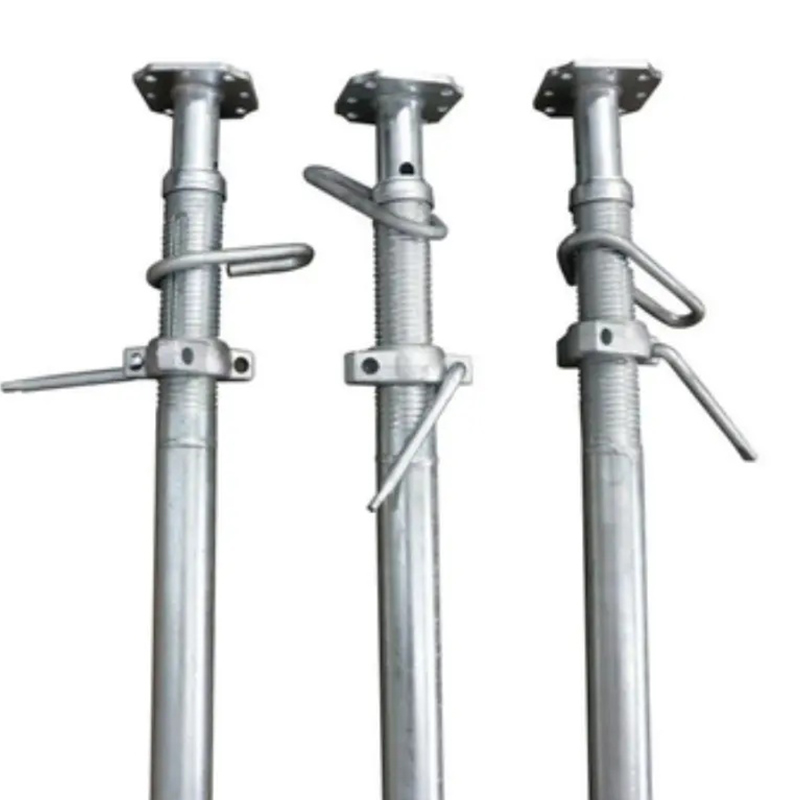
Nantong Hyson Road And Bridge Formwork Co., Ltd. is a professional manufacturer of custom steel formwork, bridge construction equipment, ringlock scaffolding, steel props, heavy-duty steel structures, and OEM metal components. Its product capability combines design, steel processing, laser cutting, bending, welding, assembly, and quality control within one manufacturing organization.
This integrated capability is important for customized box girder formwork. Customers do not need to coordinate every structural component with separate workshops that may use different standards or production methods. A unified manufacturer can manage the relationship between plate cutting, stiffener arrangement, welding, hydraulic interfaces, surface finishing, and final assembly more effectively.
The company has advanced laser cutting equipment and standardized production lines for high-precision non-standard steel components. Automation improves repeatability and supports the efficient production of multiple similar modules. Standardized processes also make it easier to maintain consistent dimensions across large formwork sets.
Hyson applies certified AWS and EN welding craftsmanship and maintains an ISO 9001 quality management system. The company also works with product requirements associated with BS1139 and EN74 international standards for relevant scaffolding and access products. These certifications and standards reflect a structured approach to production management, although the final formwork specification should always be confirmed against the applicable project codes and customer requirements.
With 12 utility patents and experience supplying central state-owned enterprises and major engineering contractors, the company has developed practical knowledge of large infrastructure manufacturing. Its project experience includes bridge, power, transportation, and industrial applications. This background supports the design of equipment that is not only technically sound but also suitable for real construction schedules and site conditions.
The company provides OEM and customized services for global clients. Customization may involve dimensions, steel grades, hydraulic systems, lifting arrangements, connection details, surface treatments, modularity, packing, documentation, and delivery requirements. The ability to produce both standard and non-standard components allows the formwork to be matched to the actual bridge design rather than forcing the project to adapt to a generic mold.
6. Application Scenarios
6.1 High-Speed Railway Bridges
High-speed railway bridges demand strict control of alignment, deck geometry, surface finish, and production consistency. Large prefabrication yards often produce many similar box girders, making turnover speed and repeatability especially important. Box Girder Formwork supports standardized mass production by providing a rigid mold, adjustable internal form, efficient stripping, and quick repositioning.
The system can be configured for single-track or double-track girders, subject to the project’s geometry and loading requirements. Accurate panel interfaces help maintain consistent dimensions across repeated casting cycles. Hydraulic demolding can reduce the time between concrete curing and the next casting operation, contributing to a more predictable production rhythm.
6.2 Highway Interchanges and Viaducts
Highway projects often include ramps, merging lanes, curved alignments, variable widths, and continuous beams with changing cross-sections. A modular formwork system is useful because it can be adapted to different structural sections without requiring a completely separate mold for every location.
For prefabricated highway girders, the formwork can be arranged in a production yard with controlled lifting, reinforcement, casting, and curing operations. For cast-in-place viaducts, the system can be integrated with temporary supports, working platforms, and site lifting arrangements. The exact configuration depends on the bridge method statement and structural design.
6.3 Segmental Box Girder Production
Segmental construction requires high dimensional consistency because individual segments must fit together during assembly. Errors in segment width, joint profile, embedded items, or internal geometry can accumulate across a span. A precision steel formwork system helps create repeatable segment dimensions and clean joint surfaces.
Modular panels and replaceable adjustment sections can support different segment lengths or cross-sections. The formwork can be coordinated with reinforcement cages, ducts, anchor zones, lifting devices, and match-casting requirements where applicable. Detailed engineering coordination is necessary to ensure that the formwork supports the selected segment production method.
6.4 Sea-Crossing Bridges and Marine Environments
Marine construction exposes equipment to salt-laden air, high humidity, wind, spray, and difficult logistics. Corrosion-resistant design and surface protection are therefore important. Formwork used near the sea should include suitable coating systems, protected connection areas, drainage considerations, and a regular cleaning and inspection program.
The heavy-duty steel structure is suitable for demanding box girder construction, but marine service life depends on proper environmental protection. Damaged coatings should be repaired quickly, cement residue should not be allowed to remain on steel surfaces, and hydraulic components should receive appropriate corrosion protection and maintenance.
6.5 Urban Elevated Roads and Complex Infrastructure
Urban projects often operate in restricted spaces with limited access, traffic constraints, nearby buildings, and strict noise or schedule requirements. A formwork system that can be assembled in modules and adjusted with reduced crane use can help contractors manage these limitations.
The clean concrete finish also benefits urban infrastructure, where visible bridge surfaces are often close to pedestrians, vehicles, and adjacent buildings. Reducing surface repair work can minimize disruption and improve the appearance of the completed viaduct.
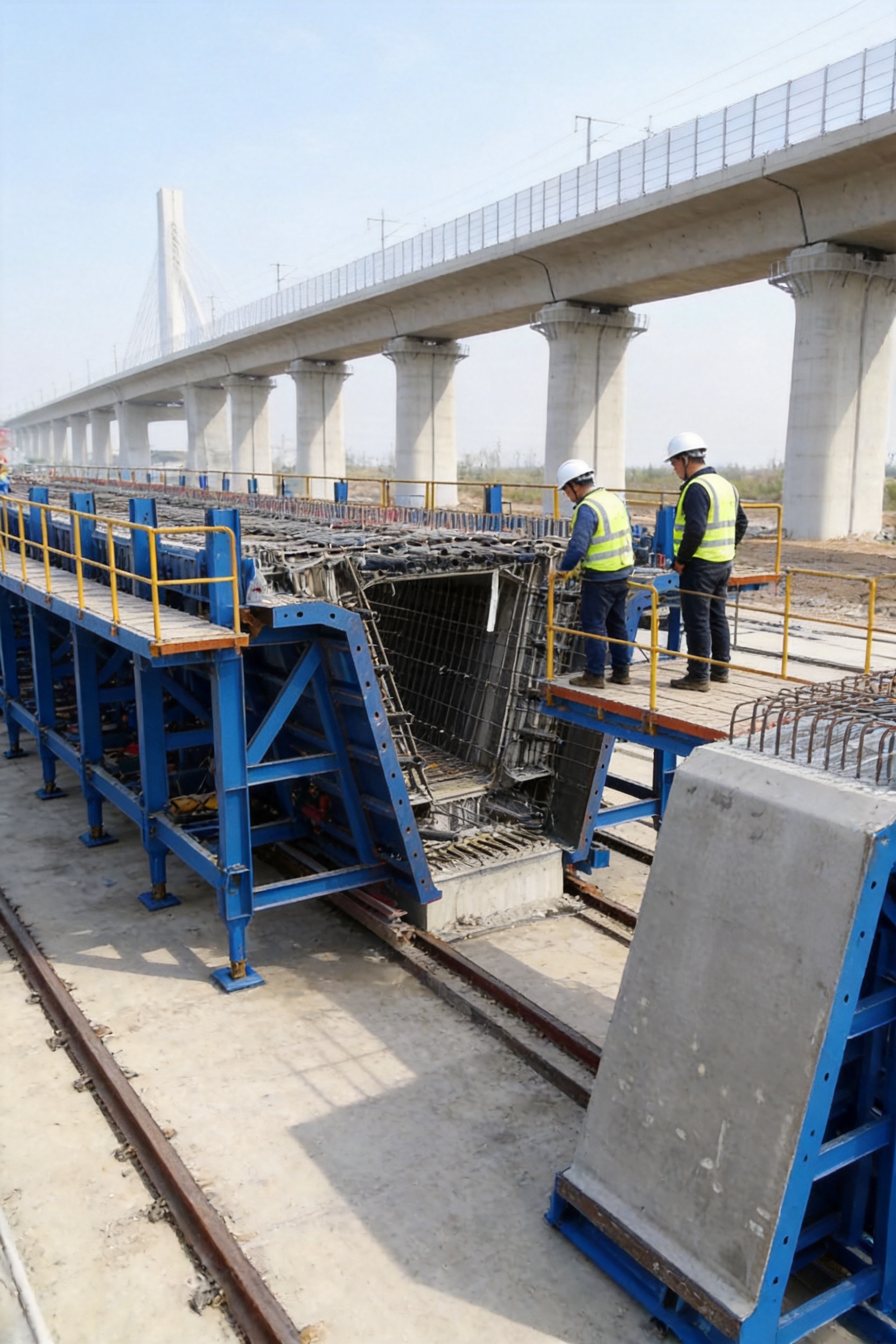
7. Efficiency, Cost, and Lifecycle Value
The economic value of box girder formwork should be assessed through total lifecycle cost. Purchase price is only one part of the calculation. Other factors include installation labor, crane utilization, casting cycle time, repair frequency, concrete surface correction, adaptability to different sections, transport, storage, maintenance, and resale or rental potential.
Hydraulic operation can reduce the number of workers needed for repeated internal mold movement and can shorten the demolding process. Faster turnover allows the same formwork set to support more girders during a defined project period. This may reduce the number of molds required for the complete production target.
Precision sealing reduces the cost of correcting honeycombing, fins, grout runs, and other surface defects. Although proper concrete placement and vibration remain essential, a well-manufactured formwork system removes one major source of quality problems. Less repair work also means fewer interruptions between casting and subsequent operations.
Modularity provides economic value when project requirements change. The contractor may adapt the existing equipment to different girder dimensions instead of purchasing a new complete system. Replaceable panels and components also allow targeted maintenance rather than full equipment replacement.
High reuse potential supports a lower cost per casting over the working life of the formwork. To achieve this benefit, the operator should establish a maintenance plan that includes cleaning after every use, checking panel joints, inspecting welds and pins, lubricating moving parts, monitoring hydraulic systems, repairing coating damage, and storing components on suitable supports.
For contractors and equipment rental providers, documentation is also part of lifecycle value. Clear assembly drawings, component identification, inspection records, hydraulic instructions, and maintenance recommendations help preserve performance when the equipment is moved between projects or operated by different teams.
8. Installation and Operating Recommendations
8.1 Site Preparation
Before installation, the support foundation, casting bed, temporary structure, or working platform should be checked for level, bearing capacity, alignment, drainage, and access. The support arrangement must be capable of transferring the expected formwork and concrete loads without unacceptable settlement or movement.
Storage areas should be organized so that panels and frames remain clean, dry, and accessible. Components should not be dragged across the ground or stacked in a way that causes permanent deformation. Lifting points and recommended handling methods should be identified before installation begins.
8.2 Assembly and Alignment
Assembly should follow the approved drawings and component identification system. Main frames are generally positioned first, followed by support members, external panels, internal panels, adjustment mechanisms, platforms, guide rails, and locking components. Connections should be installed without forcing misaligned parts into position.
After rough assembly, the formwork should be checked for longitudinal alignment, transverse dimensions, elevation, camber or required slope, internal cavity size, panel contact, and access clearance. Hydraulic components should be connected and tested before concrete placement. All locking devices must be fully engaged and secured.
8.3 Pre-Pour Inspection
A pre-pour inspection should confirm that the formwork is clean, sealed, dimensionally correct, and free from loose tools or debris. Release agent should be applied evenly and only after the forming surface has been properly prepared. Reinforcement, ducts, embedded plates, drainage components, and construction joints should be checked against the approved drawings.
Particular attention should be given to corners, panel joints, internal form interfaces, end bulkheads, diaphragm areas, and locations where grout leakage is most likely. Any gap or damaged seal should be corrected before concrete placement rather than relying on emergency repairs during the pour.
8.4 Concrete Placement and Vibration
Concrete should be placed according to the approved method statement. Pouring speed, sequence, layer thickness, temperature, and vibration should be controlled to avoid uneven pressure and segregation. Excessive vibration or poorly coordinated placement can create loading conditions beyond the assumptions used for formwork operation.
During casting, workers should monitor panel movement, connection behavior, hydraulic pressure, leakage, and alignment. If abnormal displacement or leakage occurs, the operation should be paused and the cause identified. Formwork should not be adjusted while workers are exposed to uncontrolled concrete pressure or moving equipment.
8.5 Demolding and Maintenance
Demolding should begin only after the concrete has reached the specified strength and the responsible technical personnel have authorized the operation. Hydraulic cylinders or mechanical adjustment devices should be operated in the intended sequence. Sudden impact, forced extraction, or premature release can damage both the formwork and the concrete.
After stripping, the forming surfaces should be cleaned using methods that do not cause unnecessary scratching or distortion. Hardened concrete should be removed carefully. Seals, pins, guide rails, welds, locking mechanisms, and hydraulic hoses should be inspected before the next cycle.
Any defects should be recorded and corrected promptly. A simple maintenance log can track the number of uses, repairs, coating condition, hydraulic service, dimensional checks, and replacement of wear components. Such records help predict maintenance requirements and support safe long-term operation.
9. Safety Considerations
Box girder formwork is heavy equipment and should be handled only by trained personnel under an approved lifting and installation plan. Workers must use suitable personal protective equipment and follow site rules for lifting, working at height, hydraulic operation, welding, and access to restricted areas.
Hydraulic systems should include suitable pressure control, locking arrangements, hose protection, and inspection procedures. Workers should never stand beneath suspended assemblies or enter areas where a form may move unexpectedly. Before adjustment or maintenance, stored energy should be isolated and the equipment should be mechanically secured.
Working platforms, ladders, handrails, toe boards, and access gates should be installed and maintained according to the project safety requirements. Platforms must not be overloaded with materials or equipment. Lighting and housekeeping are particularly important during night work or high-cycle prefabrication operations.
The formwork should be inspected after unusual events such as impact, excessive concrete pressure, foundation settlement, hydraulic malfunction, or severe weather. Structural members that show cracks, permanent deformation, loose welds, or serious corrosion should be taken out of service until they have been assessed and repaired.
10. Comparison with Alternative Formwork Systems
Timber formwork can be economical for small or irregular projects, but it generally has lower dimensional stability and shorter reuse potential in high-cycle box girder production. Moisture, repeated stripping, and handling can change its geometry. Steel formwork provides stronger resistance to repeated loading and better consistency for standardized bridge components.
Lightweight aluminum or thin-panel systems may be convenient for certain structures, but large box girders impose significant pressure and require substantial support. Heavy steel formwork offers a more robust solution where rigidity, long-term reuse, and resistance to impact are priorities.
Fixed single-purpose steel molds can provide excellent accuracy for one girder specification, but they may become inefficient when the project includes different lengths, curves, or cross-sections. Modular Box Girder Formwork offers greater flexibility because selected components can be adjusted or replaced.
Manual internal molds may have a lower initial equipment cost, but they can require more labor and crane time. An optional hydraulic system increases the equipment sophistication while improving demolding efficiency, repositioning accuracy, and operator productivity.
| Evaluation Factor | Conventional Fixed Formwork | Box Girder Formwork | Practical Project Benefit |
|---|---|---|---|
| Structural rigidity | Depends on basic frame design | Reinforced Q235B/Q345 steel frame and stiffeners | Improved resistance to concrete pressure and deformation |
| Configuration range | Usually limited to one girder size | Modular panels and adjustable interfaces | Supports multiple lengths and cross-sections |
| Demolding method | Mostly manual or crane-assisted | Optional integrated hydraulic adjustment | Reduced labor and crane demand |
| Leakage control | Dependent on manual fitting quality | Precision-machined joints and sealing design | Cleaner concrete surfaces and less repair work |
| Assembly speed | May require extensive manual alignment | Quick-locking pins and alignment guide rails | Shorter setup and relocation time |
| Reuse potential | Varies significantly | Approximately 200–500 uses with maintenance | Lower cost per casting over the lifecycle |
| Customization | Often limited after fabrication | OEM design and replaceable modules | Better response to project-specific requirements |
| Manufacturing control | May involve multiple independent suppliers | Integrated cutting, bending, welding, machining, and inspection | More consistent component quality and traceability |
The comparison does not mean that one formwork type is suitable for every bridge. Project scale, geometry, construction method, budget, schedule, and local standards must be considered. However, for large infrastructure projects requiring repeated box girder production, the combination of strength, modularity, hydraulic operation, and manufacturing control provides a strong competitive advantage.
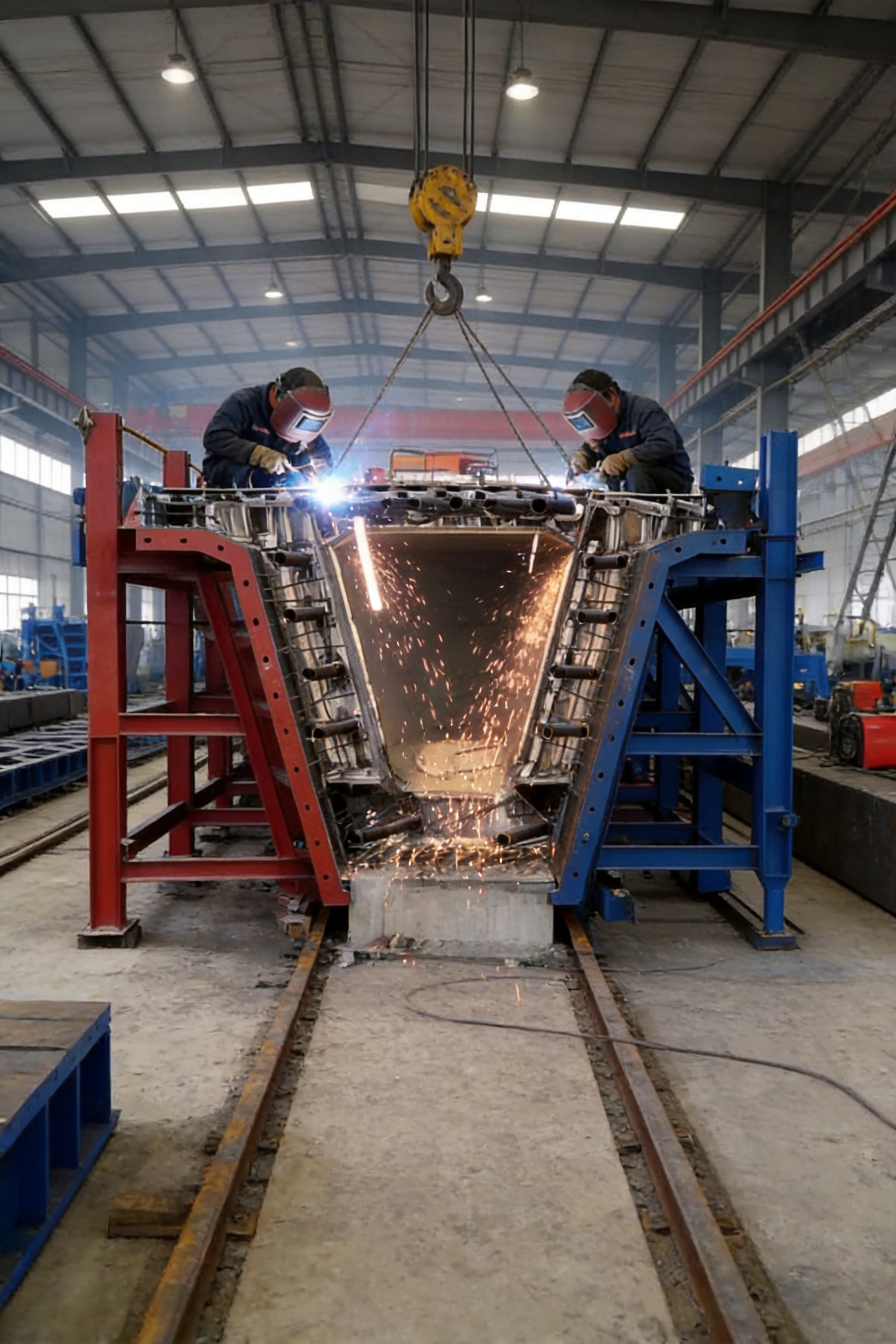
11. Customization Options
Box Girder Formwork can be engineered according to the customer’s bridge drawings and construction method. Customization begins with the forming geometry and extends to operating equipment, support arrangement, surface protection, access systems, and delivery format.
Possible customization areas include overall girder length, width, depth, internal cavity shape, web angle, deck crossfall, end geometry, diaphragm openings, segment length, curvature, variable-depth transitions, and match-casting interfaces. The external and internal forms can be designed as independent modules or as a coordinated hydraulic assembly.
Customers may also specify steel grades, coating systems, lifting points, transport divisions, working platforms, handrails, inspection openings, guide rails, locking components, hydraulic cylinders, control arrangements, and spare parts. Where the formwork will be used in a marine environment, enhanced corrosion protection can be incorporated into the design.
For contractors with existing equipment, the new formwork can be coordinated with available cranes, casting beds, launching systems, hydraulic power units, reinforcement cages, or curing facilities. Early technical communication helps prevent conflicts between the formwork and other site systems.
12. Quality Documentation and Project Support
Reliable formwork supply includes more than the physical steel assemblies. Engineering drawings, assembly instructions, inspection documents, material information, welding records, coating records, hydraulic manuals, packing lists, and maintenance recommendations all contribute to successful project implementation.
Before delivery, the supplier can coordinate the document package according to the customer’s requirements. Component numbering and assembly marks help site personnel identify the correct sequence. For large systems, shipping in clearly organized modules reduces installation confusion and supports efficient inventory control.
Technical communication can continue during installation and commissioning. Questions regarding alignment, hydraulic adjustment, sealing, replacement parts, or maintenance should be addressed by qualified technical personnel. The exact level of support depends on the project scope, delivery terms, and agreed service arrangement.
For international customers, clear communication of dimensions, units, applicable standards, packing methods, customs documentation, and site conditions is especially important. A detailed technical specification reduces the risk of misunderstandings and helps ensure that the delivered equipment is compatible with the construction plan.
13. Environmental and Sustainability Benefits
Reusable steel formwork supports more sustainable construction by reducing the need for disposable timber, repeated temporary materials, and frequent replacement. A durable formwork system can remain in service across many casting cycles, lowering material consumption per box girder.
Precision forming can also reduce the amount of repair mortar, patching material, surface treatment, and concrete waste associated with defective casting. Lower repair requirements save materials and reduce the labor and energy used for correction.
Steel components have a long service life and can be repaired, modified, or recycled at the end of their useful operation. Modular construction improves this benefit because individual panels and accessories may be replaced without discarding the entire frame.
Efficient hydraulic demolding and reduced crane usage may contribute to lower equipment operating time. Although the complete environmental impact depends on the project’s energy sources, transport distance, maintenance, and construction method, a high-turnover reusable steel system provides a practical basis for resource-efficient bridge production.
14. Selecting the Right Box Girder Formwork Supplier
When evaluating suppliers, contractors should consider engineering capability, material quality, fabrication equipment, welding standards, inspection procedures, project experience, customization capacity, delivery reliability, and after-sales support. A supplier that only sells generic panels may not be able to manage the full structural and operational requirements of a complex bridge system.
Experience with major infrastructure projects is valuable because bridge formwork must perform under strict schedule and quality demands. The supplier should be able to discuss concrete pressure, deflection control, demolding sequence, access safety, modular adjustment, corrosion protection, and maintenance rather than focusing only on steel weight or external appearance.
Manufacturing facilities should be capable of producing large welded assemblies with consistent dimensions. CNC cutting, controlled welding, machining, trial assembly, and final inspection are indicators of a more reliable production process. Customers should also confirm how the supplier manages non-conforming components, design changes, replacement parts, and technical documentation.
The best formwork solution is not necessarily the heaviest or most expensive. It is the system that balances structural performance, cycle time, adaptability, safety, durability, and total cost for the actual bridge project. A detailed technical review before ordering allows the system to be optimized for the contractor’s construction method.
15. Frequently Asked Questions
15.1 What is Box Girder Formwork used for?
It is used to form concrete box girders for high-speed railways, highway bridges, viaducts, interchanges, segmental bridge construction, cast-in-place structures, and sea-crossing projects. The system can be configured for prefabrication yards or on-site casting.
15.2 Which steel materials are used?
The main structural components can be manufactured from Q235B or Q345 steel, depending on the load requirements, frame arrangement, environmental conditions, and customer specifications. The final material selection should be confirmed through project engineering calculations and applicable standards.
15.3 Can the formwork be used for different girder sizes?
Yes. The modular design can include adjustable panels, replaceable sections, and standardized connections that allow the system to be adapted to different beam lengths, curves, widths, depths, and variable cross-sections. The available adjustment range depends on the approved design.
15.4 Is a hydraulic system included as standard?
An integrated hydraulic system is available as an optional configuration. It can support internal mold expansion, contraction, demolding, and repositioning. Customers should specify the desired hydraulic functions, operating sequence, power supply, control method, and safety requirements during the design stage.
15.5 How many times can the formwork be reused?
With appropriate operation and maintenance, the formwork may be reused approximately 200 to 500 times. Actual service life depends on concrete pressure, handling practices, environmental exposure, cleaning, inspection, repair, coating maintenance, and the design of the specific formwork set.
15.6 Does the formwork prevent concrete leakage?
The system uses precision-machined interfaces and sealing arrangements to minimize grout leakage. Effective results also require correct assembly, clean panel joints, proper sealing maintenance, suitable release agent application, and controlled concrete placement and vibration.
15.7 Can the formwork be used in marine environments?
Yes, it can be designed for sea-crossing bridge construction and other corrosive environments. Marine applications should include suitable surface protection, corrosion-resistant details, regular cleaning, coating inspection, and maintenance of hydraulic and connection components.
15.8 How does hydraulic demolding improve efficiency?
Hydraulic demolding reduces manual handling and can reduce the frequency of crane operations. It supports controlled movement of the internal form, improves repositioning accuracy, and may shorten the time between casting cycles when operated according to the approved procedure.
15.9 What manufacturing capabilities does the supplier provide?
The supplier provides custom steel fabrication, CNC laser cutting, plate processing, bending, welding, machining, surface treatment, assembly, and inspection. These capabilities support the production of complete formwork systems and large non-standard steel components.
15.10 Can the formwork be supplied as an OEM product?
Yes. OEM customization can cover dimensions, structure, hydraulic equipment, connection details, coating, packaging, component marking, and documentation. Customers should provide bridge drawings and construction requirements for technical evaluation.
15.11 What information is needed for a quotation?
Useful information includes girder drawings, dimensions, concrete weight, casting method, expected turnover frequency, number of formwork sets, internal and external geometry, hydraulic requirements, site conditions, applicable standards, delivery location, and desired accessories. Detailed information improves quotation accuracy and reduces later design changes.
15.12 How should the formwork be maintained?
After each use, the forming surfaces should be cleaned and inspected. Pins, guide rails, seals, welds, hydraulic components, locking devices, platforms, and coating condition should be checked regularly. Damaged components should be repaired or replaced before the next casting cycle.
16. Conclusion
Box Girder Formwork is a complete steel forming solution for bridge projects that require strength, dimensional accuracy, efficient turnover, and long-term adaptability. Its reinforced Q235B/Q345 steel structure resists concrete pressure and deformation, while precision sealing supports clean concrete surfaces with reduced repair requirements. Hydraulic adjustment improves demolding and repositioning, and modular construction allows the system to respond to different girder sizes, curves, and cross-sections.
The product’s advantages are reinforced by the supplier’s manufacturing capabilities. Advanced laser cutting, controlled plate processing, certified AWS and EN welding craftsmanship, precision machining, protective surface treatment, trial assembly, and ISO 9001 quality management contribute to dependable production. Experience with major bridge and industrial projects further supports the company’s ability to manage complex customized requirements.
For high-speed railway bridges, highway viaducts, urban elevated roads, segmental box girders, prefabrication yards, and marine infrastructure, the formwork can be engineered around the actual construction method. Its reusable modular design helps improve lifecycle value, reduce labor intensity, limit crane dependence, and support a more consistent casting schedule.
Successful results depend on proper engineering, installation, concrete placement, inspection, safety management, and maintenance. When these factors are coordinated, Box Girder Formwork becomes more than a temporary mold. It becomes a productive bridge construction asset capable of supporting high-volume infrastructure work with reliable performance and controlled cost.
References
1. AASHTO. LRFD Bridge Design Specifications. American Association of State Highway and Transportation Officials.
2. EN 1090. Execution of Steel Structures and Aluminium Structures.
3. EN 1993. Eurocode 3: Design of Steel Structures.
4. EN 206. Concrete: Specification, Performance, Production and Conformity.
5. AWS D1.1. Structural Welding Code—Steel. American Welding Society.
6. ISO 9001. Quality Management Systems—Requirements.
7. BS 1139. Metal Scaffolding and Accessories.
8. EN 74. Couplers, Spigot Pins and Base-Plates for Use in Falsework and Scaffolding.
9. International Federation for Structural Concrete. Recommendations for Precast and Prestressed Concrete Construction.
10. Bridge construction quality-control manuals and technical guidance for concrete formwork, prefabrication yards, hydraulic systems, and structural steel fabrication.
11. Project-specific bridge drawings, method statements, inspection and test plans, welding procedures, and formwork design calculations supplied by the responsible engineering and construction organizations.
Product: Box Girder Formwork


- Location
- Group 3, Fangzhuang Village, Rucheng Subdistrict, Rugao City, Nantong, Jiangsu, China
- Follow us
- Phone
- +86-13646196162
- info@hysonindustry.com
