 +86-13646196162
 info@hysonindustry.com




 русский
 عربى



Advanced Pier Column Formwork for High-Precision Bridge Construction
 2026.10.09
Content
- 1 What Is Pier Column Formwork?
- 2 Core Design Requirements for Bridge Pier Formwork
- 3 Material Selection and Structural Strength
- 4 Engineering Advantages Over Conventional Formwork
- 5 Modular Construction for Faster Project Execution
- 6 Advanced Manufacturing Process
- 7 Quality Control from Raw Material to Delivery
- 8 Application Areas
- 9 Installation and Operating Recommendations
- 10 Safety Considerations
- 11 Customization for Different Pier Geometries
- 12 Economic and Environmental Benefits
- 13 Manufacturing Strengths of an Integrated Heavy-Steel Fabricator
- 14 How to Select the Right Pier Column Formwork
- 15 Common Problems and Preventive Measures
- 16 Inspection Checklist Before Concrete Placement
- 17 Maintenance and Storage for Long Service Life
- 18 Q&A
- 18.1 What is the main purpose of pier column formwork?
- 18.2 Can steel pier formwork be used for both precast and cast-in-place construction?
- 18.3 What steel grades are commonly used?
- 18.4 Can the formwork be customized for non-circular piers?
- 18.5 How does modular design reduce construction time?
- 18.6 How many times can steel pier formwork be reused?
- 18.7 Does steel formwork produce a smooth concrete finish?
- 18.8 What information is needed for a quotation?
- 18.9 Why is trial assembly important?
- 18.10 How should formwork be maintained after each use?
- 18.11 Can the manufacturer provide complete OEM fabrication services?
- 19 Conclusion
- 20 References
- 21 Product: Pier Column Formwork
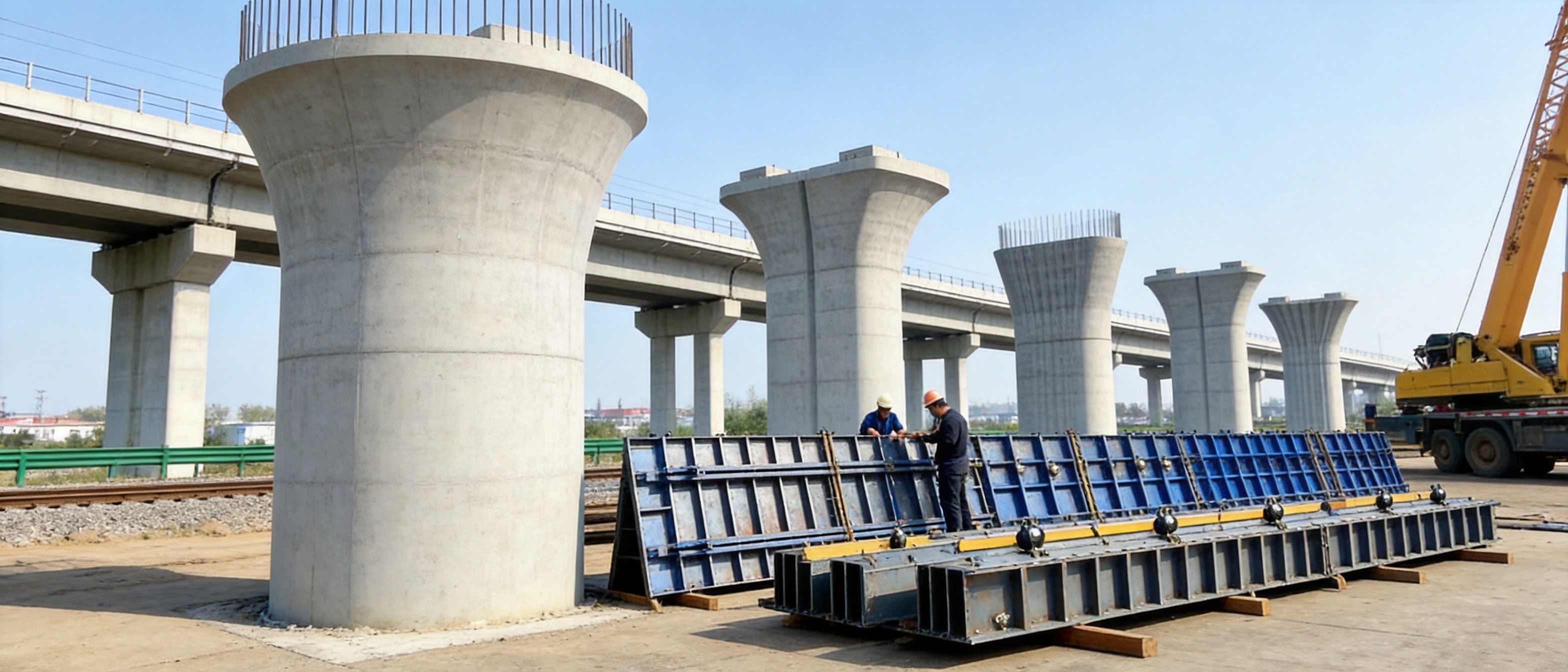
Pier column formwork is one of the most important temporary structures used in bridge substructure construction. It defines the external dimensions, geometry, verticality, and surface quality of concrete piers and columns while the concrete is being placed and consolidated. Because bridge piers carry substantial vertical and horizontal loads, the formwork used to construct them must provide reliable dimensional control, strong resistance to fresh-concrete pressure, secure connections, and efficient installation performance.
Modern bridge projects increasingly require formwork systems that can support high production efficiency without compromising structural accuracy. Traditional timber formwork may be economical for limited applications, but it can suffer from deformation, moisture absorption, difficult dimensional control, and inconsistent surface quality. Lightweight or poorly reinforced steel molds may solve some of these problems but can still experience local buckling, joint leakage, or excessive assembly time when used on large piers.
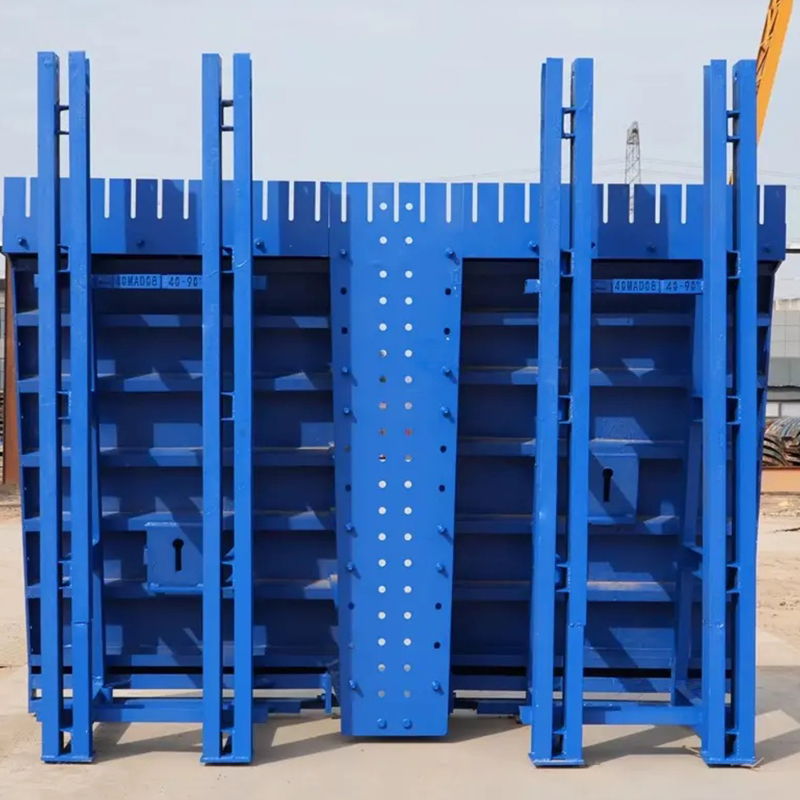
High-precision steel pier column formwork provides a more reliable solution. Manufactured from structural steel plates and reinforced with carefully designed ribs, frames, flanges, and connection systems, it creates a stable mold for circular, rectangular, square, and other customized pier geometries. Its modular construction allows the formwork to be reused across multiple casting cycles, making it suitable for highways, railways, elevated roads, municipal bridges, ports, water conservancy projects, and precast component factories.
The value of a professional pier column formwork system extends beyond the steel shell itself. Engineering design, plate cutting, bending, welding, dimensional inspection, surface treatment, trial assembly, packaging, and technical support all influence the final result. A formwork manufacturer with advanced heavy-metal fabrication capabilities can integrate these processes into one controlled production chain, helping customers obtain accurate, durable, and ready-to-install components for demanding infrastructure projects.
What Is Pier Column Formwork?
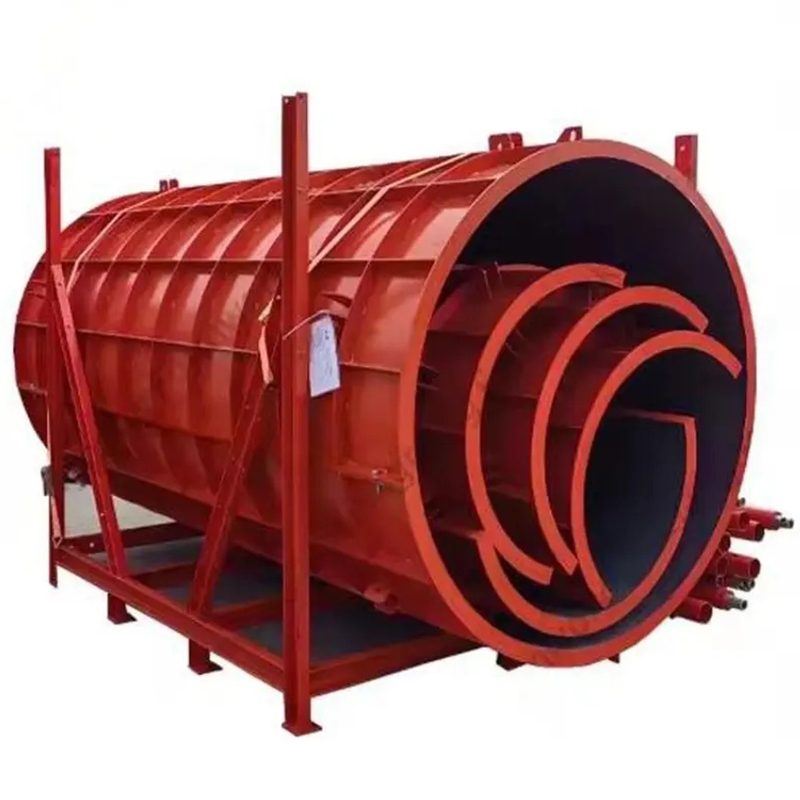
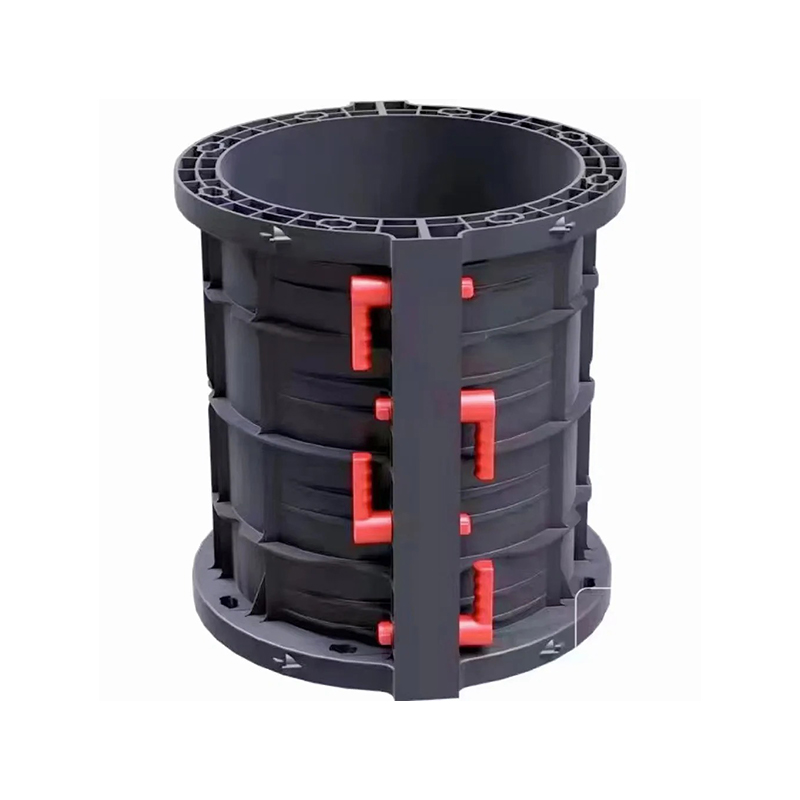
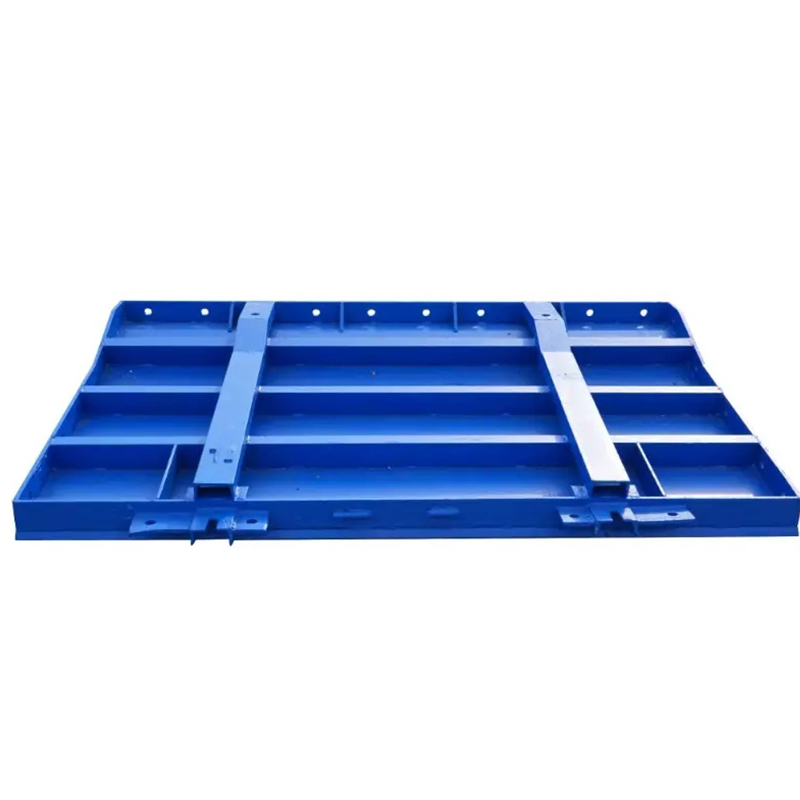
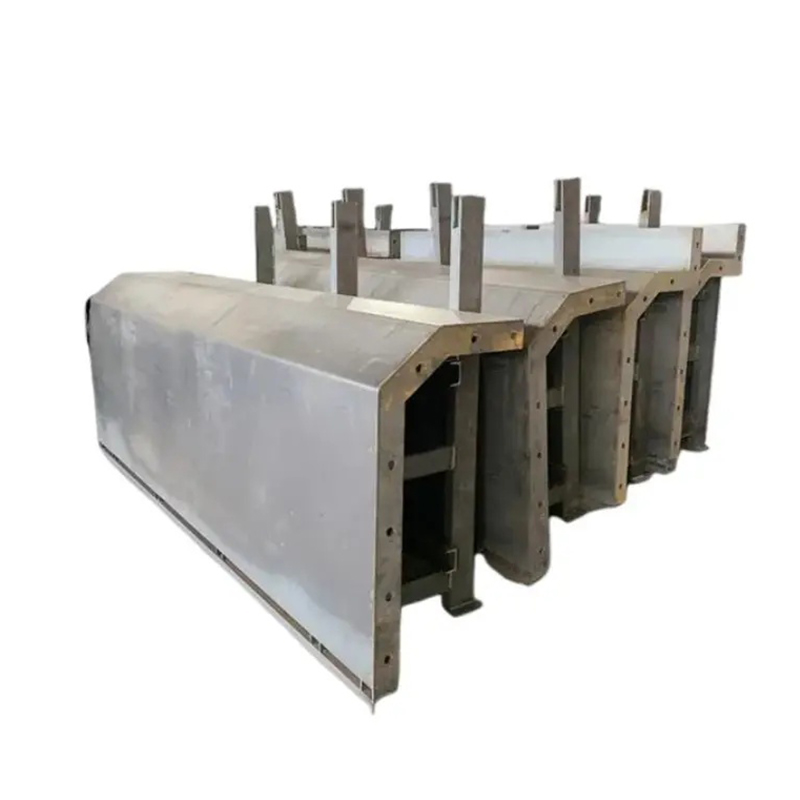
Pier column formwork is a temporary steel mold used to contain and shape freshly placed concrete until the concrete develops sufficient strength to support itself. The system usually consists of one or more curved or flat steel panels, reinforcement ribs, edge flanges, adjustable connection components, alignment devices, lifting points, and fastening hardware.
For circular piers, the formwork is commonly manufactured as two or more semicircular sections. These sections are joined along vertical seams using bolts, clamps, or other standardized connection devices. For rectangular or square columns, the system may use four independent panels or several modular assemblies connected at the corners. More complex pier shapes can be produced through customized panel layouts and specially fabricated transition sections.
The formwork is installed around the reinforcement cage or starter structure before concrete placement. During casting, the steel panels resist the lateral pressure generated by fresh concrete. Internal vibrators may also create temporary impact and vibration loads. The formwork must therefore maintain its geometry throughout the entire casting cycle. After the concrete reaches the required strength, the panels are released, separated, lifted, cleaned, and prepared for the next use.
Unlike a basic container, professional pier formwork is an engineered system. Its plate thickness, rib spacing, connection layout, lifting points, and support details must correspond to the pier diameter, height, concrete pressure, casting speed, temperature, vibration method, and site conditions. The objective is not merely to hold concrete in place, but to deliver a structurally accurate pier with a clean surface and predictable construction cycle.
Core Design Requirements for Bridge Pier Formwork
Bridge pier construction involves strict requirements for geometry and surface quality. A small error in the position or verticality of a pier can affect bearing installation, cap beam alignment, girder placement, and the overall appearance of the completed bridge. For this reason, pier column formwork must be designed around several key performance requirements.
Overall Rigidity
The formwork must remain stable under lateral pressure from fresh concrete. This requires a balanced combination of plate thickness, horizontal stiffeners, vertical ribs, circumferential frames, edge flanges, and connection hardware. The reinforced frame transfers loads across the panel and limits local deformation.
If the panels are too flexible, the pier may develop bulges, uneven dimensions, or an irregular surface. Excessive deformation can also increase the difficulty of stripping and may damage the formwork during lifting. A properly engineered steel system maintains its profile from the bottom of the pour to the top, even when the concrete is placed at a relatively high rate.
Dimensional Accuracy
The inner face of the formwork determines the final external shape of the concrete. Precision cutting, controlled welding, accurate rolling or bending, and inspection of the assembled sections are therefore essential. For circular piers, the radius and roundness of each segment must be consistent. For rectangular piers, panel squareness and corner alignment must be maintained.
Dimensional accuracy also depends on the connection system. Properly designed flanges and bolt holes help ensure that adjacent panels align correctly without excessive adjustment at the construction site. This improves the repeatability of each casting cycle and reduces the risk of visible steps or offsets at panel joints.
Sealing Performance
Fresh concrete contains water, cement paste, and fine particles that can escape through poorly fitted joints. Grout leakage often produces fins, honeycombing, exposed aggregate, or uneven lines on the finished pier. It can also leave hardened residue on the formwork, complicating future assembly and reducing the effective life of the panels.
Professional formwork uses accurately fabricated joint edges, close-fitting flanges, suitable sealing strips, and reliable fastening pressure. These details reduce leakage and help produce a smooth concrete finish. Good sealing is especially important when the pier is intended to remain exposed as architectural or fair-faced concrete.
Safe Handling and Installation
Large steel panels must be moved and installed using cranes or other lifting equipment. Lifting points should be positioned to maintain balance and minimize twisting. The formwork must also provide safe access for workers during alignment, connection, inspection, and concrete placement.
A well-designed modular system reduces the number of loose components and makes the installation sequence easier to understand. Standardized fasteners and alignment devices allow crews to repeat the same procedure for each pier, reducing assembly errors and shortening the time required between pours.
Material Selection and Structural Strength
The choice of steel directly affects the performance, durability, and service life of pier column formwork. Structural grades such as Q235B and Q355B are widely used for fabricated formwork components because they combine good weldability, reliable mechanical performance, and availability in common plate thicknesses.
Q235B steel is suitable for many standard panels, ribs, flanges, brackets, and support components. Q355B provides higher yield strength and may be selected for heavily loaded members, large formwork sections, lifting structures, or projects that require a higher strength-to-weight ratio. The actual material selection should be based on engineering calculations, formwork dimensions, concrete pressure, expected turnover cycles, and lifting conditions.
Steel plates used for the contact face should be sufficiently thick to resist local deformation and repeated handling. Reinforcing components are arranged on the exterior side so that the interior concrete surface remains continuous and unobstructed. The ribs may be formed from flat bars, angle sections, channels, welded plates, or customized structural profiles depending on the load requirements.
Material traceability is an important part of professional manufacturing. Steel certificates, incoming inspection records, cutting lists, welding records, and dimensional inspection reports provide evidence that the fabricated components correspond to the approved design. This type of documentation is particularly valuable for infrastructure projects with strict quality-management requirements.
Engineering Advantages Over Conventional Formwork
Compared with Timber Formwork
Steel pier column formwork offers significantly greater dimensional stability than timber formwork. Timber can swell, shrink, warp, or absorb moisture during construction. These changes may affect the pier diameter, corner alignment, surface smoothness, and joint tightness. Steel maintains a more stable shape under normal construction conditions and can be reused many more times when properly maintained.
Steel also provides a more consistent concrete finish. The smooth inner surface reduces the transfer of grain patterns and irregularities to the concrete. When the joints are accurately fabricated and sealed, the finished pier can often meet demanding visual requirements with less repair work.
Compared with Light-Duty Steel Panels
Some light-duty panels are designed for small columns or low-cycle applications. They may not include sufficient reinforcement for large bridge piers. Heavy-duty pier formwork uses a structural rib system that distributes concrete pressure across the entire panel. This reduces local buckling and preserves the intended shape during vibration and rapid casting.
Heavier construction does not automatically mean better performance, however. Excessive weight can increase crane requirements and handling costs. The advantage of engineered steel formwork is that the reinforcement layout is designed to place material where it provides the greatest structural benefit. Proper analysis can produce a strong and durable system without unnecessary steel consumption.
Compared with Non-Modular Fabrication
Non-modular formwork may require extensive site modification whenever pier dimensions change. Cutting, drilling, or welding at the jobsite can increase labor costs and introduce quality risks. A modular system is manufactured with standardized segment sizes, connection holes, and adjustment components, allowing it to be configured for a range of pier heights and cross-sectional dimensions.
Modularity also increases turnover efficiency. After stripping, the panels can be cleaned and repositioned for the next lift. Where a project includes multiple piers with similar dimensions, the same formwork set can support a repeatable production cycle over a long construction period.
| Performance Factor | Professional Steel Pier Formwork | Basic Timber Formwork | Light-Duty Temporary Panels |
|---|---|---|---|
| Dimensional stability | High and consistent during repeated use | Influenced by moisture and handling | Dependent on reinforcement and span |
| Resistance to concrete pressure | Designed with structural ribs and frames | Requires extensive external bracing | May be limited for large pours |
| Surface finish | Smooth and suitable for exposed concrete | May show joints or material texture | Varies with panel quality |
| Assembly efficiency | Standardized modular connections | Often requires site fabrication | May require repeated adjustment |
| Reusability | High when maintained correctly | Limited by wear and moisture | Depends on design and load history |
| Customization | Available for circular, rectangular, and irregular piers | Flexible but labor-intensive | Usually limited by standard sizes |
| Lifecycle economy | Strong for medium- and high-turnover projects | May be economical only for short use | Suitable for selected light applications |
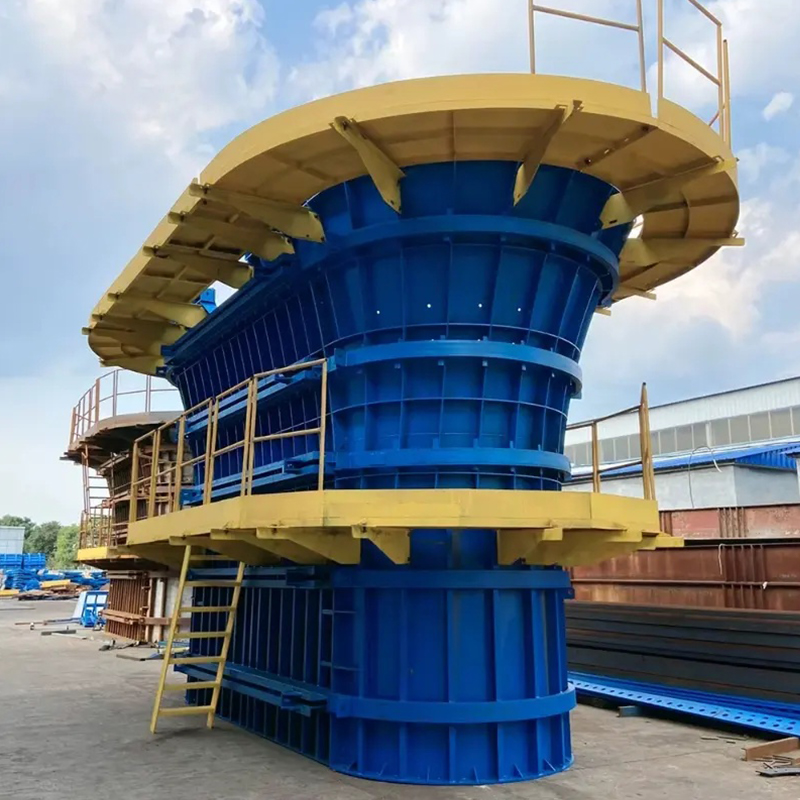
Pier Column Formwork
Modular Construction for Faster Project Execution
A modular pier column formwork system is divided into manageable sections that can be transported, assembled, lifted, and stored efficiently. The exact configuration depends on the shape and dimensions of the pier. Circular formwork may consist of two half-shells, three segments, or multiple ring sections. Tall piers may be formed in vertical lifts, with additional sections added as construction progresses.
Segmented construction provides flexibility in height adjustment. Instead of manufacturing a single full-height mold for every pier, the contractor can combine standard sections with customized top or bottom pieces. This reduces manufacturing lead time for projects that contain several pier heights and allows a common inventory of components to serve different locations.
Modular connections must be designed for both structural performance and practical handling. Bolt holes should be accurately positioned, flanges should provide sufficient bearing area, and lifting points should not interfere with the connection hardware. Alignment devices may include locating pins, wedge clamps, adjustable supports, or temporary braces.
At the construction site, the installation sequence normally includes surveying the pier location, preparing the reinforcement cage and foundation area, checking the formwork panels, applying release agent, assembling the sections, installing temporary supports, checking plumbness and dimensions, sealing the joints, and completing a pre-pour inspection. A clear sequence reduces downtime and helps ensure that each pier is constructed under consistent conditions.
Height Adjustment
Height adjustment is often achieved through stacked ring sections or interchangeable vertical modules. The sections can be bolted together to create the required form height for a particular casting lift. This arrangement is useful for bridge projects where pier elevations vary because of terrain, road alignment, river crossings, or different superstructure requirements.
Cross-Section Adjustment
Cross-sectional adjustment depends on the formwork type. Circular systems may use different diameters, replaceable curved panels, or designed transition components. Rectangular systems may use panels with adjustable tie positions or interchangeable side sections. Irregular pier geometries are generally produced as project-specific assemblies based on approved drawings.
Repeated Turnover
High turnover is one of the principal economic advantages of steel formwork. After each use, the panels should be stripped carefully, cleaned of concrete residue, inspected for deformation, and stored in a manner that prevents impact or corrosion. Damaged fasteners, sealing strips, and lifting accessories should be replaced before the next cycle.
Advanced Manufacturing Process
The quality of a pier column formwork system depends on the consistency of its manufacturing process. A professional heavy-steel fabrication facility combines engineering design, automated cutting, controlled forming, qualified welding, and inspection procedures to produce components that fit together accurately at the project site.
Engineering Design and Production Planning
The manufacturing process begins with reviewing the customer's drawings, pier geometry, construction method, concrete placement rate, expected formwork height, and site handling conditions. Engineers identify the required panel arrangement, steel grades, plate thicknesses, reinforcing members, connection details, and lifting points.
Three-dimensional modeling or detailed fabrication drawings can be used to verify interference between ribs, flanges, fasteners, lifting points, and adjacent sections. This digital review helps identify problems before steel is cut. It also supports the preparation of material lists, nesting plans, weld maps, inspection points, and assembly instructions.
Production planning is especially important for non-standard formwork. A customized pier shape may include tapered sections, variable radii, sloped faces, offset openings, or integrated brackets. Clear documentation ensures that every component is identified and installed in the correct position.
CNC Laser Cutting and Plate Preparation
Laser cutting provides accurate profiles for panel plates, ribs, flanges, gussets, brackets, and connection components. Computer-controlled cutting improves repeatability and reduces manual layout errors. It also allows complex shapes to be produced without creating excessive heat distortion.
Before cutting, the steel plate is checked for thickness, surface condition, grade, and identification. Cutting parameters are selected according to the material and thickness. After cutting, parts are inspected for edge quality, dimensions, hole position, and visible thermal effects. Edges that require welding preparation can be beveled or machined according to the approved fabrication procedure.
Efficient nesting of parts reduces material waste and helps control project cost. It also improves production scheduling by grouping similar components and reducing unnecessary machine changes. For large orders, automated cutting systems can provide consistent output across multiple formwork sets.
Rolling, Bending, and Forming
Circular pier panels require accurate rolling or bending to achieve the specified radius. The plate is formed gradually under controlled machine settings. The process must account for material springback, plate thickness, seam locations, and the final assembled diameter.
After forming, the curved panel is checked against the required template or digital measurement. The ends of the panel must align with the connection flanges, and the curvature must remain consistent across the full length. Incorrect forming can create gaps at panel joints or force workers to make difficult adjustments at the construction site.
Rectangular and polygonal panels may require press braking or controlled bending for edge details, stiffeners, and transition components. Proper forming improves fit-up and reduces the amount of corrective welding during assembly.
Robotic and Certified Welding
Welding joins the panel skin to its reinforcing ribs, frames, flanges, brackets, and lifting components. Because welding can introduce heat distortion, the sequence and parameters must be controlled. Fixtures and temporary supports help maintain the designed geometry while welds are deposited.
Automated or robotic welding can be applied to repetitive seams and standard components. It improves consistency, supports stable weld penetration, and increases production efficiency. Manual welding remains important for complex joints, customized assemblies, and areas that require close operator control.
Professional welding practice includes qualified procedures, trained welders, suitable consumables, pre-welding preparation, controlled heat input, and visual inspection. Depending on project requirements, additional non-destructive testing may be applied to selected welds. AWS and EN-based welding practices can support the quality expectations of international infrastructure projects when properly specified and documented.
Trial Assembly and Dimensional Inspection
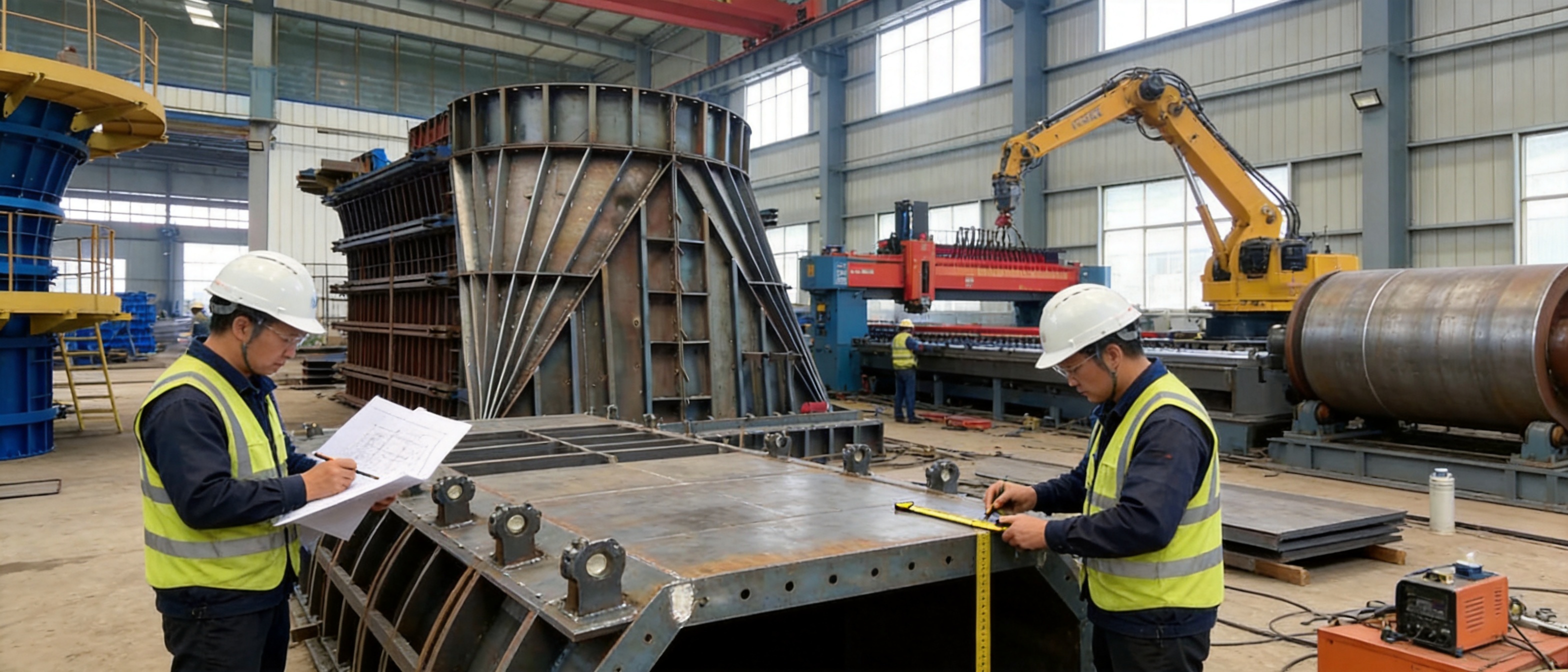
Trial assembly is a valuable step for large or customized formwork. Selected panels are assembled in the factory to verify joint alignment, bolt-hole matching, overall diameter or width, panel height, lifting balance, and access to fastening points. Any interference or misalignment can be corrected before shipment.
Dimensional inspection may include checking panel length, width, radius, diagonal measurements, flange flatness, rib position, hole spacing, and assembled plumbness. Inspection tools can include calibrated tapes, gauges, templates, total stations, three-dimensional measurement equipment, and other suitable instruments.
Factory trial assembly reduces the risk of costly site modifications. It also gives the customer a clearer understanding of the installation sequence and confirms that the supplied components correspond to the approved drawings.
Surface Treatment and Protection
After fabrication and inspection, the formwork may receive cleaning, rust removal, primer, paint, or another specified protective treatment. The inner concrete-contact surface must be kept smooth and free from excessive coating buildup, weld spatter, oil, or loose particles.
Protective treatment improves resistance to corrosion during storage, transport, and repeated use. The correct system depends on the project environment, expected storage period, exposure to water or salt, and customer requirements. For marine, coastal, or humid applications, additional corrosion protection may be appropriate.
Quality Control from Raw Material to Delivery
Quality control should cover every stage of production rather than relying only on final inspection. Incoming steel verification confirms that the material matches the specified grade and thickness. Process inspections monitor cutting, forming, welding, assembly, and surface treatment. Final inspections confirm dimensions, appearance, completeness, and documentation.
A structured quality system may include inspection and test plans, welding procedure records, welder qualifications, material certificates, dimensional reports, coating records, non-conformance reports, and corrective-action records. These documents help maintain traceability and provide useful information for project managers, consultants, and quality inspectors.
For large infrastructure contracts, the manufacturer may be required to follow customer-specific inspection hold points. These can include approval of shop drawings, first-article inspection, witness of trial assembly, weld examination, coating inspection, and pre-shipment release. Coordination between the fabrication facility and the construction site helps avoid delays caused by missing information or incomplete components.
Quality control also includes checking practical details that directly affect installation. Fasteners should be correctly sized and supplied in sufficient quantities. Lifting lugs should be clearly identified. Panel markings should correspond to the assembly drawing. Contact surfaces should be protected from impact during loading. Small omissions in these areas can create disproportionate problems at the jobsite.
Application Areas
Highway Bridges
Highway bridges often require large numbers of similar piers, making reusable modular formwork particularly valuable. A well-designed system can be moved from one foundation location to the next while maintaining consistent pier dimensions and surface quality. This supports repetitive construction and helps coordinate pier work with cap beam and girder installation schedules.
Railway Bridges
Railway bridge projects generally require strict geometric control because the alignment of the superstructure and track system depends on accurate substructure construction. Steel pier formwork provides a stable mold for tall and heavily reinforced columns, including piers located in difficult terrain or along long viaduct routes.
Municipal Elevated Roads
Urban elevated roads and overpasses often place strong emphasis on appearance, limited construction space, and short traffic-management windows. Smooth steel formwork can reduce concrete surface repair, while modular installation helps crews work efficiently in restricted areas. Customized shapes can also support architectural requirements for visible urban structures.
Water Conservancy and Port Projects
Piers and columns used in water conservancy, dock, and port facilities may be exposed to moisture, splash zones, and corrosive environments. Durable steel formwork with suitable surface protection can support repeated construction cycles in these conditions. The formwork design may also include specialized lifting and bracing arrangements for work near water.
Precast Component Factories
Precast factories benefit from formwork that can be used repeatedly under controlled production conditions. Steel molds provide consistent dimensions and a smooth finish for mass production of pier segments, columns, support members, and other concrete components. Replaceable wear parts and accessible cleaning surfaces can further improve factory productivity.
Installation and Operating Recommendations
Before installation, the site team should verify the foundation elevation, reinforcement position, embedded items, crane capacity, formwork identification marks, and availability of fasteners and accessories. The formwork should be inspected for damage caused during transport. Any deformation, missing hardware, or contamination should be addressed before the panels are placed around the reinforcement cage.
The concrete-contact surface should be cleaned and coated with a suitable release agent. The release agent must be applied evenly and should not accumulate in corners or joints. Excessive application can contaminate the concrete surface, while insufficient application may make stripping difficult.
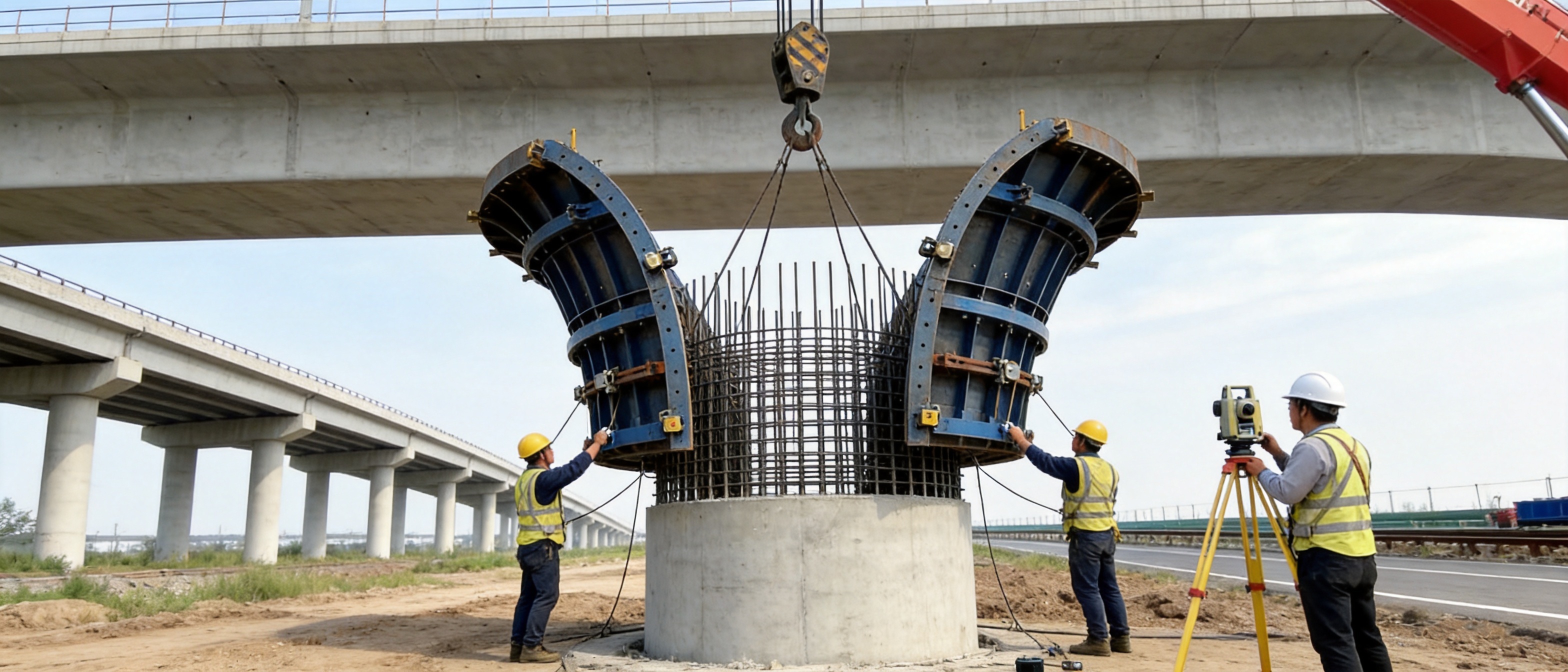
Panels should be connected according to the approved sequence. Bolts or clamps should be tightened progressively rather than fully tightening one location while leaving other joints loose. This helps distribute pressure evenly and allows the panel assembly to settle into the correct geometry.
Temporary supports and alignment devices should be installed before concrete placement. Survey personnel should check the formwork position, centerline, diameter or width, top elevation, and verticality. The inspection should also confirm that the formwork is stable under expected construction loads and that all openings and embedded items are correctly located.
Concrete should be placed at a controlled rate appropriate for the formwork design. Uncontrolled rapid placement can create excessive lateral pressure, particularly when the concrete has high fluidity or when vibration is intensive. Internal vibration should be carried out systematically to achieve consolidation without striking the formwork or reinforcement cage.
After casting, the formwork should remain in place for the period specified by the project engineer. Stripping too early can damage concrete edges and surfaces. During removal, workers should release the connections in a controlled sequence and avoid prying directly against the concrete. Panels should be lifted vertically when possible to reduce impact and twisting.
After each use, concrete residue should be removed before it hardens. The inner surface should be checked for dents, welding damage, rust, or buildup that could affect the next pier. Fasteners should be cleaned, lubricated where appropriate, and stored in labeled containers. Proper maintenance is essential for achieving the expected turnover rate.
Safety Considerations
Large formwork panels are heavy suspended loads and must be handled only with lifting equipment and accessories rated for the actual load. Crane operators, riggers, and signal personnel should follow the project lifting plan. Workers should remain clear of suspended panels and avoid standing between a moving section and a fixed structure.
Before lifting, the team should inspect lifting lugs, shackles, slings, pins, and connection points. The load should be balanced, and no loose tools or hardware should remain on top of the panel. Wind conditions should also be considered, especially when lifting tall or broad panels.
During assembly, temporary stability is critical. A partially connected formwork section may not resist wind, accidental impact, or construction loads. Bracing should be installed as soon as the panel is positioned. Workers should use appropriate platforms, guardrails, fall-protection equipment, and access systems when working at height.
Concrete placement should not begin until the formwork, reinforcement, embedded parts, access arrangements, and inspection records have been approved. A pre-pour checklist helps ensure that no critical item is overlooked. Clear communication between the formwork crew, survey team, concrete crew, and site supervisor reduces operational risk.
Customization for Different Pier Geometries
One of the main benefits of steel fabrication is the ability to create formwork for project-specific shapes. Circular piers are common, but bridge designers may also specify rectangular, square, oval, flared, tapered, hammerhead, hollow, or irregular sections. Each geometry requires a different panel arrangement and reinforcement strategy.
Circular formwork must maintain a consistent radius and accurate joint alignment. For tapered circular piers, the radius may change with height, requiring conical or segmented panels. Rectangular piers require careful control of corner squareness and side-panel alignment. Flared or hammerhead arrangements may combine vertical column sections with wider cap-support geometry.
Customized formwork can include openings for tie rods, access ports, embedded components, inspection windows, working platforms, and lifting accessories. Such additions must be incorporated into the design without weakening the panel or creating unnecessary leakage paths.
When a project uses multiple pier types, a common modular base system can sometimes be combined with customized transition pieces. This approach reduces the total amount of dedicated formwork while still meeting individual geometry requirements. A detailed review of the pier schedule is necessary to determine whether standard modules, adjustable panels, or fully custom molds provide the best economic result.
Economic and Environmental Benefits
The initial purchase price is only one part of the cost of a pier formwork system. A proper evaluation should include assembly labor, crane time, concrete repair, stripping time, transport, storage, maintenance, expected turnover, and disposal cost. Steel formwork often provides a favorable lifecycle value because it can be used repeatedly with limited dimensional change.
Accurate formwork reduces the need for grinding, patching, or surface reconstruction after stripping. This saves labor and materials while improving the consistency of the finished structure. Faster assembly and disassembly can also reduce crane occupation and improve the utilization of the construction site.
Steel is a durable and recyclable material. At the end of its useful service life, damaged panels and reinforcement members can be repaired, repurposed, or recycled. Longer product life reduces the demand for disposable timber and lowers the volume of formwork waste generated by a project.
Manufacturing efficiency also contributes to sustainability. CNC nesting reduces plate waste, controlled welding reduces rework, and modular design makes it possible to reuse components on multiple projects. These advantages are most significant when the formwork is properly maintained and transported without avoidable damage.
Manufacturing Strengths of an Integrated Heavy-Steel Fabricator
A manufacturer specializing in custom steel formwork and heavy-metal fabrication can offer more than a catalog product. Integrated capabilities in laser cutting, bending, welding, machining, assembly, and quality control make it easier to manage non-standard bridge components from one source.
Advanced laser cutting equipment supports precise production of large steel plates and complex connection parts. Standardized production lines improve repeatability, while experienced fabrication teams can adapt processes for large, irregular, or high-load components. This is particularly important for bridge projects where formwork dimensions may not correspond to standard commercial sizes.
Certified welding practices support reliable structural connections. When welding procedures, welder qualifications, consumable control, and inspection requirements are properly managed, the resulting assemblies are better suited to repeated lifting and heavy construction use. Experience with AWS and EN practices can also help the manufacturer coordinate with international project specifications.
A company with ISO 9001-based quality management can organize responsibilities, documentation, inspection, corrective action, and continual improvement in a systematic way. Compliance with recognized scaffolding and component standards, where applicable, demonstrates broader familiarity with construction equipment and site safety requirements.
Engineering experience with major infrastructure projects is another important advantage. Formwork intended for highway, railway, municipal, port, or industrial construction must function in real working conditions, not only meet a drawing dimension. Experience with large projects helps manufacturers anticipate transport limitations, crane access, assembly sequences, environmental exposure, and the need for rapid turnover.
Customization is most effective when it is supported by clear communication. The manufacturer should review customer drawings, identify missing information, confirm tolerances, clarify the concrete casting method, and provide production drawings before fabrication begins. This engineering coordination reduces uncertainty and helps ensure that the final product is ready for installation upon arrival.
How to Select the Right Pier Column Formwork
Project owners and contractors should begin by defining the pier geometry and construction method. Important information includes the pier shape, maximum diameter or width, form height, concrete grade, casting lift height, placement speed, vibration method, expected turnover quantity, and site lifting equipment.
The required surface finish should also be specified. A standard structural finish may allow different joint and surface-treatment details than an exposed architectural finish. If the concrete will remain visible, the formwork should be designed for close joint control, smooth inner surfaces, and consistent release-agent application.
Customers should review the manufacturer's fabrication capabilities, inspection system, welding qualifications, material traceability, and experience with similar projects. A supplier that can provide design review, trial assembly, technical documentation, and after-sales support may deliver better overall value than a supplier offering only basic steel panels.
It is also important to confirm the supply scope. The quotation should identify whether it includes connection bolts, clamps, sealing strips, lifting lugs, alignment accessories, working platforms, braces, spare parts, surface treatment, packing, and installation guidance. Clear scope definition prevents delays caused by missing components.
| Selection Item | Questions to Confirm |
|---|---|
| Pier geometry | Is the pier circular, rectangular, tapered, flared, hollow, or irregular? |
| Formwork dimensions | What are the diameter, width, height, thickness, and casting lift requirements? |
| Concrete conditions | What are the concrete fluidity, placement rate, temperature, and vibration method? |
| Turnover plan | How many casting cycles are expected, and will the same set serve multiple piers? |
| Handling equipment | What crane capacity, lifting height, transport width, and storage space are available? |
| Surface finish | Is the required finish standard structural concrete or exposed fair-faced concrete? |
| Quality documentation | Are material certificates, weld records, inspection reports, and trial assembly records required? |
| Accessories | Are braces, platforms, clamps, bolts, sealing materials, and lifting accessories included? |
Common Problems and Preventive Measures
Grout Leakage at Joints
Leakage is commonly caused by damaged flanges, insufficient bolt tightening, uneven joint surfaces, missing sealing material, or concrete pressure that exceeds the assumed condition. Preventive measures include inspecting joint edges, replacing damaged seals, tightening connections progressively, and controlling the concrete placement rate.
Panel Deformation
Deformation may result from insufficient reinforcement, excessive pour height, rapid placement, poor temporary support, impact from vibrating equipment, or improper stripping. The formwork should be checked against the approved design, and the concrete casting method should remain within the design assumptions.
Difficulty During Stripping
Formwork may be difficult to remove if release agent is applied incorrectly, concrete has entered gaps, the panel has been distorted, or the concrete has not reached suitable strength. Proper surface preparation, controlled joint sealing, adequate curing time, and careful release procedures reduce this problem.
Visible Surface Defects
Honeycombing, fins, color variation, and surface marks can be linked to formwork contamination, poor sealing, inadequate vibration, excessive vibration, or inconsistent release-agent application. A clean, accurately assembled mold provides the foundation for a good finish, but concrete placement and curing practices must also be properly controlled.
Incorrect Alignment
Incorrect pier position or verticality may occur when the base is not surveyed, braces are insufficient, connection flanges are misaligned, or the formwork shifts during casting. Survey checks should be completed before and, where necessary, during concrete placement. Alignment equipment must remain secure until the concrete has gained sufficient stability.
Inspection Checklist Before Concrete Placement
The foundation or previously completed concrete surface should be checked for elevation, cleanliness, laitance removal, and correct centerline. Reinforcement should be inspected for spacing, cover, lap lengths, and stability. Embedded items should match the approved drawings.
The formwork should be checked for correct panel identification, complete connections, proper sealing, undamaged inner surfaces, secure lifting and bracing components, and adequate working access. The assembled dimensions should be verified at several elevations rather than at only one point.
Survey personnel should confirm the center position, external profile, top elevation, and verticality. The inspection should also verify that the formwork will not interfere with reinforcement, embedded plates, conduits, or concrete delivery equipment.
Finally, the project team should confirm the concrete mix, delivery sequence, planned pour rate, vibration equipment, weather conditions, curing arrangements, and emergency procedures. A complete pre-pour inspection reduces the risk of stopping the pour after concrete has already entered the mold.
Maintenance and Storage for Long Service Life
After stripping, concrete residue should be removed using methods that do not damage the contact surface. Hard tools that gouge the steel should be avoided. If mechanical cleaning is required, the operator should control the tool carefully around flanges, seals, and welded joints.
Panels should be inspected for dents, cracks, distorted edges, loose welds, worn holes, and damaged lifting lugs. Minor defects should be repaired before they become larger problems. Any modification or repair affecting structural components should be reviewed by a qualified engineer or the original manufacturer.
Formwork should be stored on level supports that keep the panels away from standing water and mud. Curved panels should be supported in a way that prevents local distortion. Fasteners and small accessories should be stored in labeled, weather-protected containers.
When the formwork is transported between sites, panels should be secured against sliding, impact, and excessive vibration. Protective materials should be placed between painted surfaces and at contact points. Correct packing preserves the dimensional accuracy achieved during fabrication.
Q&A
What is the main purpose of pier column formwork?
Its main purpose is to contain and shape fresh concrete while it hardens, ensuring that the completed pier has the required dimensions, geometry, verticality, and surface quality.
Can steel pier formwork be used for both precast and cast-in-place construction?
Yes. Steel formwork can be designed for precast production lines or on-site cast-in-place construction. The panel arrangement, lifting method, support details, and turnover requirements may differ between the two applications.
What steel grades are commonly used?
Q235B and Q355B are common structural steel grades for formwork components. The final selection depends on design loads, plate thickness, reinforcement requirements, welding conditions, and project specifications.
Can the formwork be customized for non-circular piers?
Yes. Professional fabricators can manufacture formwork for rectangular, square, oval, tapered, flared, polygonal, hollow, and irregular pier shapes. Custom drawings and dimensional information are required before production.
How does modular design reduce construction time?
Modular design allows workers to assemble standardized sections quickly, adjust the form height, reuse the same components for multiple piers, and reduce site cutting or welding. Standardized fasteners and alignment devices also simplify installation.
How many times can steel pier formwork be reused?
The number of uses depends on the design, steel thickness, concrete pressure, handling method, cleaning practice, storage conditions, and maintenance. Properly engineered and maintained formwork can support a high number of casting cycles.
Does steel formwork produce a smooth concrete finish?
It can produce a smooth and consistent finish when the inner surface is clean, the joints are properly sealed, the release agent is correctly applied, and the concrete is placed and vibrated according to the project requirements.
What information is needed for a quotation?
Useful information includes pier drawings, shape, dimensions, form height, concrete conditions, casting method, required turnover, quantity, surface finish, site lifting capacity, accessories, surface treatment, and inspection-document requirements.
Why is trial assembly important?
Trial assembly verifies that panels, flanges, holes, braces, lifting points, and accessories fit together before shipment. It reduces the likelihood of site modifications and provides confidence that the formwork will be ready for installation.
How should formwork be maintained after each use?
The panels should be cleaned, inspected, dried, and stored correctly. Concrete residue, damaged seals, loose fasteners, dents, and corrosion should be addressed before the next casting cycle.
Can the manufacturer provide complete OEM fabrication services?
An experienced heavy-steel fabricator can provide integrated services such as engineering review, CNC laser cutting, plate bending, structural welding, trial assembly, surface treatment, inspection documentation, packing, and customized production according to customer drawings.
Conclusion
Pier column formwork is a critical component of safe, accurate, and efficient bridge construction. Its performance directly influences pier dimensions, verticality, concrete surface quality, construction speed, and project cost. Compared with timber or lightly reinforced temporary molds, engineered steel formwork offers higher rigidity, better dimensional stability, stronger resistance to concrete pressure, improved sealing, and greater reuse potential.
The most effective systems combine modular design with precise manufacturing. High-strength steel plates, reinforced ribs, accurately formed panels, reliable connection hardware, and suitable lifting points create a formwork assembly that can withstand demanding construction conditions. CNC cutting, controlled bending, qualified welding, trial assembly, dimensional inspection, and protective treatment further improve reliability.
For contractors and infrastructure developers, selecting a formwork supplier should involve more than comparing panel prices. Manufacturing capacity, engineering support, quality control, customization ability, documentation, and after-sales service all contribute to the true value of the system. A capable heavy-steel fabrication partner can provide ready-to-install components that reduce site labor, minimize concrete repairs, improve turnover efficiency, and support consistent results across large bridge programs.
With proper design, installation, inspection, and maintenance, steel pier column formwork becomes a durable production tool rather than a one-time temporary structure. It supports the precise construction of highway piers, railway columns, elevated roads, municipal bridges, port structures, water conservancy facilities, and precast concrete components while contributing to safer, faster, and more economical infrastructure development.
References
American Welding Society. Structural Welding Code—Steel, applicable editions and fabrication guidance.
European Committee for Standardization. EN 1090, execution of steel structures and aluminium structures.
European Committee for Standardization. EN 74, couplers, spigot pins and baseplates for use in falsework and scaffolds.
International Organization for Standardization. ISO 9001, quality management systems and process-control principles.
Bridge construction specifications covering concrete placement, formwork, reinforcement, dimensional tolerances, curing, and inspection.
Structural steel fabrication manuals covering plate cutting, forming, welding, dimensional control, corrosion protection, and inspection.
Construction safety guidance covering lifting operations, temporary works, working at height, suspended loads, and concrete placement procedures.
Product: Pier Column Formwork



- Location
- Group 3, Fangzhuang Village, Rucheng Subdistrict, Rugao City, Nantong, Jiangsu, China
- Follow us
- Phone
- +86-13646196162
- info@hysonindustry.com
