 +86-13646196162
 info@hysonindustry.com




 русский
 عربى



Modular Flat Formwork Panels for High-Precision Concrete Construction
 2026.10.07
Content
- 1 What Is Flat Formwork?
- 2 Core Design of Modular Flat Formwork Panels
- 3 Advantages Compared with Conventional Formwork
- 4 Precision Manufacturing Process
- 5 Manufacturing Strengths of an Experienced OEM Supplier
- 6 Applications of Flat Formwork
- 7 Comparison of Formwork Options
- 8 Quality Control Considerations
- 9 Installation and Use Guidelines
- 10 Maintenance, Storage, and Service Life
- 11 Customization Options for Project Requirements
- 12 Why OEM Capability Matters to International Buyers
- 13 Economic Benefits Over the Project Life Cycle
- 14 Safety and Responsible Use
- 15 Frequently Asked Questions
- 15.1 What is the main purpose of flat formwork?
- 15.2 How is modular steel formwork different from timber formwork?
- 15.3 Can flat formwork panels be customized?
- 15.4 What support systems can be used with flat formwork?
- 15.5 Does steel flat formwork provide a smooth concrete finish?
- 15.6 How should the panels be maintained?
- 15.7 Is steel flat formwork suitable for rental companies?
- 15.8 What information should be provided when requesting a quotation?
- 15.9 Why is welding quality important in steel formwork?
- 15.10 Can one panel system be used for different projects?
- 16 Conclusion
- 17 References
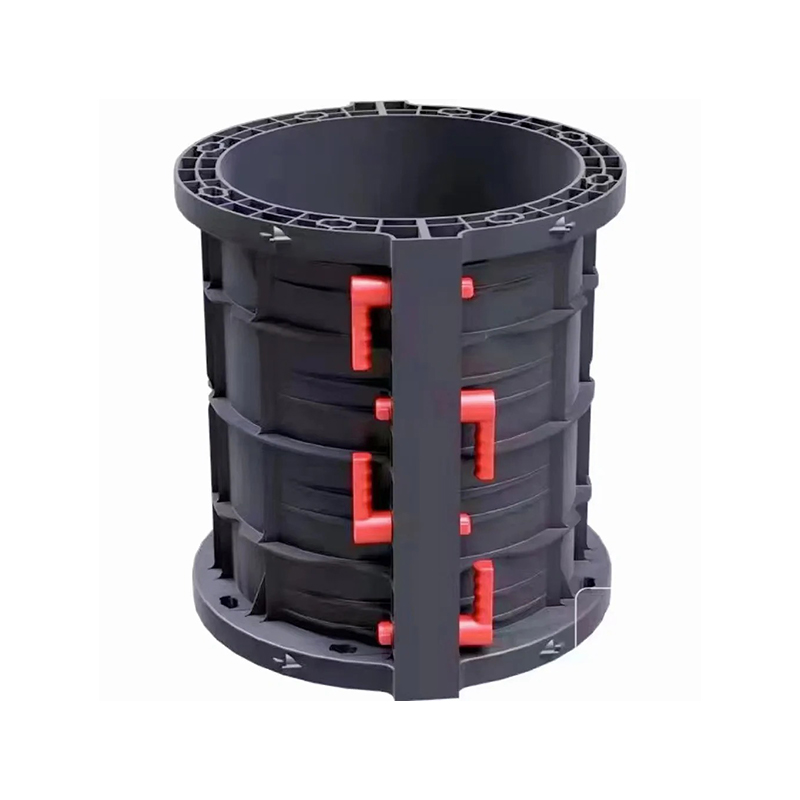
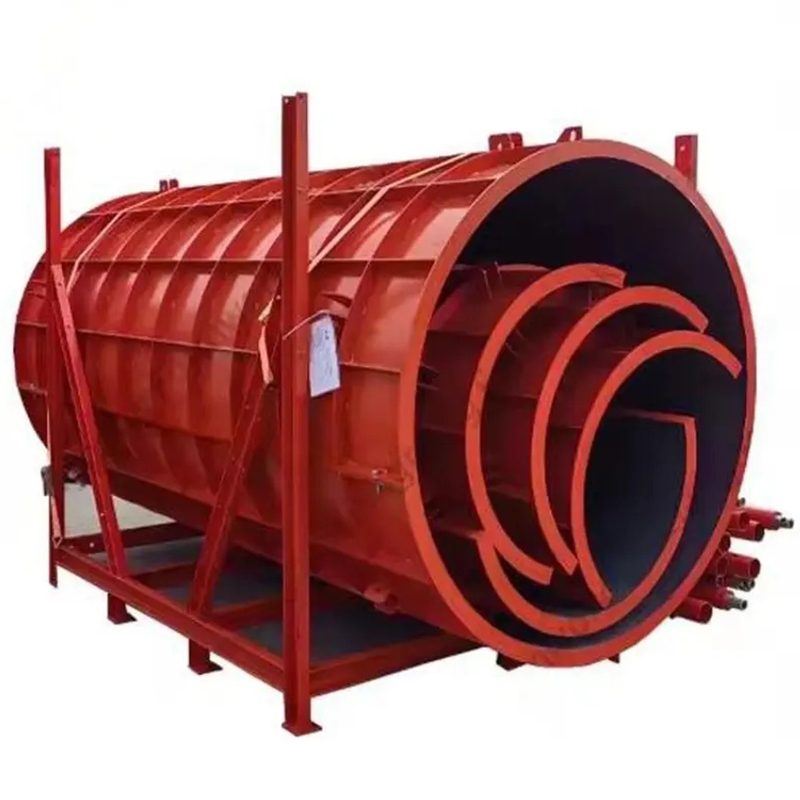
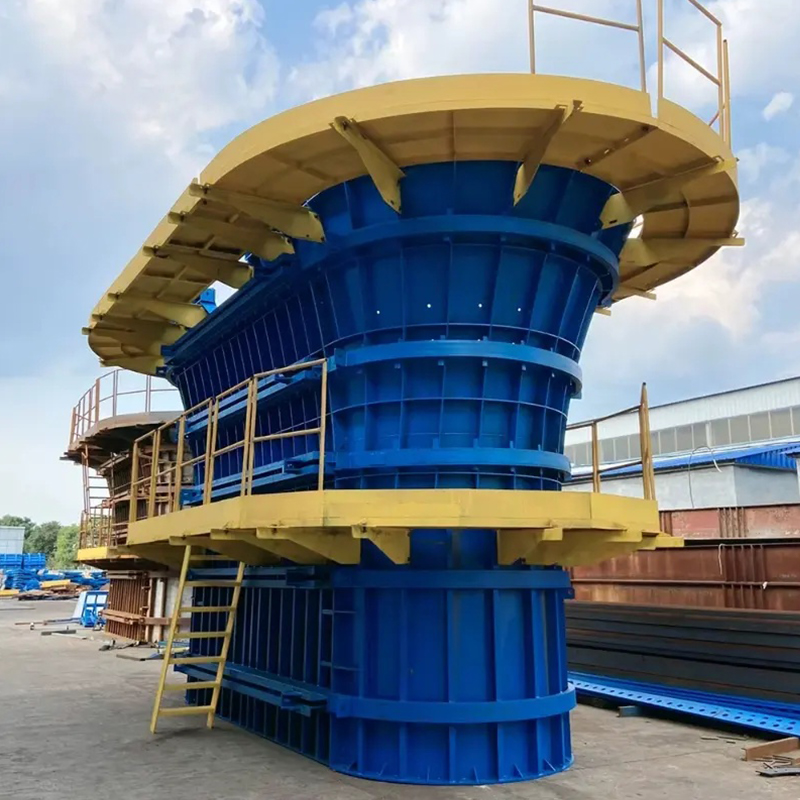
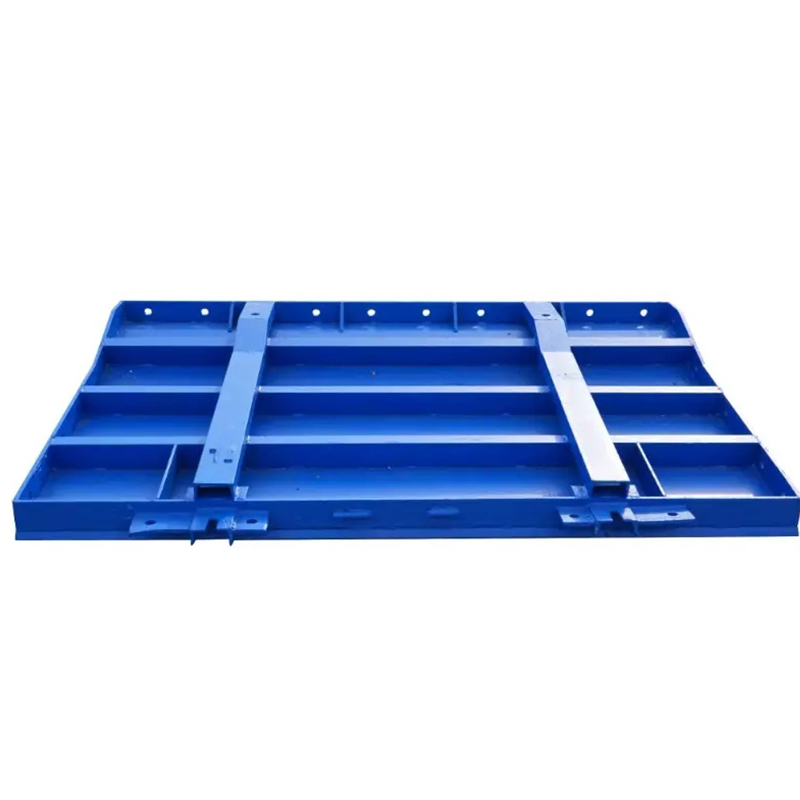
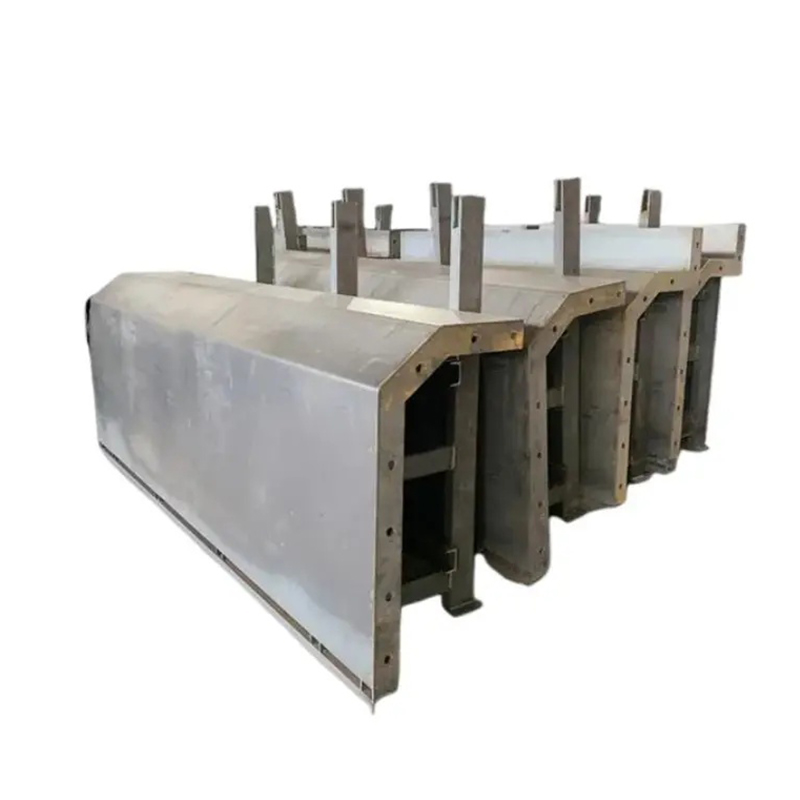
- 18 Product: Flat Formwork
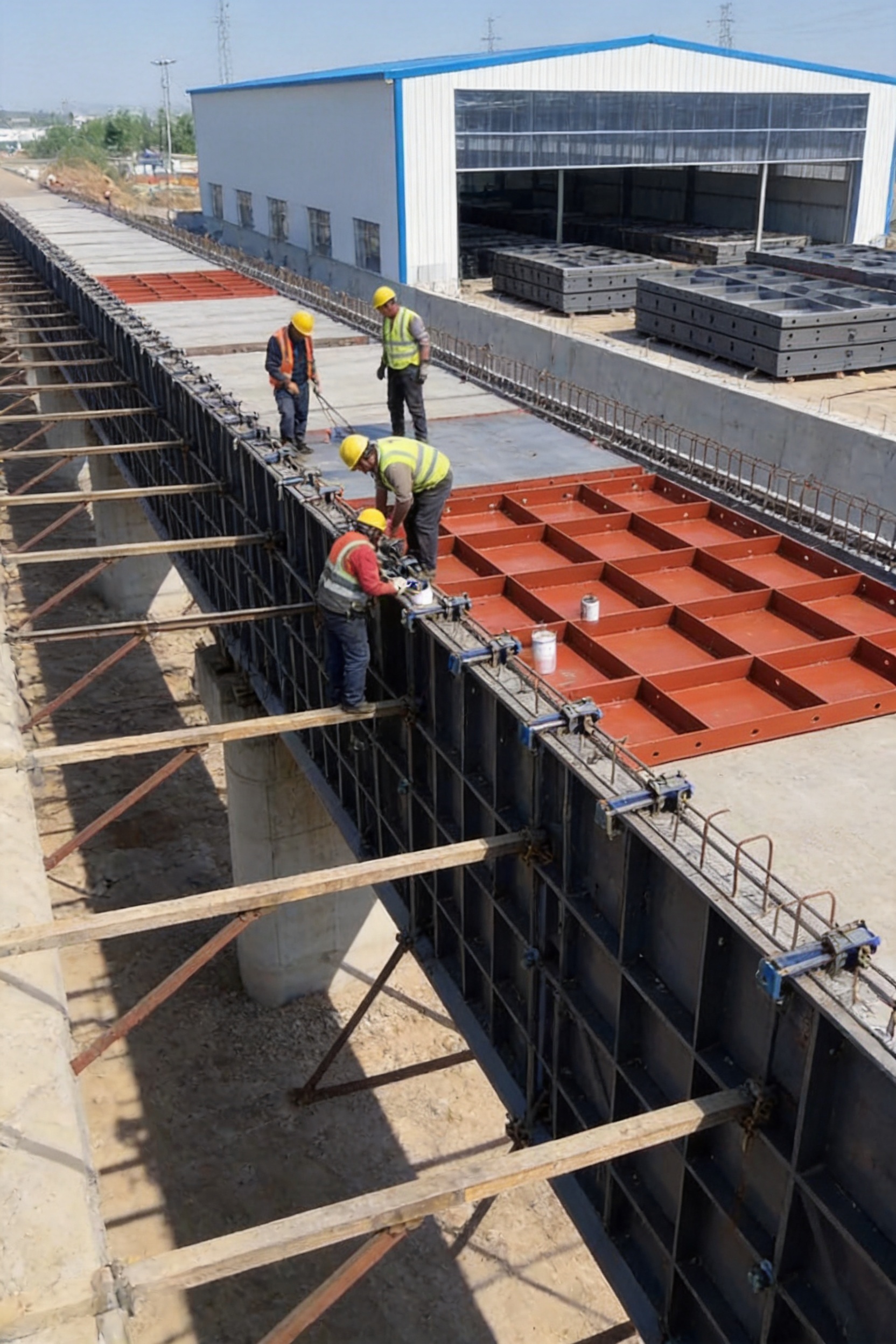
Flat formwork is a fundamental construction system for producing level, regular, and accurately finished concrete surfaces. It is used wherever concrete must be poured into a planar configuration, including floor slabs, roof slabs, bridge decks, tunnel slabs, industrial platforms, precast panels, and foundation bases. Although the basic purpose of flat formwork appears simple, the quality of the formwork directly affects construction speed, concrete appearance, dimensional accuracy, labor requirements, material consumption, and the total cost of a project.
Modern contractors increasingly require formwork that can be reused, assembled quickly, adapted to different dimensions, and integrated with existing shoring or support systems. Traditional timber formwork can be economical for small or irregular projects, but it often requires extensive cutting, produces inconsistent surfaces, absorbs moisture, and has a relatively short service life. Low-quality steel panels may offer better durability but can suffer from poor dimensional control, inaccurate joints, weak reinforcement, corrosion, or difficult handling. A well-designed modular steel flat formwork system addresses these limitations by combining standardized panel dimensions, high-strength steel, precision fabrication, reliable connections, and professional surface protection.
Modular flat formwork panels are engineered to provide an efficient and repeatable solution for flat concrete pouring. Their standardized design allows panels to be combined in different arrangements, while reinforced frames and accurately positioned connection points help maintain stability during concrete placement. When manufactured with precision CNC cutting, professional welding, controlled assembly, and appropriate surface treatment, the panels can deliver a smooth concrete finish and support repeated use across multiple construction cycles.
For contractors, rental companies, precast manufacturers, infrastructure builders, and industrial project owners, the value of flat formwork extends beyond the initial purchase price. The most important factors include reusable life, assembly speed, surface quality, compatibility with support systems, ease of repair, safety, transport efficiency, and the manufacturer's ability to provide customized dimensions. These factors determine whether a formwork system becomes a long-term productivity asset or an ongoing source of delays and maintenance costs.
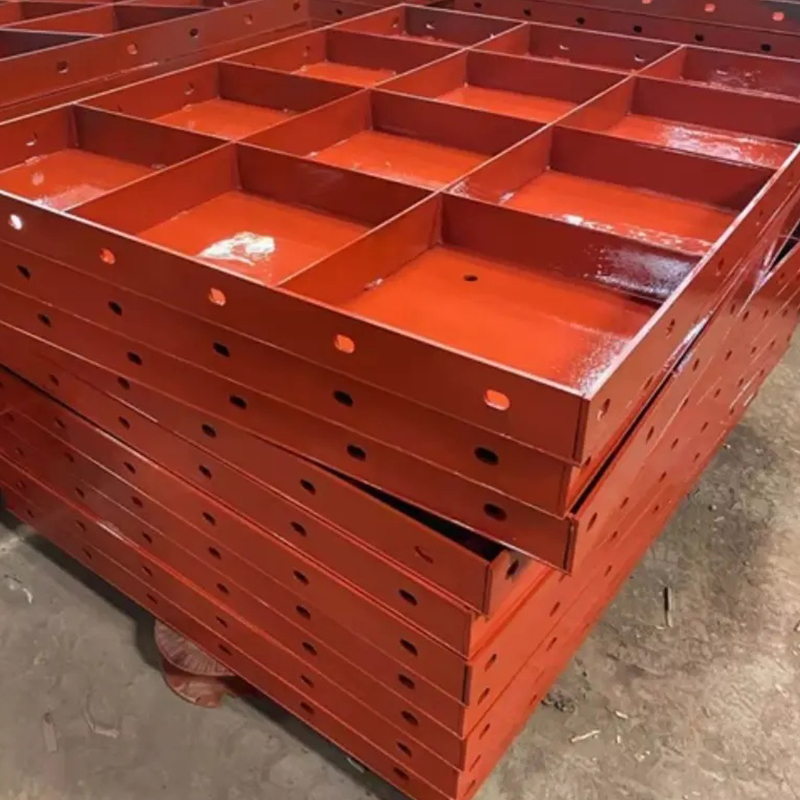
Flat Formwork
What Is Flat Formwork?
Flat formwork is a temporary or reusable structural mold used to contain and shape freshly placed concrete until the concrete gains sufficient strength to support itself. It is primarily designed for horizontal or planar concrete elements, although the same modular panels may be integrated into broader formwork arrangements for walls, platforms, ramps, and other regular surfaces.
The system normally consists of a steel-faced panel or plate, a supporting frame, reinforcing ribs, connection holes, bolts, clamps, positioning devices, and accessories for supporting or leveling the assembly. The face of the panel comes into direct contact with wet concrete. Its flatness, smoothness, rigidity, and joint quality have a direct effect on the appearance and dimensional accuracy of the completed concrete surface.
Unlike one-time timber molds, modular steel panels are designed for repeated installation and removal. The panels can be arranged according to the required length and width of the pour. Where the project uses a compatible shoring system, panels can be supported by adjustable props, beams, frames, tables, or other temporary works equipment. This allows contractors to create a standardized workflow across different floors, spans, buildings, or infrastructure sections.
The principal function of flat formwork is not simply to hold concrete in place. It must also withstand the pressure generated by wet concrete, resist deformation during vibration and placement, maintain accurate levels, prevent leakage at joints, and permit safe stripping after the concrete has cured. A reliable panel therefore combines a smooth working face with a strong backing structure and connection system.
Core Design of Modular Flat Formwork Panels
Standardized Panel Geometry
Standardization is one of the defining characteristics of modular flat formwork. Panels are produced in repeatable sizes with consistent edge profiles, hole positions, and connection details. This makes it possible to create larger working areas by combining multiple panels without designing an entirely new mold for every project.
Standardized geometry also simplifies planning. Contractors can calculate the number of panels required, prepare a layout before delivery, and organize panels by size. Rental companies can maintain an inventory that serves multiple customers and project types. Because panels are interchangeable within the same system, damaged or worn components can often be replaced without discarding the complete assembly.
For projects with unusual dimensions, standard panels may be supplemented by customized edge panels, infill strips, transition pieces, or specially fabricated sections. A manufacturer with advanced steel processing capability can produce these components while maintaining the same connection logic and surface quality as the standard product.
Steel Face and Reinforced Backing
The panel face must remain flat under working loads. If the plate bends or develops permanent distortion, the concrete surface may show waves, steps, bulges, or uneven joints. The steel face is therefore supported by a frame and a pattern of reinforcing ribs. The backing structure distributes loads across the panel and transfers them to the support system.
Reinforcement must be designed carefully. Excessive steel can increase weight and make handling more difficult, while insufficient reinforcement can lead to deflection or premature fatigue. The objective is to achieve a balanced panel with adequate stiffness, practical weight, and manageable lifting requirements. Panel dimensions, steel thickness, rib spacing, frame profiles, connection locations, and expected concrete pressure all influence the final design.
Strong edge frames also protect the panel during transport, stacking, assembly, and stripping. Accurate edges help create tight joints between adjacent panels. When joint lines are properly controlled, the risk of grout leakage and unwanted concrete fins is reduced.
Connection and Positioning System
A modular formwork system depends on reliable connections. Standardized bolt holes, clamps, pins, or other positioning devices allow workers to join panels quickly and maintain alignment. The connection method must be strong enough to resist movement but simple enough for repeated installation and removal.
Well-positioned connection points help prevent panel displacement during concrete placement. They also reduce the need for improvised drilling, cutting, or welding on the construction site. This improves safety and protects the corrosion-resistant finish. A predictable connection layout allows workers to learn the assembly process quickly and reduces dependence on highly specialized labor.
Accurate positioning devices are particularly important when multiple panels cover a large slab or deck. Small errors at individual joints can accumulate across a large area. A properly engineered system helps maintain a consistent plane, improves the final concrete finish, and reduces adjustment work before pouring.
Advantages Compared with Conventional Formwork
Higher Reusability Than Timber Systems
Timber formwork is widely available and can be cut to almost any shape, but its service life is affected by moisture, repeated nailing, stripping damage, warping, and surface wear. Timber panels may absorb water from concrete, swell at the edges, and lose dimensional accuracy after repeated use. Their surface quality also depends heavily on the quality and condition of the boards.
Steel flat formwork is manufactured for repeated cycles. When it is cleaned, stored, and handled correctly, it can be reused many more times than ordinary timber molds. Its rigid face is less likely to warp, and the standardized construction makes maintenance more predictable. The higher initial investment can therefore be offset by reduced replacement frequency, shorter preparation time, and improved productivity.
More Consistent Surface Quality
Concrete quality is influenced by mix design, placing practice, vibration, curing, and formwork condition. Even when other factors are controlled, an uneven or damaged mold can produce poor results. Precision-fabricated steel panels provide a smooth and stable contact surface that supports consistent concrete appearance.
Flat and tightly joined panels can reduce surface irregularities, leakage marks, grout lines, and local defects. In many applications, the resulting concrete surface may require little or no secondary grinding, depending on the project specification and the quality of concrete placement. Reduced finishing work saves labor and helps the contractor achieve a more uniform architectural or structural appearance.
Faster Assembly and Stripping
Modular panels are designed for repetitive work. Once the crew understands the connection pattern, panels can be placed, aligned, secured, and removed in a consistent sequence. Compared with site-built timber molds, this can significantly reduce measuring, cutting, fastening, and adjustment time.
Faster stripping also improves the rotation of formwork between work areas. On multi-story buildings, for example, panels can be removed from a completed floor and transferred to the next level. On bridge or infrastructure projects, the same equipment can move from one pour section to another. The faster the cycle, the more efficiently the contractor can use the available panel inventory.
Improved Dimensional Control
Steel panels are manufactured using controlled dimensions and repeatable fabrication processes. This provides more reliable geometry than field-cut materials. Consistent panel thickness, edge alignment, rib arrangement, and connection placement make it easier to establish level and maintain the specified dimensions of a slab or deck.
Dimensional control is especially important for bridge decks, precast elements, industrial floors, machine foundations, and other applications where flatness and elevation affect later installation work. A stable formwork base can reduce corrective work and help downstream trades work from a more accurate reference surface.
Compatibility with Multiple Support Systems
Flat formwork panels can be used with different temporary support arrangements, depending on the span, load, height, and construction method. They may be supported by adjustable steel props, shoring towers, beams, modular frames, table forms, or other engineered systems. This flexibility enables the same panel inventory to serve multiple projects.
Compatibility must always be confirmed through proper engineering. The support spacing, allowable load, panel deflection, connection capacity, wind exposure, access arrangements, and stripping sequence should be reviewed before use. The advantage of a modular panel system is that it can be adapted to different support strategies without changing the basic panel manufacturing concept.
Precision Manufacturing Process
Engineering Review and Project Definition
A reliable flat formwork product begins with accurate project information. The manufacturer should understand the required panel dimensions, concrete thickness, support spacing, working loads, reuse expectations, connection method, surface requirements, transport limitations, and environmental conditions. For customized projects, drawings, three-dimensional models, or installation layouts may be developed before production.
Engineering review identifies the critical areas of the formwork system. These may include panel stiffness, edge-frame strength, lifting points, bolt-hole accuracy, joint design, welding sequence, coating requirements, and compatibility with the customer's existing equipment. Early review reduces the possibility of producing panels that are technically strong but inconvenient to install or incompatible with the contractor's workflow.
CNC Steel Plate Cutting
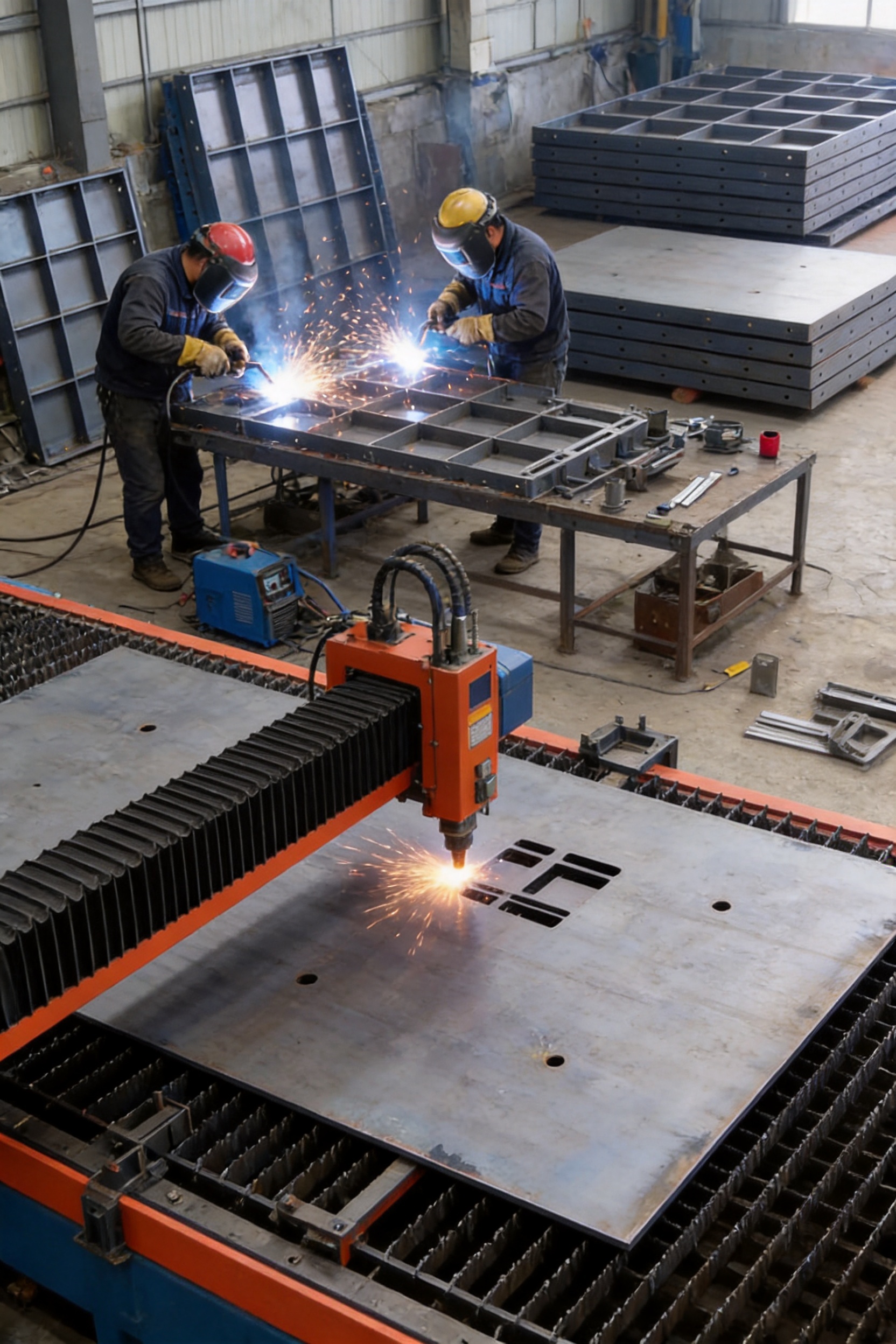
Computer numerical control cutting provides repeatable dimensions and clean profiles for steel plates and structural components. Depending on material thickness and production requirements, the manufacturer may use laser cutting or other controlled thermal cutting methods. CNC processing is especially valuable for connection holes, rib components, brackets, edge details, and customized parts.
Accurate cutting reduces dimensional variation between panels. It also supports efficient nesting of parts on steel plates, helping to reduce material waste. Cleanly processed edges improve fit-up during welding and help maintain the accuracy of the finished frame. For large or specialized panels, controlled cutting is essential to ensuring that the components match the approved drawings.
Forming, Fit-Up, and Assembly
After cutting, parts are checked and prepared for assembly. Reinforcing ribs and edge frames are positioned relative to the face plate. Fixtures, jigs, or controlled assembly stations help maintain alignment during fit-up. Proper fit-up is important because welding can introduce heat distortion if components are not restrained or welded in a balanced sequence.
Assembly workers verify overall dimensions, squareness, rib locations, edge straightness, and hole alignment. The use of standardized production methods helps ensure that every panel in a batch performs consistently. Customized panels may require additional inspection because their geometry can differ from the standard production pattern.
Professional Welding
Welding connects the steel face, frame, ribs, brackets, and other structural components into a rigid panel. The quality of welds affects strength, fatigue resistance, dimensional stability, and service life. Professional welding procedures should control joint preparation, welding consumables, current settings, heat input, welding sequence, and visual inspection.
Certified welding craftsmanship based on recognized AWS or EN practices provides a structured approach to production quality. Welders should be qualified for the relevant process and material, while welding procedures should be selected according to the component design. Continuous and intermittent welds must be applied as specified, and areas exposed to repeated handling or high stress require particular attention.
Welding distortion is managed through proper sequencing, fixturing, balanced heat input, and post-weld inspection. If necessary, panels may undergo controlled straightening or dimensional correction. The objective is to preserve a flat face and accurate frame without weakening the steel or damaging the connection details.
Surface Preparation and Protection
Steel formwork is exposed to moisture, cement residue, abrasion, handling impacts, and changing construction environments. Surface preparation and protective treatment help extend the useful life of the panels. Depending on project requirements, treatment may include cleaning, grinding, shot blasting, primer application, painting, or other anti-corrosion processes.
The concrete-contact face should be smooth and free from weld spatter, sharp projections, excessive grinding marks, or contaminants. The selected coating must be compatible with the intended use and should not interfere with concrete release or surface appearance. Edges, weld zones, lifting points, and areas likely to experience impact require careful attention during inspection and touch-up.
Final Inspection and Packing
Before shipment, panels should be checked for dimensions, flatness, squareness, hole locations, weld quality, surface condition, coating coverage, labeling, and accessory completeness. Inspection records can include material certificates, welding documentation, dimensional reports, coating information, and photographs of finished goods.
Proper packing prevents damage during transport. Panels should be stacked securely with suitable separators, while small accessories should be packed and labeled to prevent loss. Lifting points and handling instructions should be clear. For overseas shipments, the manufacturer should consider container dimensions, loading efficiency, corrosion protection during transit, and the customer's unloading capabilities.
Manufacturing Strengths of an Experienced OEM Supplier
An experienced OEM manufacturer contributes more than a standard catalog product. It can evaluate the customer's construction method, adjust panel dimensions, coordinate custom components, and provide a complete production solution. This is especially valuable when the project involves non-standard slab sizes, special access restrictions, unusual support systems, or integration with existing formwork equipment.
Nantong Hyson Road And Bridge Formwork Co., Ltd. specializes in custom steel formwork, heavy-duty steel structures, ringlock scaffolding, steel props, and OEM metal fabrication. Its production capabilities include CNC steel plate processing, bending, welding, assembly, and surface treatment. These capabilities support the production of standard flat formwork as well as customized panels and related structural components.
The company's manufacturing approach combines automated processing with controlled fabrication and welding practices. Advanced laser cutting equipment supports high-precision preparation of plates and components. Standardized production lines help maintain repeatability, while experienced personnel manage fit-up, welding, inspection, and finishing. This combination is important for formwork because the product must be both structurally robust and dimensionally accurate.
Hyson reports compliance with ISO 9001 quality management practices and manufacturing experience related to AWS and EN welding requirements. It also holds utility patents and has supplied steel products for major infrastructure and industrial projects. Experience with bridge, tunnel, power, and other large projects helps the manufacturer understand the demanding requirements associated with heavy steel components and repeated construction use.
The company's history of supplying central state-owned enterprise projects, including work associated with major bridge and infrastructure construction, reflects experience with strict project coordination and quality expectations. Such experience can benefit customers who require traceability, drawing control, production scheduling, inspection documentation, and consistent delivery across multiple batches.
As an OEM supplier, Hyson can support customers that need their own dimensions, connection patterns, branding, packaging, or installation arrangements. The ability to integrate laser cutting, bending, and welding under one production organization can reduce coordination between separate vendors and help maintain consistency from raw material to finished panel.
Applications of Flat Formwork
Building Construction
Flat formwork is commonly used for floor slabs, roof slabs, foundation bases, transfer slabs, podium decks, and other planar concrete elements. Residential buildings, commercial facilities, warehouses, factories, and public buildings all require efficient slab construction. Modular panels are particularly useful when the project repeats similar floor layouts or when the contractor wants to establish a predictable formwork cycle.
For multi-story construction, the panels can be organized into zones and moved upward as each floor is completed. The standardized arrangement supports coordinated work between reinforcement installation, electrical and mechanical services, concrete placement, and stripping. A smooth panel face can also support improved architectural concrete quality where the underside of the slab will remain visible.
Bridge Decks and Infrastructure
Bridge decks require stable and accurate temporary works because variations in elevation or surface flatness can affect drainage, surfacing, barriers, expansion joints, and final ride quality. Steel flat formwork can be arranged over beams, temporary supports, or other bridge construction systems to provide a continuous platform for deck concrete.
Infrastructure projects often expose formwork to outdoor weather, repeated lifting, dust, moisture, and long transportation distances. A robust steel system with effective surface protection can be more suitable than fragile temporary materials. Customized edge panels, openings, cantilever details, and interface components can be produced to match the bridge geometry.
Tunnels and Subway Stations
Tunnel slabs, station platforms, equipment bases, and other underground structures often require large planar pours. In these environments, access can be limited and construction sequences must be carefully coordinated. Modular flat panels help reduce on-site fabrication and support faster installation in confined work areas.
Because underground projects may involve damp conditions and repeated handling, corrosion protection and panel durability are important. The formwork must also be compatible with the available support equipment and capable of being dismantled or repositioned without excessive labor.
Precast Concrete Production
Precast plants benefit from reusable steel molds because standardized production depends on repeatable dimensions and stable surface quality. Flat formwork panels can be used to cast floor slabs, wall panels, paving elements, industrial components, and other planar products.
In a precast environment, the mold may be used many times under a controlled schedule. Accurate steel construction helps maintain consistent product dimensions, while smooth surfaces reduce finishing work. Customized panels can be produced for specific precast product sizes, embedded items, edge profiles, or production tables.
Hydraulic and Industrial Projects
Hydraulic facilities often include base slabs, channels, retaining elements, platforms, and equipment foundations. Industrial plants require flat concrete floors, machine foundations, loading areas, utility bases, and elevated platforms. These applications may involve heavy reinforcement, embedded components, high concrete loads, or strict level tolerances.
Steel flat formwork provides a stable working surface and can be adapted to the construction sequence. When used with suitable props and support frames, it can accommodate different elevations and pour zones. For industrial projects, customized openings and interfaces can be incorporated into the formwork design before production.
Comparison of Formwork Options
| Evaluation Factor | Modular Steel Flat Formwork | Timber Formwork | Low-Quality or Improvised Steel Panels |
|---|---|---|---|
| Dimensional consistency | High when produced with controlled CNC fabrication and inspection | Depends heavily on site cutting and worker accuracy | May vary because of inaccurate fabrication or distortion |
| Reusable life | Suitable for repeated construction cycles with proper maintenance | Often limited by moisture, cutting, nailing, and warping | Uncertain and strongly affected by weld and material quality |
| Concrete surface finish | Smooth and consistent when the face and joints are properly maintained | Variable; can show grain, joints, swelling, or damage | May show unevenness, weld marks, or panel deformation |
| Assembly speed | Fast due to standardized connections and repeatable layouts | Slower because of measuring, cutting, and fastening | Can be slow if holes and edges do not align |
| Adaptability | Modular panels can be combined with custom components | Highly adjustable but labor-intensive | May require field modification |
| Maintenance | Cleaning, inspection, coating repair, and replacement of damaged parts | Frequent replacement and adjustment may be required | Can require extensive straightening and repair |
| Long-term economy | Strong potential for lower cost per use | May be economical for limited or irregular work | Depends on actual durability and repair frequency |
Quality Control Considerations
Material Verification
Steel quality affects panel strength, weldability, durability, and service life. Material certificates should be reviewed when required by the project. Plate thickness, structural sections, reinforcing ribs, and connection components should correspond to the approved design. Substituting materials without technical review can affect both performance and welding procedures.
Dimensional Inspection
Panel length, width, thickness, squareness, flatness, edge straightness, rib position, and hole location should be inspected. A dimensional inspection program is particularly important when panels must connect to existing formwork or support equipment. Even small deviations can create installation difficulty when many panels are assembled across a large surface.
Weld Inspection
Welds should be visually inspected for continuity, undercut, cracking, porosity, excessive spatter, incomplete fusion, and other visible defects. Depending on project requirements and structural importance, additional non-destructive testing may be specified. Weld documentation and welder qualification records can provide additional confidence for demanding projects.
Flatness and Surface Inspection
The concrete-contact face should be inspected for dents, warping, sharp projections, excessive grinding, contamination, and coating defects. Flatness requirements should be established according to the intended application. Panels used for architectural concrete or precast production may require more stringent surface control than panels used for concealed foundation work.
Load and Support Review
Formwork panels should not be treated as independent structural systems without considering their supports. The complete arrangement includes the panel, connections, props, beams, frames, braces, anchorages, and working platforms. Engineers should verify the expected concrete pressure, construction loads, impact from placement, vibration effects, wind, and possible uneven loading.
The supplier can provide product data and recommended connection information, but the project engineer or qualified temporary works designer should confirm the final installation. Safe working load, maximum support spacing, permissible deflection, lifting capacity, and stripping requirements should be documented before use.
Installation and Use Guidelines
Preparation Before Assembly
Before installation, inspect the panels and accessories for transport damage, missing bolts, bent edges, coating damage, or contamination. The support area should be stable, level, and capable of carrying the expected loads. Survey points should be established so the formwork can be positioned to the correct elevation and alignment.
Panels should be organized by size and installation sequence. A layout plan can reduce unnecessary movement and help the crew identify the correct panel arrangement. If the system includes special edge pieces, openings, or custom sections, these should be clearly identified before the main assembly begins.
Panel Assembly
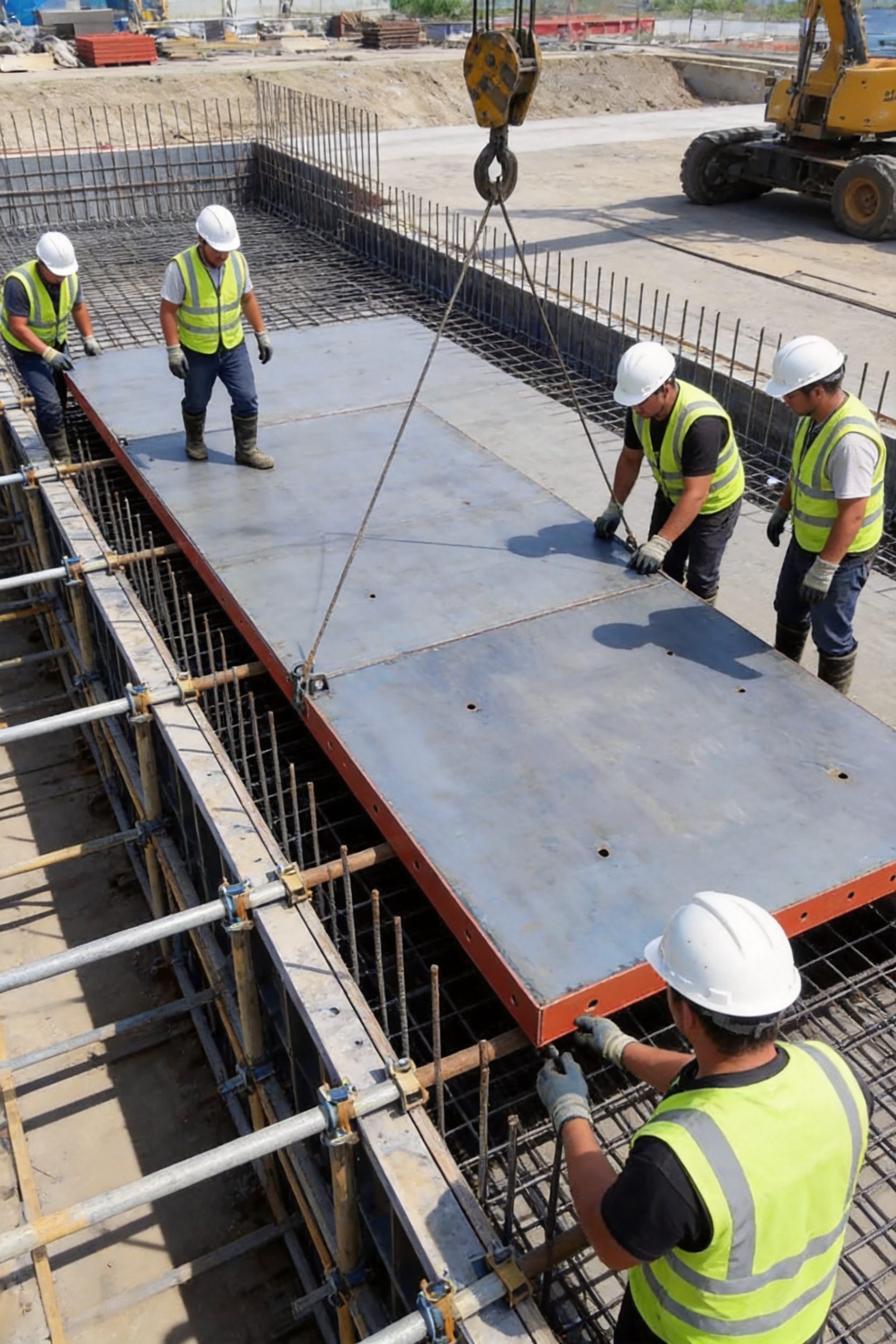
Place panels on the prepared support system according to the approved layout. Align adjacent edges and install the specified bolts, clamps, pins, or other connectors. Do not force misaligned holes with oversized tools or unauthorized modifications. Misalignment may indicate an incorrect panel position, damaged component, or support problem that should be corrected before continuing.
Check the overall plane as the assembly progresses. Local adjustments should be made through the intended support and leveling devices rather than by bending the panel or inserting unstable packing materials. Edge forms, stop ends, penetrations, and blockouts should be secured so they cannot move during reinforcement installation or concrete placement.
Release Agent and Concrete Placement
Apply a suitable release agent in a thin, uniform layer if required by the system and project specification. Excessive release agent can affect the concrete surface, while insufficient coverage may make stripping difficult. The panel face should be clean before application.
Concrete should be placed according to the approved method. Avoid dropping concrete from excessive heights or concentrating the load in one location. Control the rate of placement and vibration so that the temporary works are not subjected to unexpected impact or uneven pressure. Observe panel joints and supports during pouring. Any abnormal movement, leakage, or deformation should be addressed immediately and safely.
Stripping and Cleaning
Formwork should be stripped only after the concrete has reached the required strength and the responsible engineer or supervisor has approved the operation. Remove connections in the planned sequence and avoid using excessive force that could damage panel edges or concrete surfaces.
Clean concrete residue from the panels as soon as practical. Use methods that do not gouge the steel face or remove protective coatings. Inspect the panels after stripping, record damage, and repair coating defects before storage. Proper cleaning and maintenance are essential to achieving a long service life and consistent concrete finish.
Maintenance, Storage, and Service Life
Steel flat formwork is a durable product, but durability depends on how it is used and maintained. Panels should be cleaned after each cycle, especially at edges, connection holes, ribs, and corners where concrete can accumulate. Hardened residue should be removed with appropriate tools rather than uncontrolled impact that may deform the face.
Before storage, panels should be inspected for dents, bent frames, cracked welds, blocked holes, corrosion, and coating damage. Damaged panels should be separated from service until repaired. Minor coating damage can often be cleaned, prepared, and touched up. Structural damage should be assessed by qualified personnel before the panel is returned to use.
Store panels on stable supports with adequate separation and drainage. Avoid placing heavy loads on the concrete-contact face. Protect panels from standing water, aggressive chemicals, and uncontrolled impact from machinery. When stored outdoors, suitable covering and ventilation can help reduce moisture accumulation and corrosion.
Rental companies can improve asset management by labeling panels, recording usage cycles, tracking repairs, and maintaining standard inspection checklists. This allows damaged components to be identified early and helps determine the actual cost per use. It also improves fleet availability and reduces the likelihood of sending unsuitable panels to a project.
Customization Options for Project Requirements
Although standardized panels provide the greatest efficiency, not every project has identical requirements. A professional manufacturer can customize the system while preserving the advantages of modular production. Possible modifications include panel length and width, plate thickness, rib spacing, edge-frame configuration, bolt-hole pattern, lifting points, access openings, blockouts, corner details, and special surface treatment.
Custom dimensions may be necessary for bridge edges, tunnel profiles, industrial equipment bases, precast products, large foundation slabs, or restricted transport conditions. The manufacturer can also produce transition panels that connect standard modules to irregular project geometry. Such components reduce the need for field cutting and help preserve the quality of the formwork system.
Customization should be based on approved drawings and a clear understanding of the construction sequence. The customer should provide concrete dimensions, support conditions, access limitations, expected reuse, required finish, available lifting equipment, and local standards. Early communication helps the manufacturer design panels that are practical to install as well as technically adequate.
Why OEM Capability Matters to International Buyers
International buyers often require more than a product that meets a basic dimension. They may need export packing, documentation, metric or imperial measurements, local standards, special coatings, private labeling, or coordination with equipment sourced from another supplier. An OEM manufacturer with integrated production can address these requirements more efficiently.
OEM capability also enables design ownership and controlled revisions. If a contractor develops a preferred panel layout, the manufacturer can reproduce it for future projects. If a rental company needs a consistent fleet, standardized drawings and inspection criteria can be maintained over multiple orders. This supports long-term procurement rather than isolated purchases.
For customers purchasing large quantities, production planning and batch consistency are important. The supplier should be able to control raw material procurement, cutting programs, welding procedures, inspection, packing, and delivery schedules. A factory experienced in large steel structures is more likely to understand the importance of production sequencing, lifting, storage, and logistics for heavy components.
Nantong Hyson Road And Bridge Formwork provides OEM services for customers requiring custom formwork, steel structures, scaffolding components, steel props, and fabricated steel parts. Its integrated capabilities in laser cutting, bending, welding, and assembly allow it to support projects that combine flat formwork with other construction steel requirements.
Economic Benefits Over the Project Life Cycle
The purchase price of a formwork panel is only one part of the total cost. Contractors should also consider labor, installation time, stripping time, repairs, cleaning, transport, storage, concrete finishing, replacement, and downtime. A panel that costs slightly more initially may offer a lower total cost if it lasts longer and improves the speed of each construction cycle.
Standardized flat formwork reduces repetitive site fabrication. The contractor does not need to purchase and cut large quantities of timber for each pour. Assembly crews can work from familiar procedures, and the same panels can be transferred from one area to another. These benefits are particularly significant on repetitive building floors, long bridge decks, precast production lines, and large industrial projects.
Improved concrete surface quality can also reduce secondary finishing. Less grinding, patching, and correction means lower labor consumption and fewer delays for following trades. Where the concrete surface is exposed, better appearance can improve project acceptance and reduce remedial work.
Rental companies can benefit from asset utilization. Panels that are compatible with several support systems and project types can be rented more frequently. Standard dimensions simplify inventory planning, while durable construction reduces the replacement rate. Custom panels can be added to complete a rental fleet without abandoning the standard product range.
Safety and Responsible Use
Formwork is temporary works equipment and must be treated as part of the structural safety system. Product selection should be based on the actual project loads and installation conditions. Workers should receive instructions on assembly, lifting, access, connection tightening, stripping, and inspection.
Panels must be lifted with suitable equipment and approved lifting points. Personnel should remain clear of suspended loads, and panels should not be dragged in a manner that may damage edges or destabilize the support system. Working platforms, guardrails, access ladders, and fall protection should be provided as required by the site safety plan.
Before pouring, the complete formwork arrangement should be inspected. Particular attention should be given to support settlement, bracing, connections, edge forms, openings, and areas where reinforcement or embedded items may interfere with the panels. During concrete placement, workers should observe the system for movement, leakage, or unusual noise.
Safety depends on correct design, proper installation, disciplined supervision, and appropriate use. No formwork panel should be loaded beyond its design capacity or used in a configuration that has not been reviewed by a competent professional.
Frequently Asked Questions
What is the main purpose of flat formwork?
Flat formwork creates a stable mold for horizontal or planar concrete elements such as floor slabs, roof slabs, bridge decks, tunnel slabs, precast panels, foundations, and industrial platforms. It controls the shape, level, dimensions, and surface finish of the concrete until the concrete gains sufficient strength.
How is modular steel formwork different from timber formwork?
Modular steel formwork is manufactured with repeatable dimensions, reinforced frames, standardized connections, and a durable steel face. It is designed for repeated use and generally provides more consistent geometry and surface quality. Timber formwork is highly adaptable but usually requires more site cutting and may be more affected by moisture, wear, and dimensional changes.
Can flat formwork panels be customized?
Yes. Panels can be customized in dimensions, thickness, rib arrangement, connection locations, lifting points, edge details, openings, coatings, and other features. Customization should be based on approved drawings and the project's concrete, support, transport, and reuse requirements.
What support systems can be used with flat formwork?
Depending on the design, panels may be supported by adjustable steel props, shoring towers, beams, modular frames, table systems, or other engineered temporary works. The support arrangement must be checked for load capacity, spacing, stability, deflection, and safe installation.
Does steel flat formwork provide a smooth concrete finish?
A precision-manufactured steel panel with a clean, smooth face and well-controlled joints can provide a high-quality concrete finish. The final result also depends on concrete mix design, release agent application, vibration, placement rate, curing, and stripping practice.
How should the panels be maintained?
Clean concrete residue after each use, inspect the face and frame, repair coating damage, keep connection holes clear, and store panels on stable supports away from standing water and impact. Structural damage should be assessed before reuse.
Is steel flat formwork suitable for rental companies?
Yes. Standardized dimensions, reusable construction, compatibility with multiple support systems, and replaceable components make steel flat formwork suitable for rental fleets. Proper labeling, inspection, repair tracking, and cleaning procedures are important for maintaining fleet quality.
What information should be provided when requesting a quotation?
The buyer should provide required panel dimensions, concrete thickness, project application, support arrangement, connection preferences, expected reuse, surface finish requirements, applicable standards, quantity, delivery destination, and any custom openings or edge details. Drawings or layout sketches are helpful for accurate engineering and pricing.
Why is welding quality important in steel formwork?
Welds connect the face plate, reinforcing ribs, edge frames, brackets, and lifting components. Defective welds can reduce strength, cause deformation, and shorten service life. Controlled welding procedures, qualified welders, inspection, and proper distortion management help ensure reliable panels.
Can one panel system be used for different projects?
Yes, provided the panel dimensions, connection details, support conditions, and loading requirements are suitable. Standardized modular panels can be rearranged for different slab sizes and layouts. Project-specific engineering review is still required before each installation.
Conclusion
Modular flat formwork panels provide a practical and durable solution for high-quality planar concrete construction. Their advantages come from the combination of standardized design, strong steel construction, reinforced backing, accurate connections, smooth contact surfaces, and compatibility with different support systems. Compared with conventional site-built molds, they can improve assembly speed, dimensional consistency, concrete finish, reuse, and long-term cost efficiency.
The quality of the final product depends heavily on the manufacturing process. CNC steel plate cutting, controlled fit-up, professional AWS or EN-oriented welding practices, dimensional inspection, surface preparation, corrosion protection, and secure packing all contribute to dependable performance on site. For complex projects, the manufacturer's ability to provide customized panels and integrated fabrication services is equally important.
Nantong Hyson Road And Bridge Formwork Co., Ltd. combines steel formwork production with heavy steel fabrication, laser cutting, bending, welding, scaffolding, and structural manufacturing capabilities. Its experience in infrastructure and industrial projects supports the production of durable, accurately fabricated components for domestic and international customers.
For contractors, precast plants, infrastructure builders, and rental companies, the best formwork choice should be evaluated over the complete project life cycle. A panel that is easy to assemble, accurate, reusable, serviceable, and compatible with the site's support system can provide value on every pour. With appropriate engineering, installation, inspection, and maintenance, modular steel flat formwork can become a dependable foundation for faster construction and more consistent concrete quality.
References
American Welding Society. Structural Welding Code—Steel, AWS D1.1/D1.1M. Technical guidance for steel welding procedures, qualification, and inspection.
European Committee for Standardization. EN 1090, Execution of Steel Structures and Aluminium Structures. General principles for fabrication and conformity of structural steel components.
European Committee for Standardization. EN 74. Couplers, Spigot Pins and Baseplates for Use in Falsework and Scaffolds. Requirements related to connection components used in temporary works systems.
British Standards Institution. BS 1139. Metal Scaffolding. Reference requirements for selected scaffolding materials and components.
International Organization for Standardization. ISO 9001, Quality Management Systems—Requirements. Framework for controlled production, inspection, documentation, and continual improvement.
American Concrete Institute. ACI 347, Guide to Formwork for Concrete. Guidance on formwork planning, design considerations, construction, inspection, and removal.
Company technical information supplied for product evaluation: modular flat formwork panels, steel formwork manufacturing, CNC cutting, welding, surface treatment, OEM fabrication, and infrastructure project experience.
Product: Flat Formwork



- Location
- Group 3, Fangzhuang Village, Rucheng Subdistrict, Rugao City, Nantong, Jiangsu, China
- Follow us
- Phone
- +86-13646196162
- info@hysonindustry.com
