 +86-13646196162
 info@hysonindustry.com




 русский
  عربى
عربى 


Advanced Dolos Formwork for High-Precision Coastal Protection Concrete Block Production
 2026.08.18
Content
- 1 1. The Importance of Precision in Dolos Concrete Block Production
- 2 2. Product Overview and Engineering Concept
- 3 3. Main Advantages of the Dolos Formwork/Mold
- 4 4. Manufacturing Process and Quality Control
- 5 5. Comparison with Conventional or Lower-Quality Molds
- 6 6. Applications in Marine and Coastal Engineering
- 7 7. Recommended Production Workflow
- 8 8. Maintenance and Service-Life Management
- 9 9. Manufacturing Strengths of the Supplier
- 10 10. Customization Options for Different Projects
- 11 11. Quality, Safety, and Project Reliability
- 12 12. Economic and Environmental Considerations
- 13 13. Selection Guide for Buyers and Contractors
- 14 14. Frequently Asked Questions
- 14.1 Q1: What is the Dolos Formwork/Mold used for?
- 14.2 Q2: Why does Dolos geometry require specialized formwork?
- 14.3 Q3: What material is used to manufacture the mold?
- 14.4 Q4: How many times can the mold be reused?
- 14.5 Q5: Does the mold support customized Dolos block sizes?
- 14.6 Q6: How does the quick-release locking system improve production?
- 14.7 Q7: Does the mold produce a smooth concrete surface?
- 14.8 Q8: What manufacturing technologies are used?
- 14.9 Q9: Is the mold suitable for precast concrete plants?
- 14.10 Q10: What maintenance does the mold require?
- 14.11 Q11: Can the supplier provide OEM steel fabrication services?
- 14.12 Q12: What information should be provided when requesting a quotation?
- 15 15. Conclusion
- 16 References
- 17 Product: Dolos Formwork/Mold
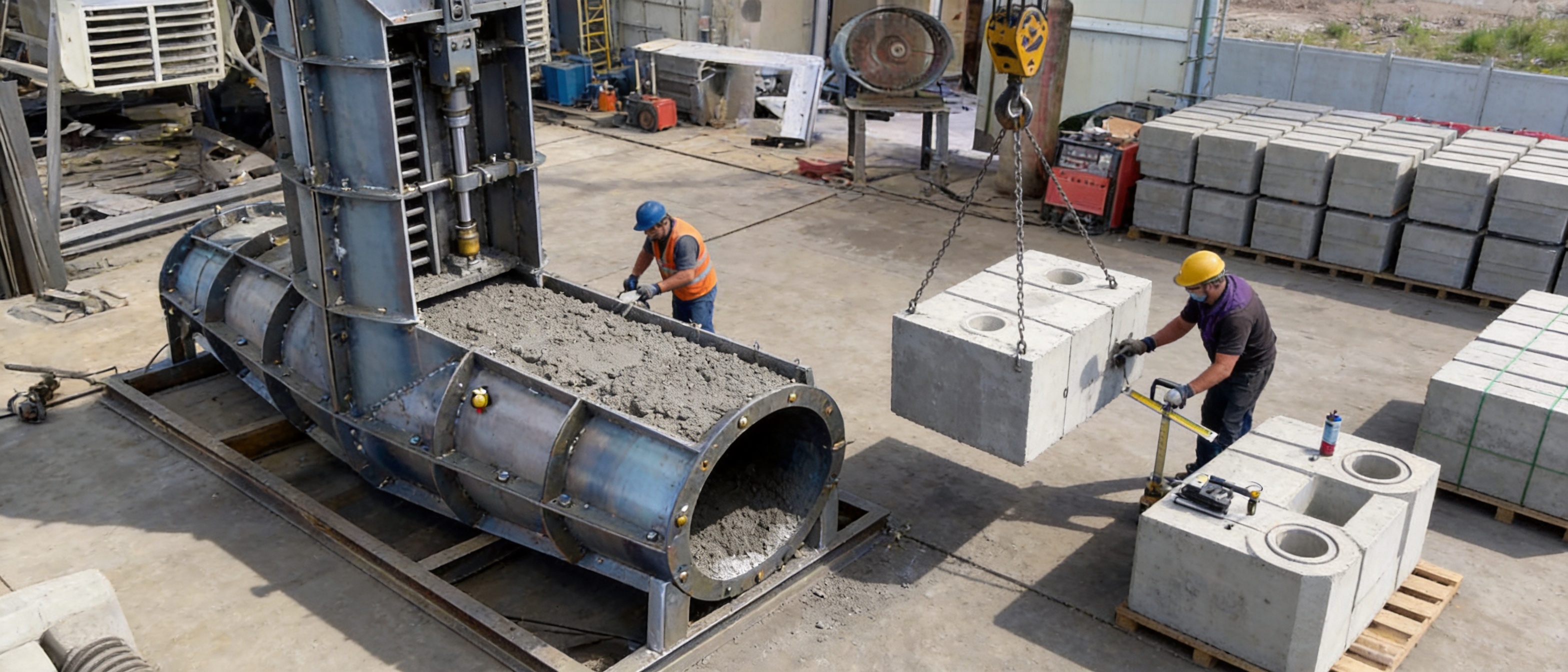
Coastal infrastructure is exposed to continuous wave impact, tidal movement, storms, saltwater corrosion, and changing seabed conditions. For ports, seawalls, breakwaters, artificial islands, and other marine structures, concrete armor units play a vital role in absorbing and dissipating wave energy. Among the most specialized of these units is the Dolos block, an interlocking concrete structure with a complex three-dimensional geometry designed to provide high stability while using relatively efficient quantities of concrete.
The performance of a Dolos breakwater depends on more than the concrete mix and installation method. The accuracy, strength, and repeatability of the formwork used to produce each block are equally important. Even small geometric deviations can affect the way individual armor units interlock, alter the designed void ratio, reduce hydraulic performance, and create weaknesses within the protective layer. For this reason, Dolos formwork must be manufactured with exceptional dimensional control, structural rigidity, surface quality, and operational efficiency.
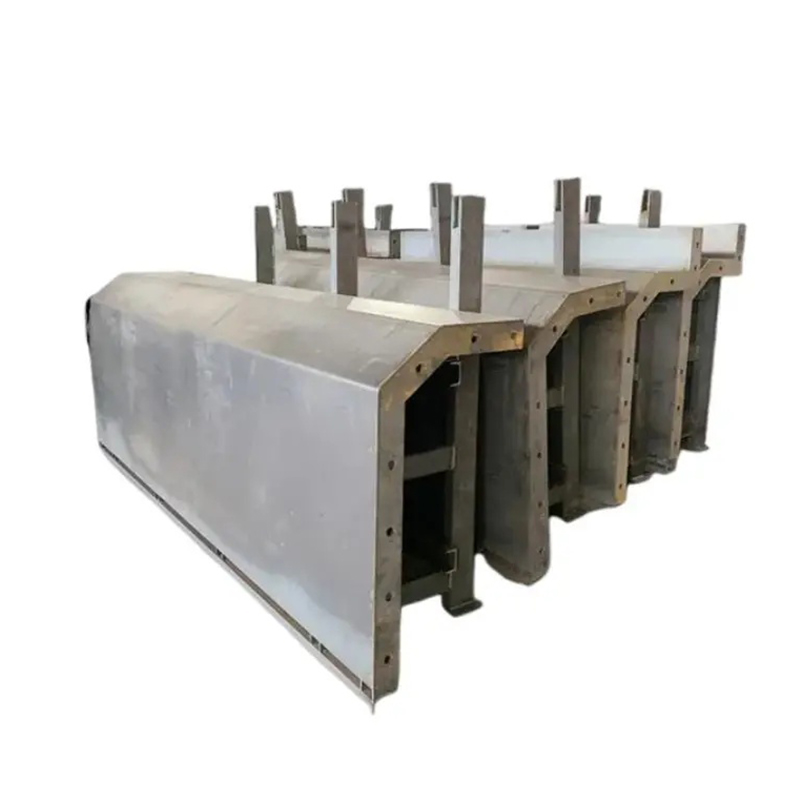
The Dolos Formwork/Mold is a prefabricated steel mold developed for the mass production of Dolos concrete blocks and similar wave-damping units. It combines three-dimensional design, CNC steel processing, reinforced welded construction, polished internal surfaces, and a quick-release locking system. The result is a durable and reusable production tool intended for demanding marine engineering and precast concrete applications.
Manufactured by Nantong Hyson Road And Bridge Formwork Co., Ltd., the mold reflects the company’s experience in custom steel formwork, heavy steel structures, bridge construction equipment, scaffolding, and OEM metal fabrication. The company has accumulated 15 years of manufacturing experience and holds 12 design and utility patents. Its manufacturing capabilities include laser cutting, CNC processing, bending, precision fitting, professional welding, quality inspection, and customized engineering support.
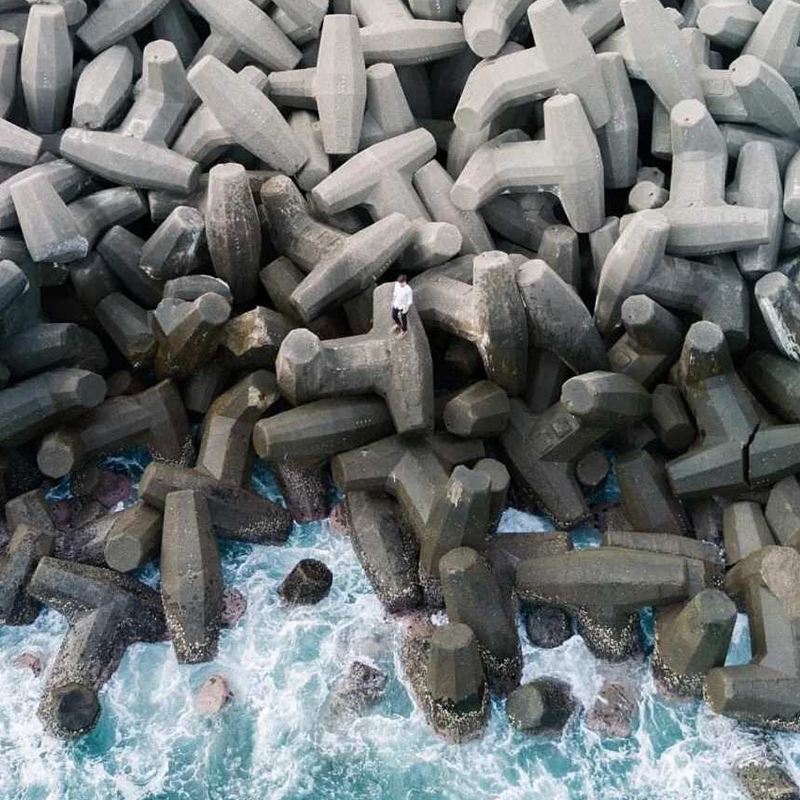
Dolos Formwork/Mold
1. The Importance of Precision in Dolos Concrete Block Production
Dolos blocks are not ordinary precast concrete products. Their function depends on a carefully engineered shape that allows individual units to work together as a mechanically stable protective layer. The arms and central body of each unit create contact points, voids, and overlapping zones. When placed correctly, the blocks form a dense but partially open armor system that reduces wave energy and distributes impact through the surrounding units.
Because of this interlocking principle, the production mold must accurately reproduce every major contour. A mold that is twisted, asymmetrical, poorly aligned, or dimensionally inconsistent can produce blocks that do not sit as intended. In a coastal project, this may lead to excessive movement, concentrated loads, uneven settlement, or reduced resistance to storm waves.
Precision is also essential when a large number of blocks are produced for one project. All units should remain within the specified dimensional tolerances so that site installation teams can handle and place them consistently. A reliable mold helps maintain uniformity from the first casting to the last casting, reducing the risk that individual blocks will require repair, rejection, or special placement.
Traditional steel molds may be sufficient for simple rectangular or cylindrical components, but complex Dolos geometry presents different challenges. The internal corners, angled sections, curved transitions, and symmetrical arms require accurate modeling before fabrication. Manual measurement alone is not adequate for maintaining repeatability across a high-volume production program.
The Dolos Formwork/Mold addresses these challenges through 3D modeling and CNC-controlled steel processing. The digital model provides a controlled geometric reference for the complete mold. CNC cutting and machining then transfer the design into the steel components with consistent accuracy. This approach helps reduce cumulative fabrication errors and improves the interchangeability of mold sections, locking components, and replacement parts.
2. Product Overview and Engineering Concept
The Dolos Formwork/Mold is a segmented steel formwork system designed to be assembled around the required concrete block geometry. Its modular construction allows the mold to be opened after the concrete has achieved sufficient strength. The segmented design is important because the complex shape of a Dolos block would make direct removal from a one-piece mold difficult or impossible.
The formwork is fabricated from Q235B carbon steel, a widely used structural steel grade suitable for welded fabrication and heavy-duty industrial applications. The mold body is reinforced with steel ribs to improve stiffness and resistance to deformation. These ribs help the formwork withstand the pressure generated by fresh concrete, vibration during casting, lifting, transportation, and repeated assembly and disassembly.
The internal surfaces are polished to support clean demolding and produce a smoother concrete finish. A smooth surface reduces the tendency of cement paste and concrete fines to adhere to the steel. It also limits the need for extensive cleaning and repair after each casting cycle. When appropriate release agents are used together with proper cleaning procedures, the mold can support a long service life and repeated production.
Standardized bolts and pins are used to connect the mold sections. These components provide a practical balance between secure assembly and convenient operation. The patented quick-release locking system is designed to shorten the time needed to open and close the mold. This is particularly valuable in precast yards where daily output depends on the number of completed casting cycles.
The system can be customized according to project requirements, including block dimensions, mold configuration, lifting arrangements, reinforcement details, surface treatment, and production capacity. As a result, the formwork can be adapted to different marine engineering designs rather than being limited to one standard size or application.
3. Main Advantages of the Dolos Formwork/Mold
3.1 Accurate Complex Geometry
The most important advantage of the mold is its ability to reproduce the complicated shape of a Dolos block with high repeatability. The use of three-dimensional modeling allows the entire geometry to be reviewed before fabrication. Engineers can check symmetry, section interfaces, opening angles, rib positions, locking points, and demolding directions in a digital environment.
CNC precision cutting and machining improve the consistency of individual steel parts. This is particularly useful for mold components that must meet at exact angles or align with corresponding sections. More accurate parts reduce the need for manual correction during assembly and help maintain the overall geometry of the finished formwork.
Accurate geometry supports reliable interlocking performance after the concrete units are placed in the breakwater. It also reduces variation between units produced in different mold positions or during different production shifts. For contractors and precast plants, this consistency can simplify quality inspection, storage, transportation, and installation planning.
3.2 Improved Interlocking Performance
Dolos armor units are designed to work as a group rather than as isolated blocks. Their stability depends on contact, friction, gravity, and interlocking between neighboring units. If one block has a distorted arm or incorrect central body dimension, the effect may extend beyond that single unit. It can influence the contact pattern and load distribution of the surrounding armor layer.
By maintaining the intended shape, the Dolos mold helps each block perform closer to the design assumptions used for the coastal protection system. The resulting units can form a more predictable armor layer with suitable void spaces and contact relationships. This supports the overall objective of reducing wave run-up, reflection, overtopping, and direct impact on the protected structure.
Although formwork alone cannot guarantee the performance of a completed breakwater, it provides the geometric foundation needed for proper block manufacture. Concrete mix quality, curing, lifting, transport, placement, and project-specific hydraulic design remain essential. The mold contributes by reducing one of the most significant sources of variation: inconsistent block shape.
3.3 Easy Demolding and Better Surface Finish
Complex concrete blocks require a mold that can be opened in a controlled sequence. If the mold adheres to the concrete or is removed in the wrong direction, the block may suffer edge damage, surface tearing, cracking, or localized chipping. Such defects can affect appearance and may also reduce confidence in the structural quality of the unit.
The segmented configuration of the Dolos Formwork/Mold creates defined release directions. The polished internal surface helps reduce friction and concrete adhesion. Together with proper release-agent application, these features make demolding more efficient and reduce the possibility of damaging the fresh or partially cured block.
A smooth, non-porous concrete surface can also simplify inspection. Operators can more easily identify honeycombing, cracks, voids, incomplete filling, and other defects. When the mold is properly maintained, the finished blocks require less secondary surface repair, supporting faster production and more consistent quality.
3.4 Strong Construction for Repeated Use
Marine concrete block production is often performed under demanding working conditions. Molds are exposed to fresh concrete pressure, mechanical vibration, crane handling, impact from tools, moisture, cement residue, and repeated opening and closing. A lightweight or poorly reinforced mold may deform, lose alignment, or develop fatigue cracks after a limited number of cycles.
The Dolos Formwork/Mold uses Q235B carbon steel and reinforced ribs to provide a strong structural frame. The rib arrangement improves the formwork’s resistance to bending and local distortion. Professional welding helps maintain the integrity of the steel assembly, while suitable connection components support reliable operation over repeated cycles.
With proper maintenance, the mold can be reused 500 times or more. Actual service life depends on concrete pressure, handling methods, cleaning procedures, storage conditions, corrosion protection, and the quality of routine inspection. Nevertheless, a high reuse rate can significantly reduce the cost per concrete block and make the mold suitable for long-term projects, rental fleets, and high-volume precast production.
3.5 Faster Assembly and Disassembly
In a conventional production yard, mold handling can consume a substantial portion of the daily work cycle. If workers must use complicated tools or remove many independent fasteners, labor requirements increase and production becomes less predictable. Delays in demolding can also reduce the number of available mold sets and limit daily output.
The Dolos mold uses standardized bolts, pins, and a patented quick-release locking system. The operating principle is to secure the mold firmly during pouring and then allow the sections to be released efficiently after the required concrete strength has been reached. The simplified procedure can reduce manual effort, improve worker safety, and support more consistent cycle times.
Faster assembly does not mean that connection inspection should be skipped. Operators must still confirm that every section is correctly positioned, all locking components are fully engaged, and the mold is stable before concrete placement. The advantage is that these checks can be integrated into a standardized procedure that is easier to teach and repeat.
3.6 Lower Long-Term Production Cost
The initial investment in precision formwork should be evaluated against the total cost of producing the required number of concrete units. A mold with a low purchase price may become expensive if it requires frequent repair, produces inconsistent blocks, needs extensive cleaning, or takes too long to operate.
The Dolos Formwork/Mold is designed to reduce these hidden costs through durability, reusability, efficient demolding, and stable geometry. Longer service life spreads the equipment cost across more production cycles. Reduced repair requirements lower labor consumption. Faster handling allows the same production team to complete more cycles in a given period.
For rental companies, the ability to reuse the mold across multiple projects can improve asset utilization. For contractors, the mold can support a planned production program with more predictable equipment performance. For precast plants, the standardized design can help integrate Dolos block production into an existing manufacturing workflow.
4. Manufacturing Process and Quality Control
4.1 Engineering Review and Three-Dimensional Modeling
The manufacturing process begins with a review of the required Dolos block geometry and project conditions. Important inputs may include the block size, concrete grade, reinforcement requirements, casting method, lifting method, design tolerance, expected production quantity, and available handling equipment.
Three-dimensional modeling is then used to develop the mold structure. Engineers examine the external shape of the concrete unit, the division of mold sections, the location of seams, the release direction, the position of ribs, and the arrangement of bolts and pins. This stage is also used to identify areas where concrete could become trapped or where a mold segment could interfere with demolding.
Digital modeling provides an opportunity to optimize the design before steel is cut. Potential conflicts between components can be corrected at an early stage. This reduces material waste, minimizes modification work, and helps ensure that the final assembly matches the approved design.
4.2 CNC Steel Plate Cutting
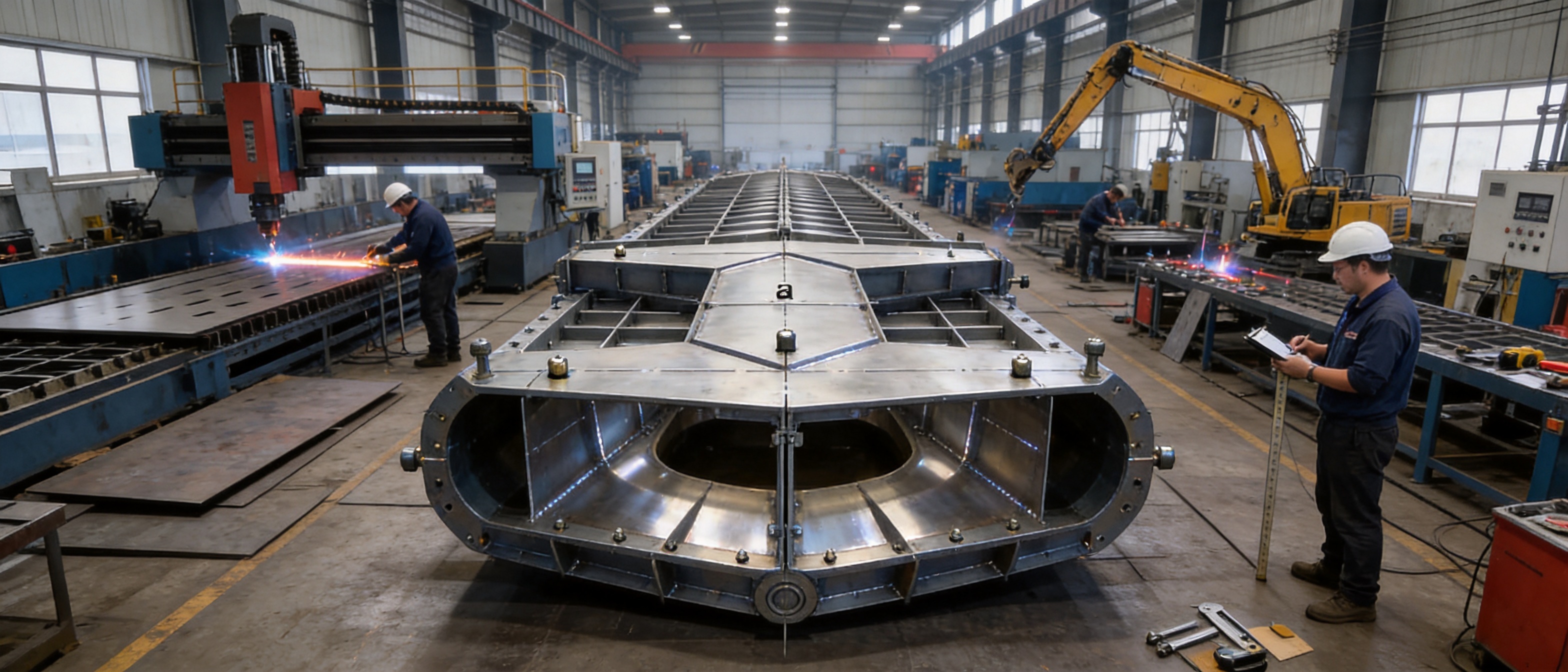
After design confirmation, steel plates and profiles are prepared for CNC processing. Advanced laser cutting equipment can produce accurate edges and detailed profiles for components with complex outlines. CNC cutting provides repeatable dimensions and reduces the variation associated with manual marking and flame cutting.
Cutting accuracy is especially important at mold section interfaces. Poorly fitted edges can create steps, gaps, or misalignment in the internal cavity. These defects may appear on the concrete block and can also make the mold more difficult to assemble. Precision cutting helps create cleaner joints and improves the fit between adjacent sections.
Hyson’s heavy metal fabrication capability enables the company to process large and thick steel components as well as smaller precision parts. The combination of steel plate cutting, bending, drilling, machining, and fitting allows more of the manufacturing process to be coordinated within one production system.
4.3 Forming, Fitting, and Assembly
Some mold components require bending or controlled forming to achieve the intended curvature and angle. Forming operations must be carried out carefully because excessive deformation or uneven springback can affect the final geometry. Components are checked against the engineering drawings and digital model before being incorporated into the mold assembly.
Fitting is performed to ensure that neighboring sections align correctly. Temporary fixtures, reference points, and measurement tools may be used to control the position of the mold panels and reinforcing ribs. Accurate fitting reduces the possibility of cumulative dimensional errors across the complete mold.
The assembly process also considers practical operation. Workers must be able to access bolts, pins, lifting points, and locking components. A formwork system that is geometrically accurate but difficult to operate would not provide the required productivity advantage. Engineering decisions therefore balance precision, strength, safety, and ease of use.
4.4 Professional Welding
Welding is a major part of heavy steel mold fabrication. The welds must connect the mold shell, reinforcing ribs, brackets, lifting components, and other structural elements without causing unacceptable distortion. Weld sequence and heat input are managed to maintain dimensional stability.
Hyson applies certified welding craftsmanship associated with AWS and EN practices. Professional welders are responsible for preparing joints, selecting suitable welding procedures, controlling welding positions, and examining completed welds. The objective is to create strong, continuous connections capable of withstanding repeated production loads and handling forces.
Welding quality affects both safety and service life. Poor welds can develop cracks, undercut, porosity, or incomplete fusion. These defects may worsen under cyclic loading. A controlled welding process, combined with visual inspection and additional testing where required, helps reduce these risks.
4.5 Surface Finishing and Corrosion Protection
After welding and structural assembly, the mold surfaces are cleaned and finished. Sharp edges, weld spatter, burrs, and irregularities are removed where they could affect operation or concrete quality. The internal surface is polished to support release and improve the appearance of the cast block.
External surfaces may receive suitable protective treatment according to the project environment and customer requirements. Although Q235B steel provides a strong fabrication base, marine and coastal conditions require attention to corrosion control. Moisture, salt, cement residue, and outdoor storage can accelerate corrosion if the steel is not cleaned and protected.
Regular maintenance is therefore an important part of the product’s performance. Operators should remove concrete residue after each cycle, inspect exposed steel, repair damaged coatings, lubricate appropriate locking components, and store the mold in a dry and organized location whenever possible.
4.6 Inspection Before Delivery
Before delivery, the mold should undergo a systematic inspection. Typical checks include overall dimensions, section alignment, cavity geometry, connection fit, rib attachment, weld quality, surface finish, locking operation, lifting arrangements, and identification markings.
A trial assembly can verify that all sections fit together as intended. It also allows operating personnel to understand the assembly sequence before the mold arrives at the construction site or precast plant. Where required, inspection records and quality documents can be provided as part of the project handover.
The company’s ISO 9001:2015 quality management framework supports process control from order review through production and final inspection. Compliance with recognized construction and industrial standards helps establish a repeatable quality system rather than relying only on final visual inspection.
5. Comparison with Conventional or Lower-Quality Molds
Not all steel molds provide the same level of performance. The differences may not be obvious when a mold is new, but they become increasingly important after repeated production cycles. A comparison should consider dimensional stability, operation, surface quality, service life, support, and total cost rather than only the initial purchase price.
| Evaluation Area | Basic Conventional Mold | Precision Dolos Formwork/Mold | Project Benefit |
|---|---|---|---|
| Geometry control | May rely heavily on manual fabrication and adjustment | Uses 3D modeling and CNC-controlled processing | More consistent Dolos block dimensions and symmetry |
| Structural rigidity | Limited reinforcement may allow deformation | Q235B steel shell with reinforced ribs | Better resistance to concrete pressure and handling loads |
| Demolding | May require prolonged manual work or forceful separation | Segmented construction with polished internal surfaces | Reduced risk of block damage and shorter cycle time |
| Locking system | May use numerous non-standard fasteners | Standardized bolts, pins, and quick-release locking system | Easier operation, replacement, and maintenance |
| Surface finish | Roughness or weld irregularities may transfer to concrete | Finished and polished mold cavity | Smoother concrete units and less repair work |
| Reuse potential | Service life varies and may be limited by early distortion | Designed for 500 or more uses with proper maintenance | Lower cost per casting over long projects |
| Customization | Often limited to standard dimensions | Can be adapted to project-specific block designs | Better fit with engineering and site requirements |
| Manufacturing support | May provide limited technical documentation | Supported by engineering, fabrication, inspection, and OEM capabilities | More reliable project coordination and after-sales support |
A conventional mold can still be appropriate for a short-term or low-volume application, especially when geometric requirements are simple. However, Dolos production is usually associated with large marine projects in which consistency, output, and long-term reliability are critical. In such conditions, precision formwork offers a stronger value proposition.
The advantage is not simply that the mold is made from steel. The real difference lies in the integration of digital design, accurate processing, reinforced construction, controlled welding, operational ergonomics, and quality management. These features work together to reduce production variation and improve the reliability of the complete casting process.
6. Applications in Marine and Coastal Engineering
6.1 Coastal Breakwaters and Seawalls
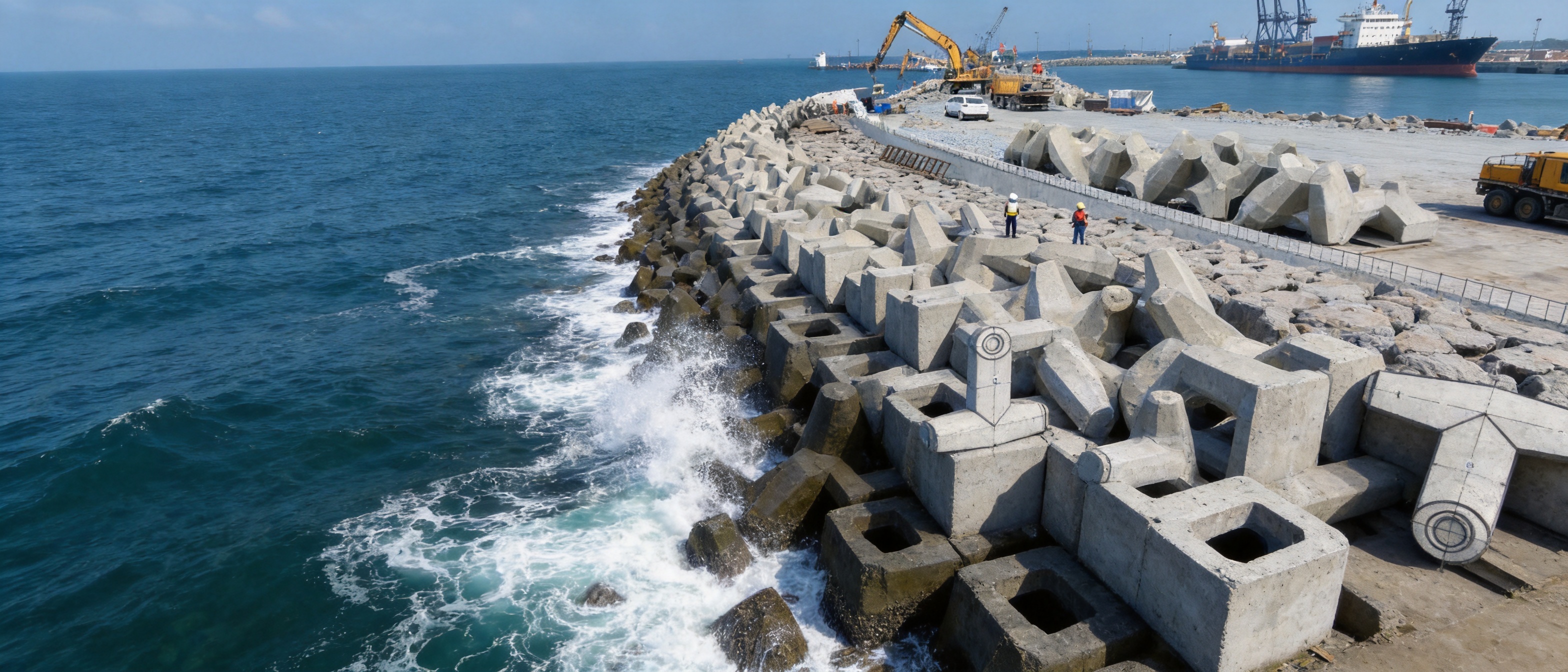
Breakwaters and seawalls protect shorelines, industrial facilities, transportation corridors, and urban areas from wave action and erosion. Dolos blocks are often installed as part of an armor layer on the seaward side of these structures. Their irregular geometry creates interlocking contact and energy-dissipating voids.
The mold supports the production of units with the repeatable dimensions needed for planned placement. Consistent blocks help installation teams create a more uniform armor layer and reduce the need to sort or modify units at the worksite. This can be particularly important when the project has limited access, severe weather exposure, or demanding construction schedules.
6.2 Port Construction
Ports require protection from waves to maintain safe berthing conditions, support cargo handling, and protect quay walls and harbor facilities. Breakwater armor units may be used to reduce wave penetration into harbor basins and limit damage caused by storms.
A high-turnover Dolos mold can support the production requirements of major port projects. The quick-release system helps shorten the interval between casting and mold reuse, while the robust steel construction allows the equipment to operate in an industrial precast environment. Customized mold designs can also be developed for project-specific armor unit sizes.
6.3 Land Reclamation and Artificial Islands
Land reclamation and artificial island projects often require temporary or permanent coastal protection during construction. Wave-damping concrete blocks can be used to protect perimeter slopes, stabilize reclamation boundaries, and reduce the impact of water movement on newly formed land.
Because reclamation projects may involve long production periods and large quantities of concrete units, mold durability is important. A reusable mold reduces the need for frequent replacement and helps maintain production continuity. The formwork can be integrated with lifting, curing, storage, and transportation plans developed for the reclamation project.
6.4 Precast Concrete Plants
Specialized precast plants can use the Dolos mold for large-scale production. The mold is suitable for production environments where equipment utilization, standardized work instructions, inspection records, and predictable cycle times are important.
Multiple mold sets can be deployed to create a parallel production system. While one set is being filled or cured, others can be cleaned, assembled, or prepared for the next cycle. The quick-release system is particularly useful in this context because it supports a more efficient flow between casting and demolding operations.
7. Recommended Production Workflow
A successful Dolos block production program begins with a clear workflow. The mold manufacturer, concrete supplier, contractor, quality team, and installation team should coordinate their requirements before production begins.
7.1 Preparation of the Mold
Before assembly, workers should inspect each mold section for damage, deformation, concrete residue, corrosion, and missing connection components. Contact surfaces should be clean, and bolts and pins should be available in the required quantities. The internal cavity should be checked for sharp projections or foreign materials.
A suitable release agent should be applied evenly to the internal surface. Excessive release agent can affect the concrete surface or create environmental problems, while insufficient coverage may increase adhesion. The recommended application method should be established through a trial casting program.
7.2 Assembly and Alignment
Mold sections should be assembled according to the approved sequence. Bolts and pins must be installed in the correct positions, and the quick-release locking system should be fully engaged. The complete mold should be placed on a stable and level base capable of supporting its weight and the pressure of the fresh concrete.
Alignment checks should confirm that the sections are fully seated and that no unintended gaps exist along the joints. If the design includes lifting points or external support frames, these should be inspected before concrete placement. The mold should not be used if there is visible movement, misalignment, or a damaged locking component.
7.3 Concrete Placement
Concrete should be placed in a controlled manner to reduce the risk of segregation, trapped air, and uneven pressure. The filling sequence should be compatible with the mold geometry and project concrete specification. Vibration must be sufficient to consolidate the concrete but controlled to avoid excessive movement of the mold or locking system.
Operators should monitor the mold during filling. Any unusual opening at a joint, leakage of cement paste, movement of the shell, or abnormal sound from the connections should be investigated immediately. Properly designed and assembled reinforcement helps the formwork withstand normal casting loads, but safe operating procedures remain essential.
7.4 Curing and Demolding
The concrete should remain in the mold until it reaches the specified demolding strength. Removing the formwork too early can damage corners, arms, or contact surfaces. The required curing period depends on the concrete mix, temperature, humidity, cement type, and project specifications.
When the concrete is ready, the mold should be released using the designated quick-release sequence. Sections should be opened in a controlled order to avoid impact against the concrete unit. Lifting equipment must be appropriately rated, and personnel should remain outside danger zones during mold opening and block handling.
7.5 Cleaning and Storage
After demolding, concrete residue should be removed from the internal surfaces and connection areas. Hardened buildup can interfere with subsequent assembly and gradually change the block geometry. Cleaning tools should not unnecessarily gouge or deform the steel surface.
The mold should be inspected after each cycle. Small defects can be repaired before they become larger problems. Connection components should be lubricated or replaced as necessary. When the mold is not in use, it should be supported properly and protected from standing water, unnecessary impact, and uncontrolled outdoor exposure.
8. Maintenance and Service-Life Management
The stated reuse potential of 500 or more cycles depends on disciplined maintenance. A well-designed mold can provide excellent durability, but service life is influenced by how the equipment is handled. Maintenance should therefore be treated as part of the production system rather than as an occasional repair activity.
8.1 Daily Inspection
Daily checks should cover mold alignment, internal surface cleanliness, bolts, pins, quick-release components, lifting points, welds, and visible corrosion. Workers should record any deformation, cracking, looseness, or unusual wear. A simple inspection checklist can help ensure that important areas are not overlooked during busy production periods.
8.2 Control of Concrete Buildup
Cement paste and hardened concrete can accumulate around seams and locking areas. If this buildup is not removed, it can prevent the mold sections from closing fully. It may also create local pressure points that cause deformation or damage during assembly.
Cleaning should be performed using methods that protect the polished surface. Aggressive impact, uncontrolled grinding, or unsuitable chemicals can shorten the service life of the cavity. The cleaning procedure should be standardized and applied consistently by all shifts.
8.3 Fastener and Locking-System Care
Standardized bolts and pins simplify replacement, but they still require inspection. Threads should be checked for damage, pins should not be excessively bent or worn, and locking mechanisms should move as intended. Fasteners that no longer provide secure engagement should be replaced rather than forced into service.
The quick-release system should be operated only by trained personnel. Improper use can damage the mechanism or create a safety risk. Clear operating instructions and periodic training help preserve both productivity and equipment reliability.
8.4 Weld and Rib Inspection
Reinforcing ribs and welded joints are exposed to repeated loads. Visual inspection should look for cracking, distortion, separation, and signs of fatigue. If a defect is found, the mold should be removed from production until the condition has been assessed and repaired by qualified personnel.
For high-volume projects, periodic formal inspections can be scheduled after a defined number of casting cycles. The inspection frequency may be increased if the mold is exposed to rough handling, excessive vibration, severe weather, or unusual concrete pressure.
8.5 Corrosion Prevention
Coastal environments can accelerate corrosion, particularly when saltwater, humid air, and cement residue are present at the same time. The mold should be washed or cleaned as appropriate, dried before storage, and protected with a suitable coating system. Damaged coating areas should be repaired promptly.
Corrosion prevention is not only an appearance issue. Deep corrosion can reduce plate thickness, weaken weld areas, interfere with fastener operation, and affect the smoothness of the mold cavity. A practical maintenance program protects the original investment and supports the target reuse rate.
9. Manufacturing Strengths of the Supplier
The Dolos Formwork/Mold is supported by the broader manufacturing capabilities of Nantong Hyson Road And Bridge Formwork Co., Ltd. The company specializes in custom steel formwork, ringlock scaffolding, heavy-duty steel structures, steel props, hydraulic tunnel trolleys, and OEM metal fabrication.
Its production system combines automated processing with experienced steel fabrication. Laser cutting equipment supports accurate plate processing, while bending, drilling, fitting, and welding capabilities allow complex assemblies to be produced within an integrated workflow. This is valuable for customers that require non-standard dimensions, special lifting arrangements, or compatible steel components for a complete project.
The company’s experience in infrastructure construction includes work connected with major bridges, power facilities, transportation projects, and marine engineering applications. Experience with large construction programs helps the manufacturer understand the practical requirements of site delivery, installation, repeated use, inspection, and project scheduling.
Its experience serving large state-owned construction enterprises, including China Communications Construction Company and China Railway Construction Corporation, has contributed to an understanding of demanding procurement and quality expectations. The company applies high-standard manufacturing principles to custom orders and provides technical coordination for international customers.
Quality management is supported by ISO 9001:2015 practices. The company also references AWS and EN welding craftsmanship and BS1139 and EN74 standards for applicable scaffolding-related products. These standards and systems provide a framework for controlled production, although the final requirements for each Dolos mold should always be confirmed according to the relevant project specifications and purchasing documents.
The manufacturer’s 12 patents demonstrate ongoing attention to design improvement. In the Dolos mold, this development experience is reflected in the quick-release locking concept, segmented configuration, reinforced structure, and integration of precision manufacturing methods.
10. Customization Options for Different Projects
Marine engineering projects vary significantly in wave climate, water depth, seabed condition, construction method, available lifting equipment, and required armor unit size. A standardized product description cannot replace project-specific engineering. The Dolos Formwork/Mold can therefore be customized to match the approved block design and production plan.
Customization may include the overall dimensions of the concrete unit, mold section arrangement, steel thickness, rib configuration, connection layout, lifting points, surface treatment, identification markings, and support accessories. The manufacturer can also coordinate the formwork design with the customer’s casting platform, crane capacity, concrete delivery system, and storage requirements.
For projects producing several block sizes, separate mold configurations can be developed. For rental fleets, the design can emphasize replacement of common wear parts and straightforward inspection. For a permanent precast facility, the formwork can be optimized for repeated handling, workflow integration, and higher daily output.
Before fabrication, customers should provide drawings, technical specifications, performance requirements, production quantities, delivery schedule, and applicable standards. A design review can then confirm the mold’s geometry, operating sequence, and quality-control requirements. This early collaboration reduces misunderstanding and helps prevent costly changes after production begins.
11. Quality, Safety, and Project Reliability
Quality in Dolos formwork is closely connected with safety. A mold that does not close correctly may leak concrete or move during vibration. A damaged lifting point may create a serious hazard during handling. A weakened rib or cracked weld may fail under repeated loading. For these reasons, structural quality and operational safety must be considered together.
The mold should be operated only on a stable foundation and within its intended design conditions. The weight of the assembled steel mold, fresh concrete, lifting accessories, and handling equipment must be included in production planning. Cranes, slings, shackles, and lifting devices should be inspected and rated for the expected load.
Personnel should be trained in assembly, locking, concrete placement, demolding, cleaning, and emergency procedures. No worker should stand beneath a suspended mold or concrete block. During demolding, workers should remain clear of moving sections and use designated access points and tools.
Quality inspection should cover both the mold and the concrete block. The mold should be checked for geometry and structural condition, while the finished block should be checked for dimensions, surface defects, cracking, honeycombing, edge damage, and curing quality. Maintaining records allows the production team to identify trends and intervene before defects become widespread.
When a reliable mold is combined with good concrete practice and disciplined handling, the project gains a more stable production foundation. This reduces uncertainty during installation and helps protect the long-term performance of the coastal structure.
12. Economic and Environmental Considerations
Durable reusable formwork can support more efficient use of steel, labor, energy, and concrete production resources. A mold that remains accurate through hundreds of cycles reduces the need to manufacture replacement molds. It also reduces downtime associated with repeated repairs or equipment changes.
Efficient demolding can lower the amount of concrete surface repair required. This reduces the consumption of repair mortar, labor, and additional handling. Consistent block geometry can also reduce rejected units and the waste associated with producing blocks that cannot be installed as planned.
From an environmental perspective, longer equipment life improves the useful output obtained from the steel used to manufacture the mold. Proper maintenance extends this benefit. At the end of its service life, the steel formwork can generally be repaired, refurbished, or recycled according to applicable local practices.
Environmental performance also depends on the complete project. Concrete material selection, curing energy, transportation distance, lifting operations, and installation methods all contribute to the project footprint. The mold’s role is to support a reliable production process that avoids unnecessary waste and repeated work.
13. Selection Guide for Buyers and Contractors
When selecting Dolos formwork, buyers should begin with the approved design of the concrete armor unit. The mold must reproduce the required geometry and should not be selected solely on the basis of external dimensions or nominal weight.
The expected production quantity is another important consideration. A short-term project may require a small number of mold sets, while a large port or coastal protection program may benefit from multiple sets arranged in a continuous production system. The number of molds should be evaluated against curing time, available yard space, crane capacity, and daily placement requirements.
Buyers should also review the mold’s steel grade, reinforcement design, weld quality, surface treatment, locking system, and maintenance requirements. The supplier should be able to explain the assembly and demolding sequence and provide information about inspection and replacement parts.
Compatibility with site equipment is essential. The mold’s weight and dimensions must match the available cranes, forklifts, transport vehicles, casting platforms, and storage areas. Lifting points should be clearly identified, and the mold should be suitable for the planned handling orientation.
Finally, customers should evaluate the manufacturer’s engineering support, quality system, production capacity, project experience, and ability to deliver customized solutions. A reliable supplier should communicate clearly from design review to final inspection and should be able to support the customer when technical questions arise during production.
14. Frequently Asked Questions
Q1: What is the Dolos Formwork/Mold used for?
The mold is used to cast Dolos concrete armor units for breakwaters, seawalls, port protection, land reclamation projects, artificial islands, and precast concrete production facilities. It is designed for repeated casting of complex wave-damping blocks.
Q2: Why does Dolos geometry require specialized formwork?
Dolos blocks have multiple arms, angled surfaces, curved transitions, and an interlocking three-dimensional structure. The geometry must be reproduced accurately so that finished blocks can interlock and perform according to the design intent of the coastal protection system. Ordinary simple molds are not suitable for this level of complexity.
Q3: What material is used to manufacture the mold?
The main mold structure is manufactured from Q235B carbon steel. Reinforcing ribs and welded structural components improve stiffness and resistance to concrete pressure, handling impact, and repeated production cycles.
Q4: How many times can the mold be reused?
With proper cleaning, inspection, corrosion protection, correct operation, and timely repair, the mold can be reused 500 times or more. Actual service life depends on the project environment, handling conditions, concrete process, and maintenance discipline.
Q5: Does the mold support customized Dolos block sizes?
Yes. The mold can be customized according to approved project drawings and technical requirements. Customization may include block dimensions, mold segmentation, steel thickness, reinforcement, lifting arrangements, connection details, and surface treatment.
Q6: How does the quick-release locking system improve production?
The quick-release system allows operators to secure and open the segmented mold more efficiently than systems that depend on numerous complicated fasteners. It can shorten assembly and demolding time, reduce manual effort, and help increase the number of daily casting cycles.
Q7: Does the mold produce a smooth concrete surface?
The internal mold surfaces are polished to reduce concrete adhesion and support a smoother finish. Concrete quality, vibration, curing, release-agent application, and cleaning also influence the final surface. Proper operation can reduce the need for secondary repairs.
Q8: What manufacturing technologies are used?
The manufacturing process uses three-dimensional modeling, CNC steel plate cutting, bending, drilling, fitting, machining, reinforced assembly, professional welding, surface finishing, and final inspection. The integrated process helps control both geometry and structural quality.
Q9: Is the mold suitable for precast concrete plants?
Yes. Its reusable steel construction, standardized connections, and quick-release operation make it suitable for high-turnover production environments. Multiple mold sets can be used to support a continuous workflow involving casting, curing, demolding, cleaning, and reassembly.
Q10: What maintenance does the mold require?
Routine maintenance includes removing concrete residue, checking alignment, inspecting welds and reinforcing ribs, examining bolts and pins, lubricating suitable moving or locking components, repairing damaged protective coatings, and storing the mold in a clean and dry location.
Q11: Can the supplier provide OEM steel fabrication services?
Yes. In addition to Dolos formwork, the manufacturer provides custom steel formwork, heavy steel structures, steel components, scaffolding-related products, laser cutting, bending, welding, and OEM metal fabrication services for construction, infrastructure, mining, transportation, agricultural, and industrial applications.
Q12: What information should be provided when requesting a quotation?
Customers should provide the approved Dolos block drawings, required quantity, concrete specifications, expected production cycles, mold quantity, site handling equipment, delivery location, applicable standards, desired surface treatment, and project schedule. This information allows the supplier to prepare a more accurate technical and commercial proposal.
15. Conclusion
The quality of a coastal protection project begins long before armor units reach the shoreline. It begins with accurate engineering, dependable materials, controlled fabrication, and a production system capable of delivering consistent concrete blocks at the required volume. For Dolos blocks, the formwork is particularly important because the geometry directly influences interlocking behavior and the stability of the armor layer.
The Dolos Formwork/Mold combines precision 3D modeling, CNC steel processing, Q235B carbon steel, reinforced ribs, polished internal surfaces, standardized connection components, and a patented quick-release locking system. These features provide advantages in dimensional accuracy, demolding, surface quality, durability, productivity, and long-term reuse.
Nantong Hyson Road And Bridge Formwork Co., Ltd. supports the product with advanced laser cutting, heavy steel fabrication, professional AWS and EN welding practices, ISO 9001:2015 quality management, engineering customization, and experience in major infrastructure projects. Its integrated capabilities allow customers to obtain not only a steel mold but also a coordinated manufacturing solution for complex non-standard components.
For coastal contractors, port developers, precast plants, infrastructure companies, and rental equipment providers, a durable precision mold can improve production reliability and reduce total operating cost. When correctly selected, operated, and maintained, the Dolos Formwork/Mold provides a practical foundation for the large-scale manufacture of high-quality wave-damping concrete blocks.
References
1. International Organization for Standardization. Quality Management Systems: ISO 9001:2015.
2. American Welding Society. Structural Welding Quality and Fabrication Practices.
3. European Committee for Standardization. EN Welding and Steel Construction Practices.
4. British Standards Institution. BS1139, Metal Scaffolding Equipment and Related Requirements.
5. European Committee for Standardization. EN74, Couplers, Spigot Pins and Baseplates for Use in Falsework and Scaffolds.
6. Coastal Engineering Manual. Principles of Breakwater Planning, Armor Unit Stability, and Wave Energy Dissipation.
7. Precast Concrete Manufacturing Guidelines. Mold Design, Concrete Consolidation, Curing, Demolding, and Quality Inspection.
8. Structural Steel Fabrication Practice. Steel Plate Cutting, Forming, Welding, Dimensional Control, and Corrosion Protection.
Product: Dolos Formwork/Mold



- Location
- Group 3, Fangzhuang Village, Rucheng Subdistrict, Rugao City, Nantong, Jiangsu, China
- Follow us
- Phone
- +86-13646196162
- info@hysonindustry.com
