 +86-13646196162
 info@hysonindustry.com




 русский
  عربى
عربى 


T-Beam Formwork: Precision Manufacturing for High-Performance Precast Bridge Construction
 2026.08.20
Content
- 1 1. The Role of T-Beam Formwork in Precast Construction
- 2 2. Engineering Design of the Steel Formwork
- 3 3. Materials Used in Manufacturing
- 4 4. Advanced Manufacturing Process
- 5 5. Main Advantages Compared with Conventional or Low-Quality Formwork
- 6 6. Applications in Infrastructure Projects
- 7 7. Customization and Configuration Options
- 8 8. Quality Control and International Manufacturing Capability
- 9 9. Integrated Fabrication Services
- 10 10. Installation and Operation Considerations
- 11 11. Maintenance and Service Life
- 12 12. Safety Considerations
- 13 13. Economic Value and Total Cost of Ownership
- 14 14. Why Manufacturer Experience Matters
- 15 15. Project Selection and Procurement Checklist
- 16 16. Inspection Before Delivery
- 17 17. Sustainability and Resource Efficiency
- 18 18. Frequently Asked Questions
- 18.1 Q1. What is T-beam formwork used for?
- 18.2 Q2. What steel grades are commonly used?
- 18.3 Q3. Can the mold be customized for different beam sizes?
- 18.4 Q4. Why is CNC cutting important for formwork production?
- 18.5 Q5. How does the formwork prevent grout leakage?
- 18.6 Q6. What is the function of the adjustable side-form support mechanism?
- 18.7 Q7. Is pre-assembly available before delivery?
- 18.8 Q8. How many times can steel formwork be reused?
- 18.9 Q9. Can the manufacturer supply related steel products?
- 18.10 Q10. What information should be provided for a quotation?
- 18.11 Q11. Is the formwork suitable for large-span bridge beams?
- 18.12 Q12. What makes a professional manufacturer different from a low-cost fabricator?
- 19 19. Conclusion
- 20 References
- 21 Product: T-Beam Formwork
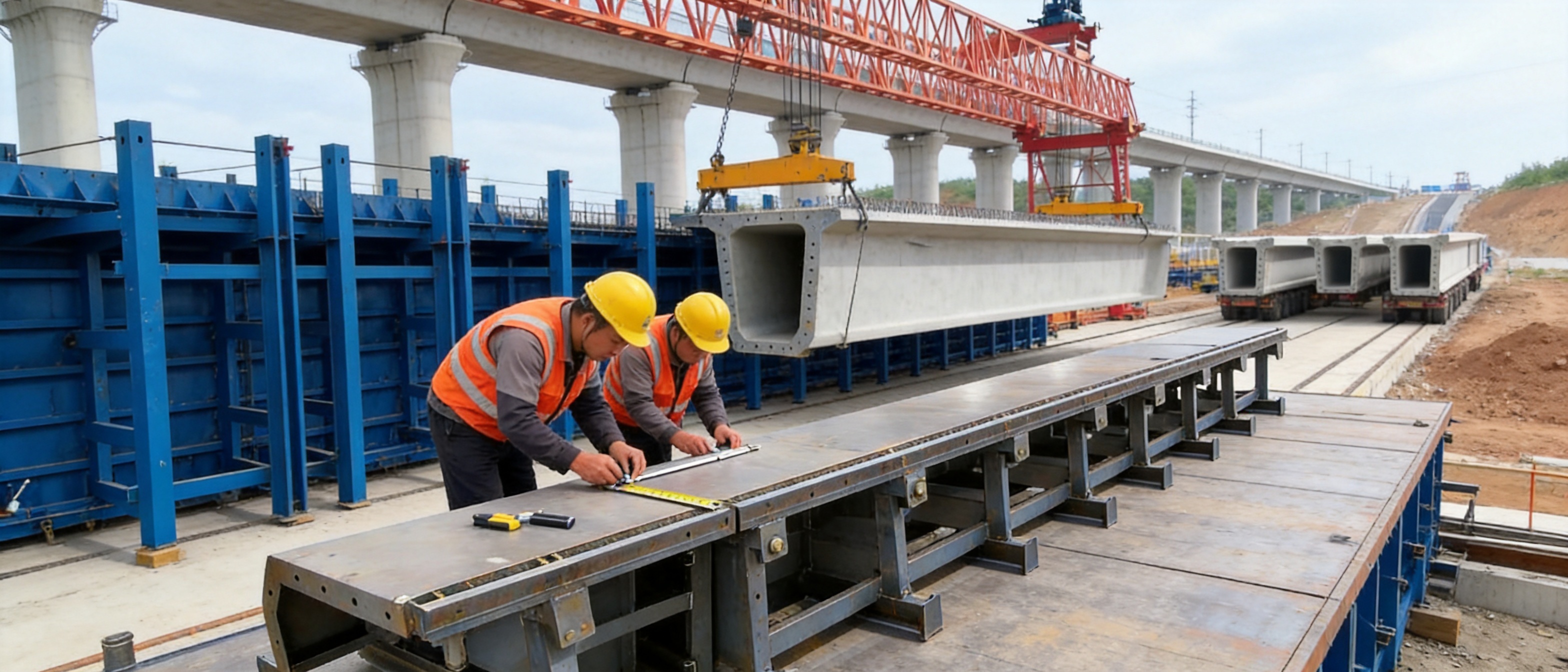
T-beam formwork is a specialized steel molding system developed for the efficient production of precast concrete T-beams used in highways, railways, elevated roads, interchanges, ramps, and other major infrastructure projects. Unlike basic temporary molds assembled from ordinary steel sheets or timber, professional T-beam formwork is engineered as a precision production tool. Its geometry, rigidity, joint sealing, demolding mechanism, and surface finish all directly influence the quality, consistency, and production cost of finished bridge beams.
Modern bridge construction increasingly depends on standardized precast components. Precast production allows contractors to manufacture beams in a controlled factory environment, maintain consistent quality, reduce on-site labor, and accelerate bridge assembly. However, these advantages can only be fully achieved when the formwork is sufficiently accurate, durable, adaptable, and easy to operate. A poorly designed mold may lead to grout leakage, dimensional deviations, concrete surface defects, edge damage, difficult demolding, and repeated repair work. High-quality T-beam formwork addresses these risks through robust steel construction, modular engineering, controlled fabrication, and practical operating features.
Designed for demanding bridge engineering applications, the T-beam formwork described in this article uses Q235B or Q355B steel plates and a reinforced structural frame. It is suitable for repeated production under concrete pouring and high-frequency vibration conditions. Its segmented construction simplifies transportation, lifting, installation, and storage while allowing the system to be adapted to different beam spans and cross-sectional requirements. CNC cutting, platform-based positioning, controlled welding, and pre-delivery inspection further improve manufacturing accuracy.
1. The Role of T-Beam Formwork in Precast Construction
A concrete T-beam consists of a horizontal flange and a vertical web that work together to carry bending and shear forces. This geometry provides an efficient structural section with a favorable strength-to-weight ratio. T-beams are widely used in bridge decks because the flange can support deck loads while the web transfers vertical forces toward bearings and supports.
During precast production, reinforcement cages or prestressing systems are positioned inside a mold. Concrete is then placed, compacted, and cured. The mold must hold the required geometry throughout the entire process. It must resist the pressure of fresh concrete, withstand vibration, maintain alignment, and release the finished beam without damaging corners or surfaces.
The formwork is therefore more than a container. It is a temporary structural system and a dimensional reference tool. Every important feature, including side-form alignment, flange width, web depth, end geometry, bearing zones, connection points, and lifting areas, may depend on the accuracy of the formwork. When the mold is manufactured correctly, the resulting beams can be produced repeatedly with minimal adjustment between cycles.
For highway and railway projects, where hundreds or thousands of similar beams may be required, the influence of formwork quality becomes especially significant. A small dimensional error repeated across a large production run can create major problems during beam installation. Conversely, a stable and repeatable mold helps the precast plant maintain predictable output and reduces the need for downstream correction.
2. Engineering Design of the Steel Formwork
Professional T-beam formwork generally consists of side forms, bottom or supporting sections, end forms, stiffening ribs, support frames, adjustable mechanisms, connection components, and lifting or handling features. Each component is designed to work with the others as a coordinated system.
2.1 Side Form Structure
The side forms define the external profile of the T-beam. They must maintain a straight and stable surface along the entire beam length, while also allowing controlled opening during demolding. Side forms are commonly reinforced with vertical and horizontal ribs to limit deflection under concrete pressure and vibration.
An adjustable support mechanism helps distribute stress evenly during pouring and demolding. This is important because side forms may experience different forces at the flange, web, corner, and lower support areas. If the support arrangement is insufficient, the side panel may move outward, causing dimensional changes or uneven surfaces. If the mechanism is too rigid or poorly aligned, demolding may damage beam edges. A properly designed adjustable system allows the operator to maintain the required geometry during casting and release the concrete in a controlled way.
2.2 Bottom Support and Alignment
The bottom section provides the main reference for beam elevation, width, and longitudinal straightness. It must be installed on a level and stable production platform. In many applications, bottom components are reinforced with structural sections that transfer load to the foundation or production bed.
Accurate bottom alignment is essential for maintaining consistent beam dimensions. Even a small variation in elevation can affect reinforcement cover, bearing levels, beam camber, and the fit between adjacent precast components. Platform tooling and controlled positioning help ensure that the bottom section remains properly aligned during assembly and repeated use.
2.3 End Forms
End forms determine the shape of the beam ends and may include openings, recesses, connection details, lifting arrangements, or bearing-related features. They must be tightly connected to the side and bottom forms to prevent concrete leakage.
Because end forms are frequently removed and reinstalled, their connection points should be durable and accessible. A practical design allows operators to complete end-form installation without excessive handling time. Replaceable components may also be provided for areas subject to repeated wear or special project requirements.
2.4 Reinforcing Ribs and Structural Frames
The formwork frame is designed to resist deformation rather than simply provide a visual support structure. Thickened steel plates and reinforcing ribs increase stiffness and improve long-term durability. The frame must be capable of maintaining shape while the mold is exposed to fresh concrete pressure, mechanical vibration, impact during handling, and repeated opening and closing cycles.
The selection of rib spacing, plate thickness, connection method, and support arrangement depends on beam dimensions, production length, concrete pressure, vibration conditions, lifting requirements, and expected reuse cycles. For large-span bridge beams, the structure may require substantial reinforcement to preserve straightness and prevent local distortion.
3. Materials Used in Manufacturing
Q235B and Q355B structural steel are commonly used for T-beam formwork because they combine strength, weldability, availability, and cost efficiency. Q235B is suitable for many general structural components, while Q355B provides higher yield strength for areas requiring increased load-bearing capacity or reduced deformation.
The material selection should be matched to the function of each component. Main load-bearing frames, lifting points, heavily stressed supports, and high-wear connection areas may require a stronger or thicker material specification. Panels must have sufficient stiffness and surface quality to produce a smooth concrete finish. Ribs and braces must be arranged to prevent excessive deflection without creating unnecessary weight.
Steel preparation is an important part of manufacturing quality. Plates should be checked for thickness, surface condition, straightness, and identification before cutting. Material traceability helps ensure that the correct steel grade is used in the intended component. Controlled preparation also reduces the risk of hidden defects that might later affect welding or assembly.
3.1 Plate Thickness and Durability
Thicker panels and ribs provide several advantages. They are less susceptible to denting during transport, handling, and cleaning. They also resist wear caused by repeated contact with concrete, release agents, tools, and vibration. A durable panel can preserve its surface quality over many production cycles, helping maintain a consistent finish for precast beams.
However, increased thickness should be applied through engineering judgment rather than simply adding weight. Excessive weight can make transportation and installation more difficult. Efficient design combines adequate plate thickness with a rational rib arrangement, suitable lifting points, and modular segmentation.
4. Advanced Manufacturing Process
The performance of T-beam formwork is strongly influenced by the manufacturing process. High-quality steel alone cannot guarantee a precise product. Accurate cutting, controlled forming, professional welding, dimensional inspection, and trial assembly must work together as a complete quality system.
4.1 Technical Review and Production Planning
Manufacturing begins with a review of the customer’s technical requirements. The production team evaluates beam drawings, cross-sectional dimensions, span, draft or release requirements, reinforcement arrangements, prestressing details, lifting restrictions, production cycles, and site conditions.
This stage identifies critical dimensions and possible operating risks before fabrication begins. It also determines whether the mold should be manufactured as a single unit or divided into transportable modules. For long or heavy molds, segmented construction may be necessary to control shipping dimensions and lifting loads.
A detailed production plan defines material specifications, cutting files, welding sequences, assembly procedures, inspection points, surface treatment, and packaging requirements. Early planning helps reduce rework and ensures that the finished mold can be assembled and operated efficiently at the customer’s facility.
4.2 CNC Cutting and Edge Preparation
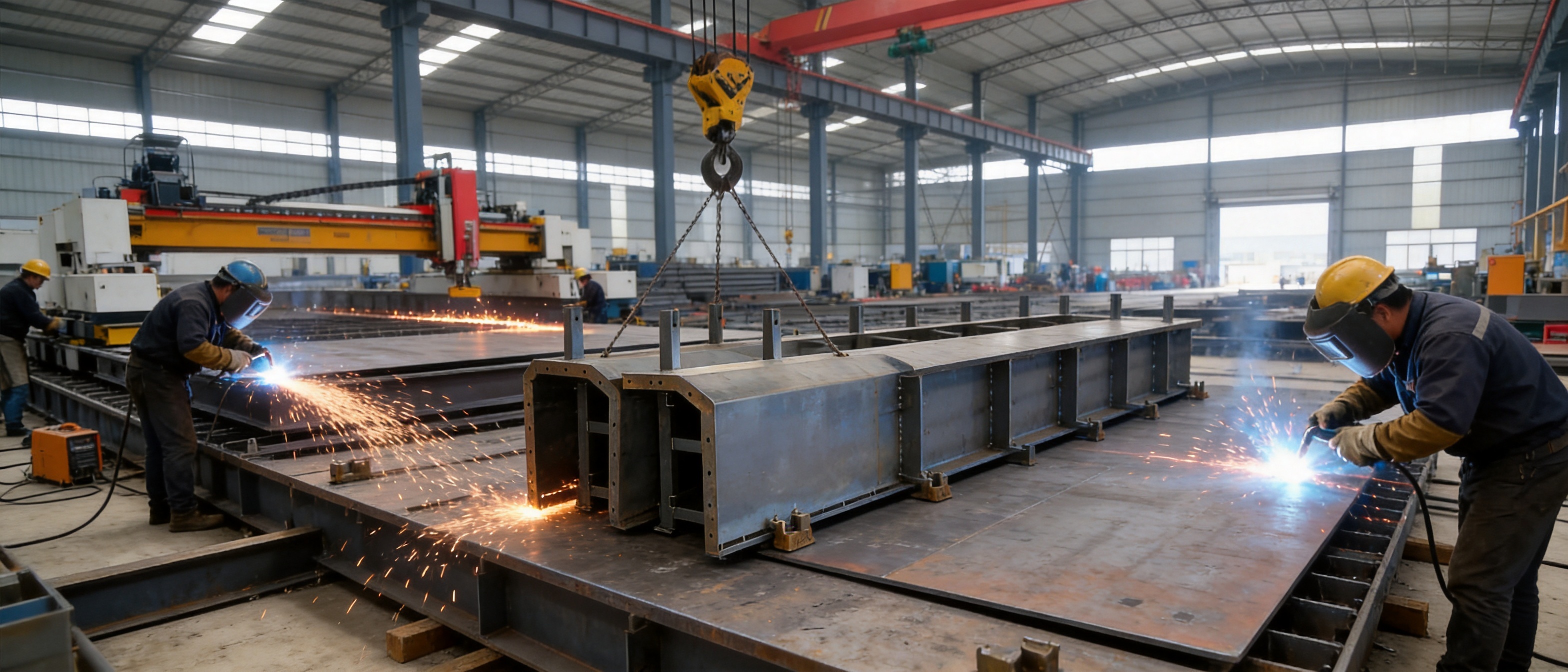
CNC cutting equipment is used to manufacture panels, ribs, brackets, end plates, and connection components according to approved drawings. Automated cutting improves dimensional consistency and reduces variation between repeated parts. It also enables the production of complex shapes and accurately positioned openings.
Compared with manual cutting, CNC processing offers better control of length, width, angle, hole location, and profile geometry. This is particularly important when multiple modules must be connected into one continuous formwork system. Accurate cutting reduces forced alignment during assembly and helps limit gaps at joints.
After cutting, edges may be cleaned, deburred, beveled, or prepared for welding as required. Proper edge preparation improves weld penetration and reduces the chance of incomplete fusion or excessive weld buildup. Parts are identified and organized to prevent mixing during later assembly.
4.3 Forming, Positioning, and Tack Assembly
Where bending or forming is required, steel components are shaped using controlled equipment and verified against the specified geometry. The forming process must avoid local distortion that could affect the concrete-facing surface.
Assembly takes place on a level platform or dedicated tooling fixture. The platform provides a stable reference for positioning panels, ribs, supports, and connection plates. Accurate tooling helps maintain straightness and squareness, especially for long side forms.
Components are initially tack-welded or mechanically fixed in a planned sequence. Temporary supports may be used to hold the structure in position before permanent welding. This staged approach helps control accumulated tolerances and reduces the risk of distortion.
4.4 Professional Welding
Welding is one of the most important processes in heavy steel formwork production. A formwork frame may experience repeated loading, vibration, impact, and handling. Weak or inconsistent welds can lead to cracking, loosening, or progressive deformation.
Hyson applies certified AWS and EN welding craftsmanship within its manufacturing operations. Welding procedures are selected according to material grade, plate thickness, joint type, structural importance, and production requirements. Welders must be suitably qualified for the work they perform, and welding parameters should be controlled to produce consistent results.
Welding sequence is also important. If large quantities of heat are introduced unevenly, panels may warp or frames may lose alignment. Alternating weld locations, using suitable fixturing, and controlling the order of operations can reduce thermal distortion. Critical joints may receive additional inspection after welding.
Welds are checked for visible defects such as undercut, porosity, cracks, incomplete fusion, excessive spatter, and irregular profiles. Depending on project requirements, additional non-destructive testing may be applied to selected joints. Grinding and finishing are performed where necessary, particularly on concrete-contact surfaces and operating interfaces.
4.5 Trial Assembly and Dimensional Verification
Before delivery, the formwork can be pre-assembled to confirm that the modules, connection points, supports, and adjustable mechanisms function as intended. Trial assembly provides an opportunity to verify overall length, width, height, straightness, flange geometry, web dimensions, joint alignment, and opening direction.
This process is particularly valuable for segmented formwork. It confirms that parts manufactured separately can be connected without excessive force or site modification. It also allows the manufacturer to identify missing components, unclear connection details, or operating difficulties before shipment.
Pre-assembly and acceptance inspection simplify on-site installation. The customer receives a system that has already been checked rather than a collection of unverified parts. This reduces commissioning time and helps the production plant begin casting sooner.
5. Main Advantages Compared with Conventional or Low-Quality Formwork
Not all T-beam molds provide the same performance. Low-cost alternatives may initially appear attractive, but inadequate steel thickness, weak ribs, inaccurate cutting, poor welding, and limited adjustment can create substantial costs during production. A professionally manufactured steel system offers advantages throughout the complete service life of the product.
5.1 Improved Dimensional Stability
The reinforced frame and thickened steel components help the mold retain its shape under concrete pressure and vibration. Stable geometry improves beam uniformity and reduces deviations in flange width, web depth, beam straightness, and end alignment.
This advantage becomes more significant in mass production. When the same mold is used repeatedly, dimensional stability ensures that successive beams remain consistent. Consistent beams are easier to transport, stack, install, connect, and integrate with other bridge components.
5.2 Better Concrete Surface Quality
Accurate steel panels and tightly sealed joints help produce smooth, dense concrete surfaces. Reduced grout leakage means fewer honeycombs, fins, voids, and edge defects. The finished beam may require less grinding, patching, and corrective work after demolding.
A better surface finish also improves visual quality and may reduce the amount of surface treatment needed before coating or final installation. For exposed bridge elements, this can have a direct effect on appearance and maintenance requirements.
5.3 Reduced Risk of Edge Damage
Beam edges are vulnerable during demolding, especially when the concrete has not reached sufficient strength or when side forms are forced open unevenly. Adjustable support mechanisms help distribute demolding forces and allow the form to release more smoothly.
By reducing concentrated stress at corners and flange edges, the formwork helps prevent chipping and cracking. This improves the finished product qualification rate and reduces time spent on repairs.
5.4 Faster Assembly and Demolding
Modular design makes the formwork easier to assemble, disassemble, transport, and store. Connection points are planned for practical access, while adjustable components allow the operator to make controlled changes without rebuilding the entire mold.
Efficient demolding is essential for precast plants seeking high daily output. If a mold requires excessive manual adjustment, heating, impact, or dismantling, the production cycle becomes longer and labor costs increase. A well-designed steel formwork system supports repeatable operating procedures and predictable cycle times.
5.5 Long-Term Reuse
Steel formwork is intended for repeated use. Thickened plates, reinforced ribs, durable connection components, and suitable surface protection help extend service life. Long-term reuse reduces the cost per beam and minimizes the need to purchase replacement molds.
The economic benefit depends not only on the initial price but also on the number of successful casting cycles, maintenance requirements, repair frequency, and production downtime. A more robust mold may provide a lower total cost of ownership than a cheaper but less durable alternative.
5.6 Adaptability to Project Requirements
Bridge projects rarely have identical requirements. Beam span, flange width, web depth, end detail, connection configuration, and production platform dimensions may vary. A segmented and modular approach allows the formwork to be customized for different project parameters.
Custom manufacturing can include modified end forms, adjustable widths, additional reinforcement, special lifting points, integrated working platforms, or adaptation to prestressed beam production. This flexibility is a major advantage over generic molds that may require extensive site modification.
| Evaluation Item | Professional Steel T-Beam Formwork | Basic or Improvised Formwork |
|---|---|---|
| Dimensional control | CNC-cut components, tooling positioning, and pre-assembly inspection support repeatable accuracy. | Manual fabrication may create cumulative deviations and alignment problems. |
| Structural stability | Reinforced ribs and frames resist concrete pressure and vibration. | Thin panels may deform or require frequent reinforcement. |
| Joint performance | Designed connection points and sealing surfaces reduce grout leakage. | Irregular joints may produce leakage, fins, and surface defects. |
| Demolding | Adjustable supports allow controlled release and reduce edge damage. | Forced opening may chip corners or damage concrete. |
| Reuse potential | Durable steel construction supports repeated production cycles. | Wear and distortion may limit service life. |
| Transportation | Segmented modules simplify lifting, shipping, and storage. | Oversized or non-modular construction can be difficult to handle. |
| Quality assurance | Material control, welding inspection, trial assembly, and final acceptance are integrated. | Inspection may be limited or inconsistent. |
6. Applications in Infrastructure Projects
T-beam formwork is suitable for precast production in several infrastructure sectors. Its main application is the manufacture of bridge beams for highway and expressway viaducts. These projects often require large numbers of standardized beams within strict construction schedules.
In railway construction, T-beam molds can support the production of components for conventional railway bridges, high-speed rail systems, elevated sections, and station approaches. Railway projects typically demand tight dimensional tolerances because beam geometry affects track elevation, deck alignment, and connection accuracy.
Municipal infrastructure is another important application. Urban interchanges, ramp bridges, flyovers, elevated road systems, and crossing structures may use precast T-beams to reduce traffic disruption and shorten construction time. Factory-made beams can be produced away from congested urban sites and transported to the project when required.
Precast component plants may also use the formwork for standardized beam processing as part of a broader product range. A plant with modular molds can adjust production according to project demand, making better use of its casting beds, cranes, labor, and curing facilities.
6.1 Highway and Expressway Viaducts
Highway bridge programs often involve repeated spans with similar beam designs. This makes them suitable for formwork systems optimized for fast cycle times and consistent output. The mold must accommodate reinforcement placement, concrete pouring, vibration, curing, and safe demolding without unnecessary interruption.
Because beams may be transported over considerable distances, dimensional accuracy and structural integrity are critical. A reliable mold supports uniform beam production and reduces the likelihood of installation problems at the bridge site.
6.2 Railway Bridges
Railway beams may require especially careful control of elevation, end geometry, and connection details. The formwork can be customized to match project drawings and production methods. Reinforcement clearance, prestressing arrangements, embedded components, and bearing zones should be considered during design review.
6.3 Municipal Elevated Roads
Urban elevated roads and ramp bridges often involve restricted working space and demanding construction schedules. Precast T-beams manufactured in a controlled plant can reduce the amount of formwork and wet concrete work required at the site. Modular molds also help plants respond to changing beam dimensions across different sections of an interchange.
7. Customization and Configuration Options
A T-beam formwork system should be designed around the actual beam rather than selected solely from a general catalog. Customization begins with the project’s structural drawings and production requirements.
Typical customization parameters include beam length, flange width, flange thickness, web thickness, web height, end shape, chamfer dimensions, recesses, embedded items, lifting points, support spacing, opening direction, and modular segmentation. The customer may also specify the required steel grade, surface treatment, working platform arrangement, and connection method.
For facilities producing several beam sizes, interchangeable parts may be considered. Replaceable end forms, adjustable side supports, modular extensions, or interchangeable panels can provide flexibility while keeping the main support system in service.
Customization should not compromise structural stability. Any adjustable feature must be designed to remain secure during pouring and vibration. Connection components should be accessible for inspection and maintenance. If a change in beam dimensions requires a major structural modification, the manufacturer should evaluate whether a separate mold or reinforced module is more suitable.
7.1 Design Information Required from the Customer
To prepare an accurate proposal, the manufacturer normally requires the beam drawings, project standards, production quantity, expected reuse cycles, casting method, concrete grade, vibration method, lifting arrangement, production platform details, and shipping restrictions.
Information about the factory is also useful. Available crane capacity, workshop height, access width, foundation conditions, storage space, and operator preferences can affect the practical configuration. Early communication prevents a situation in which the mold is technically correct but difficult to install or operate at the customer’s plant.
8. Quality Control and International Manufacturing Capability
Quality control should cover the complete production chain, from raw material receipt to final shipment. A documented system makes it easier to identify responsibility, trace material, monitor critical dimensions, and verify that the finished formwork meets the approved design.
Nantong Hyson Road And Bridge Formwork Co., Ltd. operates as a manufacturer of custom steel formwork, ringlock scaffolding, heavy-duty steel structures, and OEM metal fabrication. Its production capabilities include laser cutting, bending, welding, assembly, and inspection for non-standard steel components.
The company’s manufacturing approach combines automated processing with certified AWS and EN welding practices. This combination is valuable for heavy steel formwork because automated cutting improves repeatability, while qualified welding procedures help ensure the structural reliability of frames and supports.
Hyson reports compliance with ISO 9001, BS1139, and EN74 requirements relevant to its product and manufacturing activities. It also holds 12 utility patents and has supplied major construction organizations, including CCCC and CRCC. Such experience indicates familiarity with demanding infrastructure procurement procedures, project documentation, quality inspections, and delivery coordination.
Its project experience includes participation in major infrastructure and industrial applications such as the Sutong Yangtze River Bridge, Taizhou Bridge, and Sudan Thermal Power Plant. Experience with large engineering projects can help a manufacturer understand the importance of production stability, delivery schedules, traceability, and site support.
9. Integrated Fabrication Services
Many customers require more than a single formwork product. A bridge or industrial project may involve support frames, access platforms, embedded steel parts, temporary structures, storage racks, lifting devices, or other custom-fabricated components. An integrated fabrication supplier can coordinate these elements under one technical and production system.
Laser cutting provides accurate preparation for steel plates and profiles. Bending equipment can produce brackets, channels, covers, stiffeners, and customized connection pieces. Welding and assembly transform these parts into ready-to-install structures. When these operations are coordinated internally, the customer can reduce the number of suppliers and simplify communication.
Hyson’s broader product range includes bridge and infrastructure formwork, hydraulic tunnel trolleys, scaffolding and steel props, industrial steel structures, and heavy steel OEM fabrication. This range supports customers in construction, mining, agriculture, transportation, and related industries.
For a T-beam formwork project, integrated capability can be particularly useful when the customer needs matching steel platforms, reinforcement supports, handling frames, or additional molds. The manufacturer can review interfaces between components and help reduce inconsistencies that might arise when separate suppliers work independently.
10. Installation and Operation Considerations
Proper installation is essential for achieving the intended performance of the formwork. The production platform should be level, stable, and capable of supporting the combined weight of the mold, reinforcement, and fresh concrete. Before assembly, all modules should be checked for transport damage, missing parts, contamination, and identification marks.
Modules should be positioned according to the assembly drawings. Connection bolts, clamps, pins, and adjustable supports must be installed correctly and tightened or secured according to the specified procedure. Alignment should be checked before the reinforcement cage is placed.
Concrete-contact surfaces should be cleaned and treated with a suitable release agent. Excessive release agent can affect concrete appearance or interfere with later finishing, while insufficient application may make demolding difficult. Operators should follow the product supplier’s recommendations and keep the coating uniform.
Before pouring, the operator should verify joint sealing, side-form support, end-form installation, reinforcement clearance, embedded components, and access conditions. Any gap or misalignment should be corrected before concrete placement begins.
During pouring, concrete should be distributed in a controlled manner rather than deposited unevenly in one location. Vibration should be sufficient to compact the concrete but not excessive. Excessive vibration may increase pressure on joints and supports, while inadequate vibration can leave voids and honeycombs.
Demolding should take place only when the concrete has reached the required strength and the responsible engineer or production supervisor has approved the operation. Adjustable side supports should be released progressively. Sudden or uneven opening can damage corners and place unnecessary stress on the formwork.
11. Maintenance and Service Life
Regular maintenance extends the service life of a steel mold and helps preserve beam quality. After each casting cycle, concrete residue should be removed from panels, joints, supports, and connection points. Hardened concrete should not be removed with methods that excessively damage the steel surface.
Bolts, clamps, hinges, pins, adjustable screws, and support mechanisms should be inspected regularly. Worn or deformed components should be replaced before they affect alignment or safety. Moving parts may require suitable lubrication, while concrete-contact surfaces should remain free from excessive oil or dirt.
Panels should be checked for dents, corrosion, weld cracks, deformation, and loss of flatness. Minor damage should be repaired promptly. If a panel or frame has experienced significant deformation, it should be removed from service until it has been evaluated and corrected by qualified personnel.
Storage conditions also matter. Formwork should be placed on stable supports, protected from standing water, and arranged to avoid unnecessary impact. Modules should be identified so that they can be reassembled correctly for the next production cycle.
12. Safety Considerations
Steel formwork is heavy equipment and should be handled under a controlled lifting plan. Cranes, slings, shackles, lifting lugs, and other handling accessories must have suitable capacity and be inspected before use. Loads should remain balanced during lifting, and personnel should stay clear of suspended components.
Assembly areas should be organized to prevent slips, trips, and collisions. Operators should use appropriate personal protective equipment, including safety footwear, gloves, eye protection, and protective equipment for welding or cutting activities.
Adjustable mechanisms should be secured before concrete placement. Temporary supports must not be removed prematurely. Access platforms and work areas should provide safe routes for inspection, reinforcement placement, concrete operations, and demolding.
Safety procedures should be adapted to the customer’s local regulations, project requirements, crane arrangements, and factory conditions. Clear operating instructions and operator training can significantly reduce preventable incidents.
13. Economic Value and Total Cost of Ownership
The purchase price of T-beam formwork is only one part of the total economic calculation. A more meaningful assessment considers the complete cost of ownership, including installation labor, casting cycle time, maintenance, repair, replacement, concrete finishing, storage, transportation, and production downtime.
A high-quality mold can reduce grout leakage and surface defects, which lowers repair labor and material consumption. Better dimensional control can reduce rejected beams and installation adjustments. Faster demolding can increase daily output without necessarily increasing the number of casting beds.
Modular design may reduce transportation costs because the system can be divided into manageable sections. It may also simplify relocation when production moves to another site. Long-term reuse distributes the initial investment across a larger number of beams, potentially providing a lower cost per finished component.
For large bridge projects, even a small improvement in the production cycle can generate significant savings. If a mold allows the plant to complete more cycles per month, the increased output may have greater value than a modest difference in initial purchase price.
14. Why Manufacturer Experience Matters
Engineering formwork is a project-specific product. It must combine structural design, fabrication accuracy, practical operation, lifting safety, and concrete production knowledge. A manufacturer with experience in bridge and infrastructure projects is more likely to recognize the interaction between these requirements.
Experience also supports better communication. An established manufacturer can help clarify drawing information, identify missing dimensions, recommend modular arrangements, and anticipate shipping or installation problems. This is especially important for overseas customers who need clear documentation and reliable coordination across different technical standards.
Hyson’s experience as a strategic supplier for major state-owned construction organizations demonstrates exposure to demanding procurement and quality environments. Its combination of formwork production, heavy steel fabrication, and infrastructure equipment allows it to approach T-beam molds as part of a complete engineering solution rather than as isolated steel boxes.
The company’s location in Rugao, Nantong, Jiangsu, China, provides access to an established industrial manufacturing region with supporting steel, machinery, logistics, and fabrication resources. Its contact team can provide project consultation, customized design coordination, quotation support, and production communication for international customers.
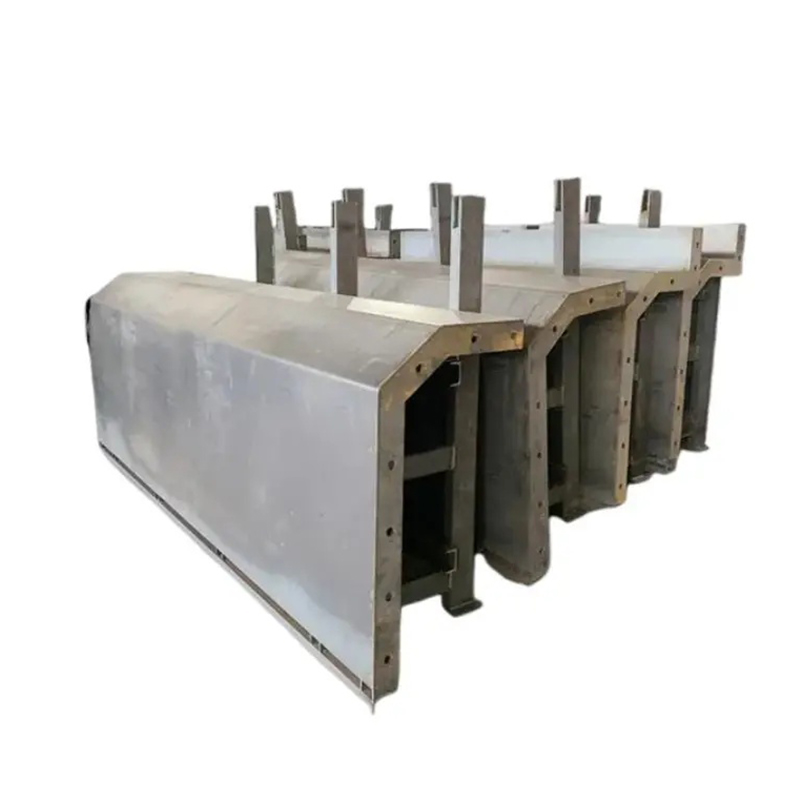
T-Beam Formwork
15. Project Selection and Procurement Checklist
Before ordering T-beam formwork, the customer should prepare a clear technical specification. The specification should identify beam dimensions, production quantity, expected mold reuse, concrete type, reinforcement configuration, casting method, vibration method, curing process, and required dimensional tolerances.
The customer should also clarify whether the mold will be used indoors or outdoors, whether it must be relocated, what crane capacity is available, and how the modules will be stored. These factors influence structural reinforcement, lifting points, surface protection, and segmentation.
Important questions for supplier evaluation include:
Does the manufacturer have experience with bridge beam formwork and large steel structures?
Are the steel grades and plate thicknesses clearly specified?
Are critical dimensions controlled through CNC cutting and platform tooling?
Are welding procedures and welder qualifications available when required?
Will the formwork be pre-assembled before shipment?
Are assembly drawings, maintenance instructions, and inspection records provided?
Can the supplier customize the mold for different beam sizes or project conditions?
What support is available for installation, commissioning, and future maintenance?
A clear procurement process reduces misunderstandings and makes it easier to compare suppliers on technical value rather than price alone.
16. Inspection Before Delivery
Final inspection should confirm that the formwork corresponds to the approved drawings and agreed technical requirements. The inspection may include verification of overall dimensions, module identification, panel flatness, side-form alignment, end-form geometry, bolt-hole positions, adjustable mechanisms, lifting points, weld quality, and surface condition.
Functional checks should confirm that the form can be opened, closed, connected, and adjusted as intended. If the system includes removable components, each component should be checked for correct fit and identification.
Pre-assembly records, dimensional inspection reports, material certificates, welding documentation, coating records, packing lists, and operation instructions may be included in the delivery documentation according to the project’s requirements.
Good packaging protects the components during transportation. Connection hardware should be grouped and labeled. Smaller items should be secured in suitable containers, while large modules should be supported to prevent bending or impact. Clear packing information helps the receiving team begin installation efficiently.
17. Sustainability and Resource Efficiency
Reusable steel formwork supports more efficient use of construction materials. Unlike single-use timber molds, a durable steel system can be used repeatedly, reducing the amount of temporary material consumed over a project’s life. Its modular construction also allows components to be repaired, replaced, or adapted rather than discarded as a complete system.
Accurate formwork reduces concrete waste caused by leakage and dimensional corrections. Improved beam quality reduces the need for patching materials and rework. Efficient production cycles can also reduce energy and labor consumption per finished beam.
At the end of its useful service life, steel components can generally be recycled. Responsible design should therefore consider durability, repairability, material identification, and disassembly from the beginning.
18. Frequently Asked Questions
Q1. What is T-beam formwork used for?
T-beam formwork is used to cast precast concrete T-beams for highways, expressways, railways, municipal elevated roads, interchanges, ramp bridges, and other infrastructure projects. It provides the required beam geometry while concrete is poured, compacted, and cured.
Q2. What steel grades are commonly used?
Q235B and Q355B are commonly used structural steel grades. The final selection depends on the formwork design, loading conditions, component function, customer requirements, and applicable project standards.
Q3. Can the mold be customized for different beam sizes?
Yes. T-beam formwork can be customized according to beam length, flange width, flange thickness, web height, web thickness, end configuration, embedded details, production platform, and transportation restrictions. Modular or interchangeable components may be considered for projects involving multiple beam types.
Q4. Why is CNC cutting important for formwork production?
CNC cutting improves repeatability and dimensional control for panels, ribs, end plates, holes, and connection components. It helps reduce manual cutting errors and makes it easier to align separate modules during assembly.
Q5. How does the formwork prevent grout leakage?
Leakage is controlled through accurate panel fabrication, tight joints, properly designed connection points, suitable sealing arrangements, and correct installation. The production platform must also be level and stable so that the mold remains aligned during pouring.
Q6. What is the function of the adjustable side-form support mechanism?
The adjustable support mechanism helps maintain side-form alignment during casting and allows the operator to release the form progressively during demolding. It distributes forces more evenly and helps reduce edge damage, deformation, and difficult mold opening.
Q7. Is pre-assembly available before delivery?
Pre-assembly and acceptance before delivery can be arranged. This verifies the fit of modules, connection points, supports, and operating mechanisms. It also simplifies installation and commissioning at the customer’s facility.
Q8. How many times can steel formwork be reused?
Reuse life depends on steel thickness, structural design, concrete pressure, vibration conditions, handling practices, maintenance, storage, and cleaning. A properly designed and maintained steel mold is intended for repeated production and generally provides a substantially longer service life than temporary improvised molds.
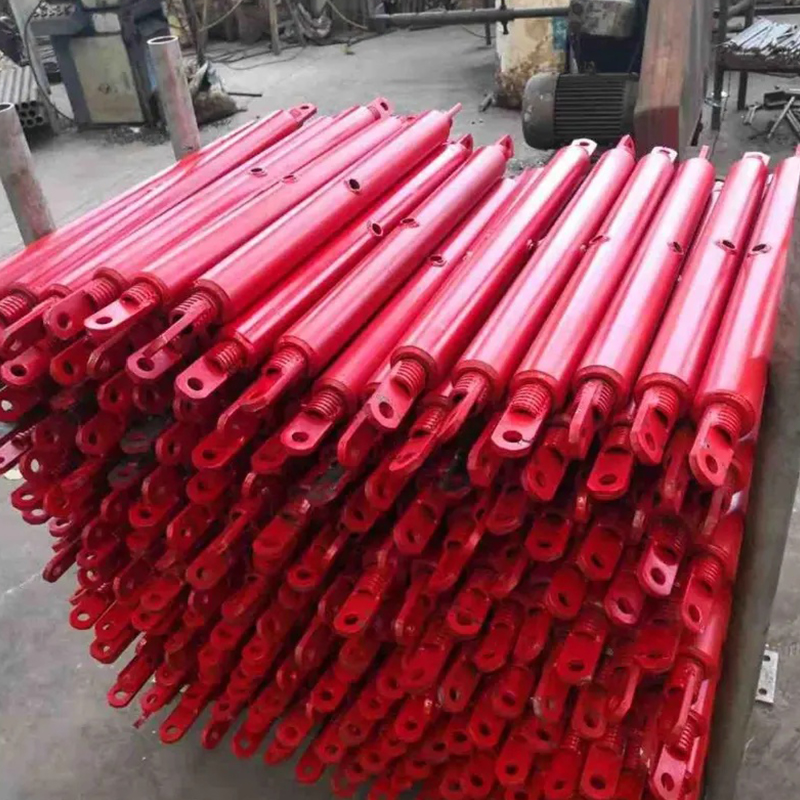
Yes. In addition to bridge formwork, the manufacturer provides custom steel structures, ringlock scaffolding, steel props, hydraulic tunnel trolleys, and OEM heavy metal fabrication. Related components such as support frames, platforms, brackets, and other non-standard steel parts may also be coordinated as part of an integrated project solution.
Q10. What information should be provided for a quotation?
The customer should provide beam drawings, dimensions, required quantity, intended production method, project standards, expected reuse cycles, delivery destination, lifting and transportation restrictions, and any special requirements for embedded parts or surface finish. Factory information can also help the manufacturer design a practical installation arrangement.
Q11. Is the formwork suitable for large-span bridge beams?
Yes. The reinforced frame, thickened steel plates, modular configuration, and customized support system can be designed for large-span bridge beam production. The final design should be verified against the beam dimensions, concrete pressure, vibration method, and handling conditions.
Q12. What makes a professional manufacturer different from a low-cost fabricator?
A professional manufacturer combines engineering review, controlled material selection, CNC processing, qualified welding, tooling-based assembly, dimensional inspection, trial fitting, documentation, and after-sales support. These controls reduce the risks of deformation, leakage, poor fit, early wear, and production delays.
19. Conclusion
T-beam formwork is a critical production asset for modern precast bridge construction. Its quality directly influences beam geometry, concrete finish, demolding safety, production speed, reuse value, and overall project cost. A professional system made from Q235B or Q355B steel, reinforced with a rigid frame, and manufactured through controlled cutting, welding, assembly, and inspection provides a reliable foundation for standardized beam production.
The principal advantages include strong dimensional stability, tight joint sealing, improved concrete surface quality, adjustable side-form support, reduced edge damage, modular transportation, long-term reuse, and adaptability to different bridge designs. These characteristics make the system suitable for highways, railways, municipal elevated roads, interchanges, ramp bridges, and precast component factories.
Nantong Hyson Road And Bridge Formwork Co., Ltd. combines custom formwork design with laser cutting, bending, welding, heavy steel fabrication, and project-oriented quality control. Its experience serving major infrastructure organizations and its capabilities in AWS and EN welding, ISO 9001-based quality management, and non-standard steel manufacturing support the production of dependable formwork for demanding engineering applications.
For customers evaluating suppliers, the most important consideration is not the lowest initial price. The better question is whether the formwork will maintain accuracy, support efficient production, withstand repeated use, and reduce total project risk. When engineering design and manufacturing quality are treated as priorities, T-beam formwork becomes a long-term productivity tool capable of supporting safe, consistent, and cost-effective bridge construction.
References
1. American Welding Society. Structural Welding Code—Steel, AWS D1.1/D1.1M.
2. European Committee for Standardization. EN 74, Couplers, Spigot Pins and Baseplates for Use in Falsework and Scaffolds.
3. British Standards Institution. BS 1139, Metal Scaffolding.
4. International Organization for Standardization. ISO 9001, Quality Management Systems—Requirements.
5. AASHTO. LRFD Bridge Design Specifications.
6. fib. Model Code for Concrete Structures.
7. American Concrete Institute. Guide to Formwork for Concrete.
8. International Federation for Structural Concrete. Guidance on Precast Concrete Construction and Quality Control.
9. Relevant project-specific bridge construction specifications, approved structural drawings, and precast production procedures.
10. Manufacturer technical data, inspection procedures, and operating recommendations for custom steel T-beam formwork.
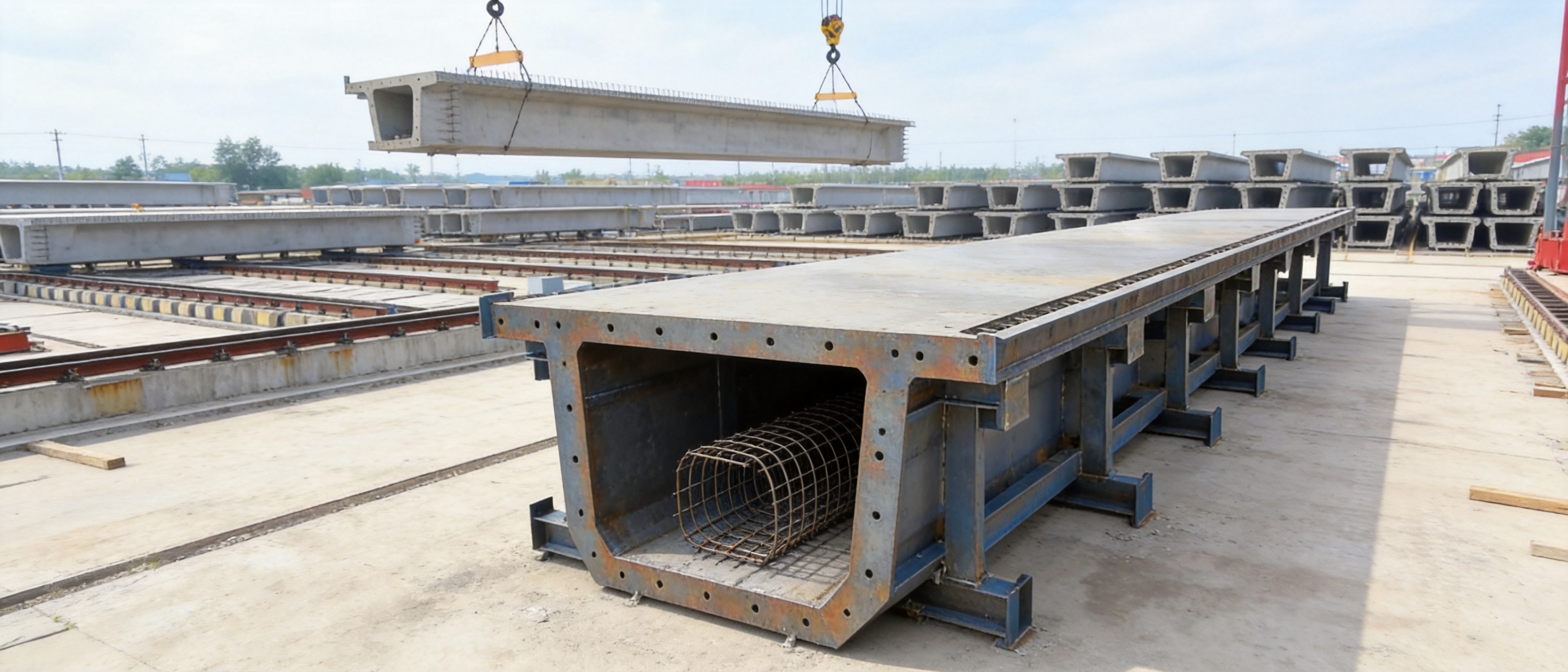
For customized T-beam formwork, heavy metal fabrication, large steel structural components, and related bridge construction equipment, project requirements should be reviewed in detail before production begins. Technical drawings, operating conditions, required quantities, delivery schedules, and applicable standards should be confirmed as part of the engineering and quotation process.
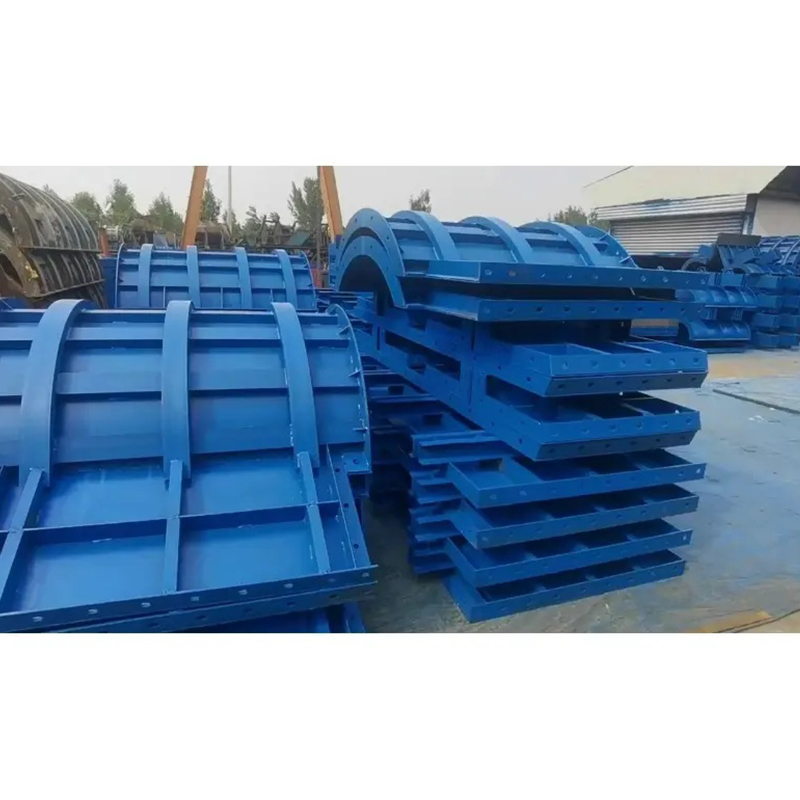
Product: T-Beam Formwork



- Location
- Group 3, Fangzhuang Village, Rucheng Subdistrict, Rugao City, Nantong, Jiangsu, China
- Follow us
- Phone
- +86-13646196162
- info@hysonindustry.com
