 +86-13646196162
 info@hysonindustry.com




 русский
  عربى
عربى 


High-Performance Pier Column Formwork for Precise Bridge Construction
 2026.08.16
Content
- 1 What Is Pier Column Formwork?
- 2 Engineering Design of the Steel Formwork
- 3 Performance Advantages Compared with Conventional Alternatives
- 4 Application Areas
- 5 Manufacturing Process and Quality Control
- 6 How the Formwork Supports Construction Efficiency
- 7 Design Flexibility for Different Pier Geometries
- 8 Installation and Operating Recommendations
- 9 Company Manufacturing Strengths
- 10 Why Choose a Customized OEM Solution?
- 11 Quality, Safety, and Reliability Considerations
- 12 Inspection Checklist for Buyers
- 13 Frequently Asked Questions
- 13.1 What types of bridge structures can use this formwork?
- 13.2 Can the formwork be used for both precast and cast-in-place concrete?
- 13.3 Which steel grades are available?
- 13.4 Can the product be customized for circular and rectangular piers?
- 13.5 How does the formwork help achieve a fair-faced concrete finish?
- 13.6 How many times can the formwork be reused?
- 13.7 Does the manufacturer provide lifting points and accessories?
- 13.8 How is the formwork protected against corrosion?
- 13.9 What information is needed for a quotation?
- 13.10 Can the manufacturer supply other steel products for the same project?
- 14 Conclusion
- 15 References
- 16 Product: Pier Column Formwork
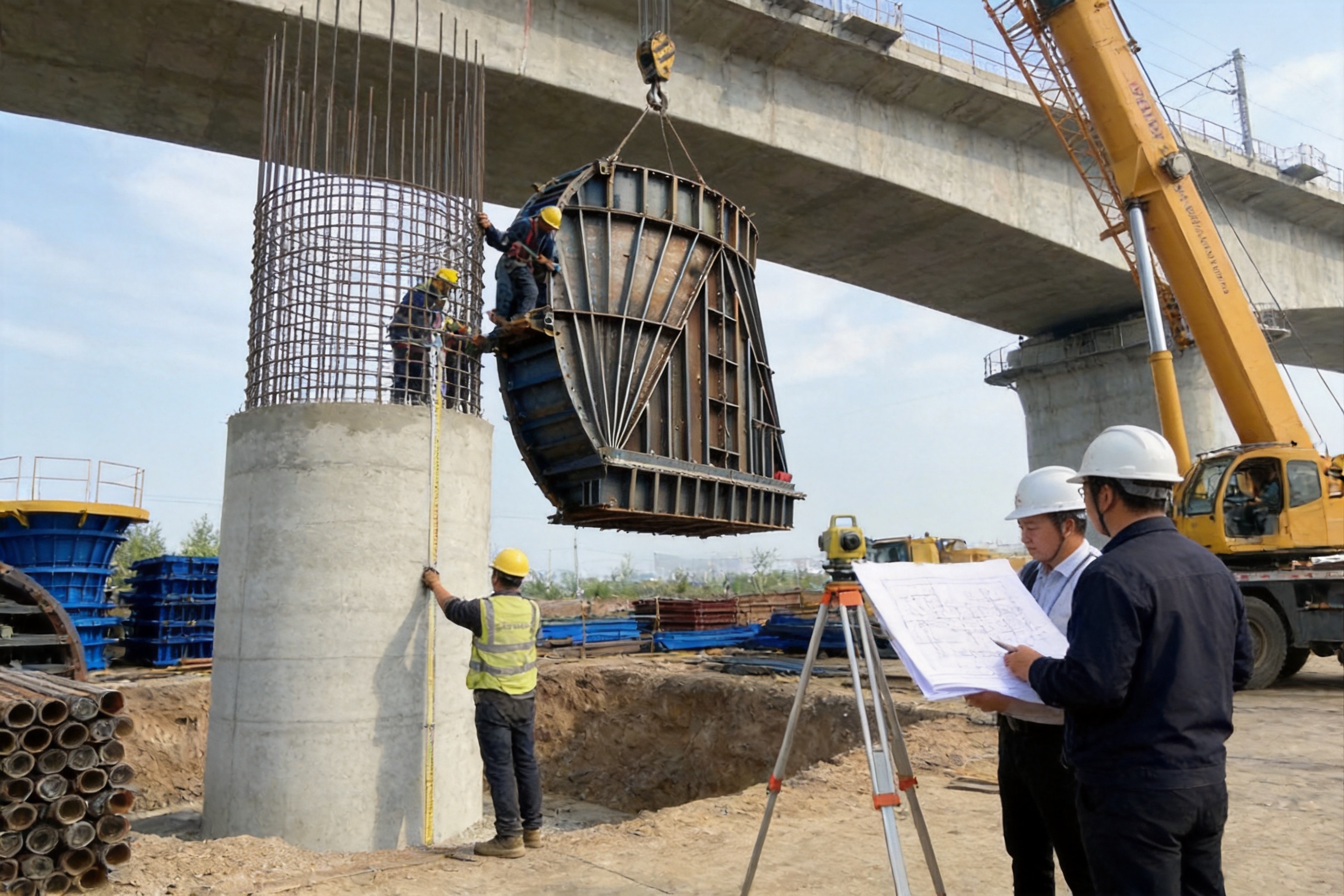
Pier column formwork is one of the most important temporary structures used in bridge substructure construction. It defines the geometry, surface quality, alignment, and dimensional accuracy of concrete piers and columns while the concrete gains sufficient strength to support itself. Although formwork is removed after curing, its influence remains visible in the finished structure for decades. Poorly designed or inaccurately manufactured formwork can cause bulging, grout leakage, honeycombing, dimensional deviations, verticality problems, difficult stripping, and unnecessary repair work. A properly engineered steel system, by contrast, supports efficient construction and helps produce stable, uniform, and high-quality bridge components.
Modern pier construction increasingly requires formwork that combines structural strength, repeatability, adaptability, efficient handling, and a clean concrete finish. Steel pier column formwork meets these requirements through rigid panels, reinforced ribs, standardized connections, adjustable segments, and carefully controlled manufacturing processes. It is suitable for highway bridges, railway bridges, elevated roads, municipal overpasses, water conservancy structures, port facilities, and precast concrete production.
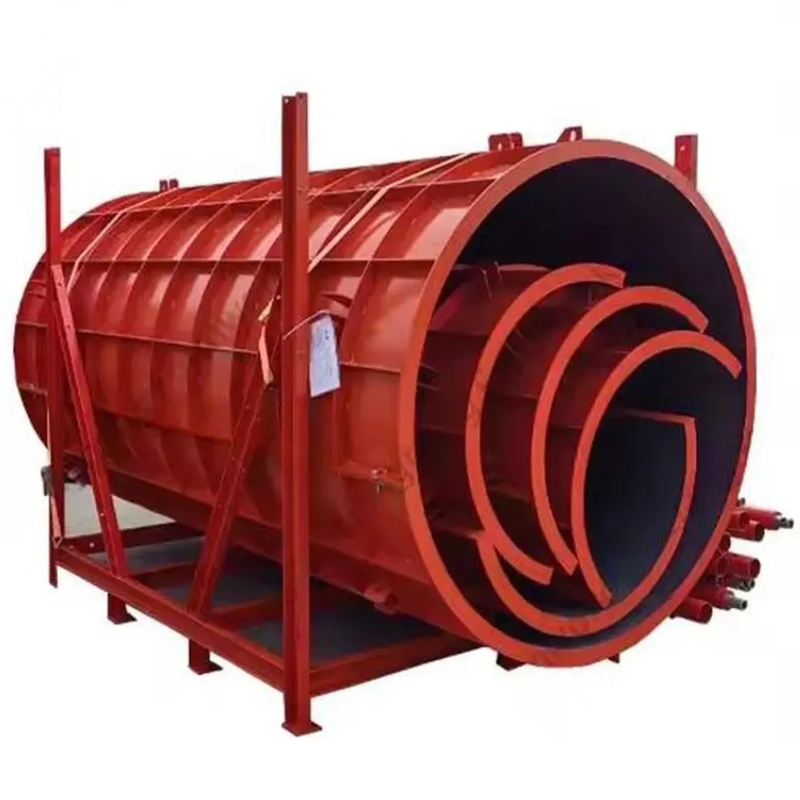
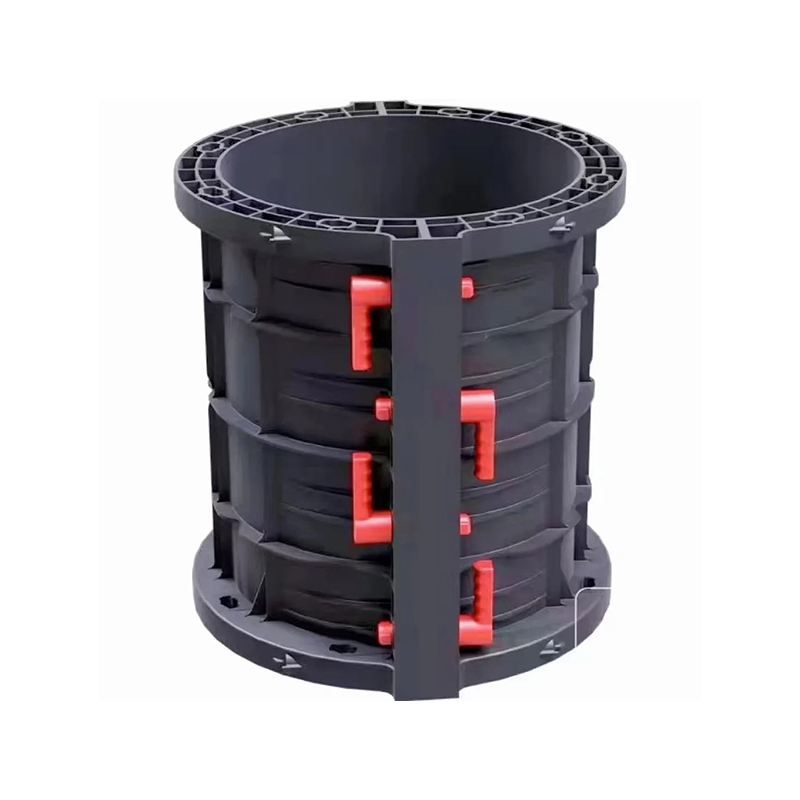
Manufactured by Nantong Hyson Road And Bridge Formwork Co., Ltd., the pier column formwork described in this article is designed as a high-precision, modular steel mold for circular, rectangular, and selected irregular pier and column applications. The product uses high-strength Q235B or Q355B steel plates, reinforced structural ribs, standardized positioning devices, and carefully processed joints. Its engineering purpose is to resist the lateral pressure and vibration impact generated during concrete placement while maintaining the specified shape, dimensions, and vertical alignment of the pier.
The system is also developed for repeated use. Its robust steel construction, corrosion-resistant surface treatment, modular geometry, and replaceable or maintainable connection components make it suitable for projects where the same formwork must be turned over many times. This repeated-use capability can reduce the average formwork cost per pier, shorten installation cycles, and simplify project logistics.
What Is Pier Column Formwork?
Pier column formwork is a temporary steel mold assembled around reinforcement cages or other structural elements before concrete is poured. The formwork creates the external boundary of a pier, column, or pillar and remains in place until the concrete has reached the required stripping strength. During casting, it must resist fresh-concrete pressure, vibration, wind loads, handling forces, and local stresses around joints and lifting points.
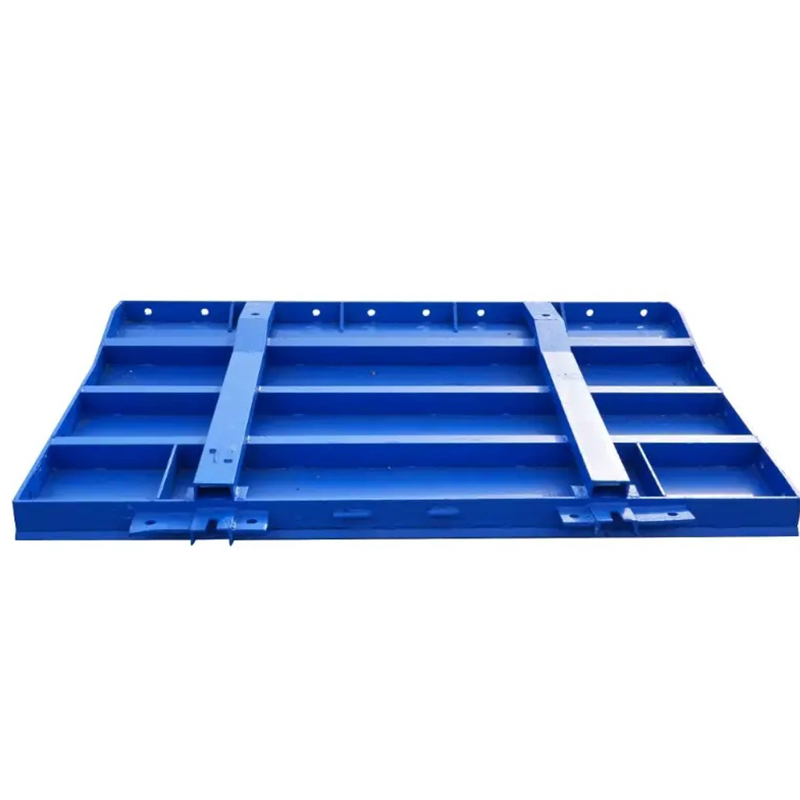
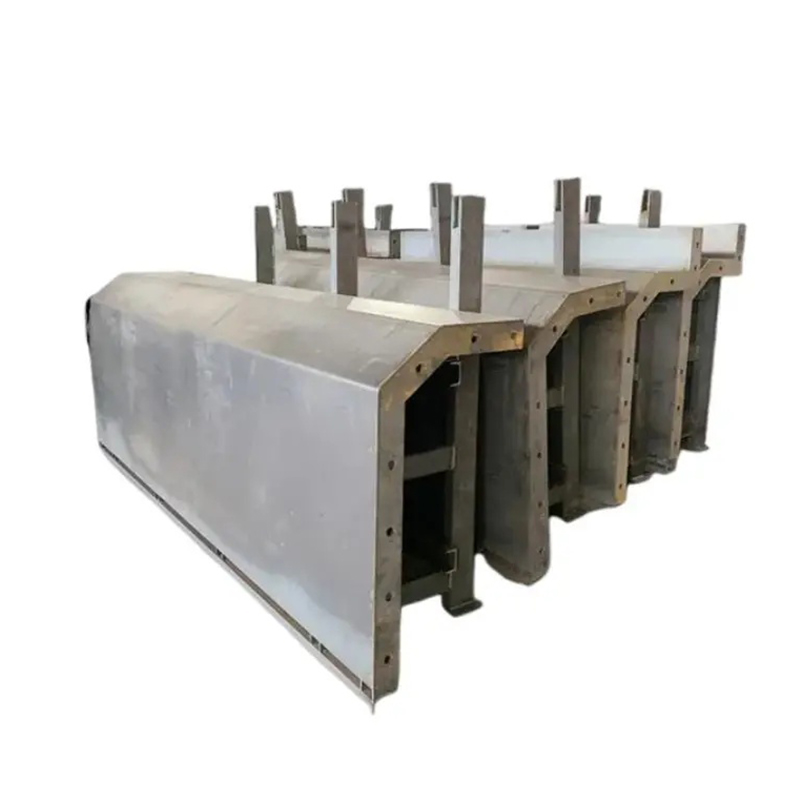
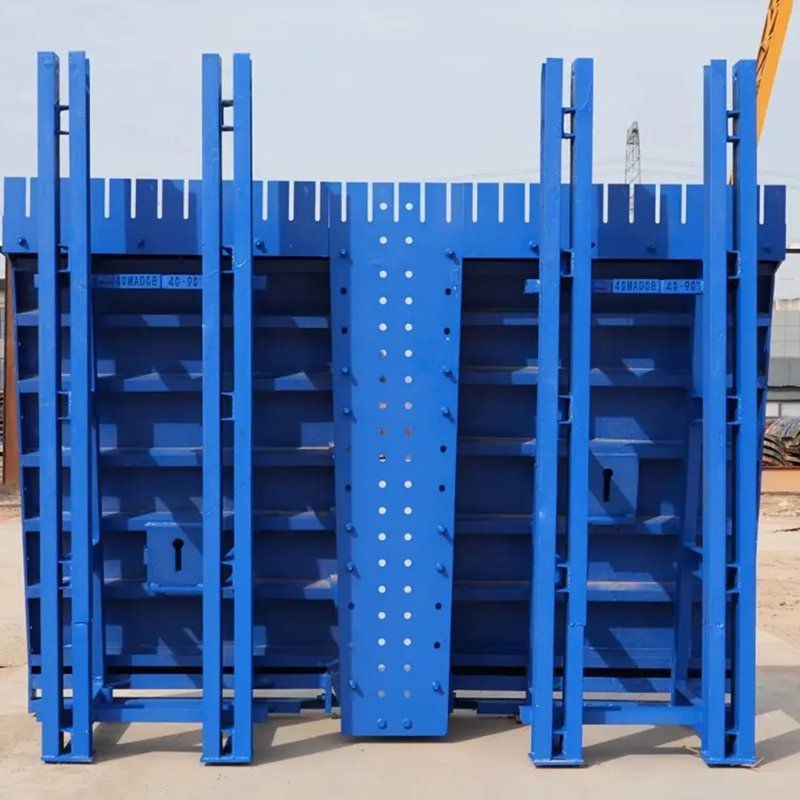
A complete pier column formwork system normally includes steel face panels, vertical and horizontal stiffening ribs, flange plates, connection bolts, alignment devices, lifting lugs, working platforms, access components, and other project-specific accessories. Depending on the pier geometry, the mold can be supplied in two or more segments. These segments are assembled around the reinforcement and connected to create a continuous enclosure.
The inner face of the formwork determines the visible surface of the concrete. For this reason, panel flatness, joint accuracy, weld quality, corner geometry, and release-agent compatibility are all important. A small mismatch between adjacent panels can leave a visible step or line on the finished pier. A poorly sealed joint can allow cement grout to escape, producing voids and surface defects. A weak rib arrangement can allow the panel to bulge under pressure, changing the pier dimensions and making later installation of caps, bearings, or superstructure components more difficult.
Steel formwork is particularly valuable in bridge work because bridge piers are commonly repeated in large quantities. Once the first mold has been accurately assembled and adjusted, the same system can often be transferred to additional pier locations. Standardized dimensions and connection details make this process faster and more predictable than constructing a new timber or improvised mold for every pier.
Engineering Design of the Steel Formwork
High-Strength Steel Panels
The formwork can be manufactured from Q235B or Q355B steel plates according to the project’s structural and fabrication requirements. Q235B is widely used for general structural components where reliable weldability and cost efficiency are important. Q355B provides higher yield strength and can be selected for heavily loaded components, large panels, long spans, or applications where additional resistance to deformation is required.
The selected plate thickness depends on the pier dimensions, casting height, concrete pressure, rib spacing, support arrangement, lifting conditions, and expected number of turnovers. Engineering personnel can evaluate these factors to determine a suitable panel and stiffener configuration. A correctly designed plate does not need to be excessively thick in every location. Instead, material is distributed through a combination of face plates, ribs, flanges, and connection frames to achieve the required rigidity while controlling total weight.
Reinforcing Ribs and Structural Frames
Reinforcing ribs are welded or otherwise integrated with the panel assembly to limit deflection and distribute pressure. Vertical ribs support the panel across its height, while horizontal ribs or frame members help maintain the cross-sectional shape and transfer loads to adjacent segments and connection points. The result is a stiff shell that remains stable during placement and vibration of concrete.
The rib arrangement is a major difference between basic steel molds and engineered bridge formwork. A lightly reinforced plate may appear adequate before casting but can deform when subjected to fresh-concrete pressure. Excessive deflection may lead to a larger or irregular pier section, uneven concrete cover, or joint opening. A properly designed rib frame maintains the relationship between the inner face, outer frame, and connection flanges so that the formwork performs as a unified structural system.
Segmented and Modular Configuration
The formwork adopts a modular, segmented design. Instead of lifting one extremely large and heavy mold, construction teams can handle several manageable sections and connect them at the work location. The precise number of segments depends on the pier diameter or cross-sectional dimensions, available lifting equipment, transportation restrictions, and site conditions.
Modular construction also supports changes in pier height and, within the limits of the approved design, cross-sectional geometry. Standard segments can be stacked or rearranged to meet different casting elevations. For projects involving several pier types, a family of compatible modules may reduce the number of completely different molds that must be manufactured and stored.
Segmented formwork also improves maintenance. If a connection flange, local panel area, or accessory is damaged, the affected component can be inspected and repaired without necessarily replacing the entire system. This approach is beneficial for contractors managing multiple bridge projects or long construction programs.
Connection and Positioning System
Connection accuracy affects both assembly speed and the quality of the concrete surface. Standardized bolts, flange plates, locating elements, and positioning devices help bring adjacent sections into the correct relationship. The connection system must provide sufficient clamping force to prevent joint movement while allowing practical installation and stripping.
Accurate positioning is especially important for circular piers, where small deviations around the circumference can accumulate and affect the final diameter. For rectangular piers, connection accuracy helps maintain straight corners and consistent side lengths. For irregular sections, carefully prepared templates and reference points are used to ensure that the formwork follows the approved geometry.
The formwork can be prepared with lifting lugs and handling points positioned to support safe crane operations. These components are designed as part of the assembly rather than added without structural consideration. Their placement should account for the center of gravity, panel weight, sling angles, and the possibility of repeated lifting during the construction sequence.
Performance Advantages Compared with Conventional Alternatives
Pier column formwork may be produced from timber, plywood, aluminum, plastic, or steel. Each material has a suitable application, but bridge projects with repeated piers and demanding dimensional requirements often benefit from a robust steel solution.
| Performance requirement | Engineered steel pier formwork | Common temporary alternatives | Project benefit |
|---|---|---|---|
| Resistance to concrete pressure | Rigid steel panels and reinforced ribs provide strong load-bearing capacity | Timber or thin panel systems may require more external bracing | Reduced risk of bulging and dimensional changes |
| Repeatability | Standardized segments can be reused for multiple pours | Improvised systems may require frequent adjustment or rebuilding | More consistent pier geometry and faster turnover |
| Surface finish | Accurate inner faces and sealed joints support smooth concrete surfaces | Panel wear, warping, or joint gaps may increase surface defects | Less repair, patching, and cosmetic treatment |
| Adaptability | Modular sections can be configured for multiple heights and shapes | Some systems are limited to one specific size | Better suitability for projects with different pier types |
| Durability | Steel construction and protective treatment support repeated use | Wood-based systems can absorb moisture or deteriorate more quickly | Lower long-term replacement requirements |
| Handling | Designed lifting points and standardized connections support planned operations | Non-standard molds may require additional site modifications | Improved organization and reduced assembly uncertainty |
Greater Resistance to Deformation
Fresh concrete creates substantial lateral pressure, particularly when placement is rapid, the concrete has high workability, or vibration is intensive. The pressure is not necessarily uniform. It can vary with the rate of pour, temperature, setting time, mix design, height of fresh concrete, and vibration method. Pier formwork must therefore provide adequate stiffness throughout the casting sequence.
The combination of thickened panels and reinforced ribs gives steel formwork a strong resistance to local and overall deformation. This helps maintain the designed pier diameter, side length, corner position, and vertical profile. Stable geometry is important not only for appearance but also for the fit of pier caps, crossbeams, bearing systems, expansion components, and other structural elements.
Improved Joint Sealing
Grout leakage is one of the most common causes of poor concrete appearance around formwork joints. Escaping cement paste can leave voids, fins, lines, and honeycomb-like pitting. It can also make stripping more difficult if concrete accumulates around bolts or flanges.
Precision-machined edges, accurately aligned flanges, and suitable sealing arrangements help reduce the risk of leakage. Proper tightening of connections is still necessary, but the quality of the manufactured interface gives site personnel a reliable foundation for achieving a tight mold. Better sealing can reduce the amount of post-casting repair and help contractors meet fair-faced concrete requirements.
Consistent Concrete Finish
A smooth and clean concrete surface depends on the condition of the form face, the release agent, the concrete mix, vibration practice, temperature, and joint treatment. The formwork cannot compensate for poor concrete placement, but it can eliminate many avoidable surface problems caused by irregular panels or misaligned joints.
Steel face panels can be manufactured to a consistent flatness and finished for repeated contact with concrete. When cleaned and maintained correctly, they can produce a uniform appearance across multiple pours. This is particularly useful for exposed bridge piers in urban areas, where visual quality is an important part of the project.
Higher Turnover Potential
For projects with many similar piers, the cost of formwork is influenced by the number of times it can be reused and the time required for each cycle. A durable steel system can be lifted, cleaned, inspected, repositioned, and assembled for the next pour. Faster turnover can reduce the amount of formwork required on site and support a more continuous construction schedule.
High turnover does not mean that inspection can be skipped. Each cycle should include checks for panel damage, flange distortion, missing bolts, weld cracking, concrete buildup, release-agent condition, and alignment. Proper maintenance preserves the benefits of the initial manufacturing quality.
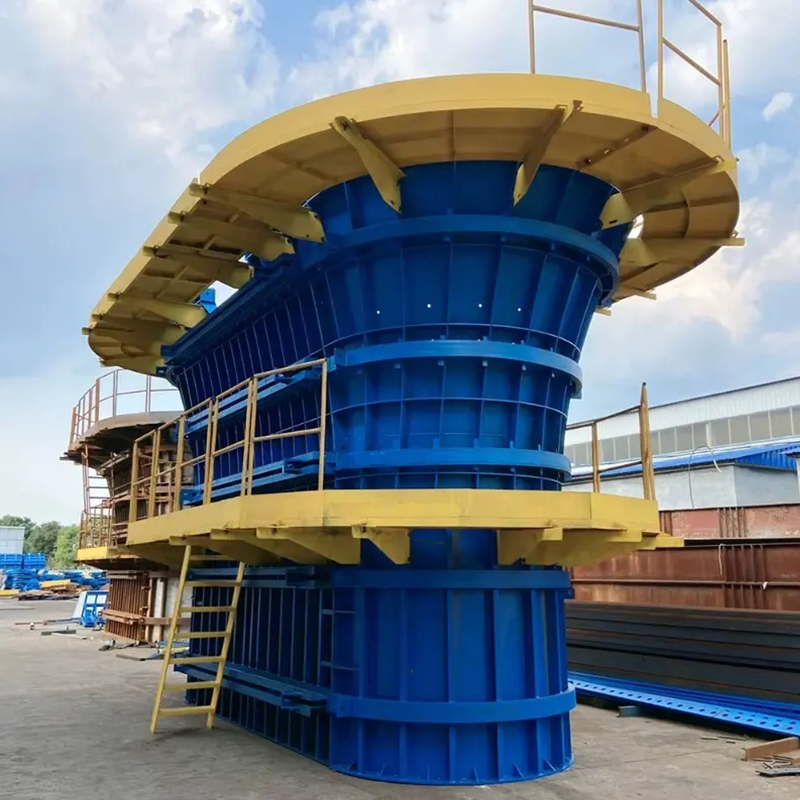
Pier Column Formwork
Application Areas
Highway Bridge Piers
Highway bridges often contain a large number of repeated piers, making standardized steel formwork an economical and practical choice. The formwork can be adjusted to accommodate different pier heights, foundation elevations, and cap arrangements. Its stiffness helps maintain the shape required for pier caps and superstructure alignment.
On large highway projects, construction teams may work simultaneously at several pier locations. Modular formwork makes it possible to plan lifting operations, transport sections between work fronts, and establish a repeatable assembly procedure. The consistent system also simplifies training for site crews because the same connection and positioning practices are used from one pier to another.
Railway and High-Speed Railway Structures
Railway infrastructure places strict demands on alignment, dimensional control, and construction quality. Piers must support the track structure and transfer loads safely to the foundation. Even when the final pier is not visible to passengers, deviations can complicate the installation of caps, bearings, girders, and track-related components.
Steel pier column formwork supports the repeatable production of railway columns and piers. Its reinforced structure helps limit movement during concrete vibration, while accurate segment connections assist with maintaining the specified cross-section. Project-specific details can be added for access, lifting, surveying, and integration with other temporary works.
Municipal Elevated Roads and Overpasses
Urban elevated roads and overpasses commonly require compact construction methods because work takes place close to traffic, buildings, utilities, and pedestrian areas. A modular mold can be transported and assembled within restricted spaces more easily than a very large monolithic system. The short installation cycle can help reduce the duration of lane closures and minimize disruption to surrounding activities.
Fair-faced concrete may also be preferred in urban projects because piers form a prominent part of the visual environment. Smooth panels, tight joints, and careful concrete placement help reduce the need for extensive surface finishing after stripping.
Water Conservancy and Port Engineering
Piers and support columns used in ports, waterfront structures, flood-control facilities, and water conservancy projects may be exposed to demanding environmental conditions. Steel formwork provides a strong and reusable mold for construction activities where careful dimensional control and reliable handling are important.
Protective surface treatment and proper storage are especially significant in humid or coastal environments. After use, the formwork should be cleaned of concrete residue, dried, inspected, and protected before being stored. These practices help preserve the steel and maintain connection accuracy over repeated projects.
Precast Concrete Component Production
Precast factories can use pier column formwork for the mass production of standardized columns, supports, and pier components. Factory production allows better control over reinforcement placement, concrete mixing, vibration, curing, and inspection. A durable steel mold can be used through many production cycles while maintaining consistent dimensions.
For precast applications, the stripping sequence and mold opening direction should be considered during design. Adequate release-agent application and suitable lifting or handling provisions help protect both the concrete component and the mold. If multiple component sizes are required, modular segments can provide useful production flexibility.
Manufacturing Process and Quality Control
The performance of pier column formwork depends on more than the steel grade stated on a material certificate. Plate preparation, cutting precision, forming accuracy, welding quality, dimensional inspection, surface treatment, and final assembly all influence the finished product. Nantong Hyson Road And Bridge Formwork Co., Ltd. applies a structured manufacturing process intended to control these factors from raw material preparation through delivery.
Project Review and Technical Design
Manufacturing begins with a review of the client’s drawings, pier geometry, concrete casting method, construction sequence, lifting equipment, access restrictions, and required turnover rate. Important design inputs include pier diameter or side lengths, total height, segment height, panel thickness, stiffener arrangement, connection method, working platform requirements, and expected concrete pressure.
For non-standard structures, the supplier can prepare customized drawings and fabrication details. The objective is to convert the project’s engineering requirements into a manufacturable and usable formwork assembly. Attention is given to transport dimensions, crane capacity, storage requirements, and the way the mold will be stripped and repositioned.
Material Selection and Traceability
Q235B and Q355B steel plates are selected according to the structural requirements of the project. Material identification and documentation support traceability throughout production. Plate surfaces are checked for obvious defects, and dimensions are verified before cutting.
Traceability is valuable for large infrastructure projects because the customer may require records covering material certificates, welding procedures, inspection results, and dimensional checks. Organized documentation also helps identify the source of a component if maintenance or replacement is needed later.
CNC Laser Cutting
Advanced CNC laser cutting equipment is used to process steel plates and related components with high dimensional accuracy. Computer-controlled cutting helps produce repeatable flange plates, ribs, access components, brackets, and panel edges. It also supports complex profiles and the precise production of non-standard pieces.
Accurate cutting reduces the amount of manual correction required during assembly. It helps ensure that connection holes, reference edges, and mating surfaces remain in the intended positions. Cleanly cut edges can also support efficient welding preparation and improve the consistency of the finished assembly.
Bending, Forming, and Fit-Up
Where the pier geometry requires curved or formed components, steel plates are bent or shaped according to approved drawings. Circular pier formwork requires particular control of radius and segment matching. If adjacent sections have different radii or uneven edges, the mold may not close correctly and the concrete surface may show a noticeable joint line.
Before welding, components are positioned and temporarily secured in a controlled fit-up process. Measurements are taken to confirm panel dimensions, rib spacing, flange orientation, and overall squareness or curvature. Proper fit-up helps limit distortion during welding and improves the accuracy of final assembly.
Certified Welding Practice
Welding is central to the strength and durability of a steel formwork system. The manufacturer applies AWS and EN welding craftsmanship through qualified procedures and trained personnel. Welded joints are planned according to the load path and the function of each component. Structural ribs, lifting lugs, connection frames, and panel supports require particular attention because they may experience repeated loading.
Welding quality control can include visual inspection, dimensional checks, weld profile verification, and additional non-destructive testing where required by the project or applicable standards. The objective is to identify incomplete fusion, undercut, cracks, excessive spatter, distortion, or other conditions that could affect performance.
Welding sequence is also important. Heat input can cause panel warping or flange misalignment if welding is not balanced. Controlled sequencing, temporary restraints, and appropriate welding parameters help preserve the intended geometry. After welding, the assembly is checked and corrected within approved procedures if any deviation is found.
Assembly and Dimensional Inspection
Completed panels and segments are assembled for inspection before shipment whenever practical. This step verifies that mating edges, bolt holes, flanges, ribs, lifting points, and positioning devices work together as intended. It can reveal problems that may not be visible when individual parts are inspected separately.
Typical inspection points include overall height, width, diameter, diagonals, panel flatness, segment matching, bolt-hole position, flange alignment, weld appearance, lifting-lug location, and the condition of the concrete-contact surface. Inspection records can be prepared for customer review and project documentation.
Surface Treatment and Protection
After fabrication and inspection, the steel surface can receive rust-proof treatment or a project-specified coating system. Surface preparation removes contaminants and supports better coating adhesion. The selected treatment depends on the expected environment, storage period, transportation conditions, and customer requirements.
The inner face should be kept smooth and free from coating defects that could transfer to the concrete. Exterior surfaces and structural frames require protection against corrosion during storage and service. During transport, exposed edges and connection surfaces should be protected from impact and moisture.
Final Packing and Delivery
Formwork sections are packed according to their weight, shape, lifting method, and destination. Bolts, accessories, and smaller components should be labeled and organized so that site crews can quickly identify them. Clear marking of segment numbers, orientation, and assembly references reduces installation errors.
For international projects, packing also considers container dimensions, loading efficiency, export protection, and unloading arrangements. Properly planned packing can reduce transport damage and simplify the transition from factory inspection to site installation.
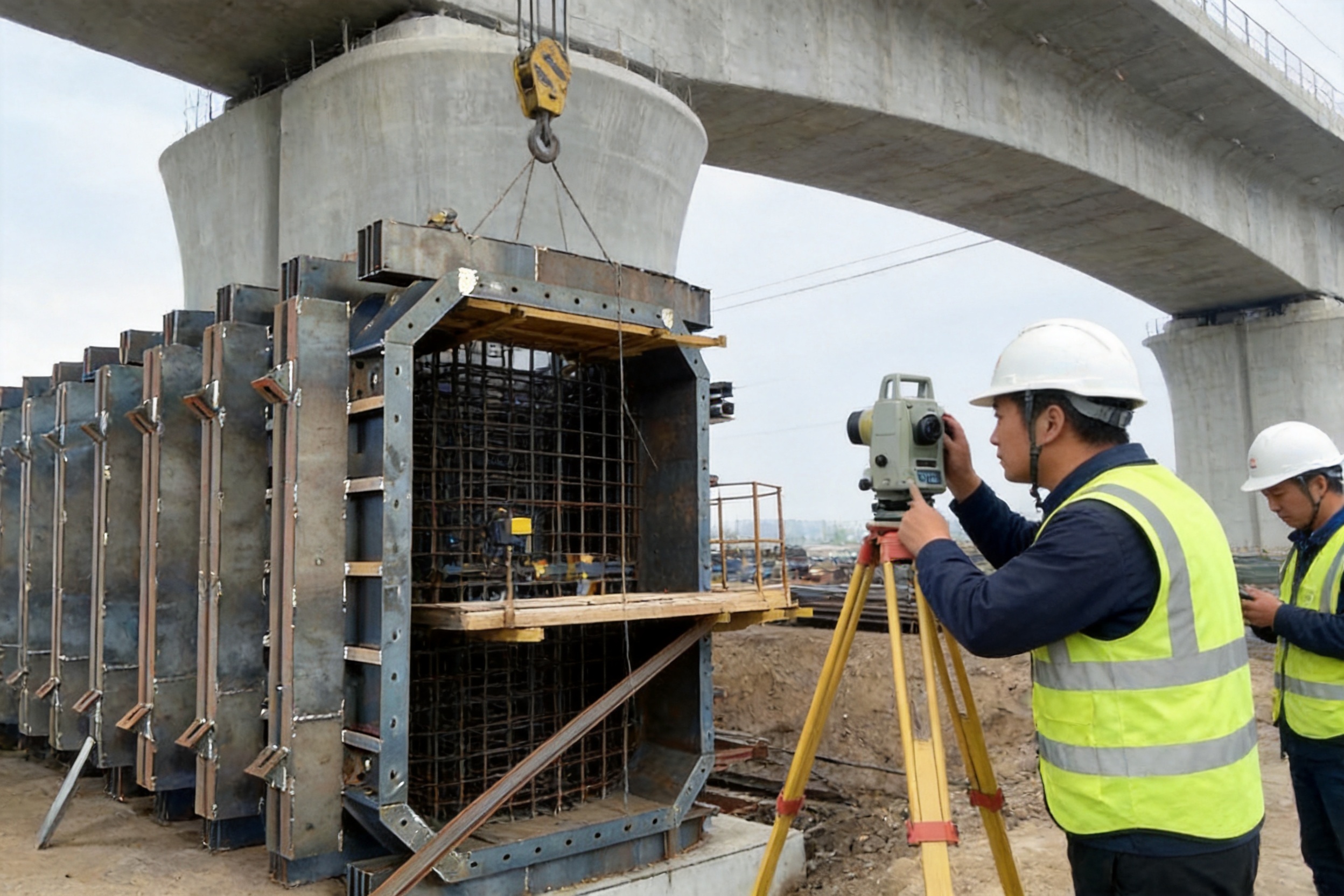
How the Formwork Supports Construction Efficiency
Faster Installation
Standardized connections and pre-fabricated segments allow the formwork to be assembled with fewer site modifications. Crews can follow a defined sequence: prepare the foundation or previously cast section, position the reinforcement, inspect the mold, install the segments, tighten the connections, check alignment, and complete the concrete pour.
Because the components are manufactured in a controlled factory environment, the site team does not need to spend extensive time cutting, drilling, or reinforcing panels. This can be especially valuable where working space is limited or where construction must proceed under a tight traffic-management plan.
Reduced Labor and Hoisting Requirements
A segmented mold can be lifted in planned units instead of requiring one oversized assembly. Standard lifting points support more predictable crane operations. The exact lifting plan must always be prepared by qualified personnel using the actual component weights, crane capacity, sling configuration, and site conditions.
Efficient handling reduces idle time for cranes and workers. It also lowers the likelihood of damage caused by improvised lifting arrangements. When the formwork is designed with the construction sequence in mind, stripping and repositioning can become a controlled routine rather than a separate engineering challenge at every pier.
Better Schedule Predictability
Bridge construction schedules depend on the reliable repetition of many activities. If formwork requires frequent repair or adjustment, each cycle becomes uncertain. A robust steel mold provides a stable platform for establishing standard work procedures, inspection checklists, and turnover targets.
Schedule performance still depends on concrete supply, reinforcement preparation, weather, curing requirements, crane availability, and site coordination. Nevertheless, consistent formwork removes one major source of variability from the pier construction process.
Lower Lifecycle Cost
The purchase price is only one part of the cost of formwork. Contractors should also consider the number of uses, assembly labor, repair work, storage, transport, surface finishing, and disposal. A durable steel system may offer a stronger economic return when used repeatedly across a project or a group of projects.
Reduced concrete repair is another potential cost advantage. When joint sealing and panel stiffness are properly controlled, the finished pier may require less patching, grinding, or cosmetic treatment. This can reduce both direct repair costs and the time required before the next construction stage begins.
Design Flexibility for Different Pier Geometries
Circular Piers
Circular piers are common in highway, railway, and elevated bridge projects. Their formwork is usually constructed from curved steel segments joined around the reinforcement cage. Radius accuracy, segment matching, flange alignment, and continuous sealing are critical to achieving a uniform circular section.
Depending on the project, the system may be supplied as two semicircular sections or as several smaller curved segments. More segments can simplify transportation and handling, while fewer segments may reduce the number of vertical joints. The optimum configuration depends on diameter, height, crane capacity, and the required surface appearance.
Rectangular and Square Columns
Rectangular and square pier columns require stable corners, straight sides, and accurate diagonals. Reinforced corner frames and rigid connection flanges help prevent the mold from opening or twisting during concrete placement. The formwork can be configured for different side lengths and may include chamfer details if specified in the project drawings.
Accurate corner geometry is particularly important where pier caps or crossheads are installed directly above the column. A small deviation at the top of the pier can make alignment and bearing installation more difficult.
Irregular Sections
Some bridge and infrastructure projects use tapered, flared, oval, or otherwise irregular pier profiles. These shapes require customized panel layouts and detailed control of the transition between segments. CNC cutting, controlled forming, and factory trial assembly are valuable for such applications because they reduce the risk of cumulative errors.
Customized formwork can include different segment heights, sloped faces, internal chamfers, embedded-item openings, and special access provisions. Before production, the geometry should be confirmed through approved drawings and, where necessary, three-dimensional modeling or full-scale dimensional checks.
Variable Heights
Different foundations and terrain conditions may result in a range of pier heights. Modular vertical segments allow the system to be adjusted within the agreed design range. The connection between stacked sections must provide sufficient strength, alignment, and sealing for the planned casting pressure.
When a pier is cast in stages, the construction team should define the treatment of the previous concrete surface, reinforcement continuity, construction joints, and the method for aligning the next formwork lift. Steel formwork can support staged construction, but the sequence must be included in the technical plan.
Installation and Operating Recommendations
Before installation, the site team should verify the foundation or previously cast concrete surface, reinforcement position, survey control points, crane access, and the condition of all formwork components. Panels should be checked for deformation, damaged coating, concrete buildup, missing fasteners, and blocked bolt holes.
The contact surface should be cleaned and treated with a suitable release agent. The release agent must be applied evenly and should not contaminate reinforcement, construction joints, or embedded items. Excessive application can affect the concrete surface, while insufficient application can make stripping difficult.
Segments should be lifted only from designated lifting points using suitable slings and hardware. The formwork should be guided into position without striking reinforcement or previously cast concrete. Once the segments are in place, the crew should install and tighten the specified connections in the recommended sequence.
Alignment should be checked using surveying instruments or approved measurement tools. Important checks include centerline, verticality, diameter or side length, top elevation, joint closure, and the position of embedded components. Any adjustment should be completed before concrete placement.
Concrete should be placed at a controlled rate consistent with the formwork design. Excessively rapid filling can increase lateral pressure beyond the assumed conditions. Vibration should be thorough but controlled, avoiding prolonged vibration at one location or direct contact with the panel and reinforcement.
After casting, the formwork should remain in place for the required period and under the conditions specified by the project engineer. Stripping must not begin until the concrete has achieved the necessary strength and the responsible engineer or site authority has approved the operation.
After removal, concrete residue should be cleaned from the inner face, flanges, bolt holes, and accessories. The panels should be inspected before they are transferred to the next pier. Small issues should be corrected promptly so that they do not become larger problems during later cycles.
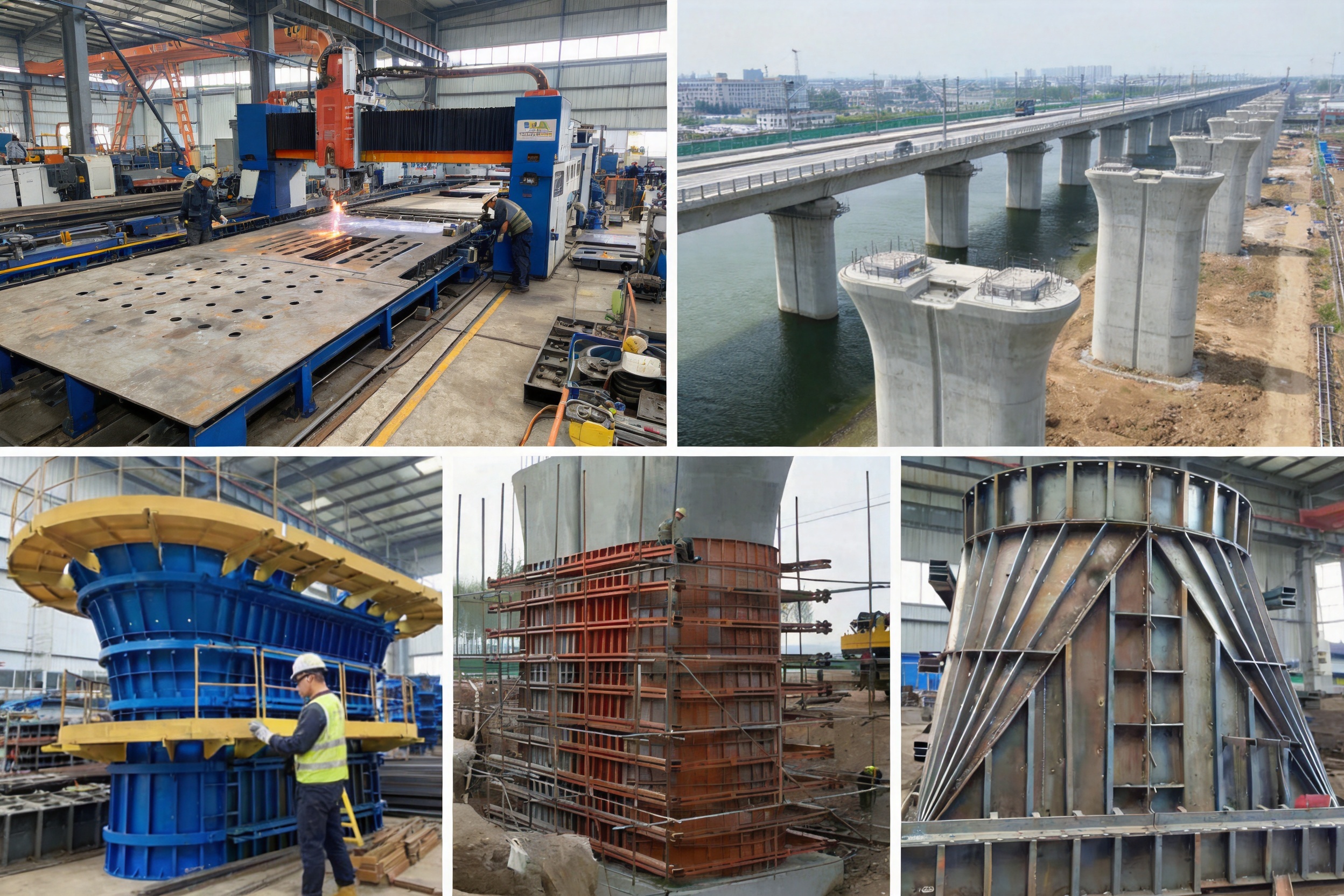
Company Manufacturing Strengths
Nantong Hyson Road And Bridge Formwork Co., Ltd. is a professional manufacturer specializing in custom steel formwork, bridge construction equipment, ringlock scaffolding, heavy-duty steel structures, and OEM metal fabrication. Its production capabilities combine automated plate processing with controlled structural fabrication, allowing the company to manufacture both standard products and non-standard engineering components.
The company uses advanced laser cutting equipment and standardized production lines to process steel plates and structural parts. This combination supports repeatable dimensions, efficient production, and the fabrication of complex components required for customized pier molds. Laser cutting is integrated with bending, fit-up, welding, inspection, and surface treatment to create ready-to-install assemblies rather than disconnected raw parts.
Hyson applies AWS and EN welding craftsmanship and maintains quality management practices aligned with ISO 9001. The company also identifies compliance with BS1139 and EN74 standards for relevant scaffolding products. These systems demonstrate an emphasis on documented procedures, process control, inspection, and continuous manufacturing management.
With 12 utility patents and experience serving major infrastructure customers, the company has developed production knowledge across bridge formwork, hydraulic tunnel trolleys, scaffolding, steel props, industrial structures, and heavy steel fabrication. This broad experience is useful when a pier formwork project includes special platforms, access systems, lifting provisions, embedded-item interfaces, or other temporary works.
Hyson has supplied solutions for major projects associated with CCCC, CRCC, and other large state-owned enterprises. Its referenced project experience includes the Sutong Yangtze River Bridge, Taizhou Bridge, and Sudan Thermal Power Plant. Such work requires coordination between engineering drawings, procurement schedules, fabrication standards, inspection documentation, transport, and site requirements.
The company’s heavy-metal fabrication capability also supports customers that need more than a basic mold. Services can include CNC steel plate laser cutting, bending, structural assembly, welding, customized steel components, and complete formwork fabrication. This integrated approach can reduce the number of external suppliers involved in a project and simplify communication regarding tolerances, interfaces, and delivery responsibilities.
Why Choose a Customized OEM Solution?
Bridge piers are not always identical. Differences may occur in diameter, height, taper, cap connection, foundation elevation, construction method, access restrictions, or finish requirements. A standard catalog mold may not satisfy all of these conditions without extensive site modification.
An OEM solution begins with the actual project data. The manufacturer can review drawings, develop a suitable segment arrangement, select material grades, design stiffener spacing, prepare connection details, and incorporate lifting or working accessories. This reduces the risk that the contractor will have to adapt an unsuitable product after delivery.
Customized manufacture can also address local standards, customer inspection requirements, coating specifications, transport dimensions, and documentation needs. For international buyers, the supplier can coordinate manufacturing information with the purchaser’s technical team before production begins.
A well-managed OEM process does not mean that every project requires a completely unique product. In many cases, standard design principles and reusable modules can be combined with customized dimensions. This approach balances engineering flexibility with manufacturing efficiency.
Quality, Safety, and Reliability Considerations
Formwork is temporary, but it is not non-structural during construction. It must be treated as an engineered load-bearing system. The design should consider concrete pressure, dynamic effects from vibration, wind, lifting forces, working platforms, access loads, and the condition of supporting surfaces.
Safety depends on both product design and site operation. Lifting lugs must be used within their rated conditions. Platforms, guardrails, ladders, and access components should be installed and inspected as required. Workers should not stand beneath suspended panels or enter areas that have not been secured against movement.
Connection bolts should be installed according to the manufacturer’s instructions and checked before pouring. Missing or partially tightened fasteners can cause joint opening or local movement. Formwork alignment should be verified after final tightening because the tightening process can shift a segment if it is not properly restrained.
The concrete placement plan should match the formwork’s approved design assumptions. Pour rate, lift height, concrete temperature, workability, and vibration method can all affect pressure. If site conditions change significantly, the responsible technical personnel should review the situation before proceeding.
Reliability also depends on maintenance. After each use, the mold should be cleaned, dried, inspected, and stored on stable supports. Panels should not be dragged across hard surfaces, and connection flanges should be protected from impact. Regular maintenance preserves the dimensional accuracy that makes steel formwork valuable.
Inspection Checklist for Buyers
Before placing an order, buyers should provide complete technical information. This normally includes drawings, cross-sectional dimensions, pier height, required concrete finish, expected turnover quantity, concrete placement method, site crane capacity, transport limitations, applicable standards, and any required accessories.
During technical review, buyers should confirm the steel grade, panel thickness, reinforcement arrangement, connection method, segment weight, lifting points, working platform details, surface treatment, and allowable dimensional tolerances. The stripping sequence should also be discussed, especially for tapered or irregular pier sections.
At the factory, inspection may include material documentation, visual weld checks, dimensional verification, trial assembly, bolt-hole alignment, panel flatness, coating condition, marking, and packing. For large or complicated systems, a factory pre-assembly can provide valuable confirmation before shipment.
At the site, the customer should inspect the formwork upon arrival and compare the components with the packing list. Damaged items should be photographed and reported promptly. Before the first pour, the contractor should conduct a trial assembly or controlled inspection to confirm that the mold matches the approved drawings.
Frequently Asked Questions
What types of bridge structures can use this formwork?
The formwork is suitable for highway and railway bridge piers, elevated road columns, municipal overpasses, port and water conservancy supports, and precast concrete pier components. The final suitability depends on the pier geometry, construction method, load conditions, and approved engineering design.
Can the formwork be used for both precast and cast-in-place concrete?
Yes. The modular steel mold is suitable for both precast production and cast-in-place construction. For precast work, the design should consider demolding direction, factory handling, curing arrangements, and repeated production cycles. For cast-in-place work, site lifting, alignment, concrete pressure, and access requirements are especially important.
Which steel grades are available?
The formwork can be manufactured using Q235B or Q355B steel plates. The appropriate grade depends on the structural design, expected loading, panel dimensions, project specifications, and customer requirements.
Can the product be customized for circular and rectangular piers?
Yes. The formwork can be customized for circular, rectangular, square, tapered, and selected irregular pier shapes. The customer should provide approved drawings or detailed dimensions so that the manufacturer can prepare the segment layout and connection design.
How does the formwork help achieve a fair-faced concrete finish?
Rigid panels help prevent bulging, while accurately processed joints and sealing arrangements reduce grout leakage. A smooth inner face supports a more uniform concrete surface. Proper release-agent application, concrete mix control, vibration, curing, and cleaning are also necessary to achieve the desired finish.
How many times can the formwork be reused?
The actual number of turnovers depends on panel design, concrete conditions, handling practice, cleaning, storage, maintenance, and the required appearance standard. Because it is manufactured from durable steel, the system is intended for repeated use, but the contractor should inspect it after every cycle.
Does the manufacturer provide lifting points and accessories?
Lifting lugs, positioning devices, working platforms, access components, and other accessories can be incorporated according to the project requirements. Their design should be confirmed during the technical review and coordinated with the site lifting plan.
How is the formwork protected against corrosion?
The steel can receive rust-proof surface treatment or a project-specific coating system. Corrosion protection is supported by proper storage, cleaning, drying, and repair of damaged coating after use. Coastal and humid environments may require additional protection measures.
What information is needed for a quotation?
Useful information includes pier shape, diameter or side dimensions, height, segment height, quantity, steel grade, expected reuse frequency, concrete finish requirements, accessories, delivery destination, applicable standards, and the preferred construction method. Drawings and photographs of the work area can also help the manufacturer evaluate handling and access conditions.
Can the manufacturer supply other steel products for the same project?
Yes. In addition to bridge and infrastructure formwork, the company manufactures hydraulic tunnel trolleys, ringlock scaffolding, steel props, heavy-duty steel structures, industrial components, and custom OEM fabricated parts. Integrated laser cutting, bending, and welding services can support projects requiring multiple types of steel components.
Conclusion
Pier column formwork has a direct influence on the safety, geometry, appearance, and efficiency of bridge construction. A high-quality steel system provides the stiffness needed to resist fresh-concrete pressure, the dimensional accuracy required for precise pier profiles, and the sealing performance necessary for clean concrete surfaces. Its modular design supports different pier heights and shapes, while durable steel construction enables repeated use across large infrastructure projects.
Compared with less rigid or improvised alternatives, engineered steel formwork can offer stronger deformation resistance, faster assembly, improved repeatability, better surface quality, and lower lifecycle cost. These advantages become increasingly important when a project includes many identical piers, strict dimensional tolerances, restricted urban work areas, or fair-faced concrete requirements.
Nantong Hyson Road And Bridge Formwork Co., Ltd. combines Q235B and Q355B material capability with CNC laser cutting, controlled bending, precision fit-up, AWS and EN welding craftsmanship, dimensional inspection, surface treatment, and customized OEM production. Its experience in bridge formwork, steel structures, scaffolding, tunnel equipment, and heavy fabrication enables it to supply complete steel solutions for infrastructure and industrial applications.
For contractors, precast manufacturers, engineering companies, and international buyers, the best formwork solution is one that is designed around the actual construction sequence rather than selected only by nominal dimensions. By matching the mold configuration to pier geometry, lifting equipment, concrete placement, turnover requirements, and applicable standards, customers can obtain a safer, more efficient, and more reliable system for bridge substructure construction.
References
1. American Welding Society. Structural Welding Code—Steel, AWS D1.1/D1.1M.
2. European Committee for Standardization. Relevant European requirements for welding quality and fabricated steel structures.
3. International Organization for Standardization. ISO 9001, Quality Management Systems—Requirements.
4. British Standards Institution. BS 1139, Metal Scaffolding—Applicable product and performance provisions.
5. European Committee for Standardization. EN 74, Couplers, Spigot Pins and Baseplates for Use in Falsework and Scaffolds.
6. Chinese national standards for structural steel materials, including Q235B and Q355B classifications.
7. Bridge construction engineering practices concerning concrete formwork, dimensional control, vibration, curing, and temporary works safety.
Product: Pier Column Formwork



- Location
- Group 3, Fangzhuang Village, Rucheng Subdistrict, Rugao City, Nantong, Jiangsu, China
- Follow us
- Phone
- +86-13646196162
- info@hysonindustry.com
