 +86-13646196162
 info@hysonindustry.com




 русский
  عربى
عربى 


Hollow Square Steel Formwork for Efficient Breakwater and Coastal Protection Construction
 2026.09.13
Content
- 1 1. The Role of Hollow Concrete Blocks in Coastal Engineering
- 2 2. Product Design Based on the Demolding Process
- 3 3. Main Advantages of Hollow Square Steel Formwork
- 4 4. Comparison with Conventional Simple Steel Box Molds
- 5 5. Precision Manufacturing Process
- 6 6. Manufacturing Strengths of Nantong Hyson Road And Bridge Formwork
- 7 7. How the Formwork Operates in Production
- 8 8. Applications
- 9 9. Quality Control Considerations
- 10 10. Maintenance and Service Life
- 11 11. Why Custom Engineering Matters
- 12 12. Procurement and Project Planning
- 13 13. Safety Considerations
- 14 14. Environmental and Economic Benefits
- 15 15. Selecting a Reliable Formwork Manufacturer
- 16 16. Frequently Asked Questions
- 16.1 Q1: What is Hollow Square Steel Formwork used for?
- 16.2 Q2: How does the mold achieve rapid demolding?
- 16.3 Q3: Can the mold be customized for different block sizes?
- 16.4 Q4: Is the mold suitable for mass production?
- 16.5 Q5: Does the product require special concrete?
- 16.6 Q6: Can the formwork be used in coastal environments?
- 16.7 Q7: What information should a customer provide for a quotation?
- 16.8 Q8: What makes this product different from a simple welded steel box?
- 16.9 Q9: Can the inner core be mechanically folded?
- 16.10 Q10: How should the mold be maintained?
- 16.11 Q11: Is operator training necessary?
- 16.12 Q12: Can the manufacturer provide other steel products?
- 17 17. Conclusion
- 18 References
- 19 Product: Hollow Square Fomwork/Mold
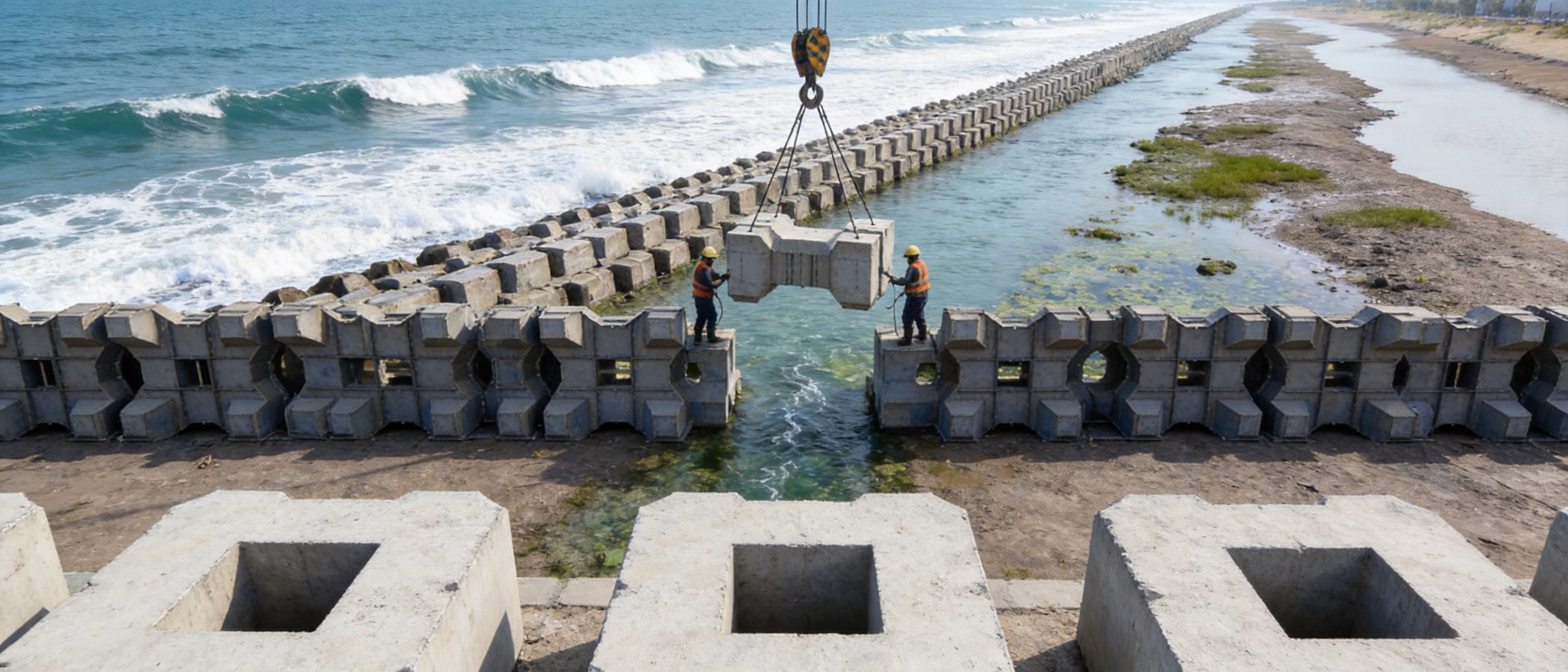
Modern coastal infrastructure projects demand concrete protection units that are strong, accurately shaped, economical to produce, and fast to demold. Breakwaters, seawalls, artificial reefs, riverbank protection systems, and ecological restoration structures all depend on the reliable production of specialized concrete blocks. When conventional molds create long demolding cycles, high labor requirements, dimensional inconsistencies, or damage to fresh concrete units, the entire project can experience delays and increased costs.
Hollow Square Steel Formwork, also known as Hollow Square Block Formwork or a Hollow Square Concrete Mold, is designed to solve these production challenges. It is a specialized steel formwork system for casting hollow square concrete blocks used in coastal protection and ecological engineering. Unlike a basic steel box assembled by welding several plates together, this formwork is developed around the complete production process: concrete placement, vibration, curing, inner-core release, block removal, cleaning, and repeated use.
The most important feature of the system is its rapid demolding mechanism. Depending on the block design and project requirements, the mold can use accurately calculated draft angles, also called cone angles, or a mechanically foldable inner core. After the concrete has reached the required initial strength, the internal core can withdraw or contract away from the concrete surface. This allows demolding to be completed within minutes rather than requiring a long, labor-intensive removal process.
The result is a practical formwork solution that combines high production efficiency, reliable dimensional control, reduced labor requirements, durable steel construction, and adaptability to different breakwater block designs. Manufactured by Nantong Hyson Road And Bridge Formwork Co., Ltd., the product reflects the company’s experience in custom steel formwork, heavy metal fabrication, steel structure manufacturing, laser cutting, bending, and certified welding.
1. The Role of Hollow Concrete Blocks in Coastal Engineering
Coastal and hydraulic engineering structures must withstand repeated exposure to waves, tides, currents, saltwater, wind, changing water levels, and impact from floating materials. Concrete blocks used in these environments must therefore be manufactured consistently. A block with incorrect dimensions, an uneven surface, a damaged corner, or an improperly formed hollow section may reduce the performance of the completed protection system.
Hollow square blocks are designed to perform more than one function. Their mass and geometry help resist or disperse wave energy, while the hollow areas can reduce material consumption and create space for water movement, sediment accumulation, vegetation growth, or marine habitats. When arranged correctly, the blocks can form an interconnected protective layer along a breakwater, seawall, riverbank, or shoreline.
The hollow configuration may also support ecological objectives. Artificial reef units and habitat-enhancement blocks require cavities, openings, or protected internal spaces where marine organisms can shelter. In riverbank and coastal restoration projects, the geometry of the block can help combine physical protection with a more environmentally compatible design.
However, producing hollow blocks is more complicated than producing solid rectangular units. The internal core must be strong enough to resist the pressure of fresh concrete, stable during vibration, accurately aligned with the outer mold, and easy to remove after casting. If the core does not release efficiently, the benefits of the hollow block design can be undermined by slow production and high labor costs. This is why the inner-core structure and demolding concept are central to the performance of Hollow Square Steel Formwork.
2. Product Design Based on the Demolding Process
A formwork system should not be evaluated only by its appearance or steel thickness. The most important question is whether the finished mold supports a complete, repeatable, and efficient production cycle. Hollow Square Steel Formwork is designed around the release behavior of the concrete block.
During casting, the outer form and internal core define the block geometry. Once the concrete is placed and compacted, it begins to gain strength around the form surfaces. If the internal core remains rigid and has vertical sides, friction and mechanical locking can make removal difficult. Excessive force may damage the concrete, deform the mold, or require multiple workers and lifting equipment.
To overcome this problem, the mold may incorporate carefully calculated draft angles. A draft angle creates a controlled change in the internal profile, allowing the core to disengage gradually from the concrete. The angle must be matched with the block dimensions, concrete behavior, reinforcement requirements when applicable, and the required surface finish. A poorly selected angle may cause dimensional deviation or an unsuitable block profile, while a properly engineered angle supports smooth release.
For designs that require straight internal faces or more complex geometries, a mechanically foldable inner core may be used. This type of core is arranged so that selected sections contract inward or fold away from the concrete before the block is lifted from the mold. The mechanism can be adapted to the block size and production method, allowing the formwork to maintain the desired finished shape while still providing fast release.
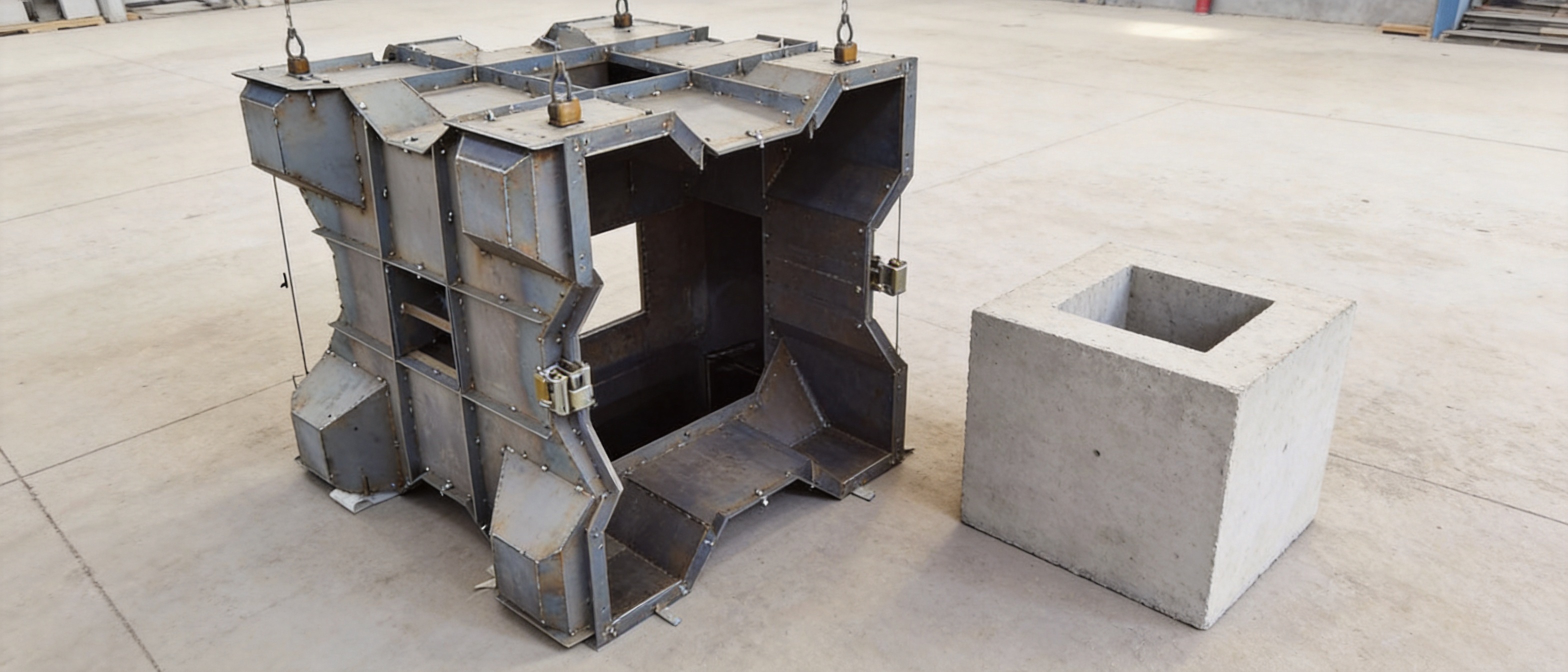
The demolding method is therefore not an afterthought. It is integrated into the mold design from the beginning. Outer panels, internal supports, hinges, locking devices, lifting points, and contact surfaces must work together. This integrated approach distinguishes an engineered formwork system from a simple welded steel container.
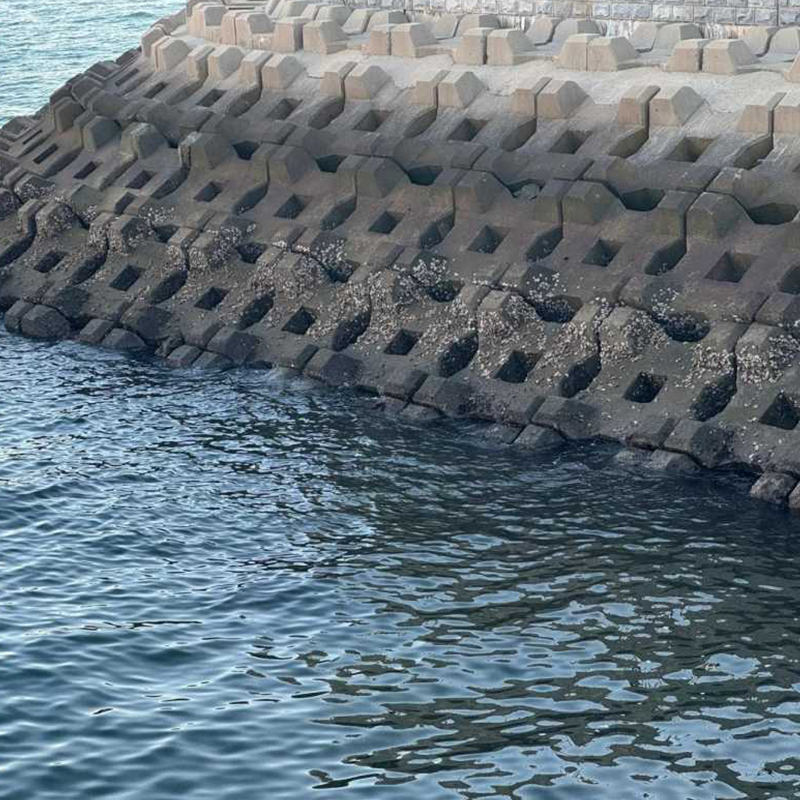
Hollow Square Fomwork/Mold
3. Main Advantages of Hollow Square Steel Formwork
3.1 Rapid Demolding and Higher Production Output
The primary advantage of the formwork is its ability to shorten the demolding cycle. Traditional molds with fixed internal cores may require extended waiting periods, manual loosening, prying, or repeated lifting attempts. These actions consume time and may damage the concrete block or the formwork.
With an accurately designed draft angle or retractable inner core, the mold can release the concrete unit rapidly after the required setting or initial curing condition has been achieved. In suitable production conditions, demolding can be completed within minutes. The exact time depends on the concrete mix, temperature, curing method, block dimensions, vibration process, and project specifications, but the fundamental benefit remains the same: the mold spends less time locked around each block.
Faster demolding allows the same mold to be used for more production cycles. A precast plant can increase daily output without expanding the mold inventory proportionally. On a construction site, the faster cycle can reduce the space required for mold storage and improve the movement of materials between casting, curing, and installation areas.
3.2 Reduced Labor Requirements
A difficult demolding procedure often requires several workers to loosen the mold, operate lifting equipment, guide the block, and prevent damage during release. The labor burden increases when the blocks are large or when the mold must be opened in stages.
The Hollow Square Steel Formwork is designed to simplify this operation. Once the core is released or contracted, the concrete block can be removed using the planned lifting or handling method. This reduces unnecessary manual intervention and allows workers to focus on positioning, inspection, cleaning, and production control.
Lower labor demand provides both direct and indirect savings. Direct savings come from reduced man-hours per block. Indirect savings result from less worker fatigue, fewer handling errors, a lower risk of accidental damage, and a more organized production area. Simplified operation is particularly valuable when the project requires a large quantity of identical blocks.
3.3 Accurate and Consistent Block Geometry
Coastal protection systems depend on the planned arrangement of concrete units. Consistent dimensions help maintain the intended interlocking relationship, contact area, drainage behavior, and overall surface profile. If one block is significantly different from the others, installation efficiency and structural performance may be affected.
Precision manufacturing helps the mold maintain accurate external dimensions and internal hollow sections. Properly cut steel plates, controlled assembly, accurate alignment, and reliable welding all contribute to repeatable block geometry. The use of production drawings and inspection procedures provides a basis for verifying key dimensions before the mold enters service.
Accurate geometry also supports efficient project planning. When each block has a predictable size and weight, handling equipment can be selected more effectively, storage areas can be organized, transport capacity can be estimated, and installation sequences can be prepared with greater confidence.
3.4 Strong and Durable Steel Construction
A concrete mold is exposed to repeated mechanical loads. Fresh concrete exerts pressure on the sidewalls and internal core. Vibration can create additional dynamic forces. Lifting, transport, opening, closing, cleaning, and impact during daily operation can gradually affect the structure.
For this reason, the mold must be designed with sufficient stiffness and durable connections. Reinforcing ribs, supporting frames, corner details, base structures, and lifting components must be selected according to the size and weight of the block. The mold should remain stable during casting and maintain its shape through repeated cycles.
Steel is suitable for this application because it offers high strength, predictable fabrication behavior, and the ability to create customized panels and mechanical assemblies. With proper surface treatment, cleaning, storage, and maintenance, a steel formwork system can support repeated use over an extended project period.
3.5 Adaptability to Different Project Requirements
Breakwater and coastal protection projects do not all use the same block dimensions. Water depth, design wave height, seabed conditions, installation method, environmental objectives, and available equipment may vary from one project to another.
A custom formwork manufacturer can adjust the mold dimensions, wall thickness, inner-core arrangement, opening configuration, lifting points, access features, and support structure according to the project design. The product can therefore be developed for a particular hollow square block rather than forcing the project to use a generic mold.
Customization is especially important where the blocks are required to meet engineering drawings or client-specific standards. The formwork can be reviewed against the intended finished product before fabrication, helping reduce the risk of dimensional mismatch during production.
4. Comparison with Conventional Simple Steel Box Molds
Simple steel box molds are often made by welding flat plates into an external container. Such a mold may appear economical at the initial purchase stage, but it may not address the full needs of hollow block production. The outer shape can be formed, yet the internal core, draft angle, access, release sequence, and lifting arrangement may remain unresolved.
A basic box mold commonly presents several challenges. Its internal core may be fixed and difficult to remove. The corners may be vulnerable to distortion. Welded areas may not be sufficiently controlled for dimensional accuracy. The mold may require excessive manual force during opening. If the internal surfaces are not properly prepared, concrete can adhere to the steel and delay release.
Hollow Square Steel Formwork is different because the demolding process is incorporated into the engineering concept. The mold is not merely a container for concrete. It is a reusable production tool with a defined operating sequence.
| Evaluation Item | Simple Steel Box Mold | Hollow Square Steel Formwork |
|---|---|---|
| Primary design purpose | Contain fresh concrete in a basic shape | Produce a defined hollow block with an efficient release process |
| Inner-core arrangement | Often fixed or difficult to withdraw | Designed with draft angles or a mechanically foldable core |
| Demolding speed | May require extended manual work | Designed for rapid release after initial concrete strength is achieved |
| Dimensional control | Depends heavily on basic welding and manual assembly | Supported by precision cutting, controlled fabrication, and inspection |
| Labor requirement | Potentially high during opening and removal | Reduced through a planned mechanical release process |
| Suitability for mass production | Limited when repeated cycles are required | Suitable for systematic production of repeated hollow units |
| Customization | Often limited to basic dimensions | Adaptable to block size, opening geometry, lifting, and project requirements |
| Long-term production value | May be reduced by deformation and inefficient operation | Improved through robust construction and repeatable use |
The comparison does not mean that every simple mold is unsuitable for every application. Basic molds can be useful for small, low-volume work. However, where a project requires high output, reliable hollow geometry, quick demolding, and controlled production, an engineered formwork system offers greater practical value.
5. Precision Manufacturing Process
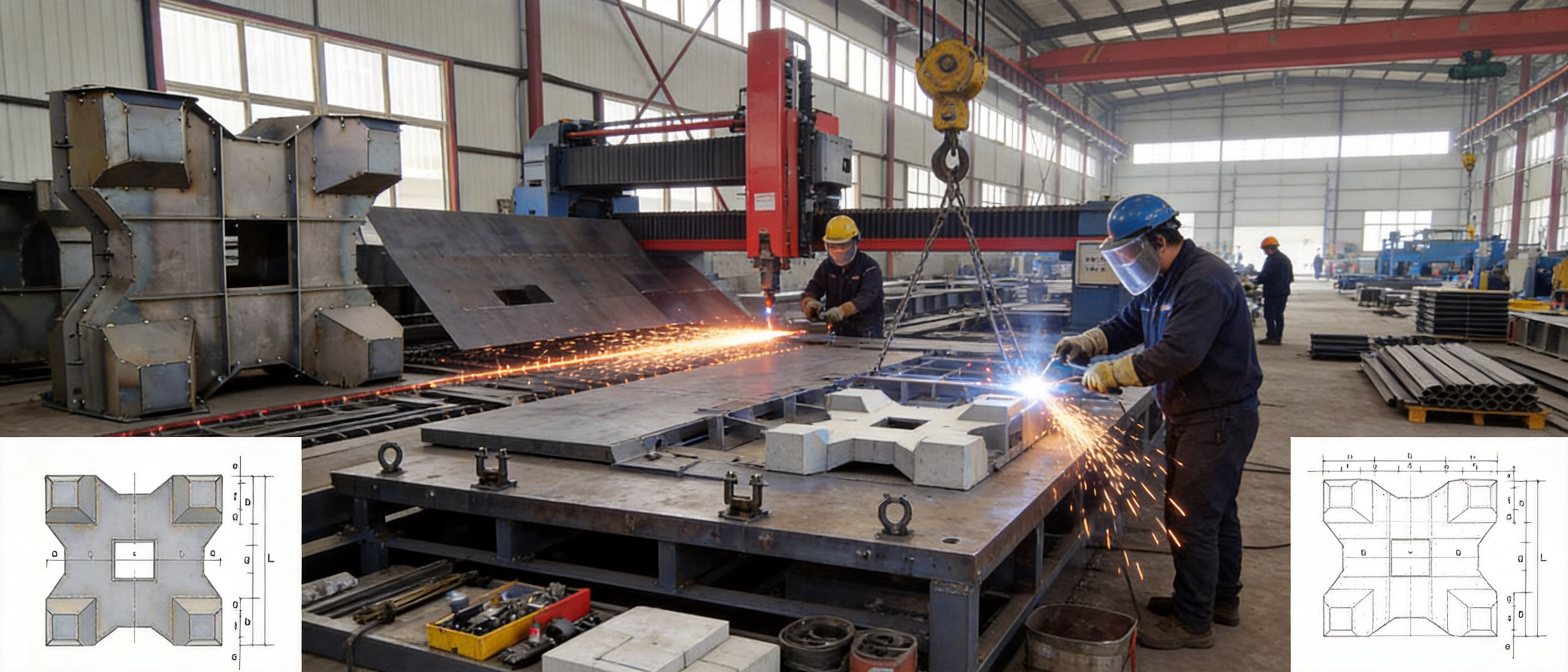
The performance of a specialized mold depends on how accurately its design is transferred into steel. Nantong Hyson Road And Bridge Formwork Co., Ltd. operates a professional manufacturing facility covering approximately 20,000 square meters. The company combines engineering preparation, steel plate processing, structural assembly, welding, finishing, and inspection into an integrated production process.
5.1 Engineering Review and Production Planning
Manufacturing begins with an engineering review of the required block. Important information includes external dimensions, internal cavity dimensions, wall thickness, corner treatment, draft angle, opening size, demolding direction, expected concrete pressure, lifting method, and production cycle.
The design team must also understand how the customer plans to use the mold. A precast component factory may use overhead cranes, repeated casting stations, and dedicated curing areas. A site-based project may require a more compact mold, manual adjustment features, or lifting points compatible with available equipment. The production environment affects the final mold design.
During planning, the manufacturer can identify potential interference between the inner core and outer panels, determine where locking devices should be located, and establish the order in which the mold will be opened. This preparation helps prevent avoidable modification work after fabrication.
5.2 CNC Steel Plate Laser Cutting
Precise plate cutting is essential for mold accuracy. Advanced CNC laser cutting equipment can produce steel components with controlled dimensions and clean edges. Compared with uncontrolled manual cutting, CNC processing improves repeatability and reduces the amount of correction required during assembly.
Laser cutting is particularly useful for complex plates, access openings, connection plates, rib components, hinge parts, and repeated components. Digital production data can be used to maintain consistency across multiple pieces. Accurate cutting also improves fit-up, which can reduce welding distortion and improve the overall appearance of the finished mold.
Nantong Hyson’s heavy metal fabrication capability enables the company to process steel plates for large and non-standard components. The same manufacturing resources used for custom formwork and large steel structures support the production of specialized hollow block molds.
5.3 Bending and Forming
Some mold panels and reinforcement components require bending to create the intended profile. Controlled bending helps produce smoother surfaces and reduces the number of separate welded pieces. This can improve structural continuity and decrease potential leakage points during concrete placement.
The bending process must be coordinated with the plate thickness, material properties, bend radius, and finished dimensions. If the bend is inaccurate, the internal core may not align correctly or the finished concrete block may deviate from the required shape. Controlled forming therefore contributes directly to mold performance.
5.4 Assembly and Dimensional Alignment
After cutting and bending, components are assembled on suitable work surfaces or jigs. The outer panels, base, stiffeners, internal core, hinges, locks, supports, and lifting points must be positioned according to the approved drawings.
Alignment is especially important for the inner core. Even a small offset can create uneven wall thickness in the concrete block or make the core difficult to retract. The assembly process should verify diagonal dimensions, panel spacing, verticality, parallelism, and the relationship between moving and fixed parts.
Where multiple molds are manufactured for the same project, the assembly process should also maintain interchangeability and consistency. Standardized fabrication procedures help ensure that operators can use each mold in a similar manner.
5.5 Certified Welding
Welding connects the structural elements and determines much of the mold’s durability. Welding must be suitable for the steel grade, plate thickness, joint design, and expected service loads. Critical areas include lifting points, hinge supports, corner joints, base frames, reinforcement ribs, and connection brackets.
Nantong Hyson applies AWS and EN welding craftsmanship within its manufacturing operations. These standards provide a framework for welding preparation, welder competence, process control, inspection, and quality management. Proper welding helps reduce the risk of cracking, incomplete fusion, distortion, and premature failure during repeated use.
Welding sequence is also important. Excessive heat concentration can distort large plates and affect the accuracy of the mold. By controlling the sequence, clamping, tack welding, and heat input, fabricators can maintain better dimensional stability.
5.6 Surface Finishing and Protection
Concrete-contact surfaces should be prepared to support clean release and consistent block appearance. Weld spatter, sharp edges, excessive weld reinforcement, and surface irregularities can interfere with demolding or leave unwanted marks on the concrete.
After fabrication, surfaces may be ground, cleaned, and treated according to the project’s requirements. A suitable protective coating can help reduce corrosion during storage and service, especially when the molds are used in humid coastal environments. The coating system must be selected so that it does not compromise the concrete-contact surfaces or moving mechanisms.
5.7 Inspection and Trial Assembly
Before delivery, the mold should be inspected for key dimensions, structural stability, moving-part operation, locking performance, lifting-point position, and surface condition. Trial assembly or dry operation can confirm that the inner core contracts or withdraws as intended.
Where practical, a trial casting can provide additional information about filling, vibration, release, and finished block geometry. Trial procedures are particularly valuable for new or complex designs because they allow adjustments before large-scale production begins.
6. Manufacturing Strengths of Nantong Hyson Road And Bridge Formwork
Nantong Hyson Road And Bridge Formwork Co., Ltd. is a professional manufacturer of custom steel formwork, ringlock scaffolding, heavy-duty steel structures, and OEM metal fabrication. Its product capabilities are supported by a combination of industrial equipment, engineering experience, welding resources, and project-oriented quality management.
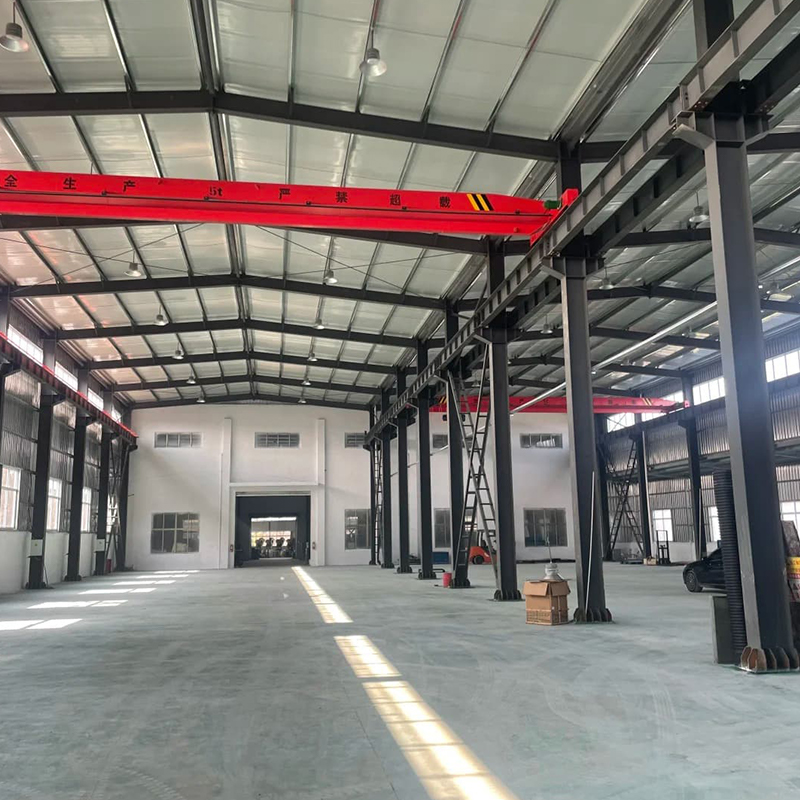
The company’s approximately 20,000-square-meter professional factory provides space for material preparation, CNC processing, structural assembly, welding, finishing, inspection, and storage. This integrated environment is valuable for large molds and non-standard components because the entire production chain can be coordinated within one manufacturing organization.
Advanced laser cutting equipment supports the production of accurate steel plates and complex components. Bending and forming equipment helps produce shaped panels and structural parts. Standardized production lines improve consistency across repeated orders, while experienced fabricators manage the assembly and welding of large structures.
The company combines automated processing with AWS and EN welding practices. It also maintains ISO 9001 quality management and works with requirements associated with BS1139 and EN74 standards for applicable scaffolding and related products. These certifications and standards demonstrate a commitment to documented processes and controlled production, although the exact standard applicable to a mold should always be confirmed according to the project specification.
Nantong Hyson has obtained 12 utility patents and has supplied products to major infrastructure clients, including China Communications Construction Company and China Railway Construction Corporation. Its experience includes involvement in major projects such as the Sutong Yangtze River Bridge, Taizhou Bridge, and Sudan Thermal Power Plant. This background provides practical knowledge of demanding construction environments and large-scale project coordination.
The company’s broader capabilities include bridge and infrastructure formwork, hydraulic tunnel trolleys, scaffolding, steel props, industrial steel structures, steel plate cutting, bending, welding, and heavy steel OEM fabrication. These related capabilities support Hollow Square Steel Formwork because the product requires the same fundamental skills used in complex structural fabrication.
For overseas customers, integrated manufacturing can simplify procurement. Instead of sourcing cut plates, welded frames, hinges, lifting parts, and finishing services from different suppliers, customers can request a coordinated formwork solution from one factory. This can reduce communication gaps, improve responsibility control, and support more predictable delivery planning.
7. How the Formwork Operates in Production
7.1 Mold Preparation
Before each casting cycle, operators inspect the mold for cleanliness, alignment, visible damage, and proper operation of the locks and moving parts. Concrete residue should be removed from contact surfaces. The release agent should be applied evenly and according to the concrete and surface treatment requirements.
The outer mold and inner core are then assembled in the correct position. The operator should verify that the core is centered and that the planned wall thickness is maintained. Any removable panels, access covers, pins, bolts, or locking devices should be secured before concrete placement.
7.2 Concrete Placement
Concrete is placed into the mold in a controlled sequence. The placement method should reduce the risk of segregation and ensure that concrete reaches corners and areas around the internal core. Vibration or other compaction methods may be used to remove trapped air and achieve the required density.
Excessive vibration should be avoided because it can cause segregation, increase pressure on the formwork, or shift the inner core if the assembly is not adequately secured. The appropriate process depends on the concrete mix, block size, reinforcement, and project requirements.
7.3 Initial Curing
After casting, the concrete remains in the formwork until it reaches the strength or stiffness required for safe demolding. Demolding too early can damage edges, deform the hollow section, or reduce surface quality. Waiting too long, however, can reduce the productivity advantage of the mold.
The best release time should be established through project testing and consideration of concrete materials, ambient temperature, humidity, curing method, and block geometry. The formwork is designed to support rapid demolding, but rapid release must always be coordinated with concrete quality requirements.
7.4 Inner-Core Release
Once the concrete is ready, operators release the inner core. For a draft-angle design, the core is lifted or withdrawn along the planned direction. For a foldable core, the mechanical components are operated so that the core sections contract away from the concrete.
The movement should be smooth and controlled. Operators should not use uncontrolled impact or excessive force. If resistance occurs, the mold should be inspected for remaining concrete adhesion, misalignment, locked components, or insufficient curing.
7.5 Outer Mold Opening and Block Removal
After the core is released, the outer mold can be opened or separated according to the design. The finished hollow square block is then lifted or moved using suitable equipment. Lifting points and handling procedures should match the block weight and the concrete’s current strength.
The block should be inspected for cracks, damaged corners, incomplete filling, exposed voids, surface defects, and dimensional accuracy. The formwork is then cleaned and prepared for the next cycle.
8. Applications
8.1 Breakwaters and Seawalls
Hollow square concrete blocks can be arranged along breakwaters and seawalls to create a protective layer against wave action. Their shape and mass help absorb, redirect, and disperse energy. Interconnected units can provide stability when installed according to the engineering design.
The hollow structure may also improve water passage and reduce the visual and material intensity of a solid concrete barrier. The final arrangement, foundation preparation, block weight, and installation pattern should be determined by qualified coastal engineers.
8.2 Artificial Reefs and Marine Habitat Structures
The internal cavities of hollow blocks can provide shelter and attachment surfaces for marine organisms. When used in artificial reef projects, the block geometry may be selected to create protected zones with different sizes and orientations.
Material selection and surface treatment should be reviewed for compatibility with the marine environment. The formwork itself supports the accurate production of the units, while the ecological performance depends on the concrete mix, placement location, hydrodynamic conditions, and long-term environmental management.
8.3 Riverbank and Shoreline Protection
Hollow square blocks can be used along riverbanks, tidal channels, reservoirs, and shorelines where erosion threatens soil stability. The blocks help protect exposed surfaces from flowing water, tidal movement, and wave impact.
The hollow design can support drainage and vegetation strategies when combined with suitable soil, geotextiles, planting systems, and installation details. A properly designed bank protection system should address toe stability, slope angle, foundation conditions, and water pressure rather than relying on the blocks alone.
8.4 Ecological Restoration Projects
Ecological restoration often requires a balance between physical protection and environmental integration. Hollow blocks can be adapted to create voids, channels, or habitat spaces while still providing a stable protective structure.
Because the formwork can be customized, project designers may explore different opening proportions, surface textures, block dimensions, and interlocking arrangements. The mold manufacturer can translate an approved block concept into a repeatable production tool.
9. Quality Control Considerations
Quality control should cover both the steel mold and the concrete products made from it. The first step is to verify the material certificates and steel grades used for major components. Plate thickness, structural profiles, fasteners, hinges, lifting devices, and welding consumables should be appropriate for the design.
Dimensional inspection should include the external length, width, and height of the mold, internal cavity dimensions, wall thickness, diagonals, flatness, alignment, and the position of lifting and locking components. Tolerances should be established in the approved drawings or project specification.
Welded joints should be visually inspected, and additional non-destructive testing may be applied to critical areas where required. The inspection method should reflect the importance of the joint and the applicable engineering standard.
Moving components require functional checks. The inner core should release without abnormal interference. Hinges should rotate correctly, locks should engage fully, and removable parts should be accessible to operators. Trial operation can reveal problems that are not visible during a static inspection.
For the concrete blocks, quality checks may include dimensions, weight, surface finish, cavity size, edge condition, compressive strength, density, and curing performance. These checks help confirm that the mold and production process are delivering the intended product.
10. Maintenance and Service Life
Regular maintenance is essential for maintaining the productivity of a reusable steel mold. After each casting cycle, concrete residue should be removed before it hardens excessively. Scrapers and approved cleaning tools should be used carefully to avoid gouging the steel surface.
Hinges, pins, folding mechanisms, locks, and lifting components should be inspected regularly. Lubrication should be applied where appropriate, while avoiding contamination of concrete-contact surfaces. Loose bolts, distorted plates, damaged welds, and worn contact edges should be repaired before they affect block quality or worker safety.
Storage conditions also influence service life. When the mold is not in use, it should be placed on stable supports in a dry and organized area. Water should not be allowed to accumulate inside closed sections. Coastal project sites may require additional corrosion protection because salt and humidity can accelerate steel deterioration.
Preventive maintenance is generally less expensive than corrective repair after a mold has become severely deformed. A maintenance record can document casting cycles, repairs, inspections, and coating work. This information helps project managers plan replacement parts and schedule service without interrupting production.
11. Why Custom Engineering Matters
Hollow block molds are not universal products in the same way as simple standard boxes. The proper mold depends on the concrete unit’s shape, dimensions, mass, cavity arrangement, production volume, handling method, and installation environment.
Custom engineering allows the mold manufacturer to consider the complete project. For example, a large block may require additional external stiffeners and reinforced lifting points. A thin-wall block may require a more carefully controlled inner core. A factory using automated handling may need specific interfaces for cranes or lifting frames. A remote construction site may need a simplified assembly procedure and replaceable components.
Customization can also improve safety. Handles, access areas, lifting points, and locking devices can be positioned to reduce awkward manual operations. Clear opening sequences can help operators work consistently. Robust supports can reduce the risk of tipping or unexpected movement during casting and demolding.
The most effective custom design process includes communication among the client, structural or coastal engineer, concrete specialist, formwork designer, and manufacturing team. Drawings should be reviewed before fabrication, and any unclear requirements should be resolved at the engineering stage.
12. Procurement and Project Planning
When purchasing Hollow Square Steel Formwork, customers should provide as much technical information as possible. This may include the block drawings, required production quantity, target cycle time, concrete mix information, lifting method, available cranes, site conditions, coating requirements, and applicable standards.
The customer should also clarify whether the mold will be used in a permanent precast plant or temporarily at a construction site. The expected number of casting cycles is important because it influences material selection, reinforcement, surface protection, and replaceable wear components.
Delivery planning should account for mold size, shipping weight, packaging, loading equipment, and assembly requirements. Large molds may need to be shipped in sections. If the mold includes a foldable inner core, the supplier should provide operating instructions and identify any components that require adjustment after transport.
Training and technical support can help the customer achieve the expected productivity. Operators should understand the release sequence, inspection points, safe lifting procedures, cleaning requirements, and maintenance schedule. A well-designed mold can still perform poorly if it is operated outside its intended process.
13. Safety Considerations
Concrete formwork involves heavy components, stored mechanical energy, lifting operations, wet concrete, vibration, and potentially slippery surfaces. A safe operating procedure should be prepared before production begins.
Only trained personnel should operate cranes, lifting devices, foldable cores, and locking systems. Workers should remain clear of suspended loads and moving mold components. The mold should be placed on a stable, level foundation capable of supporting the combined weight of the mold and fresh concrete.
Lifting points should not be modified without engineering review. Improvised chains, hooks, or connection methods can create serious hazards. The actual weight of the concrete block and the strength development at the time of lifting should be considered in the handling plan.
Safety inspections should be performed routinely. Cracks, damaged welds, bent lifting points, missing pins, loose bolts, and malfunctioning locks should be treated as reasons to stop operation until the issue is corrected.
14. Environmental and Economic Benefits
The productivity advantages of Hollow Square Steel Formwork can generate environmental benefits as well as economic benefits. Faster production may reduce equipment idle time, unnecessary handling, and energy consumption associated with prolonged operations. Reusable steel molds can reduce the need for disposable formwork materials.
The hollow block itself can reduce concrete consumption compared with a solid unit of similar external dimensions, depending on the structural design. Lower material use can reduce transportation weight and support more efficient installation. However, the block must always satisfy the required structural, hydraulic, and durability criteria.
Ecological applications can combine protection with habitat creation. Hollow units may provide spaces for marine organisms, improve water circulation, and support restoration strategies. The environmental outcome depends on the complete project design, but accurate and repeatable block production is an important foundation.
From an economic perspective, rapid demolding increases the output potential of each mold. Reduced labor requirements can lower production costs. Consistent dimensions can reduce rejected blocks and improve installation speed. Durable steel construction can provide value over multiple projects or long production runs.
15. Selecting a Reliable Formwork Manufacturer
A suitable supplier should have more than general welding capacity. Customers should evaluate engineering capability, steel processing equipment, welding qualifications, quality systems, inspection procedures, project experience, and after-sales support.
Nantong Hyson Road And Bridge Formwork combines custom formwork design with heavy steel fabrication and OEM manufacturing. Its factory resources support laser cutting, bending, welding, assembly, and inspection. The company’s experience with bridge formwork, tunnel equipment, scaffolding, steel structures, and infrastructure projects provides a broad technical background for specialized molds.
Customers should request drawings and technical confirmation before production. They should also ask how the supplier will control draft angles, inner-core movement, dimensional tolerances, welding distortion, lifting points, and surface preparation. These details have a direct impact on the final performance of the mold.
A reliable manufacturer should be willing to discuss the customer’s production method rather than offering a standard product without modification. The supplier should understand the required block output, concrete behavior, handling equipment, and project environment.
16. Frequently Asked Questions
Q1: What is Hollow Square Steel Formwork used for?
It is used to cast hollow square concrete blocks for breakwaters, seawalls, artificial reefs, riverbank protection, shoreline stabilization, and ecological restoration projects.
Q2: How does the mold achieve rapid demolding?
The mold uses either a carefully calculated draft angle or a mechanically foldable inner core. These features allow the internal core to move away from the hardened concrete, reducing friction and enabling the block to be released quickly.
Q3: Can the mold be customized for different block sizes?
Yes. The outer dimensions, inner cavity, wall thickness, draft angle, folding mechanism, lifting points, locking devices, and support structure can be designed according to the approved block drawings and production requirements.
Q4: Is the mold suitable for mass production?
Yes. Its rapid release process, durable steel construction, and repeatable geometry make it suitable for high-volume production in precast factories or organized site-based casting operations.
Q5: Does the product require special concrete?
The mold does not prescribe one universal concrete mix. The concrete should be selected by the project’s engineering team according to strength, durability, curing, marine exposure, placement method, and environmental requirements. The appropriate demolding time must be confirmed through testing.
Q6: Can the formwork be used in coastal environments?
Yes, provided that the steel protection, surface treatment, storage, cleaning, and maintenance procedures are suitable for humid and salt-exposed conditions. The coating system and corrosion protection should be agreed upon during the design stage.
Q7: What information should a customer provide for a quotation?
The customer should provide block drawings, dimensions, quantity, expected production cycles, concrete information, lifting method, available equipment, required standards, surface treatment requirements, and delivery conditions.
Q8: What makes this product different from a simple welded steel box?
The product is designed as a complete demolding and production system. It incorporates a controlled internal-core release method, precision-fabricated components, structural reinforcement, operational access, and dimensional inspection rather than functioning only as a basic concrete container.
Q9: Can the inner core be mechanically folded?
Yes. Where the block geometry requires it, the inner core can be designed with mechanical folding or contraction sections. The exact arrangement depends on the block shape, dimensions, release direction, and operating equipment.
Q10: How should the mold be maintained?
The mold should be cleaned after each cycle, inspected for concrete buildup and deformation, lubricated at appropriate moving parts, checked for damaged welds and loose connections, and stored in a stable, protected area when not in use.
Q11: Is operator training necessary?
Yes. Operators should understand the casting sequence, curing requirements, core-release procedure, outer-mold opening, lifting precautions, cleaning method, and maintenance checks. Proper operation protects both workers and the mold.
Q12: Can the manufacturer provide other steel products?
Yes. Nantong Hyson Road And Bridge Formwork also manufactures custom bridge and infrastructure formwork, hydraulic tunnel trolleys, ringlock scaffolding, steel props, industrial steel structures, laser-cut steel components, and heavy metal OEM fabrications.
17. Conclusion
Hollow Square Steel Formwork provides a practical solution for projects that require efficient production of hollow concrete protection blocks. Its main value lies in the integration of accurate block geometry, rapid demolding, reduced labor, durable steel construction, and adaptable engineering.
The use of draft angles or mechanically foldable inner cores addresses one of the most common bottlenecks in hollow block production: removing the internal core without damaging the concrete or wasting time. When supported by CNC laser cutting, controlled bending, accurate assembly, certified welding, surface finishing, and quality inspection, the mold becomes a dependable production tool rather than a simple welded box.
Nantong Hyson Road And Bridge Formwork Co., Ltd. offers the manufacturing infrastructure and project experience required for customized steel formwork and heavy steel components. Its factory resources, quality systems, welding practices, patent experience, and background in major infrastructure projects support the development of reliable molds for coastal, hydraulic, and ecological engineering applications.
For project owners, contractors, precast manufacturers, and engineering companies, the correct mold can improve production capacity, reduce labor costs, support consistent block quality, and contribute to faster completion of breakwater and shoreline protection works. The best results are achieved when the mold design is developed together with the block geometry, concrete process, handling equipment, and installation plan.
References
1. American Welding Society. Structural Welding Code and Welding Quality Practice for Steel Fabrication.
2. European Committee for Standardization. EN 1090, Execution of Steel Structures and Aluminium Structures.
3. European Committee for Standardization. EN 74, Couplers, Spigot Pins and Baseplates for Use in Falsework and Scaffolds.
4. British Standards Institution. BS 1139, Metal Scaffolding and Accessories.
5. International Organization for Standardization. ISO 9001, Quality Management Systems — Requirements.
6. Coastal Engineering Manual. Principles of Breakwater, Seawall, Shore Protection, and Wave-Resistant Structure Design.
7. Precast Concrete Institute. Recommended Practices for Concrete Formwork, Precast Production, Handling, and Quality Control.
8. Standard engineering practice for concrete curing, dimensional inspection, lifting safety, steel fabrication, and reusable formwork maintenance.
Product: Hollow Square Fomwork/Mold



- Location
- Group 3, Fangzhuang Village, Rucheng Subdistrict, Rugao City, Nantong, Jiangsu, China
- Follow us
- Phone
- +86-13646196162
- info@hysonindustry.com
