 +86-13646196162
 info@hysonindustry.com




 русский
  عربى
عربى 


Box Girder Formwork: Precision Steel Solutions for High-Performance Bridge Construction
 2026.08.26
Content
- 1 1. The Role of Box Girder Formwork in Bridge Construction
- 2 2. Product Design for Prefabrication and Cast-in-Place Construction
- 3 3. High-Strength Steel Construction and Structural Stability
- 4 4. Hydraulic Adjustment for Faster Demolding
- 5 5. Precision Sealing and Concrete Surface Quality
- 6 6. Modular Construction and Project Flexibility
- 7 7. Manufacturing Process and Quality Control
- 8 8. Comparison with Conventional and Lower-Quality Alternatives
- 9 9. Applications in Major Infrastructure Projects
- 10 10. Safety, Maintenance, and Operating Practices
- 11 11. The Manufacturing Strength of Nantong Hyson Road And Bridge Formwork
- 12 12. OEM Customization and Project Support
- 13 13. Economic Benefits Over the Product Lifecycle
- 14 14. Environmental and Resource Considerations
- 15 15. Selecting the Right Box Girder Formwork System
- 16 16. Frequently Asked Questions
- 16.1 What is box girder formwork used for?
- 16.2 What steel grades are used in the formwork?
- 16.3 How does hydraulic operation improve construction efficiency?
- 16.4 Can the formwork be customized for different box girder dimensions?
- 16.5 How many times can box girder formwork be reused?
- 16.6 Will the formwork prevent all concrete surface defects?
- 16.7 Is this formwork suitable for marine bridge projects?
- 16.8 What manufacturing capabilities are important for this product?
- 16.9 Can a contractor use the formwork for several projects?
- 16.10 What information should be provided for a quotation?
- 16.11 Does the manufacturer provide OEM services?
- 17 17. Conclusion
- 18 References
- 19 Product: Box Girder Formwork
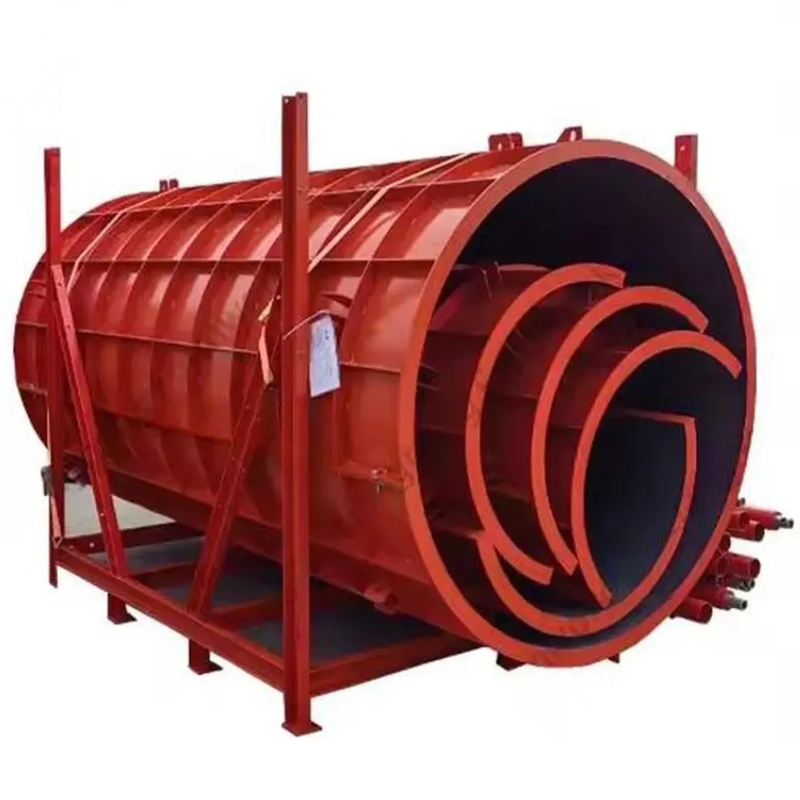
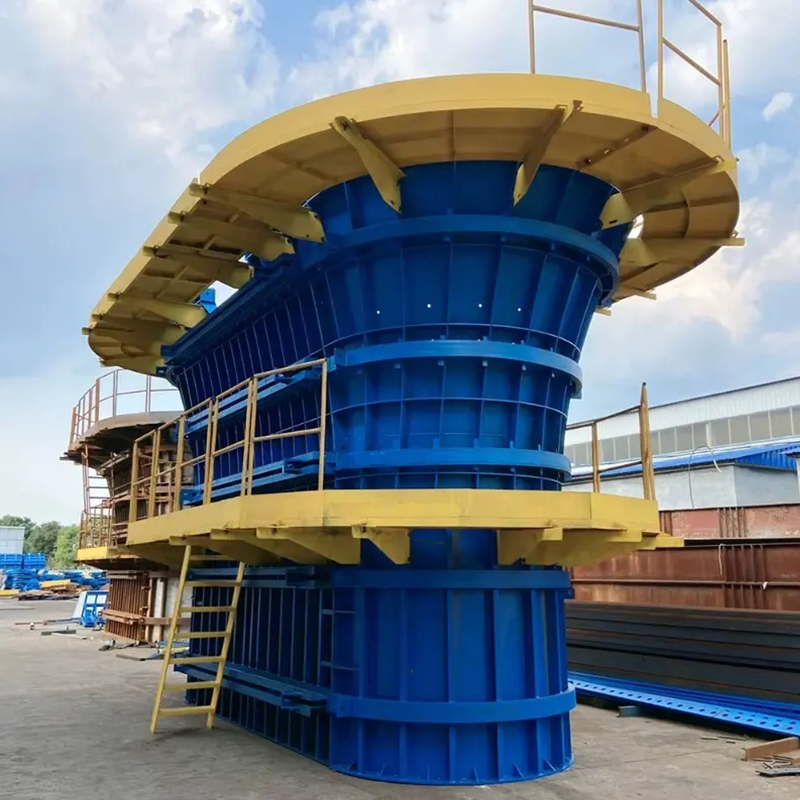
Box girder formwork is a specialized steel forming system developed for the accurate, repeatable, and efficient construction of prestressed concrete box girders. It is used extensively in high-speed railway bridges, expressway viaducts, highway interchanges, elevated urban transport systems, precast beam yards, and large cross-sea bridge projects. By defining the external and internal geometry of a box girder during concrete casting, the formwork directly influences structural accuracy, surface quality, construction speed, labor consumption, and the overall service life of the completed bridge.
Modern bridge projects demand much more than a simple steel mold. Contractors require a complete forming solution capable of handling high concrete pressure, repeated turnover, variable dimensions, strict tolerances, difficult site conditions, and increasingly demanding production schedules. A reliable system must also support safe demolding, rapid repositioning, convenient maintenance, and cost-effective operation over many construction cycles.
The box girder formwork supplied by Nantong Hyson Road And Bridge Formwork Co., Ltd. is designed around these requirements. The system combines high-strength Q235B and Q345 steel, reinforced structural members, precision machining, modular components, hydraulic adjustment, quick-locking connections, and carefully engineered sealing arrangements. This combination enables the formwork to support both mass production in prefabrication yards and cast-in-place work on complex bridge sites.
With more than 15 years of experience in bridge formwork manufacturing, Hyson has developed products for demanding infrastructure applications, including projects associated with the Sutong Yangtze River Bridge and other major transport structures. Its manufacturing capabilities extend from steel plate cutting and structural fabrication to bending, welding, assembly, surface treatment, inspection, and final commissioning. This integrated approach helps ensure that the delivered formwork is not only structurally strong but also compatible with the practical needs of contractors, engineering consultants, and project owners.
1. The Role of Box Girder Formwork in Bridge Construction
A box girder is a hollow structural beam with one or more internal cells. Its closed section provides a favorable strength-to-weight ratio, high torsional stiffness, and efficient resistance to bending. These characteristics make box girders suitable for long-span bridges, curved ramps, elevated roadways, railway viaducts, and structures that must carry heavy or dynamic traffic loads.
During production, concrete is placed around a carefully positioned internal core and within external side and bottom forms. The geometry of the formwork determines the dimensions of the girder, including its width, depth, web thickness, flange profile, internal cell shape, drainage features, openings, and connection interfaces. Even a small dimensional error may affect reinforcement placement, prestressing operations, bearing installation, segment alignment, or the fit between adjacent bridge components.
For this reason, box girder formwork must meet several essential requirements:
1. It must withstand the lateral pressure and vibration forces generated during concrete placement.
2. It must maintain dimensional stability throughout casting and curing.
3. It must prevent grout leakage at panel joints, corners, access openings, and connection points.
4. It must allow efficient installation, adjustment, stripping, cleaning, and repositioning.
5. It must deliver a smooth concrete surface with minimal need for secondary repair.
6. It must be adaptable to different beam lengths, cross-sections, curves, and construction methods.
7. It must remain reliable after repeated use in demanding production environments.
Traditional site-built timber or lightly fabricated steel molds may satisfy basic forming needs, but they often require intensive manual adjustment and have limited dimensional consistency. A purpose-designed steel box girder formwork system provides a more controlled and repeatable solution, particularly where hundreds of similar beams must be produced within a strict schedule.
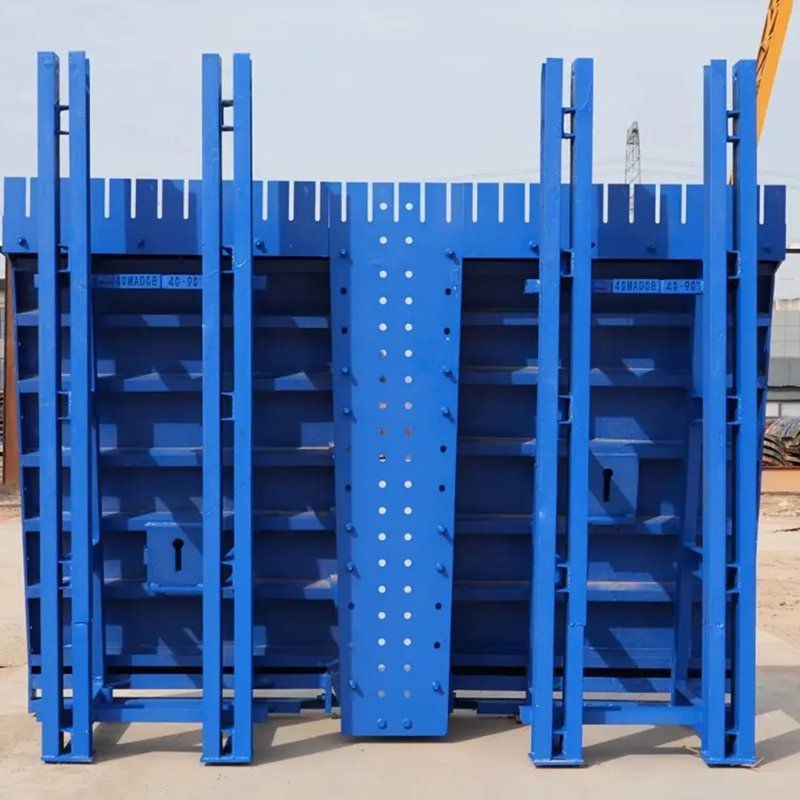
Box Girder Formwork
2. Product Design for Prefabrication and Cast-in-Place Construction
One of the principal advantages of a professional box girder formwork system is its ability to support more than one construction method. In a prefabrication yard, the formwork is typically installed on a prepared casting platform and used repeatedly to produce standardized beams. The priority is rapid cycling, reliable alignment, easy demolding, and compatibility with lifting and transport operations.
For cast-in-place construction, the formwork must accommodate more variable conditions. It may be installed on temporary supports, launching systems, scaffolding platforms, or bridge construction frames. Site restrictions can include limited working space, irregular access, changing elevations, curved alignments, variable cross-sections, and weather exposure. The forming system therefore needs a high level of adjustability without compromising structural performance.
Hyson’s box girder formwork uses a modular design to address both operating environments. Standardized connection components allow major panels and support members to be assembled in a controlled sequence. Adjustable panels can be configured for different beam dimensions, while hydraulic components help manage the internal mold during demolding and repositioning. This reduces the need to manufacture an entirely new form for every project variation.
In a prefabrication yard, the system can be arranged as a repeatable production station. The external forms remain aligned on the casting bed, while the internal mold is adjusted, collapsed, and extracted after the concrete reaches the required stripping strength. The operation can then be repeated with limited manual intervention.
At a bridge site, the same design principles help contractors respond to practical conditions. Individual sections can be assembled and aligned in stages, and the formwork can be modified to match project drawings. This flexibility is especially useful for ramp box girders, variable-depth beams, continuous bridge sections, and structures with changing curvature.
Support for Standardized Production
High-speed rail and major expressway projects often require large numbers of similar box girders. In these projects, productivity depends on reducing the time between one casting cycle and the next. The formwork must be engineered as a production tool rather than a one-time temporary mold.
Standardized panels, repeatable connection points, integrated alignment features, and hydraulic operation help create a stable cycle. The contractor can establish procedures for reinforcement placement, embedded parts, concrete pouring, curing, demolding, inspection, and cleaning. Once the operating sequence is optimized, production becomes more predictable and less dependent on individual workers’ experience.
Adaptation to Variable Geometry
Not every bridge beam has the same dimensions. Some projects use different spans, changes in deck width, variable web thickness, sloped surfaces, curved alignments, or special openings. A completely fixed mold may become inefficient when multiple geometries are required.
Modular formwork enables selected parts of the system to be adjusted or replaced. Standardized connection components simplify the modification process, while adjustable panels help maintain the intended concrete profile. This provides a practical balance between standardization and customization. Contractors can preserve much of the existing system while adapting specific sections to new drawings.
3. High-Strength Steel Construction and Structural Stability
The structural integrity of box girder formwork is fundamental to the quality and safety of bridge construction. Fresh concrete exerts significant pressure on vertical and inclined panels, particularly when concrete placement is rapid or mechanical vibration is used. If a mold lacks adequate stiffness, it may bulge, twist, or open at its joints. These failures can lead to dimensional errors, surface defects, repair work, and construction delays.
The formwork is manufactured using Q235B and Q345 steel, selected according to the requirements of the structural members and project specifications. These commonly used structural steels offer a practical combination of strength, weldability, availability, and fabrication performance. Reinforcing ribs, support frames, stiffeners, brackets, and connection members are arranged to distribute casting loads and minimize local deformation.
Q345 steel can provide higher yield strength than conventional lower-grade structural steel in suitable applications, allowing engineers to achieve the required load capacity with efficient member dimensions. Q235B steel remains useful for many plates, secondary members, and fabricated components where its mechanical and welding characteristics are appropriate. The final selection depends on engineering calculations, panel dimensions, support spacing, expected concrete pressure, and the operating environment.
Unlike improvised molds assembled from miscellaneous materials, a professionally engineered steel system is designed as a coordinated structure. The panels, ribs, frames, hydraulic supports, connection points, and working platforms must function together. The load path from the fresh concrete through the form skin and stiffeners into the support structure is considered during design and fabrication.
Resistance to Deformation
Deformation resistance is important for two reasons. First, it protects workers and equipment by reducing the risk of structural instability during concrete placement. Second, it protects the dimensional accuracy of the finished girder. A form that moves under pressure may produce inconsistent flange widths, web angles, or internal clearances.
Reinforced panel construction helps limit these movements. Stiffening ribs are positioned according to the anticipated stress distribution, while larger support frames transfer loads to the casting platform or temporary support system. Connection details are designed to maintain alignment and reduce movement at panel joints.
Long-Term Durability
Bridge formwork is exposed to moisture, cement residue, impact from handling equipment, repeated loading, and frequent assembly and disassembly. Surface protection treatment and suitable fabrication practices help slow corrosion and preserve the condition of the steel. Proper maintenance, including cleaning after each cycle, inspection of welds and connections, lubrication of moving parts, and timely repair of damaged coating, can significantly extend useful service life.
Depending on operating conditions and maintenance quality, the formwork can be reused approximately 200 to 500 times. This high turnover potential is one of the key reasons steel formwork is preferred for large infrastructure programs. The initial equipment investment is distributed across many casting cycles, reducing the average forming cost per girder.
4. Hydraulic Adjustment for Faster Demolding
Demolding is one of the most time-sensitive operations in box girder production. A conventional internal mold may require workers to loosen numerous bolts, reposition heavy components, and coordinate crane movements. These operations increase labor requirements and create opportunities for impact damage, misalignment, and unsafe working conditions.
The box girder formwork can be equipped with an integrated hydraulic cylinder system for internal mold adjustment. By operating the hydraulic controls, the internal form can be contracted or repositioned with greater precision. This supports one-step or simplified demolding, depending on the project configuration and operating procedure.
Hydraulic operation offers several practical benefits:
It reduces the physical workload associated with releasing the internal mold.
It decreases reliance on cranes for frequent small adjustments.
It improves the consistency of the stripping sequence.
It helps reduce the risk of damaging concrete edges during extraction.
It allows the internal mold to be repositioned more accurately for the next casting cycle.
It can shorten the time required for each turnover, increasing daily or weekly production.
Hydraulic systems also provide useful flexibility where the internal geometry is complex. Different sections of the mold may be controlled in a coordinated manner, allowing the system to release from the concrete without excessive force. Proper hydraulic design, cylinder selection, hose routing, control protection, and routine inspection remain essential to reliable operation.
Reduced Crane Dependency
Cranes are often among the most heavily utilized resources on bridge construction sites and in precast yards. When a crane is required for every internal mold adjustment, it can become a production bottleneck. It also increases the risk of collision with reinforcement cages, embedded parts, temporary platforms, or nearby workers.
A hydraulic system does not eliminate the need for lifting equipment, because major components may still require cranes during initial assembly or relocation. However, it reduces the frequency of crane-assisted operations during normal casting cycles. This can improve the utilization of the entire yard and make the production sequence more independent.
Improved Operating Consistency
Manual demolding often produces different results depending on the operator’s strength, experience, and interpretation of the sequence. Hydraulic adjustment provides a more repeatable movement. When combined with clear operating instructions and safety interlocks where appropriate, it supports consistent production quality from one cycle to the next.
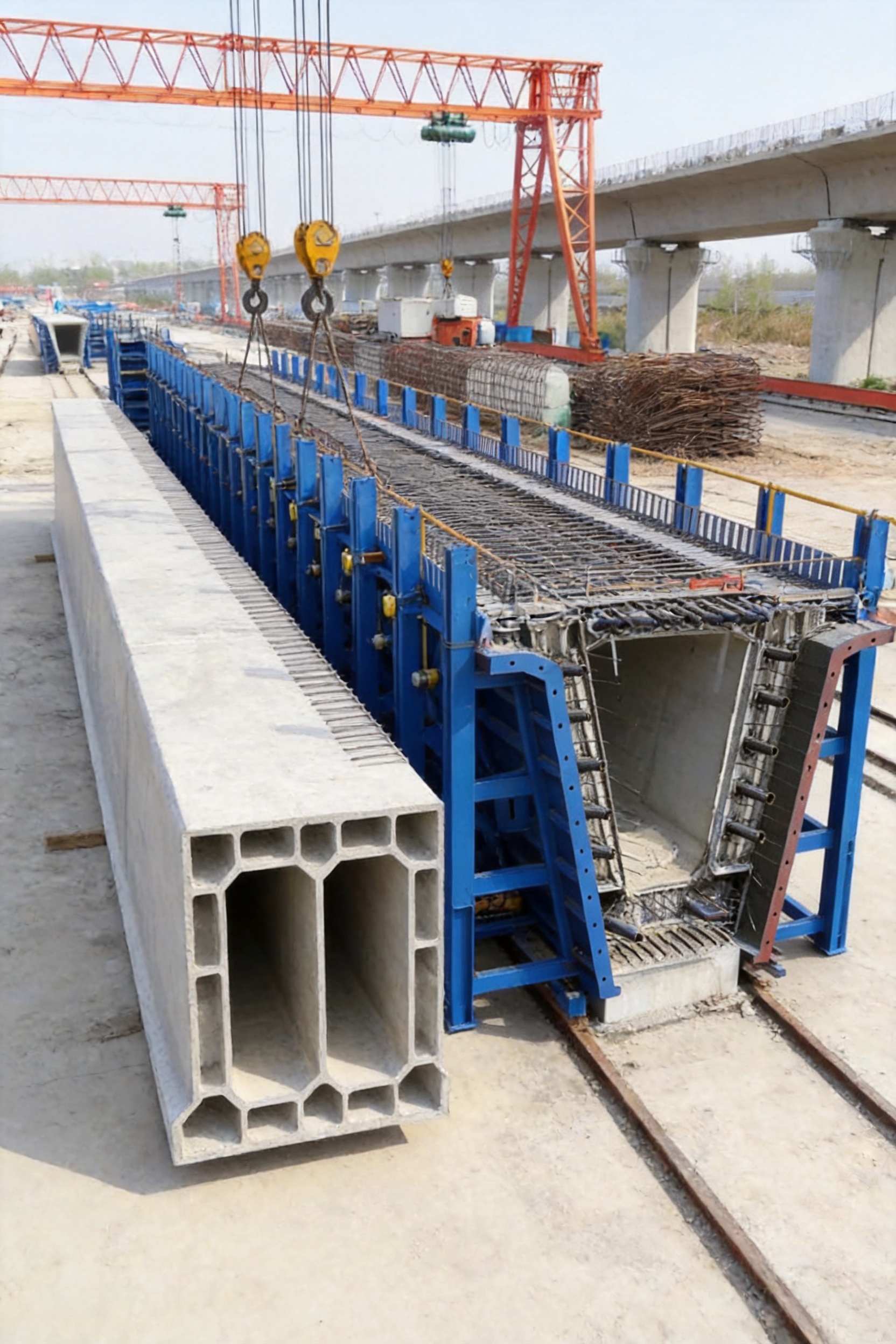
5. Precision Sealing and Concrete Surface Quality
A formwork system must control not only the shape of the concrete but also the movement of cement paste during pouring. Grout leakage can occur at panel joints, corners, access points, changes in section, or poorly fitted interfaces. Leakage may create honeycombing, fins, voids, exposed aggregate, staining, and uneven surfaces. Repairing these defects consumes time and may compromise the appearance or durability of the girder.
The box girder formwork uses precision fabrication and engineered sealing arrangements to reduce the risk of grout leakage. Close-fitting panels, controlled joint tolerances, suitable sealing materials, and carefully manufactured corner details work together to keep cement paste inside the mold.
Leak-proof performance is particularly important for prestressed box girders. The girder may contain dense reinforcement, ducts, anchorages, drainage fittings, lifting inserts, and other embedded components. Once the concrete has hardened, access for correction is limited. A clean casting surface helps ensure that later operations, including bearing installation, segment connection, waterproofing, and protective coating, can proceed without unnecessary repair.
A smooth concrete surface also reduces the need for secondary plastering. This improves the visual quality of viaducts and bridges while lowering the amount of patching material, labor, and inspection effort. In exposed bridge structures, consistent surface quality can contribute to more uniform weathering and easier maintenance.
Precision Machining of Contact Surfaces
Fabrication accuracy begins with the preparation of steel plates and structural components. CNC cutting equipment can produce repeatable profiles for panels, ribs, brackets, and connection plates. Bending and forming operations must maintain the specified radius and angle, especially around curved corners and inclined surfaces.
After cutting and forming, components are fitted and welded according to controlled procedures. Machining or controlled finishing of important contact surfaces helps improve the fit between adjoining panels. This is particularly valuable at the internal corners and external flange areas where small gaps can become leakage paths.
Reduced Repair Requirements
No formwork system can replace proper concrete mix design, reinforcement installation, vibration, curing, and site management. However, accurate and well-sealed formwork removes one major source of defects. When the mold maintains its geometry and prevents grout loss, contractors have a better opportunity to achieve a uniform, dense, and visually clean concrete surface.
6. Modular Construction and Project Flexibility
Infrastructure projects frequently change during detailed design, procurement, or construction. Beam dimensions may be revised, additional spans may be introduced, or different sections may be required for ramps and transition areas. A modular formwork system helps reduce the cost and lead time associated with these changes.
The system uses standardized connection elements, adjustable panels, guide rails, and interchangeable structural components. Instead of building a completely new formwork set for every dimension, the contractor can retain the main support structure and modify selected areas. This approach helps improve equipment utilization and makes the system attractive for contractors involved in multiple bridge projects.
Modular design also supports transportation and site logistics. Large formwork assemblies can be divided into manageable sections for loading, shipment, lifting, and installation. Once on site, the sections can be aligned and connected according to the approved assembly drawings. This is particularly helpful when access roads, working platforms, or storage areas are restricted.
Applications for Different Beam Lengths
Box girders may be produced in different standard lengths or adjusted to suit a specific span arrangement. Modular side and end components can help accommodate these requirements, subject to the engineering limits of the system. End forms can also be configured for different reinforcement and prestressing details when required by the design.
Applications for Curved and Variable-Section Girders
Highway ramps, interchange structures, and urban viaducts often include curvature or changes in width. These areas may not be suitable for a rigid, single-geometry mold. Adjustable components and project-specific modules allow the forming system to support more complex arrangements while preserving the benefits of a reusable steel solution.
Value for Rental and Multi-Project Fleets
Equipment rental companies and contractors with large formwork fleets require systems that can be reused across different projects. A modular configuration increases the potential value of each set because components can be reconfigured rather than retired after a single contract. Standardized parts also simplify inventory management, spare-part procurement, and maintenance planning.
7. Manufacturing Process and Quality Control
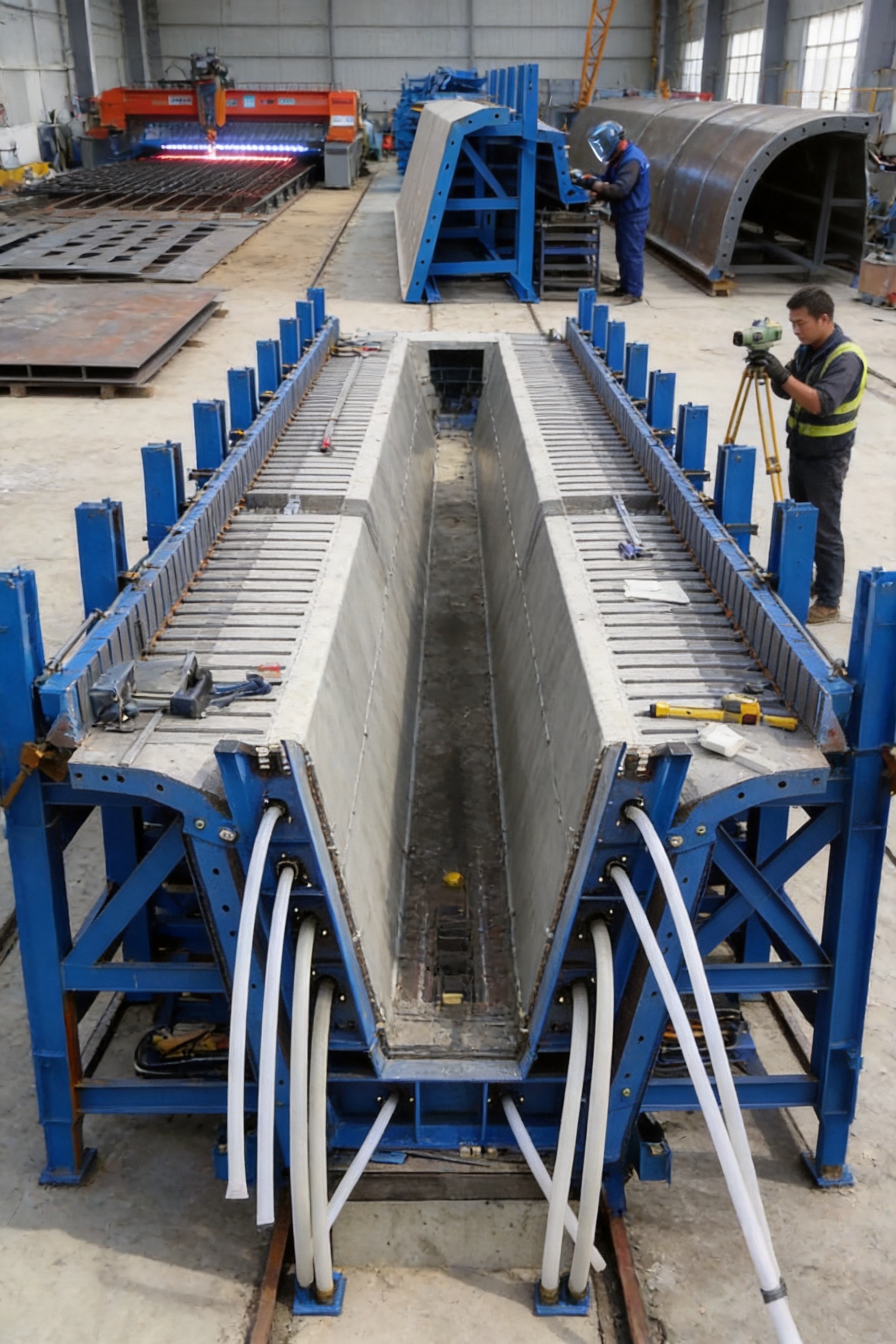
The performance of box girder formwork depends heavily on the quality of its manufacturing process. A technically strong design will not deliver the expected results if steel preparation, welding, alignment, or finishing is inconsistent. Hyson applies an integrated production process covering engineering review, material preparation, CNC cutting, forming, assembly, welding, inspection, surface treatment, and trial installation.
Engineering Review and Production Planning
Manufacturing begins with a review of the project drawings, design loads, beam geometry, operating method, turnover requirements, and site restrictions. The engineering team identifies the main external dimensions, internal clearances, panel divisions, support arrangements, hydraulic requirements, lifting points, access platforms, and connection details.
Production planning then establishes the sequence for cutting, forming, fitting, welding, inspection, coating, and assembly. Proper sequencing is important because welding heat can affect alignment, and late modifications may be more difficult after surface treatment. A controlled production plan helps avoid interference between structural members and moving components.
CNC Steel Plate Cutting
Advanced laser cutting equipment is used for accurate preparation of steel plates and component profiles. CNC processing improves dimensional repeatability and reduces the variation associated with manual marking and cutting. It can also produce clean edges that require less post-processing before assembly.
Accurate cutting is especially important for panel edges, joint plates, stiffener connections, access openings, and hydraulic brackets. When the cut components match the approved drawings, fitting work becomes more efficient and the risk of accumulated dimensional errors is reduced.
Bending and Forming
Some box girder surfaces include angled, sloped, or curved sections. Bending equipment forms these plates to the required geometry while controlling distortion. Correct bend radii and angles help ensure that the finished form matches the intended concrete profile.
Where multiple identical parts are needed, repeatable machine settings improve consistency across the complete formwork set. This is valuable when opposing panels must align or when several casting stations are produced for the same project.
Structural Assembly
After cutting and bending, plates, ribs, frames, supports, and connection components are assembled on dedicated work surfaces. Temporary fixtures and alignment tools help hold parts in the correct position before final welding. The assembly process considers access for welding, the location of moving parts, and the ability to complete later inspections.
Important dimensional checks are performed during assembly. These may include panel length, width, diagonal measurements, angle, flatness, support spacing, joint alignment, and internal mold clearance. Early correction is more efficient than repairing dimensional problems after all components have been completed.
Certified Welding Practices
Welding is central to the strength and durability of steel formwork. Hyson applies certified AWS and EN welding craftsmanship, supported by qualified procedures and experienced personnel. Welding parameters, joint preparation, sequence, and inspection are controlled according to the applicable project requirements.
Appropriate welding sequence helps control distortion, particularly in long panels and large structural frames. Welds are inspected for visual quality, continuity, penetration where specified, and the absence of unacceptable defects. Additional nondestructive testing may be applied when required by the project or by the criticality of a component.
Trial Assembly and Final Inspection
Before shipment, major formwork components can be trial-assembled to verify their fit and operation. This process checks connection points, guide rails, hydraulic cylinders, panel alignment, working platforms, access features, and the overall geometry of the mold.
Trial assembly reduces installation risk at the construction site. It allows the manufacturer to identify missing components, unsuitable clearances, or operating conflicts before the equipment is packed and transported. Final inspection records may include material certificates, dimensional reports, welding inspection results, hydraulic test records, coating information, and assembly photographs.
8. Comparison with Conventional and Lower-Quality Alternatives
Box girder formwork is available in many configurations, and not all systems provide the same level of performance. The main differences generally involve steel grade, structural design, fabrication precision, hydraulic capability, sealing quality, modularity, and after-sales support.
| Evaluation Factor | Professional Modular Steel Formwork | Basic Fixed Steel Mold | Improvised Timber or Mixed Material Form |
|---|---|---|---|
| Structural stability | Engineered frames, stiffeners, and load paths designed for concrete pressure | Generally stable but may have limited adjustment and local reinforcement | More dependent on site workmanship and temporary supports |
| Dimensional consistency | High, supported by CNC fabrication and controlled assembly | Moderate to high when carefully manufactured | Variable between casting cycles |
| Demolding efficiency | Hydraulic adjustment and guided movement can reduce manual work | Usually requires manual release and crane assistance | Often labor-intensive and slow |
| Adaptability | Modular panels can accommodate selected geometry changes | Limited once the mold is completed | Flexible in theory but difficult to control accurately |
| Surface quality | Precision joints and sealing reduce grout leakage and repair work | Depends strongly on joint design and maintenance | Greater risk of gaps, deformation, and surface defects |
| Repeated turnover | Approximately 200–500 cycles with suitable maintenance | Usually suitable for repeated use but may require more repair | Generally lower durability under intensive production |
| Lifecycle cost | Higher initial investment with strong value over many cycles | Moderate initial cost and moderate reuse value | Lower initial cost but higher labor and replacement risk |
Compared with basic fixed molds, a modular hydraulic system provides more efficient turnover and greater adaptability. Compared with improvised forms, it offers stronger control over geometry, surface quality, and safety. Its main advantage is not necessarily the lowest purchase price; rather, it is the ability to reduce total project cost through faster cycles, lower labor demand, fewer repairs, and longer service life.
For contractors producing a small number of non-repeating beams, a simple system may sometimes be sufficient. For high-volume bridge projects, however, the benefits of engineered steel formwork become more significant. The higher level of manufacturing control is especially valuable where dimensional tolerances are strict and the construction schedule is tied to the rapid completion of multiple spans.
9. Applications in Major Infrastructure Projects
High-Speed Railway Bridges
High-speed railway construction requires strict control of alignment, beam geometry, surface quality, and production consistency. Single-track and double-track box girders are often produced in large quantities under standardized conditions. Formwork must support a stable cycle while maintaining the tolerances needed for railway track systems, bearings, expansion joints, and bridge erection equipment.
In a precast yard, hydraulic internal molds and reusable modular panels can improve production efficiency. The system can be configured for repeated beam lengths and adjusted for project-specific reinforcement and embedded components. Accurate casting helps reduce downstream corrections during transportation and erection.
Expressway Interchanges and Viaducts
Highway interchanges contain ramps, curved alignments, transition sections, and variable cross-sections. These features require more than a single standardized mold. Adjustable and modular box girder formwork allows contractors to produce different components while retaining a common set of main structural elements.
For cast-in-place viaducts, the formwork can be integrated with temporary supports or other bridge construction systems. Strong support frames and secure connections help resist concrete pressure and construction vibration, while adjustable components support variations in beam geometry.
Precast Beam Yards
Precast yards benefit from equipment that can operate in a controlled, repeatable production environment. The box girder formwork can be positioned on a prepared casting platform and used for segmental or full-length beam production. Quick-locking pins and alignment guide rails simplify installation, while hydraulic demolding reduces the time required between cycles.
Precast production also places a high value on cleanliness and surface quality. Effective sealing minimizes grout leakage, and durable panel surfaces can produce consistent finishes over many uses. A well-maintained mold helps the yard establish predictable inspection and acceptance procedures.
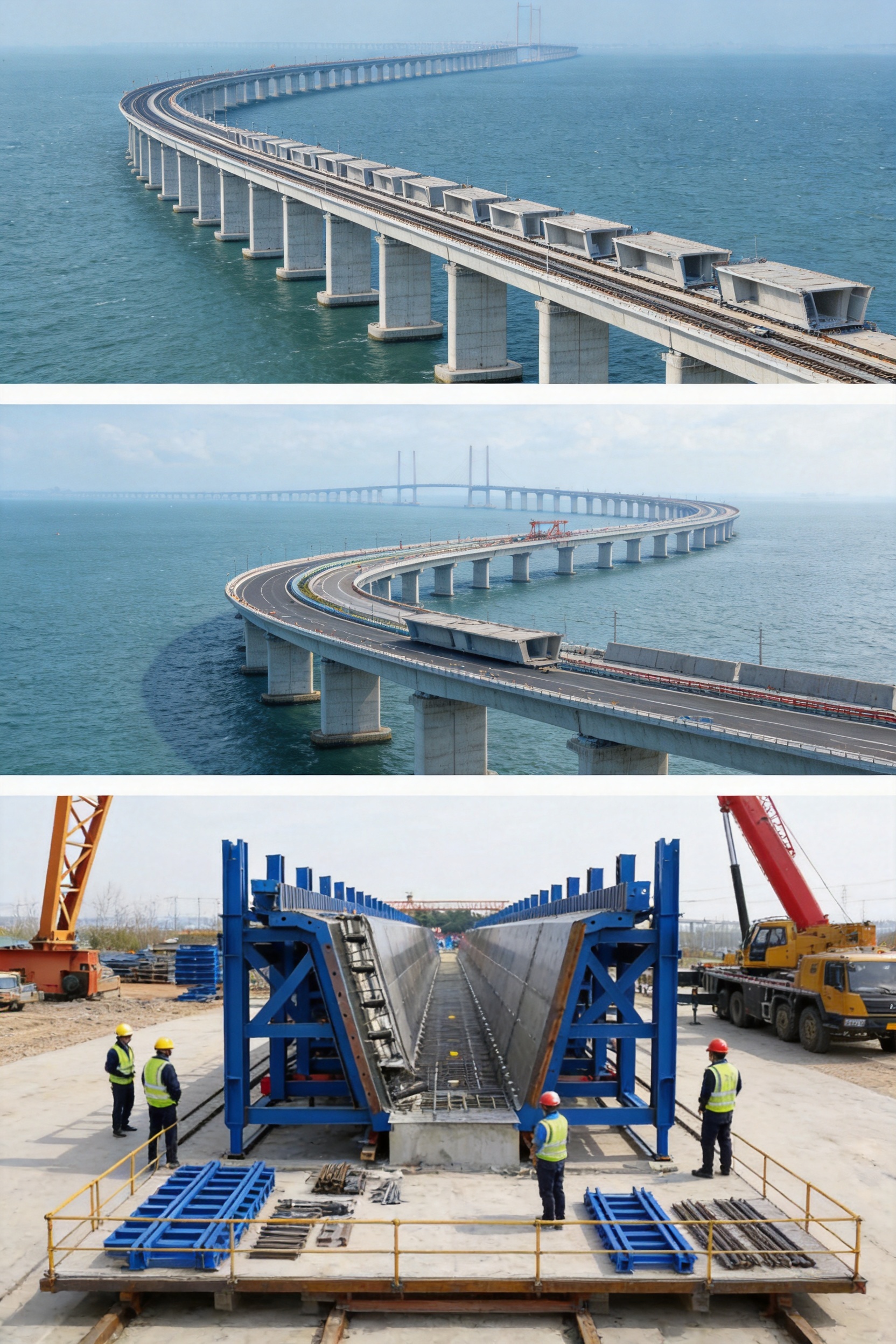
Sea-Crossing Bridges
Marine bridge construction exposes equipment to humidity, salt spray, wind, and restricted access. Formwork used in these environments requires suitable corrosion protection, robust connection details, and careful maintenance. The product can be configured with surface protection and structural arrangements appropriate for demanding marine conditions.
For sea-crossing projects, logistics and installation planning are especially important. Components must be transportable, easy to lift, and capable of being assembled safely within limited working areas. Modular construction helps divide the equipment into practical shipping and installation units.
10. Safety, Maintenance, and Operating Practices
Safe operation begins with correct design, but it also depends on assembly, inspection, and worker training. Before each casting cycle, the contractor should verify that all primary connections are installed, locking pins are fully engaged, hydraulic components are secure, access platforms are stable, and the formwork is correctly supported.
Concrete should be placed according to the approved sequence and rate. Excessively rapid filling may create pressure beyond the assumptions used for design. Vibration should be controlled to avoid unnecessary impact on the panels and to ensure proper consolidation around reinforcement and embedded components.
After demolding, concrete residue should be removed from panel faces, joints, guide rails, and moving parts. Hardened concrete can interfere with alignment and may damage sealing surfaces during the next assembly. Suitable release agents should be applied in accordance with the manufacturer’s instructions and the requirements of the concrete system.
Recommended Inspection Points
Regular inspections should include panel flatness, weld condition, bolts, quick-locking pins, guide rails, hydraulic cylinders, hoses, supports, lifting points, working platforms, and corrosion protection. Any crack, permanent deformation, excessive wear, or damaged seal should be addressed before the next casting cycle.
Hydraulic System Maintenance
Hydraulic cylinders should be checked for leakage, rod damage, unusual movement, and loss of pressure. Hoses should be protected from abrasion and sharp edges. Hydraulic oil levels and cleanliness should be maintained according to the equipment requirements. Operators should never stand in a hazardous area while the mold is being contracted, expanded, or repositioned.
Storage and Protection
When the formwork is not in use, components should be stored on stable supports above standing water. Exposed surfaces should be cleaned and protected, while hydraulic components should be covered against dust and moisture. Small connection parts should be labeled and stored systematically to prevent loss during relocation.
11. The Manufacturing Strength of Nantong Hyson Road And Bridge Formwork
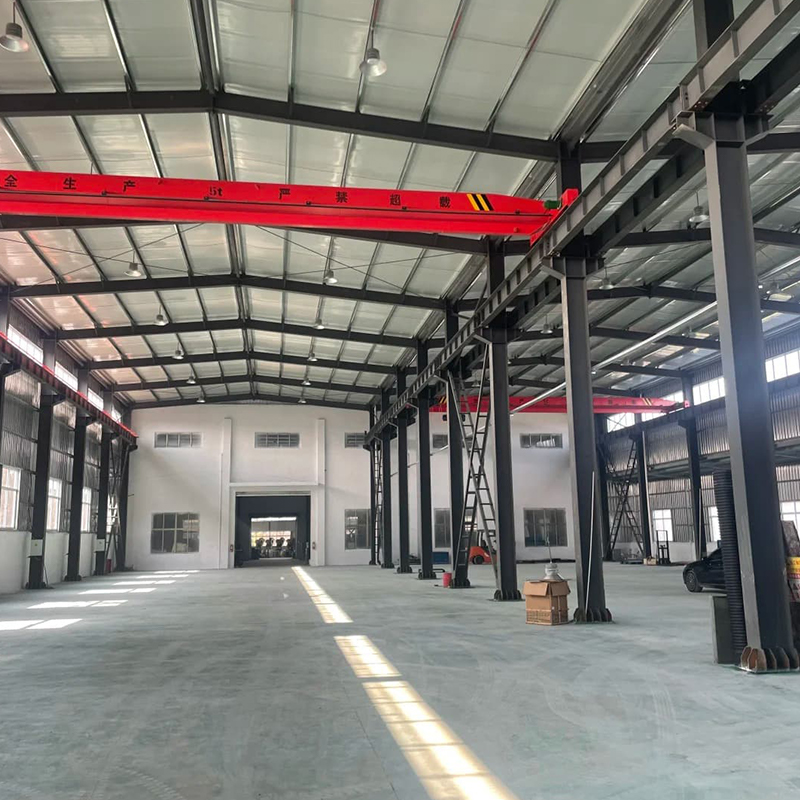
Nantong Hyson Road And Bridge Formwork Co., Ltd. is a professional manufacturer of custom steel formwork, ringlock scaffolding, heavy-duty steel structures, and OEM metal fabrication. The company’s manufacturing model combines specialized bridge formwork knowledge with broader heavy steel processing capabilities.
Its production resources include advanced laser cutting equipment, standardized production lines, bending and welding facilities, and inspection procedures for non-standard steel components. This integrated capacity is important for box girder formwork because the product contains many different types of parts, including large plates, curved or angled members, reinforced frames, hydraulic brackets, guide rails, access platforms, and custom connection assemblies.
Hyson applies automated processing where appropriate while retaining skilled fabrication for complex fitting and assembly work. CNC processing improves repeatability for steel plate components, while experienced welders and fabrication technicians manage large structural assemblies. The company’s welding practices follow AWS and EN-related requirements, supporting the production of reliable components for international projects.
The company is supported by 12 utility patents and operates under an ISO 9001 quality management framework. Its product standards and manufacturing experience also include BS1139 and EN74-related scaffolding requirements. Although different product categories have different technical standards, this broader quality culture benefits bridge formwork production by encouraging documented procedures, traceability, inspection, and continuous process control.
Hyson has supplied products and solutions for major customers and infrastructure organizations, including CCCC and CRCC-related projects. Its project experience includes the Sutong Yangtze River Bridge, Taizhou Bridge, and Sudan Thermal Power Plant. Such experience exposes the manufacturer to demanding requirements for structural performance, delivery coordination, customization, and site support.
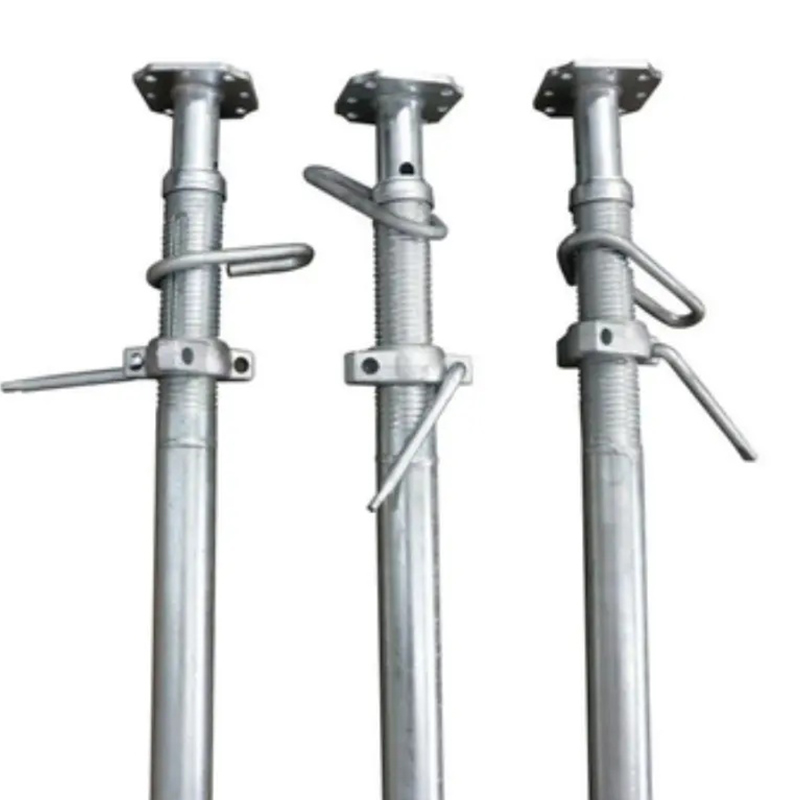
The company’s product range includes bridge and infrastructure formwork, hydraulic tunnel trolleys, scaffolding, steel props, industrial steel structures, and heavy steel OEM fabrication. This range allows it to support clients that need several categories of steel equipment from one manufacturing partner. It also provides a technical foundation for integrated projects involving formwork, temporary works, access systems, and structural steel components.
12. OEM Customization and Project Support
Box girder formwork is rarely a completely off-the-shelf product. The required dimensions and operating arrangements depend on the bridge design, construction method, casting sequence, local standards, lifting equipment, and site conditions. A capable manufacturer must therefore be able to interpret project information and convert it into a practical forming system.
Custom OEM services may include modification of beam length, width, depth, internal cell configuration, panel segmentation, hydraulic arrangement, support structure, access platform, lifting points, connection method, and surface treatment. The manufacturer can also coordinate with the contractor’s drawings and production plan to ensure that the equipment supports the intended construction cycle.
Good project support begins with technical communication. The client should provide general arrangement drawings, typical cross-sections, concrete mix information, casting speed, expected turnover frequency, crane capacity, available platform dimensions, and site limitations. This information helps the manufacturer confirm whether a standard module is suitable or whether project-specific modifications are required.
After design confirmation, the manufacturer can prepare fabrication drawings, component lists, hydraulic diagrams, assembly instructions, inspection documents, and maintenance recommendations. Clear documentation simplifies site installation and reduces delays caused by uncertainty over component positions or operating procedures.
Technical Questions to Confirm Before Ordering
Before placing an order, the buyer should confirm the expected girder dimensions and tolerances, the maximum concrete pressure, the required casting cycle, the number of planned reuse cycles, the available lifting equipment, the preferred hydraulic control method, the corrosion protection system, and the applicable inspection standards.
The buyer should also clarify whether the supply includes only the steel mold or a complete system with hydraulic components, support frames, working platforms, guide rails, end forms, accessories, spare parts, documentation, and commissioning assistance. Defining the supply scope early helps prevent cost disputes and installation problems later.
13. Economic Benefits Over the Product Lifecycle
The financial value of box girder formwork should be evaluated over its complete lifecycle rather than by purchase price alone. A low-cost mold may become expensive if it requires extensive manual labor, frequent repair, slow turnover, concrete surface correction, or early replacement.
A durable steel system can reduce costs in several ways. Faster demolding increases the number of casting cycles that can be completed within a given period. Hydraulic operation reduces labor requirements and crane usage. Precision fabrication lowers the likelihood of dimensional correction. Effective sealing reduces patching and surface repair. Modular construction permits reuse across different beam configurations and projects.
The reuse potential of 200 to 500 cycles can be especially valuable for large bridge programs. For example, if a formwork set is used for hundreds of beams, the cost of the original equipment is distributed across a large production volume. Maintenance and replacement of wear parts remain necessary, but these expenses are generally more predictable than the costs associated with rebuilding improvised molds for every project section.
There are also indirect economic benefits. Reliable formwork reduces the probability of schedule interruptions, rejected components, and rework. It supports more accurate production planning, which can improve the use of labor, concrete plants, reinforcement workshops, transport vehicles, and erection equipment.
14. Environmental and Resource Considerations
Steel formwork is reusable, which can reduce the consumption of timber, plywood, and disposable forming materials over the life of a bridge project. Repeated use also reduces the volume of construction waste generated by temporary molds. At the end of its service life, steel components can generally be repaired, reconfigured, or recycled.
Efficient forming contributes to resource conservation by reducing concrete defects and the need for repair materials. Accurate geometry helps avoid over-pouring caused by uncontrolled panel movement, while effective sealing prevents loss of cement paste. Faster production cycles may also reduce energy use associated with prolonged crane operation, site lighting, and repeated handling.
Environmental performance still depends on responsible manufacturing and operation. Steel production, cutting, welding, coating, and transportation consume energy and materials. Manufacturers and contractors should therefore optimize nesting during plate cutting, reuse suitable offcuts where technically appropriate, control coating emissions, maintain equipment efficiently, and plan logistics to reduce unnecessary transportation.
15. Selecting the Right Box Girder Formwork System
Selection should be based on the complete construction method rather than on panel dimensions alone. The buyer should consider whether the formwork will be used in a fixed precast yard, a movable casting station, a cast-in-place bridge section, or several different environments.
The following factors are particularly important:
Beam geometry: Confirm external dimensions, internal cell dimensions, flange slopes, web thickness, corners, openings, and special details.
Construction method: Identify whether the beam will be precast, segmentally cast, or produced in place on temporary supports.
Production volume: Estimate the total number of casting cycles and the required daily or weekly output.
Demolding method: Decide whether manual, mechanical, hydraulic, or combined operation is most suitable.
Site conditions: Review platform size, crane capacity, access routes, wind exposure, marine corrosion, temperature, and available storage space.
Quality requirements: Establish dimensional tolerances, surface finish expectations, leakage limits, welding requirements, and inspection documentation.
Maintenance resources: Confirm the availability of trained operators, hydraulic maintenance personnel, cleaning equipment, and spare parts.
Future reuse: Consider whether the system will be transferred to other projects or rented to additional users.
A manufacturer with both bridge formwork expertise and heavy steel fabrication capability can help balance these factors. The best design is not always the heaviest or most automated solution. It is the system that provides the required strength, accuracy, productivity, safety, and adaptability at an appropriate lifecycle cost.
16. Frequently Asked Questions
What is box girder formwork used for?
Box girder formwork is used to shape reinforced or prestressed concrete box girders for high-speed railways, expressways, viaducts, interchanges, precast beam yards, and sea-crossing bridges. It can support both precast production and cast-in-place construction, depending on its configuration.
What steel grades are used in the formwork?
The system uses Q235B and Q345 structural steel according to the requirements of individual components and project specifications. Reinforcing ribs, frames, brackets, and other structural members are designed to resist concrete pressure and control deformation.
How does hydraulic operation improve construction efficiency?
Hydraulic cylinders can contract, release, and reposition the internal mold with less manual effort. This reduces the number of bolting and crane-assisted operations required during demolding, improves operating consistency, and can shorten the time between casting cycles.
Can the formwork be customized for different box girder dimensions?
Yes. The modular system can be customized through adjustable panels, standardized connections, interchangeable components, and project-specific end forms. The final configuration depends on the required beam geometry, construction method, and engineering limits of the system.
How many times can box girder formwork be reused?
With proper operation, cleaning, inspection, lubrication, and surface protection, the formwork can generally be reused approximately 200 to 500 times. Actual service life depends on casting pressure, handling methods, environmental exposure, maintenance quality, and the level of modification between projects.
Will the formwork prevent all concrete surface defects?
No formwork can eliminate every possible concrete defect because concrete quality also depends on mix design, reinforcement congestion, vibration, curing, temperature, and workmanship. However, precision joints, reliable sealing, dimensional stability, and smooth panel surfaces significantly reduce formwork-related leakage and deformation defects.
Is this formwork suitable for marine bridge projects?
It can be configured for marine construction with suitable corrosion-resistant surface protection, robust structural details, and an appropriate maintenance program. Salt exposure, humidity, transport arrangements, and site installation conditions should be discussed during the design stage.
What manufacturing capabilities are important for this product?
Important capabilities include CNC steel plate cutting, bending, accurate fitting, certified welding, structural assembly, dimensional inspection, hydraulic integration, surface treatment, trial assembly, and technical documentation. Integrated manufacturing helps maintain consistency between the design and the finished equipment.
Can a contractor use the formwork for several projects?
Yes. The modular design is intended to support reconfiguration and repeated use. Contractors should confirm the compatibility of the existing components with the dimensions, loads, and operating conditions of each new project before reuse.
What information should be provided for a quotation?
The buyer should provide general arrangement drawings, typical cross-sections, beam dimensions, concrete placement method, expected casting rate, turnover target, project quantity, site conditions, crane capacity, hydraulic preferences, corrosion requirements, and applicable standards. Complete information improves the accuracy of technical and commercial proposals.
Does the manufacturer provide OEM services?
Yes. Nantong Hyson Road And Bridge Formwork Co., Ltd. provides customized OEM services for steel formwork, heavy steel structures, and non-standard fabricated components. The scope can include design coordination, fabrication, hydraulic integration, inspection documents, packing, and project-specific modifications.
17. Conclusion
Box girder formwork is a central production asset in modern bridge construction. Its performance affects structural accuracy, concrete appearance, casting speed, labor demand, safety, and project cost. For large infrastructure projects, the formwork must be engineered for repeated operation rather than treated as a temporary enclosure.
A high-quality system combines high-strength Q235B and Q345 steel, reinforced frames, precision machining, leak-resistant joints, hydraulic internal mold adjustment, quick-locking connections, alignment guide rails, modular geometry, and durable surface protection. These features provide important advantages over basic fixed molds and improvised forming methods, particularly when large quantities of box girders must be produced under strict schedule and quality requirements.
Nantong Hyson Road And Bridge Formwork Co., Ltd. strengthens this product through integrated heavy steel manufacturing. Its CNC laser cutting, bending, AWS and EN welding practices, standardized production lines, inspection procedures, patent-supported design experience, and ISO 9001 quality management approach provide a solid foundation for customized bridge formwork production.
Whether used for high-speed railway bridges, expressway viaducts, precast beam yards, variable-section ramps, or sea-crossing structures, the system is designed to deliver repeatable performance and long-term value. By combining structural strength with hydraulic efficiency, dimensional precision, modular flexibility, and lifecycle durability, professional box girder formwork helps contractors construct safer, cleaner, and more efficient bridge structures.
References
1. Q235B and Q345 structural steel designation and general mechanical property references for fabricated steel structures.
2. AWS welding procedure and qualification principles for structural steel fabrication.
3. EN-based guidance for welding quality, steel fabrication, and construction equipment manufacturing.
4. ISO 9001 quality management system principles for manufacturing organizations.
5. Bridge construction quality-control practices for reinforced and prestressed concrete box girders.
6. General engineering guidance for concrete formwork design, pressure control, dimensional tolerance, and repeated-use maintenance.
7. BS1139 and EN74 principles relating to scaffolding components, temporary works, and construction safety equipment.
8. Manufacturer technical information for modular steel box girder formwork, hydraulic demolding systems, and heavy steel fabrication.
Product: Box Girder Formwork



- Location
- Group 3, Fangzhuang Village, Rucheng Subdistrict, Rugao City, Nantong, Jiangsu, China
- Follow us
- Phone
- +86-13646196162
- info@hysonindustry.com
