 +86-13646196162
 info@hysonindustry.com




 русский
 عربى



PP+GF Reinforced Formwork: A High-Turnover Plastic-Steel Solution for Modern Concrete Construction
 2026.10.11
Content
- 1 1. Understanding PP+GF Reinforced Formwork
- 2 2. Why the Formwork Surface Matters
- 3 3. Lightweight Handling and Faster Installation
- 4 4. Reduced Auxiliary Support Requirements
- 5 5. Stability in Difficult Weather and Site Conditions
- 6 6. High Turnover and Lifecycle Economics
- 7 7. Environmental and Recyclability Benefits
- 8 8. Application in Civil and Commercial Buildings
- 9 9. Application in Underground Engineering
- 10 10. Application in Infrastructure Projects
- 11 11. Manufacturing Strengths Behind the Product
- 12 12. Quality Control and Standards-Oriented Production
- 13 13. Custom OEM Manufacturing Capability
- 14 14. Installation and Operating Recommendations
- 15 15. Comparing PP+GF Formwork with Competing Systems
- 16 16. Project Planning and Return-on-Investment Considerations
- 17 17. Frequently Asked Questions
- 17.1 Q1: What does PP+GF mean?
- 17.2 Q2: Can PP+GF formwork replace timber on every project?
- 17.3 Q3: Does the panel require release agent?
- 17.4 Q4: How many times can the panels be reused?
- 17.5 Q5: Can the panels be cut on site?
- 17.6 Q6: Are PP+GF panels waterproof?
- 17.7 Q7: Are the panels suitable for cold or hot climates?
- 17.8 Q8: Can PP+GF formwork be used with steel frames?
- 17.9 Q9: Is the product environmentally friendly?
- 17.10 Q10: What services can the manufacturer provide besides panels?
- 17.11 Q11: Does the manufacturer serve large infrastructure projects?
- 17.12 Q12: What information should be provided for a quotation?
- 18 18. Conclusion
- 19 References
- 20 Product: PP+GF Reinforced Formwork
Modern construction projects require formwork that can combine structural reliability, dimensional accuracy, fast installation, reduced labor demand, and controlled lifecycle cost. Traditional timber formwork remains familiar and widely available, but it can absorb water, deform, crack, and deteriorate after repeated use. Conventional all-steel formwork offers strength and dimensional stability, yet it may be heavy, difficult to handle, vulnerable to corrosion, and comparatively expensive to modify on site. PP+GF reinforced formwork has been developed to address these limitations by combining a polypropylene-based polymer matrix with glass-fiber reinforcement and a structural design intended for repeated concrete casting.
This plastic construction formwork system is based on the principle of replacing wood with a durable, recyclable material while retaining the load-bearing advantages normally associated with steel-supported systems. Its smooth face, lightweight structure, weather resistance, impact resistance, and high turnover potential make it suitable for residential, commercial, industrial, underground, and infrastructure projects. When correctly selected and installed according to the project’s structural requirements, PP+GF reinforced formwork can help contractors achieve better concrete surfaces, faster panel handling, lower auxiliary support requirements, and more predictable project economics.
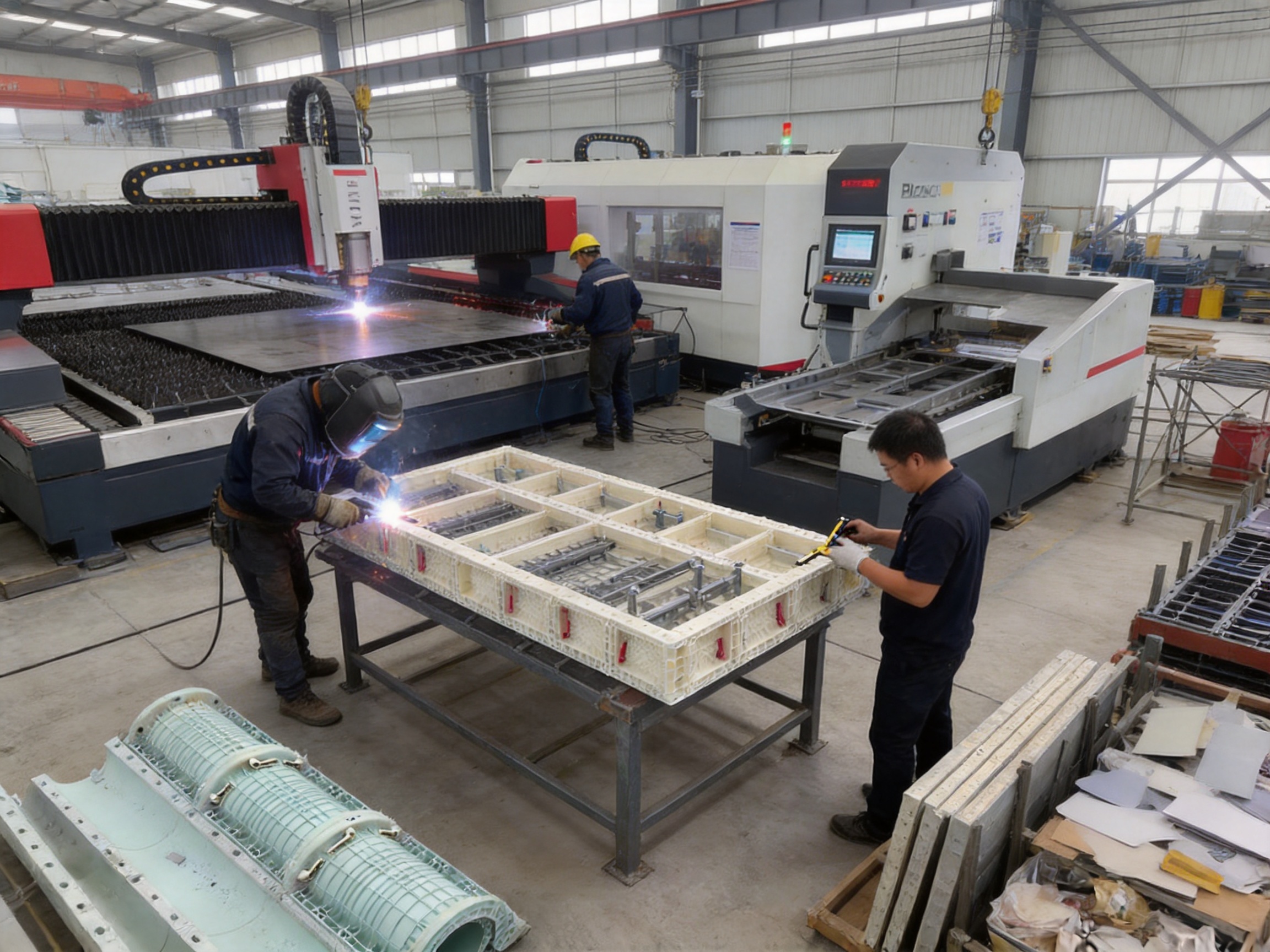
The system is supplied by Nantong Hyson Road And Bridge Formwork Co., Ltd., a professional manufacturer focused on custom formwork, steel structures, scaffolding, steel plate cutting, and OEM metal fabrication. The company’s experience in heavy construction equipment and non-standard steel components provides an important manufacturing foundation for plastic-steel formwork production. Its capabilities include automated processing, laser cutting, bending, welding, customized fabrication, and quality control for construction components used in demanding engineering environments.
1. Understanding PP+GF Reinforced Formwork
PP+GF reinforced formwork is a composite construction panel system made from polypropylene reinforced with glass fiber. Polypropylene, commonly abbreviated as PP, is a thermoplastic polymer known for its low density, chemical resistance, moisture resistance, and ability to withstand repeated handling. Glass fiber, abbreviated as GF, is introduced to improve stiffness, strength, dimensional stability, and resistance to impact and deformation.
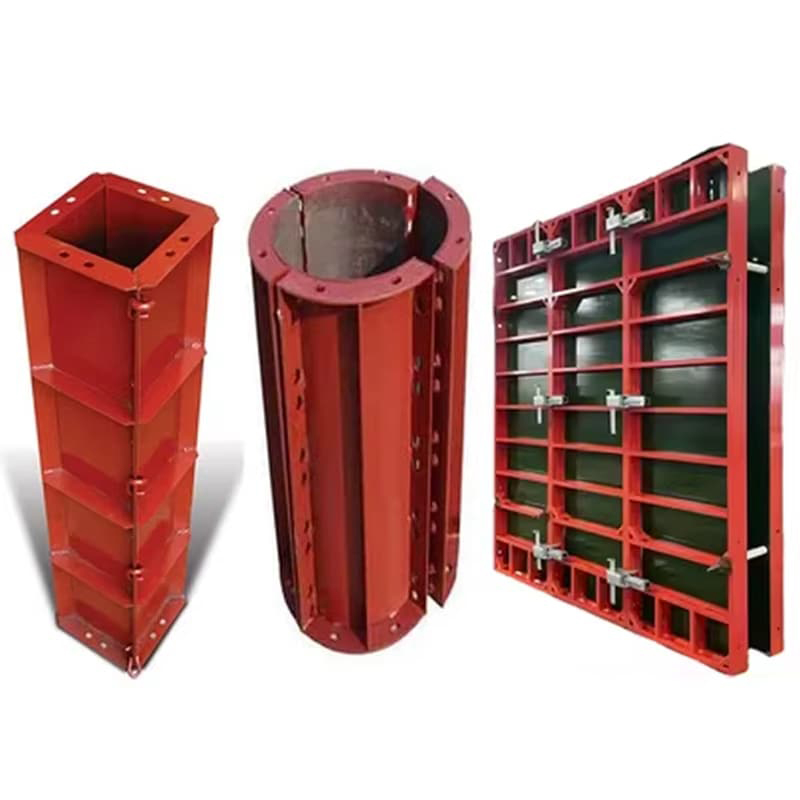
The resulting material is not simply a thin plastic sheet. It is an engineered formwork product designed to resist the pressure generated by fresh concrete during casting. Depending on the panel design, thickness, internal ribs, steel reinforcement, edge configuration, and connection method, the formwork can be used for walls, columns, beams, slabs, foundations, tunnels, retaining walls, and other cast-in-place structures.
The core objective is to create a practical balance between the easy handling of polymer products and the structural performance required on a construction site. Timber is relatively light and easy to cut, but it is not highly durable under moisture and repeated loading. Steel is strong and durable, but it can be heavy and labor-intensive. PP+GF systems occupy an intermediate and highly useful position: they are lightweight enough for manual handling while providing reinforced stiffness and a robust working surface.
The panels can be used as part of a complete formwork arrangement or combined with steel frames, braces, supports, ties, clamps, walers, props, and other accessories. Project engineers should determine the appropriate panel size, support spacing, connection arrangement, and allowable casting pressure based on the concrete mix, pour rate, wall height, temperature, vibration method, and applicable construction standards.
2. Why the Formwork Surface Matters
The quality of the formwork face directly affects the appearance and finishing requirements of the concrete. A warped, rough, damaged, or highly absorbent panel can transfer defects to the concrete surface. It may also require additional plastering, patching, grinding, or coating after stripping. These secondary operations add labor, extend the project schedule, and increase material consumption.
PP+GF reinforced formwork is manufactured with a smooth and flat contact surface. When the panels are properly aligned, joined, supported, and cleaned, they can produce a concrete finish that meets the requirements of many fair-faced or high-quality exposed-concrete applications. The exact finish depends on concrete mix design, vibration, joint treatment, installation accuracy, and site workmanship, but the non-absorbent panel surface provides a strong foundation for consistent results.
Unlike untreated timber, the polymer surface does not readily absorb water from the concrete. This helps reduce the risk of moisture-related swelling, edge distortion, and localized surface variation. The smooth face can also reduce the amount of concrete residue left on the panel after stripping. As a result, cleaning can be completed more quickly between uses.
Another important benefit is the reduced need for release agents. Concrete is less likely to adhere strongly to the PP+GF surface than to rough, damaged, or inadequately prepared timber. In many applications, contractors can strip the panels without applying conventional release oil. However, release-agent requirements should always be verified through a site trial, particularly when special concrete mixes, architectural finishes, high-temperature conditions, or unusual curing systems are involved.
Reducing or eliminating release-agent use offers several advantages. It lowers material consumption, minimizes worker exposure to chemical products, reduces the possibility of surface staining, and simplifies panel preparation. It can also make the work area cleaner and help improve the consistency of concrete finishing operations.
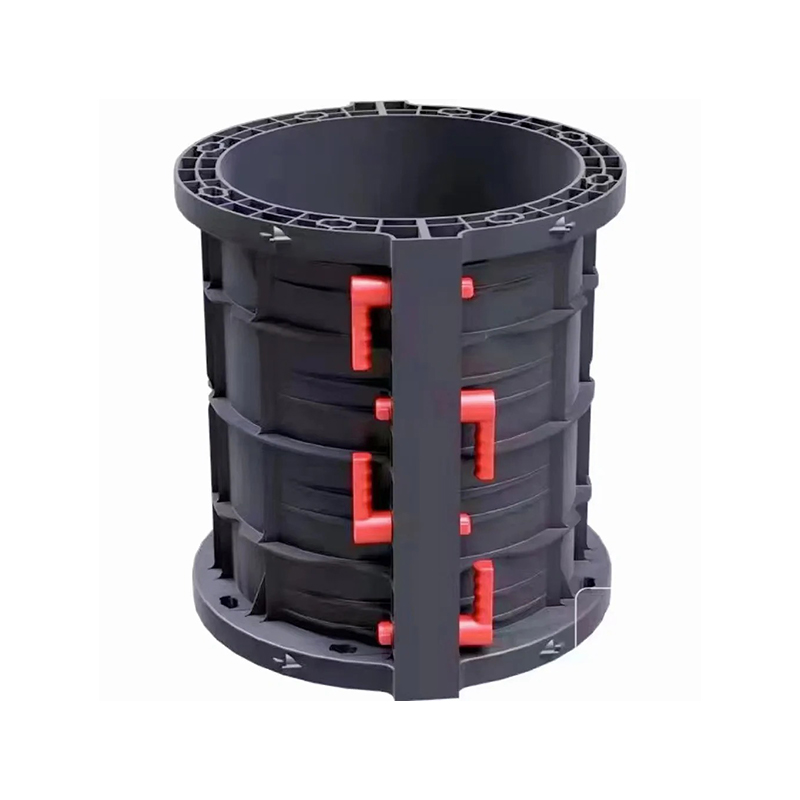
PP+GF Reinforced Formwork
3. Lightweight Handling and Faster Installation
Weight is one of the most important practical differences between formwork systems. Heavy panels may require cranes, forklifts, or multiple workers for every movement. They can slow down installation, increase worker fatigue, and create additional handling risks. Although all-steel formwork is highly capable in demanding applications, its mass can become a disadvantage when the project contains many small work areas, restricted access zones, or frequent layout changes.
PP+GF reinforced panels are designed to be lighter than many conventional steel panels. Their lower weight allows workers to move, position, and adjust them more easily. In suitable configurations, panels can be carried manually without relying on lifting equipment for every operation. This is particularly useful in interior areas, residential floors, narrow utility corridors, renovation projects, and locations where crane access is limited.
Reduced panel weight does not mean that installation quality can be compromised. The panels must still be supported according to the required design, and workers must use appropriate lifting and handling procedures. Nevertheless, the easier manual handling can reduce the number of workers needed for routine panel movement and may shorten the time required for each formwork cycle.
The material is also adaptable to changing site conditions. PP+GF panels can generally be sawn, nailed, and drilled using suitable tools. This allows contractors to create openings, adjust edges, accommodate embedded items, and handle non-standard dimensions directly on site. Such adaptability is a major advantage over rigid systems that require factory modification or specialized cutting equipment for every change.
Site cutting should be controlled carefully. Cutting plans should be prepared to minimize waste, preserve panel strength, and avoid weakening critical load-bearing zones. Holes and edge modifications should be positioned in accordance with the formwork design. If a panel is cut near a structural rib, tie location, or connection point, additional reinforcement or a different support arrangement may be necessary.
In documented applications, the improved handling characteristics of plastic-steel formwork have contributed to significant productivity gains, with some projects reporting approximately double the efficiency compared with less adaptable conventional methods. Actual productivity depends on crew experience, panel layout, reinforcement congestion, concrete cycle planning, site access, and the degree of repetition in the building design.
4. Reduced Auxiliary Support Requirements
Formwork performance depends not only on the panel itself but also on the supporting system. Timber formwork often requires substantial quantities of wood studs, battens, wedges, and temporary bracing. Conventional systems may also require dense steel pipe support arrangements, especially where panels are not sufficiently stiff or where site conditions cause local deformation.
PP+GF reinforced formwork is designed to provide a stable casting surface with reinforced structural behavior. Because the panels are light and can be combined with efficient supporting components, some projects have reduced their steel pipe support requirements by approximately 50 percent. This potential reduction can simplify the site arrangement, free up material for other work areas, and lower handling and dismantling demands.
Support reduction must never be interpreted as permission to exceed the formwork’s design limits. Fresh concrete produces hydrostatic and dynamic pressure, particularly when the pour rate is high or when mechanical vibration is intensive. The correct spacing of ties, walers, braces, props, and frames must be established by competent technical personnel. A well-designed support layout is essential for protecting workers, maintaining concrete dimensions, and preventing panel displacement.
The most effective use of PP+GF formwork comes from treating the panel and its support system as one engineered assembly. Panel dimensions, connection locations, corner details, tie rods, clamps, and supporting frames should be coordinated before installation begins. Standardized layouts can be prepared for repeated wall lengths, column sizes, beam dimensions, and floor zones, allowing the same system to be reused efficiently across multiple work cycles.
5. Stability in Difficult Weather and Site Conditions
Construction formwork is frequently exposed to changing weather, moisture, sunlight, dust, impact, and temperature variation. Timber panels can swell when exposed to water and shrink as they dry. Repeated wetting and drying may cause warping, splitting, delamination, or loss of surface quality. Steel panels generally remain dimensionally stable, but they can corrode if protective coatings are damaged or maintenance is neglected.
PP+GF reinforced formwork is non-absorbent and resistant to moisture-related deformation. It does not readily take in water from rain, wet concrete, or cleaning operations. This characteristic is valuable in basement work, tunnel construction, rainy climates, and projects where formwork must be stored or used in damp conditions.
The material is also designed for use across a broad temperature range. The supplied product information identifies stable performance between approximately -20°C and 60°C, with reduced risk of shrinkage and cracking within that range. Actual performance depends on the composition, panel design, storage conditions, exposure duration, and project environment. Panels should be protected from unnecessary long-term exposure to extreme heat, open flame, and uncontrolled chemical contamination.
Impact resistance is another important advantage. Construction materials are often dropped, stacked, moved across rough ground, or struck by tools and equipment. A formwork panel that is too brittle may develop cracks or broken edges, while a damaged timber panel may lose its flatness and load-bearing capacity. The reinforced polymer structure of PP+GF formwork is intended to withstand ordinary site impacts more effectively and retain useful performance over repeated cycles.
Corrosion resistance is especially valuable in underground and infrastructure construction. The panels themselves do not rust like unprotected steel. This makes them suitable for wet basements, utility tunnels, bridge works, retaining walls, and other locations where water and aggressive environmental conditions are common. Any steel frames, ties, clamps, or support components used with the panels should still receive appropriate corrosion protection.
6. High Turnover and Lifecycle Economics
The purchase price of a formwork panel is only one part of the total cost. Contractors should evaluate the complete lifecycle, including labor, support materials, cleaning, repairs, storage, transport, release agents, waste disposal, and the number of successful casting cycles. A low-cost panel that can be used only once or twice may be less economical than a more durable system with a higher initial price.
PP+GF reinforced formwork is designed for repeated use. The supplied product information indicates a turnover potential of at least 30 uses for flat panels and at least 40 uses for column and beam forms under appropriate operating conditions. Actual service life depends on panel handling, support design, cutting practices, concrete pressure, cleaning methods, storage, and maintenance.
High turnover offers several economic benefits. The cost of the original panels can be distributed across more construction cycles. Repeated use also reduces the need to purchase and dispose of new timber for every floor or structural section. When the layout is standardized, the same panels can move systematically from one work area to another, improving material utilization.
Case studies supplied for this product indicate potential cost savings of approximately 50 percent compared with timber formwork. This figure should be treated as project-specific rather than universal. Savings are influenced by local timber prices, labor rates, construction speed, the number of reuse cycles, concrete finish requirements, and the cost of cleaning and disposal. Even when the exact percentage varies, the combination of reuse, reduced finishing, lower support demand, and faster handling can produce a favorable comprehensive cost.
Lifecycle accounting should include the value of time. Faster stripping and installation may allow reinforcement, mechanical, electrical, and finishing trades to start earlier. A smoother concrete surface can reduce plastering and repair work. Fewer support components can reduce site congestion. Together, these improvements may have a greater financial impact than the unit price of the formwork itself.
| Evaluation Item | Timber Formwork | Conventional Steel Formwork | PP+GF Reinforced Formwork |
|---|---|---|---|
| Typical handling | Light and easy to cut | Strong but often heavy | Lightweight and adaptable |
| Moisture behavior | May absorb water, swell, or warp | Generally stable but may corrode | Non-absorbent and corrosion-resistant |
| Surface quality | Declines with repeated use | Consistent when maintained | Smooth and flat for consistent concrete finish |
| On-site modification | Easy to saw and nail | More difficult without specialized tools | Can be sawn, nailed, and drilled with suitable tools |
| Reuse potential | Usually limited by damage and moisture | High, but handling may be demanding | At least 30 uses for flat panels and 40 uses for column or beam forms under suitable conditions |
| Waste profile | Generates recurring wood waste | Reusable but requires metal maintenance | Offcuts and used formwork are recyclable |
| Best application advantage | Small, irregular, low-cost work | High-load repetitive work | Repetitive and irregular work requiring light handling and high turnover |
7. Environmental and Recyclability Benefits
Sustainable construction requires more than reducing energy consumption during operation. It also requires attention to material sourcing, service life, waste generation, reuse, and end-of-life recovery. Traditional timber formwork can create substantial volumes of offcuts and damaged panels, particularly when buildings contain many different dimensions. Used wood may be contaminated with concrete, coatings, nails, or release agents, making recovery more difficult.
PP+GF formwork is designed for repeated use and can be recycled at the end of its useful service life. Offcuts and used panels can be collected and directed toward appropriate recycling channels. The supplied product information identifies the material as 100 percent recyclable, supporting a zero-waste-oriented approach when collection and recycling systems are properly organized.
Recyclability does not remove the need for responsible site management. Panels should be separated from unrelated materials, stored to prevent unnecessary damage, and returned through an appropriate recycling process. Contractors should also consider local regulations concerning composite polymers, glass-fiber-reinforced materials, and construction waste.
The environmental advantages of high-turnover formwork arise from several factors at the same time. A durable panel reduces the need for replacement. A smooth surface can reduce plaster, mortar, and repair materials. Lower panel weight may reduce handling energy and transport demands. Reduced use of release agents can decrease chemical consumption. Finally, recycling can recover material that would otherwise enter the waste stream.
8. Application in Civil and Commercial Buildings
PP+GF reinforced formwork is suitable for many building structures cast in place. In residential and commercial projects, it can be applied to shear walls, core tubes, columns, beams, floor slabs, stair structures, foundations, and selected architectural concrete elements.
Shear walls and core tubes benefit from a formwork system that can be assembled quickly and aligned accurately. Repeated floor plans allow panels to be reused across multiple stories. Where wall dimensions remain consistent, contractors can create a standardized panel schedule, reducing the time spent measuring and modifying formwork.
For columns and beams, the system’s high turnover potential is especially useful. Column forms often require repeated stripping, cleaning, repositioning, and reassembly. Panels that resist concrete adhesion can shorten the cleaning interval between pours. The ability to drill or cut suitable openings can also help accommodate ties, embedded components, and connection details.
Floor slab applications require careful coordination with props, joists, frames, and edge protection. The lightweight character of the panels can simplify overhead placement, but the supporting system must be designed to control deflection and maintain safe working conditions. Formwork should not be loaded with reinforcement bundles, concrete equipment, or construction materials beyond its planned capacity.
In commercial buildings where the concrete surface will remain visible or receive only limited finishing, the smooth contact face can help reduce post-stripping work. A project-specific mock-up is recommended before large-scale deployment so that the contractor, engineer, and client can evaluate joint lines, tie-hole treatment, surface color, texture, and dimensional accuracy.
9. Application in Underground Engineering
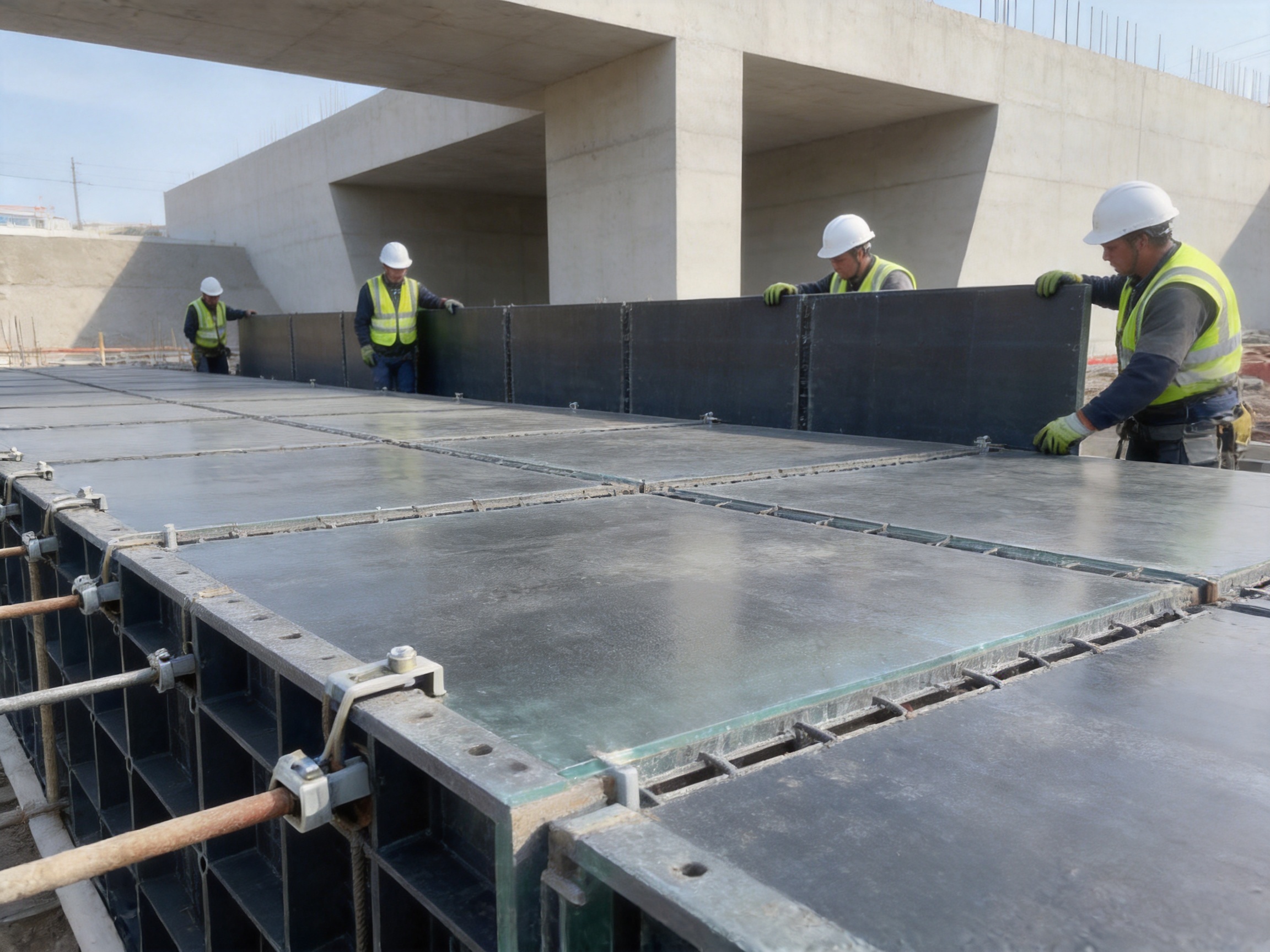
Basements, utility tunnels, underground parking structures, water-related facilities, and other below-grade works expose formwork to moisture, mud, concrete residue, and restricted working space. These conditions can be challenging for timber panels, which may degrade rapidly when repeatedly exposed to wet environments.
The moisture resistance and non-absorbent surface of PP+GF formwork are valuable in basement exterior walls and underground structures. The panels are easier to wash, less likely to swell, and less vulnerable to ordinary dampness. Their resistance to corrosion also reduces concerns about rust on the contact surface, although metal accessories still require protection.
Underground sites often have limited ventilation, narrow access routes, and complex reinforcement arrangements. A lighter formwork system can reduce dependence on large lifting equipment and make it easier for workers to position panels around reinforcement cages. The ability to modify panels with common site tools can also help address unexpected penetrations, sleeves, drainage details, and construction joints.
Water-retaining structures and below-grade walls require particular attention to tie-hole treatment, joint sealing, concrete compaction, and dimensional control. PP+GF formwork can support these applications, but the complete system must be designed to meet the project’s water-tightness and structural requirements. The formwork material alone cannot guarantee water-tight concrete; workmanship and detailing remain essential.
10. Application in Infrastructure Projects
Infrastructure construction includes bridge piers, abutments, retaining walls, tunnels, culverts, drainage structures, and other large cast-in-place elements. These projects frequently involve non-standard dimensions, repeated sections, harsh weather, heavy reinforcement, and strict requirements for surface quality and structural accuracy.
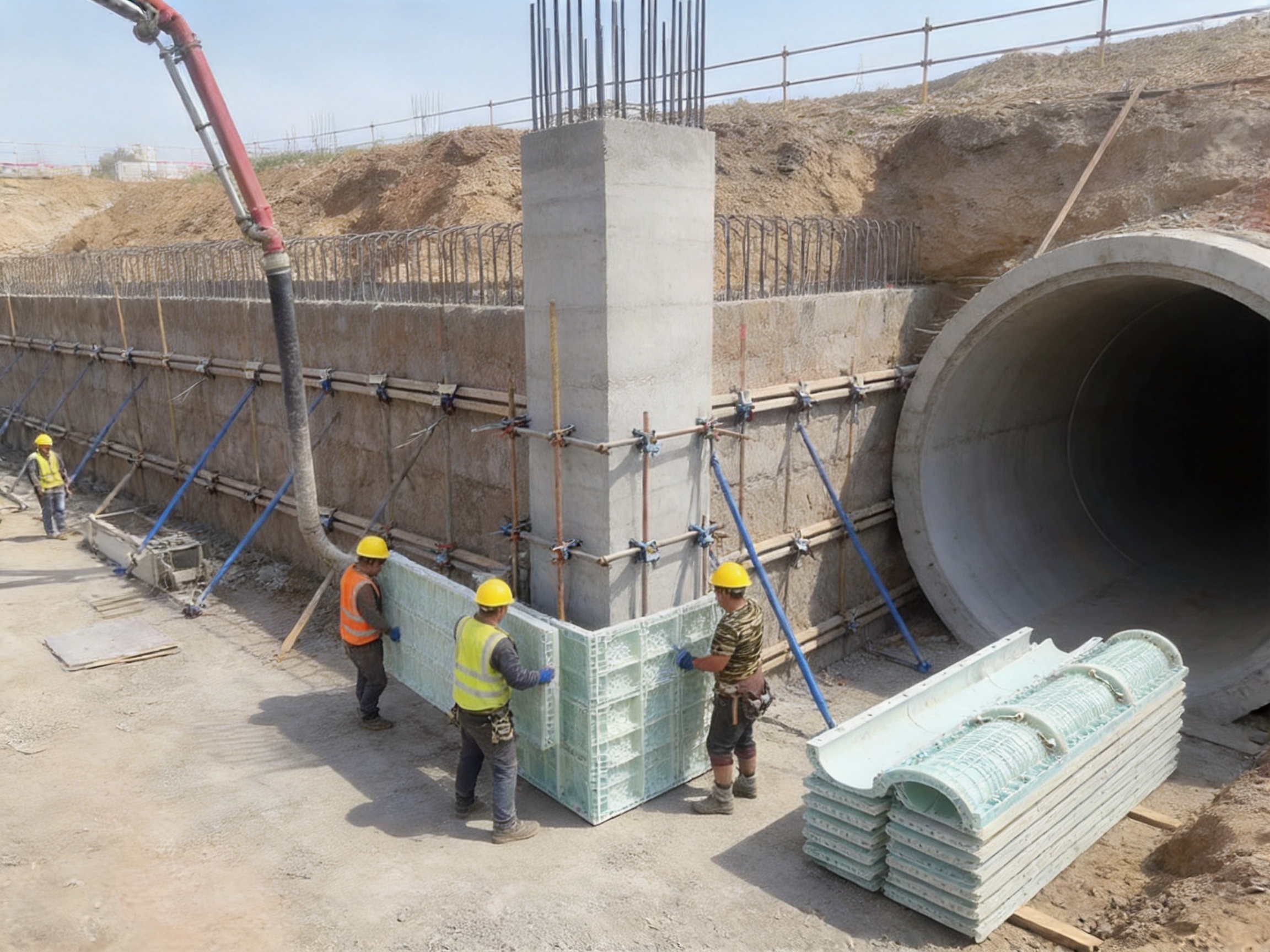
Bridge piers and retaining walls often require robust forms that can resist fresh concrete pressure while maintaining alignment over a substantial height. PP+GF panels can be combined with steel frames, walers, ties, and braces to create a reinforced formwork assembly. The lightweight panel face can simplify repositioning between similar pier sections, while the durable surface supports repeated casting cycles.
Tunnel and utility infrastructure projects may involve moisture, dust, limited access, and frequent formwork movement. A non-absorbent panel is easier to clean after stripping, and the material’s resistance to ordinary impact can help it withstand repeated site handling. For hydraulic tunnel trolleys and specialized tunnel systems, PP+GF panels may be incorporated into a broader engineered arrangement developed for the project geometry.
Retaining walls and large foundation structures can have irregular layouts and complex corners. Panels that can be cut and drilled provide greater flexibility than systems that rely entirely on fixed factory dimensions. Nevertheless, any modification should be documented and reviewed where it affects structural performance, support spacing, or connection integrity.
11. Manufacturing Strengths Behind the Product
The performance of formwork depends heavily on manufacturing consistency. A panel that is strong in one area but poorly formed in another may produce uneven deflection, unreliable connections, or premature damage. Dimensional accuracy, surface quality, reinforcement placement, edge integrity, and material uniformity must be controlled throughout production.
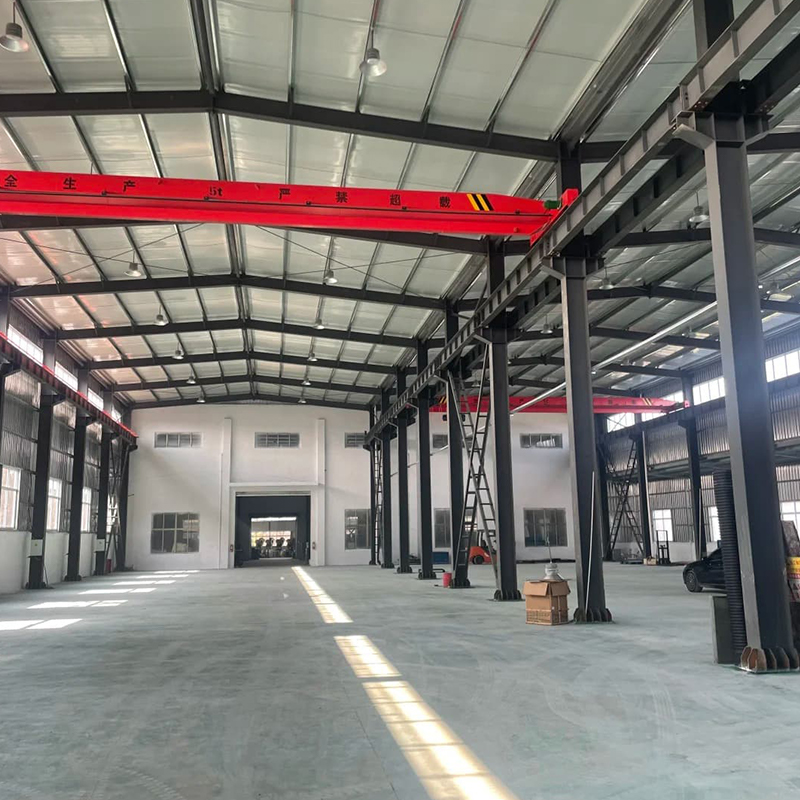
Nantong Hyson Road And Bridge Formwork Co., Ltd. combines construction formwork manufacturing with heavy steel fabrication and infrastructure component production. This combination gives the company practical insight into the requirements of construction sites, including panel alignment, support coordination, steel connection details, transport constraints, and project-specific customization.
The company operates standardized production lines and uses automated processing equipment. Automated production helps improve repeatability, particularly for repeated components and large orders. It can reduce variation between panels, support more reliable dimensional control, and improve production planning for projects with strict delivery schedules.
Although PP+GF formwork is a polymer composite product, the company’s steel manufacturing capabilities remain relevant. Many complete formwork systems use steel frames, clamps, walers, brackets, supports, props, or custom structural components. The ability to process steel components in-house can simplify system integration and enable the manufacturer to provide more than a standalone panel.
The company’s equipment includes advanced laser cutting facilities for steel plate processing. CNC laser cutting can produce accurate openings, connection plates, stiffeners, brackets, and other components used in formwork and structural assemblies. Accurate cutting supports consistent fit-up during welding and reduces the amount of manual correction required during assembly.
Laser cutting is complemented by bending and welding operations. Steel parts can be formed to specified angles and dimensions before being assembled into frames or supports. The company applies certified AWS and EN welding craftsmanship, helping provide a structured approach to weld preparation, execution, inspection, and quality documentation.
For non-standard construction work, the ability to coordinate design, cutting, bending, welding, assembly, and inspection within one manufacturing organization is a significant advantage. It can reduce communication gaps between separate suppliers and make it easier to develop customized panel frames, special corners, curved structures, tunnel components, and heavy-duty support systems.
12. Quality Control and Standards-Oriented Production
Formwork is a safety-critical construction product. Failure can cause concrete loss, structural defects, equipment damage, schedule delays, and serious injuries. Quality control must therefore cover raw materials, production parameters, dimensions, connections, welds, surface condition, load-bearing components, and final inspection.
Nantong Hyson Road And Bridge Formwork Co., Ltd. maintains an ISO 9001 quality management framework and produces scaffolding and related components in accordance with stated BS1139 and EN74 requirements where applicable. The company also reports 12 utility patents supporting its product development and manufacturing capabilities.
Standards and certifications do not replace project-specific engineering. Every formwork application must still be checked against the relevant national codes, contract requirements, concrete pressure calculations, safety procedures, and site conditions. However, a standards-oriented production system provides customers with a more reliable basis for supplier evaluation and quality documentation.
Full-process quality control may include incoming material inspection, production-stage checks, dimensional verification, weld inspection, surface review, assembly testing, packaging inspection, and traceability records. For custom projects, drawings and technical requirements should be confirmed before production. Sample approval, prototype testing, or a first-article inspection may be appropriate for complex components.
Customers purchasing a complete solution should clarify the inspection scope before order confirmation. Important documents may include material certificates, welding procedures, inspection records, dimensional reports, loading information, installation instructions, maintenance recommendations, and packing lists. Clear documentation helps the contractor plan installation and supports future maintenance.
13. Custom OEM Manufacturing Capability
Construction projects rarely conform perfectly to a single standard product size. Wall thicknesses, column dimensions, tunnel radii, connection details, lifting points, and support layouts can differ significantly from one project to another. OEM manufacturing allows the customer to specify the required geometry, material combination, connection method, and production quantity.
Hyson provides customized OEM services for global clients and manufactures non-standard steel components for construction, mining, agriculture, transportation, and infrastructure applications. This broader industrial experience is useful when a formwork project requires integrated frames, heavy supports, access platforms, steel brackets, or other fabricated parts.
A successful custom order begins with complete technical information. Customers should provide drawings, three-dimensional models where available, concrete dimensions, expected casting pressure, required reuse frequency, lifting and handling conditions, support spacing, surface-finish requirements, applicable standards, and delivery schedule.
The manufacturer can then review the design for manufacturability. This review may identify opportunities to reduce unnecessary welds, standardize connection points, improve panel nesting, simplify assembly, or reduce transport dimensions. Early technical coordination can prevent costly revisions after production has started.
For international projects, packaging and shipment planning are also important. Panels and steel assemblies should be protected against deformation, abrasion, moisture, and impact during transport. Components should be labeled clearly, grouped by installation zone, and accompanied by packing documentation that allows site personnel to identify each item efficiently.
14. Installation and Operating Recommendations
Before installation, panels should be inspected for cracks, damaged edges, excessive deformation, blocked holes, or contamination. The supporting structure should be checked for stability and alignment. A clean, level working area improves assembly accuracy and reduces the risk of trip hazards or unexpected movement.
Panels should be arranged according to an approved layout. Joints should be tight and aligned, and gaps should be sealed where necessary to prevent cement paste leakage. Ties, clamps, walers, braces, and props should be installed according to the project’s formwork design rather than estimated by appearance.
Concrete should be placed at a controlled rate. Rapid filling can produce pressure greater than the design assumption, especially in tall walls, narrow columns, or low-temperature conditions where concrete remains fluid for longer. Vibration should be applied properly to achieve consolidation without damaging joints or overloading the panels.
Stripping should begin only when the concrete has achieved the required strength and the responsible engineer or supervisor has approved the operation. Panels should be loosened carefully rather than struck excessively. Avoid using sharp metal tools directly against the formwork face, as unnecessary gouging can reduce future surface quality.
After removal, clean the panels with suitable tools and water where appropriate. Concrete residue should not be allowed to build up on edges or connection zones. Panels should be stacked on a flat support surface, protected from uncontrolled heat, and kept away from heavy equipment traffic. Proper storage is essential for preserving flatness and extending service life.
15. Comparing PP+GF Formwork with Competing Systems
The main competitive advantage of PP+GF reinforced formwork is not that it completely replaces every other formwork type. Rather, it provides a balanced solution for projects that need a combination of durability, low weight, adaptable processing, smooth concrete finish, and repeated use.
Compared with timber, PP+GF formwork offers better moisture resistance, more stable dimensions, greater resistance to repeated cleaning, and stronger recycling potential. It can also reduce the frequency of replacement and the amount of post-stripping plastering. Timber may still be attractive for very small, irregular, or one-off tasks where initial cost and immediate availability are the main priorities.
Compared with all-steel panels, PP+GF formwork is generally easier to carry, cut, drill, and reposition. It can reduce the need for lifting equipment in suitable applications and may be more convenient where the layout changes frequently. All-steel systems may remain preferable for extremely high-load conditions, highly standardized large-scale operations, or projects that require very rigid modular frames.
Compared with ordinary plastic panels without reinforcement, PP+GF formwork offers improved structural stiffness and impact resistance. Glass-fiber reinforcement helps the product perform as a construction component rather than merely as a disposable plastic sheet. The exact advantage depends on panel geometry and support design, so procurement decisions should be based on verified technical data and project calculations.
Compared with low-quality imitation products, professionally manufactured PP+GF formwork offers stronger confidence in material consistency, dimensional accuracy, connection quality, and technical support. The manufacturer’s combined experience in formwork, heavy steel structures, welding, laser cutting, and major infrastructure projects provides an important distinction for customers seeking a complete engineered solution.
16. Project Planning and Return-on-Investment Considerations
Before purchasing PP+GF reinforced formwork, contractors should map the project’s repeated dimensions and casting sequence. The highest economic return is usually achieved when panels can be reused across many similar walls, floors, columns, beams, or infrastructure sections. A panel schedule should identify where each panel will be used, when it will be stripped, how it will be cleaned, and when it will be moved to the next work area.
The project team should calculate more than the panel quantity. Required accessories may include ties, clamps, edge profiles, frames, props, walers, lifting devices, corner components, storage racks, and repair materials. The support system must be included in the technical and financial evaluation.
Labor savings should be estimated using realistic site data. Consider the number of workers needed for carrying, assembly, stripping, cleaning, adjustment, and storage. Also consider whether faster formwork cycles can shorten the overall construction schedule or allow the same crew to complete more work within the planned period.
Concrete finishing savings are another important factor. If the project requires exposed or semi-exposed concrete, the reduced need for plastering and patching may provide substantial value. A sample wall or column should be cast before full deployment to confirm that the resulting surface meets the client’s expectations.
Finally, end-of-life recovery should be included in the purchasing strategy. Panels that can no longer meet dimensional or structural requirements should be removed from service, segregated, and directed toward recycling or approved disposal channels. This approach protects safety while preserving the environmental benefits of the material.
17. Frequently Asked Questions
Q1: What does PP+GF mean?
PP+GF means polypropylene plus glass fiber. Polypropylene provides a lightweight, moisture-resistant polymer base, while glass fiber improves stiffness, strength, dimensional stability, and impact resistance. Together, they form a composite material suitable for engineered construction formwork.
Q2: Can PP+GF formwork replace timber on every project?
It can replace timber in many wall, column, beam, slab, basement, tunnel, and infrastructure applications, but the suitability of any formwork system must be verified against the project’s load, geometry, support arrangement, finish requirements, and local regulations. It is best evaluated through technical design and a site trial.
Q3: Does the panel require release agent?
The smooth, non-absorbent surface reduces concrete adhesion and may allow stripping without conventional release oil in many applications. The final decision should be based on a project trial, the concrete mix, the required surface finish, and the manufacturer’s instructions.
Q4: How many times can the panels be reused?
The supplied product information indicates at least 30 uses for flat panels and at least 40 uses for column and beam forms under suitable conditions. Actual turnover depends on support design, handling, cleaning, storage, cutting, concrete pressure, and site discipline.
Q5: Can the panels be cut on site?
Yes. The panels can generally be sawn, nailed, and drilled with suitable tools. Cutting should follow a planned layout and must not weaken critical ribs, edges, tie locations, or load-bearing areas. Modified panels should be inspected before reuse.
Q6: Are PP+GF panels waterproof?
The material is non-absorbent and resistant to moisture, but the complete formwork assembly is not automatically waterproof. Joints, tie holes, seals, concrete placement, and structural detailing determine the water-tightness of the finished concrete structure.
Q7: Are the panels suitable for cold or hot climates?
The stated operating range is approximately -20°C to 60°C, with reduced risk of shrinkage and cracking within that range. Project conditions, storage, direct sunlight, concrete temperature, and local technical requirements should still be considered before use.
Q8: Can PP+GF formwork be used with steel frames?
Yes. The panels can be integrated with steel frames, walers, props, ties, clamps, brackets, and other support components. The complete arrangement should be designed as a unified system to control pressure, deflection, alignment, and safety.
Q9: Is the product environmentally friendly?
Its environmental advantages include repeated use, reduced timber consumption, lower waste generation, reduced need for release agents, and recyclability of offcuts and used panels. Responsible collection and recycling are necessary to realize these benefits.
Q10: What services can the manufacturer provide besides panels?
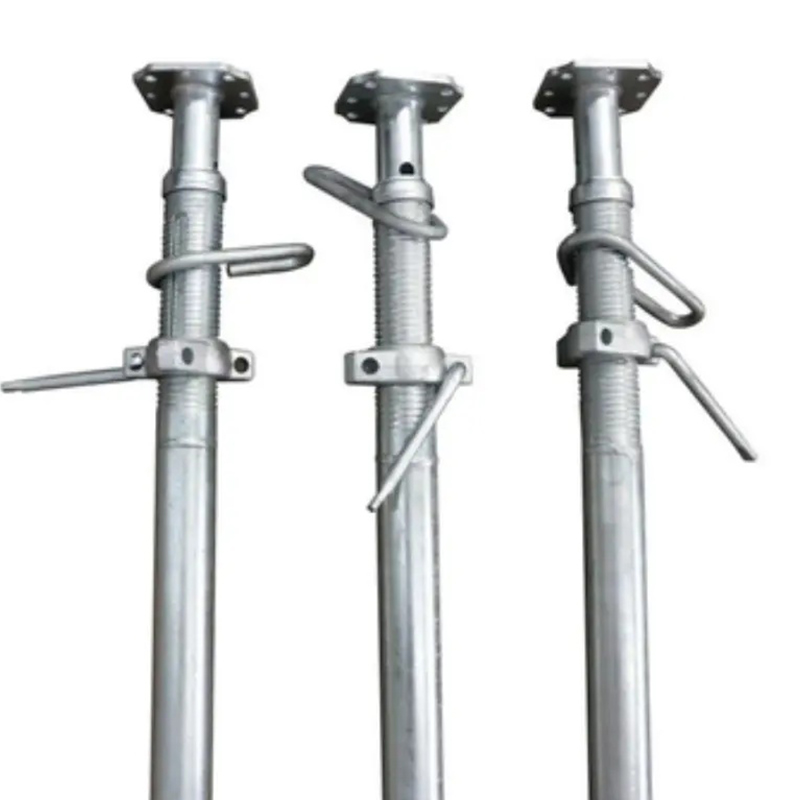
The manufacturer provides custom formwork, heavy-duty steel structures, ringlock scaffolding, steel props, laser cutting, bending, welding, and OEM metal fabrication. This allows customers to source integrated steel frames, brackets, supports, and other non-standard components for construction and industrial projects.
Q11: Does the manufacturer serve large infrastructure projects?
The company reports experience as a strategic supplier for major construction organizations and has supplied solutions for projects including the Sutong Yangtze River Bridge, Taizhou Bridge, and Sudan Thermal Power Plant. Its manufacturing capabilities are intended for both standard and complex infrastructure requirements.
Q12: What information should be provided for a quotation?
Customers should provide panel dimensions, structural drawings, concrete geometry, expected casting pressure, required quantities, reuse objectives, support details, surface-finish requirements, applicable standards, delivery location, and project schedule. Complete technical information improves quotation accuracy and reduces later design changes.
18. Conclusion
PP+GF reinforced formwork represents a practical development in construction formwork technology. By combining the low weight and adaptability of polymer materials with glass-fiber reinforcement and engineered support arrangements, it addresses many of the weaknesses associated with timber and heavy all-steel systems. Its smooth surface can improve concrete finish quality, its non-absorbent body simplifies cleaning, and its resistance to moisture, impact, corrosion, and temperature variation supports repeated use in demanding environments.
The system is particularly attractive where contractors need fast installation, reduced manual handling, high panel turnover, lower auxiliary support demand, and better lifecycle economics. It can be applied to civil and commercial buildings, underground structures, bridge piers, tunnels, retaining walls, utility projects, and other cast-in-place concrete works.
The value of the product is strengthened by the manufacturer’s broader industrial capabilities. Nantong Hyson Road And Bridge Formwork Co., Ltd. combines formwork production with laser cutting, steel plate processing, bending, welding, heavy structural fabrication, scaffolding manufacturing, and OEM customization. Its ISO 9001-oriented management system, stated AWS and EN welding practices, BS1139 and EN74-related product capabilities, utility patents, and experience with major infrastructure suppliers provide a strong foundation for integrated project support.
For the best results, customers should evaluate the complete system rather than the panel alone. Proper engineering, support spacing, installation, concrete placement, stripping, cleaning, storage, and inspection determine the final performance. When these factors are managed correctly, PP+GF reinforced formwork can help construction teams achieve a more efficient, durable, economical, and environmentally responsible method of producing high-quality concrete structures.
References
1. Product technical information for PP+GF Reinforced Formwork, including performance advantages, applications, reuse potential, and recyclability data.
2. ISO 9001, Quality Management Systems—Requirements.
3. BS 1139, Metal Scaffolding—Relevant Requirements for Scaffolding Components and Systems.
4. EN 74, Couplers, Spigot Pins and Baseplates for Use in Falsework and Scaffolds—Requirements and Test Procedures.
5. AWS welding standards and recommended practices for structural and industrial fabrication.
6. General engineering principles for concrete formwork design, fresh-concrete pressure, temporary works, and construction-site safety.
7. Manufacturer information concerning custom steel formwork, laser cutting, heavy steel fabrication, OEM production, scaffolding, and infrastructure project experience.
Product: PP+GF Reinforced Formwork



- Location
- Group 3, Fangzhuang Village, Rucheng Subdistrict, Rugao City, Nantong, Jiangsu, China
- Follow us
- Phone
- +86-13646196162
- info@hysonindustry.com
