 +86-13646196162
 info@hysonindustry.com




 русский
 عربى



Heavy-Duty Steel Structures and Large Steel Structural Components for Demanding Construction Projects
 2026.10.15
Content
- 1 Introduction
- 2 What Is a Steel Structure?
- 3 Applications of Heavy Steel Structures
- 4 Key Advantages of Professionally Manufactured Steel Structures
- 5 Why Heavy-Metal Fabrication Capability Matters
- 6 Advanced Steel Structure Manufacturing Process
- 6.1 1. Technical Drawing and Requirement Review
- 6.2 2. Material Selection and Traceability
- 6.3 3. CNC Laser Cutting and Plate Processing
- 6.4 4. Forming, Bending, and Edge Preparation
- 6.5 5. Fit-Up and Assembly
- 6.6 6. Certified Welding
- 6.7 7. Dimensional Inspection and Correction
- 6.8 8. Welding and Non-Destructive Inspection
- 6.9 9. Surface Preparation and Protection
- 6.10 10. Final Assembly, Identification, and Packing
- 7 Manufacturing Strengths That Create a Competitive Advantage
- 8 Comparison with Less Specialized Steel Suppliers
- 9 Quality Control from Raw Material to Delivery
- 10 Design Considerations for Buyers
- 11 Cost Efficiency Beyond the Purchase Price
- 12 Environmental and Operational Benefits
- 13 Technical Support and Project Communication
- 14 How to Select a Steel Structure Manufacturing Partner
- 15 Steel Structure Solutions from Nantong Hyson Road And Bridge Formwork
- 16 Frequently Asked Questions
- 16.1 What types of steel structures can be manufactured?
- 16.2 Can steel structures be produced according to customer drawings?
- 16.3 What is the advantage of CNC laser cutting?
- 16.4 What welding standards are used?
- 16.5 Can large components be divided for transportation?
- 16.6 How is dimensional accuracy controlled?
- 16.7 What surface treatments are available?
- 16.8 Can the supplier provide inspection documentation?
- 16.9 Which industries use these steel structures?
- 16.10 What information should be provided for a quotation?
- 17 Conclusion
- 18 References
- 19 Product: Steel Structure
Introduction
Steel structures are essential to modern construction, infrastructure, industrial development, transportation, energy, warehousing, and heavy engineering. From bridge components and industrial workshops to warehouse frames, equipment supports, embedded parts, and large load-bearing assemblies, steel provides the strength, flexibility, and service life required for demanding projects. However, the performance of a steel structure depends on much more than the basic material. Engineering accuracy, plate preparation, cutting quality, welding control, dimensional consistency, corrosion protection, inspection, packaging, and delivery coordination all influence the final result.
For international buyers, contractors, engineering companies, and original equipment manufacturers, selecting a reliable steel structure manufacturing partner is therefore a strategic decision. A qualified supplier must be able to process heavy steel plates, manufacture large structural components, meet project-specific drawings, manage non-standard designs, and maintain stable quality from raw material inspection through final shipment. The supplier must also understand the practical requirements of construction sites, including installation sequence, lifting points, bolted connections, embedded components, transport limitations, and tolerance control.
Nantong Hyson Road And Bridge Formwork Co., Ltd. is a professional manufacturer of heavy-duty steel structures, custom steel formwork, ringlock scaffolding, steel props, bridge and infrastructure components, and OEM metal fabrication. Its steel structure capability is supported by advanced laser cutting equipment, standardized production lines, automated processing, and certified AWS and EN welding craftsmanship. The company combines heavy-industry manufacturing experience with customized engineering support to produce large steel structural components for construction, mining, agriculture, transportation, energy, and industrial applications.
This article explains the main advantages of professionally manufactured steel structures, the manufacturing processes used for high-precision components, the quality systems that support reliable performance, and the reasons a specialized heavy-metal fabrication supplier can provide greater value than a general steel workshop.
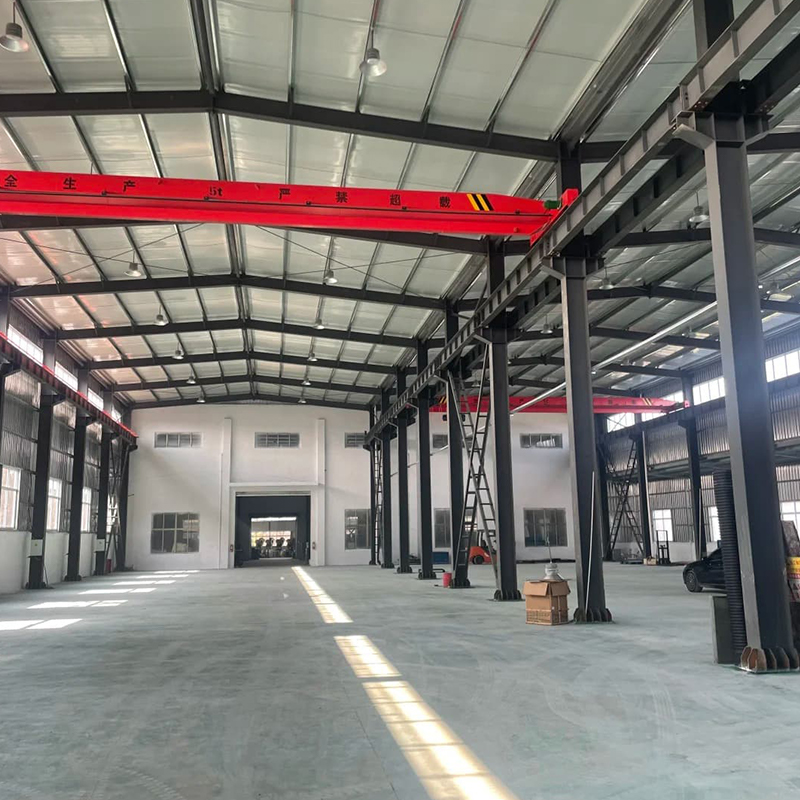
Steel Structure
What Is a Steel Structure?
A steel structure is an engineered assembly made from structural steel plates, beams, columns, tubes, angles, channels, stiffeners, base plates, connection plates, brackets, embedded parts, and other fabricated components. These parts are cut, formed, fitted, welded, drilled, inspected, treated, and assembled according to engineering drawings and project requirements.
Steel structures can be designed as primary load-bearing systems or as secondary supporting systems. Primary structures include building frames, bridge components, large roof systems, transfer frames, industrial platforms, and heavy equipment supports. Secondary structures include walkways, stairs, handrails, access platforms, maintenance frames, conveyor supports, protective structures, and service brackets.
Unlike simple stock steel products, fabricated structures are made to meet a defined geometry and operational purpose. The final component may need to support compression, tension, bending, vibration, impact, wind load, equipment load, thermal movement, or repeated cyclic stress. For this reason, manufacturing must follow the approved design rather than rely on general workshop habits.
A high-quality steel structure manufacturer converts engineering information into a controlled production process. This includes reviewing drawings, confirming material grades and thicknesses, preparing cutting files, organizing material traceability, controlling welding procedures, checking dimensions, and preparing components for efficient site installation.
Applications of Heavy Steel Structures
Industrial Buildings and Workshops
Steel structures are widely used for factories, production buildings, maintenance workshops, machine halls, processing plants, and industrial storage facilities. The structural system can be designed for wide spans, large overhead doors, cranes, heavy equipment, ventilation systems, and future expansion. Steel framing also allows an industrial building to be assembled quickly compared with many traditional construction methods.
Industrial workshops often require customized column spacing, elevated platforms, equipment openings, service corridors, and reinforced areas. A fabrication partner with experience in non-standard components can manufacture the frame around the actual production process rather than forcing the building to follow a limited standard module.
Warehouses and Logistics Facilities
Warehouses require strong but efficient structural systems that can support roof cladding, wall panels, storage equipment, loading areas, lighting, fire-protection systems, and mechanical services. Steel structures are suitable for both conventional warehouses and high-clearance facilities with large internal volumes.
Large steel structural components can be prefabricated and delivered in installation-ready sections. This reduces cutting and welding work at the construction site, helping contractors improve erection speed, reduce site labor, and maintain safer working conditions.
Bridges and Transportation Infrastructure
Bridge construction requires precise steel components capable of carrying substantial loads and resisting environmental exposure. Steel may be used for bridge formwork supports, temporary structures, access platforms, maintenance systems, embedded parts, connection assemblies, and permanent structural elements.
Transportation infrastructure projects often involve tight coordination between civil works, reinforcement, concrete placement, mechanical systems, and traffic management. Fabricated steel components must therefore match the approved dimensions and connection details. Incorrect hole positions, uneven bearing surfaces, or uncontrolled distortion can delay installation and create costly site modifications.
Energy and Power Projects
Power plants, thermal power facilities, substations, renewable energy sites, and utility projects use steel structures for equipment platforms, pipe supports, maintenance access, support frames, service buildings, and heavy-duty operating areas. Such applications may expose steel to heat, moisture, chemicals, vibration, or outdoor weather.
Manufacturing quality is especially important when components are installed around high-value equipment. Proper dimensional control helps prevent interference with pipes, cable trays, machinery, and access routes. Clear identification and organized packaging also support efficient installation during complex project schedules.
Mining, Agriculture, and Material Handling
Mining and agricultural operations require durable structures for processing lines, storage facilities, conveyors, feeders, platforms, protective frames, and machinery supports. These environments may contain dust, moisture, abrasive materials, impact loads, or corrosive substances.
Heavy steel fabrication allows the design to be adapted to actual operating conditions. Reinforced sections, wear-resistant plates, replaceable brackets, access platforms, and service openings can be incorporated into the structure during production. This reduces the need for improvised modifications after delivery.
Construction and Temporary Engineering Systems
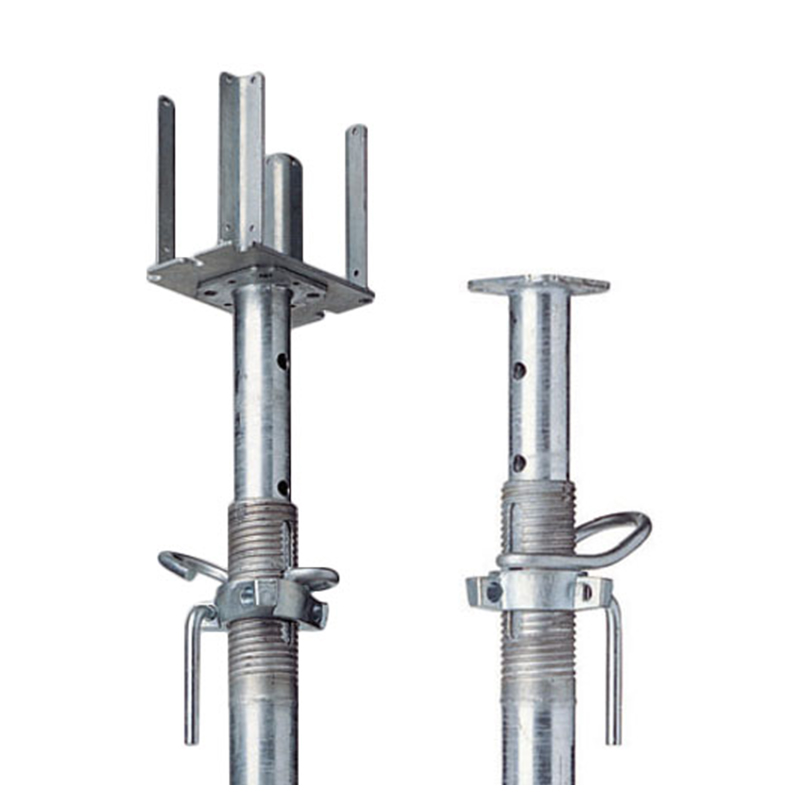
Steel formwork, hydraulic tunnel trolleys, scaffolding systems, steel props, bridge construction assemblies, and temporary support structures are important examples of specialized steel fabrication. These systems must combine structural strength with repeated usability, manageable weight, safe handling, and accurate assembly.
Because temporary structures are frequently moved, dismantled, adjusted, and reused, the quality of welded joints, connection components, lifting points, and alignment features is critical. A manufacturer experienced in road and bridge construction can better understand these repeated-use requirements.
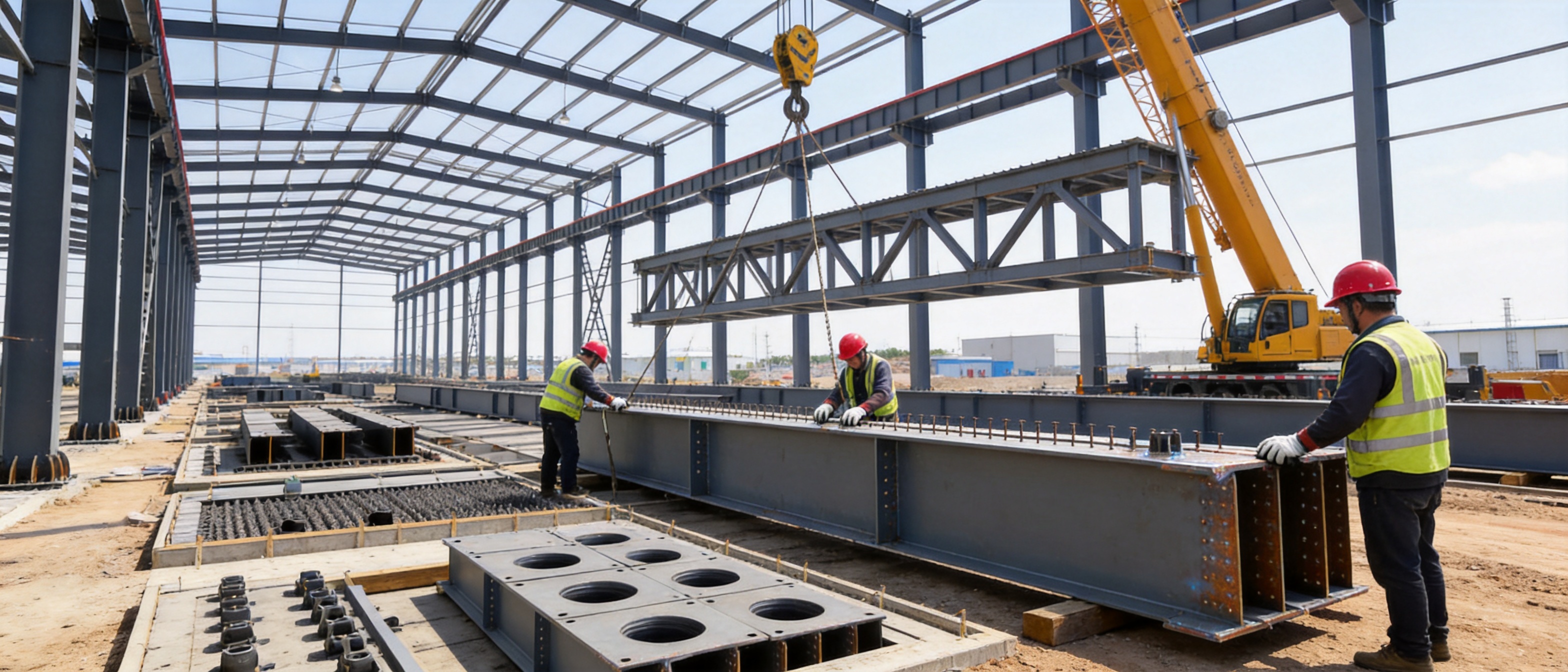
Key Advantages of Professionally Manufactured Steel Structures
High Strength-to-Weight Performance
Steel provides high structural strength while allowing engineers to control the weight of the final assembly. Properly designed steel frames can carry significant loads without requiring excessively thick or bulky members. This can create larger usable spaces, wider spans, higher clearances, and more efficient transportation arrangements.
The strength-to-weight advantage is particularly valuable for bridges, workshops, warehouses, industrial platforms, and transportable equipment supports. Lower structural weight may reduce foundation requirements, lifting demands, shipping costs, and installation time, depending on the project design.
Design Flexibility
Steel is suitable for regular and irregular geometries. Fabricated assemblies can include tapered beams, curved plates, stiffened panels, heavy brackets, complex connection plates, embedded parts, and custom support frames. This flexibility is useful when a project contains unusual site conditions or when the structure must accommodate existing equipment.
Computer-controlled cutting and modern fabrication methods allow manufacturers to produce accurate non-standard components without relying entirely on manual layout. As a result, complex designs can be repeated with greater consistency.
Fast Site Installation
Much of the work involved in steel structure production can be completed in a controlled factory environment. Cutting, drilling, welding, inspection, surface preparation, labeling, and partial assembly can be performed before the components reach the construction site.
Factory prefabrication reduces the amount of hot work, measuring, and adjustment required on site. When components arrive in the correct sequence and are clearly marked, erection teams can work more efficiently. This can be especially important in urban construction, restricted sites, bridge projects, and facilities where production interruptions must be minimized.
Repeatable Quality
A standardized production line supports repeatability. Rather than manufacturing each part through an informal sequence, a controlled process defines how materials are received, cut, formed, assembled, welded, inspected, treated, and packed.
Repeatability is valuable for large projects involving hundreds or thousands of related parts. Consistent dimensions and connection details reduce the risk of mismatch during installation and make replacement or additional production easier.
Long Service Life
Steel structures can provide a long service life when the material selection, design, welding, surface treatment, drainage, inspection, and maintenance plan are appropriate. Good fabrication reduces the likelihood of premature cracking, distortion, poor fit-up, and local stress concentration.
For outdoor or corrosive environments, the structure may require a suitable coating system, galvanizing, protective paint, sealed details, or other corrosion-control measures. The correct treatment depends on the environment, exposure category, service temperature, maintenance plan, and project specification.
Repairability and Modifiability
Steel structures can often be reinforced, extended, repaired, or modified more easily than many other structural systems. Additional plates, brackets, stiffeners, access features, or connection points can be incorporated when the original design allows future adaptation.
This makes steel suitable for industrial facilities that may change production equipment or operating requirements over time. A supplier with OEM fabrication experience can also support replacement parts and customized modifications after the initial delivery.
Why Heavy-Metal Fabrication Capability Matters
Heavy-metal fabrication is different from light-duty workshop production. Large structural components may involve thick plates, long weld seams, large lifting loads, high heat input, extensive fit-up work, and strict dimensional requirements. The manufacturing facility must have suitable equipment, floor space, lifting capacity, process discipline, and experienced personnel.
Heavy components can be difficult to rotate, align, support, and inspect. If a large assembly is not properly planned, welding sequence may cause distortion, access to internal seams may be limited, and later correction may become expensive. A capable manufacturer considers these issues before production begins.
Large steel structural components also require careful transportation planning. The manufacturer must evaluate component length, width, height, weight, center of gravity, lifting points, packing protection, and loading sequence. Components that are structurally correct but difficult to transport or unload may create unnecessary project delays.
Hyson’s heavy-industry manufacturing focus supports the production of large steel assemblies for infrastructure and industrial customers. Its experience with bridge formwork, steel structures, scaffolding, embedded parts, and OEM fabrication provides a practical foundation for managing complex fabrication requirements.
Advanced Steel Structure Manufacturing Process
1. Technical Drawing and Requirement Review
Every successful steel structure project begins with a clear understanding of the design. The manufacturer reviews general arrangement drawings, part drawings, weld symbols, material specifications, tolerances, coating requirements, connection details, inspection standards, and packaging instructions.
This review identifies potential production problems before material is cut. Examples include inaccessible welds, insufficient clearance, conflicting dimensions, unsuitable lifting points, difficult assembly sequences, or components that exceed practical transport limits.
For OEM projects, the supplier may also review three-dimensional models, sample parts, equipment interfaces, and performance requirements. The purpose is not simply to reproduce a drawing, but to convert the design into a reliable and manufacturable production plan.
2. Material Selection and Traceability
Structural steel material must match the approved specification. Important factors may include grade, yield strength, tensile strength, impact performance, thickness, chemical composition, weldability, and environmental suitability.
Material identification should be maintained during cutting and processing. Traceability helps connect finished components to their original steel plate or section. This is valuable for quality documentation, project records, future maintenance, and inspection requirements.
For projects involving thick plates or critical load-bearing components, material certificates and inspection records may be required. The exact documentation depends on the contract, applicable standard, and customer specification.
3. CNC Laser Cutting and Plate Processing
Laser cutting is an important part of modern steel structure production. Computer-controlled laser equipment can produce accurate profiles, holes, slots, notches, and connection shapes from digital files. It is suitable for many structural plates and customized metal components.
The advantages of CNC laser cutting include consistent geometry, reduced manual marking, clean cutting edges, efficient nesting, and improved repeatability. Accurate cutting reduces the amount of grinding and adjustment required during assembly.
Laser cutting is particularly useful for non-standard components such as gusset plates, stiffeners, base plates, brackets, embedded parts, flange plates, and connection elements. When the same design is produced repeatedly, digital control helps maintain consistency between batches.
Cutting parameters must be selected according to material type, thickness, profile complexity, and required edge quality. After cutting, parts should be checked for visible defects, dimensional accuracy, heat-affected areas, and identification marks where required.
4. Forming, Bending, and Edge Preparation
Some steel components require bending, rolling, pressing, beveling, or edge preparation before assembly. Forming must be controlled to prevent unwanted cracking, excessive deformation, or dimensional deviation.
Weld preparation is also important. Bevel angles, root gaps, edge cleanliness, and joint configuration affect weld penetration and final strength. The preparation method must correspond to the approved welding procedure and plate thickness.
Accurate edge preparation improves welding efficiency and reduces the need for excessive filler metal. It can also help minimize distortion by creating a predictable joint geometry.
5. Fit-Up and Assembly
During fit-up, cut and formed parts are positioned according to the approved drawings. Fixtures, jigs, temporary supports, clamps, and reference marks may be used to maintain alignment.
Fit-up personnel verify dimensions, squareness, diagonals, joint gaps, hole locations, stiffener positions, and connection interfaces before full welding begins. Correcting a problem at the fit-up stage is usually easier and less costly than correcting it after welding.
For large assemblies, the production team may divide the structure into subassemblies. This approach can improve access, reduce handling difficulty, and make inspection more manageable. The subassemblies are later joined using a controlled sequence.
6. Certified Welding
Welding is one of the most important operations in steel structure manufacturing. The quality of a welded assembly depends on joint design, material compatibility, welder skill, welding parameters, preheating where required, interpass temperature, cleaning, sequence, and inspection.
Hyson applies AWS and EN welding craftsmanship to its fabrication activities. These internationally recognized frameworks provide guidance for welding procedures, welder qualification, joint quality, inspection, and acceptance requirements. The specific standard applied to a project should be confirmed in the contract and technical documentation.
Controlled welding procedures help reduce common problems such as lack of fusion, incomplete penetration, undercut, porosity, cracking, excessive reinforcement, and distortion. Welding personnel must understand the approved procedure and use suitable consumables for the material and joint type.
Welding sequence is especially important for large components. Uneven heat input can cause angular distortion, bowing, twisting, or dimensional movement. Planned sequencing, balanced welding, temporary restraint, controlled heat input, and intermediate measurements help maintain structural accuracy.
7. Dimensional Inspection and Correction
After welding, the structure is inspected against the approved drawings and specified tolerances. Measurements may include overall length, width, height, diagonals, flatness, straightness, hole position, flange alignment, base plate level, and connection geometry.
If correction is necessary, it must be carried out using an approved method that does not damage the material or compromise the welds. Controlled mechanical correction or carefully managed thermal correction may be appropriate depending on the component and specification.
Dimensional inspection is not limited to the final stage. In-process checks are more effective because they identify movement before the assembly becomes too large or complex to adjust.
8. Welding and Non-Destructive Inspection
Inspection requirements depend on structural importance, customer specifications, material thickness, weld category, and applicable standards. Visual inspection is a basic requirement for all welded components. Additional methods may include dimensional inspection, magnetic particle testing, penetrant testing, ultrasonic testing, or radiographic testing where specified.
Non-destructive testing allows inspectors to evaluate weld integrity without cutting or damaging the finished component. The selected method depends on the type of discontinuity being investigated and the geometry of the joint.
Inspection records provide evidence that the manufacturing process was controlled. For major infrastructure and industrial projects, these records may form part of the final quality dossier.
9. Surface Preparation and Protection
Before painting or other surface treatment, steel surfaces must be cleaned and prepared. Oil, rust, mill scale, welding spatter, dust, and other contaminants can reduce coating adhesion and accelerate corrosion.
Surface preparation may include mechanical cleaning, abrasive blasting, grinding, or other specified methods. The required preparation level depends on the coating system and environmental exposure.
Protective coatings may include primers, intermediate coats, finishing coats, zinc-rich systems, galvanizing, or specialized treatments. Coating thickness, drying time, environmental conditions, and surface cleanliness should be controlled throughout the process.
Areas intended for welding, bolting, grounding, or later assembly may require special treatment. Coating plans should therefore be coordinated with the installation sequence and project requirements.
10. Final Assembly, Identification, and Packing
Before shipment, components may be trial-assembled or checked against matching parts. Connection holes, bolt groups, access points, lifting lugs, embedded parts, and orientation marks should be verified.
Clear identification is important for large projects. Each component can be marked with a part number, assembly reference, orientation symbol, weight information, or installation sequence according to customer requirements.
Packaging must protect the steel structure during handling, inland transportation, port operations, and long-distance shipping. Sensitive machined surfaces, coated areas, connection plates, and smaller accessories require suitable protection against impact, moisture, and loss.
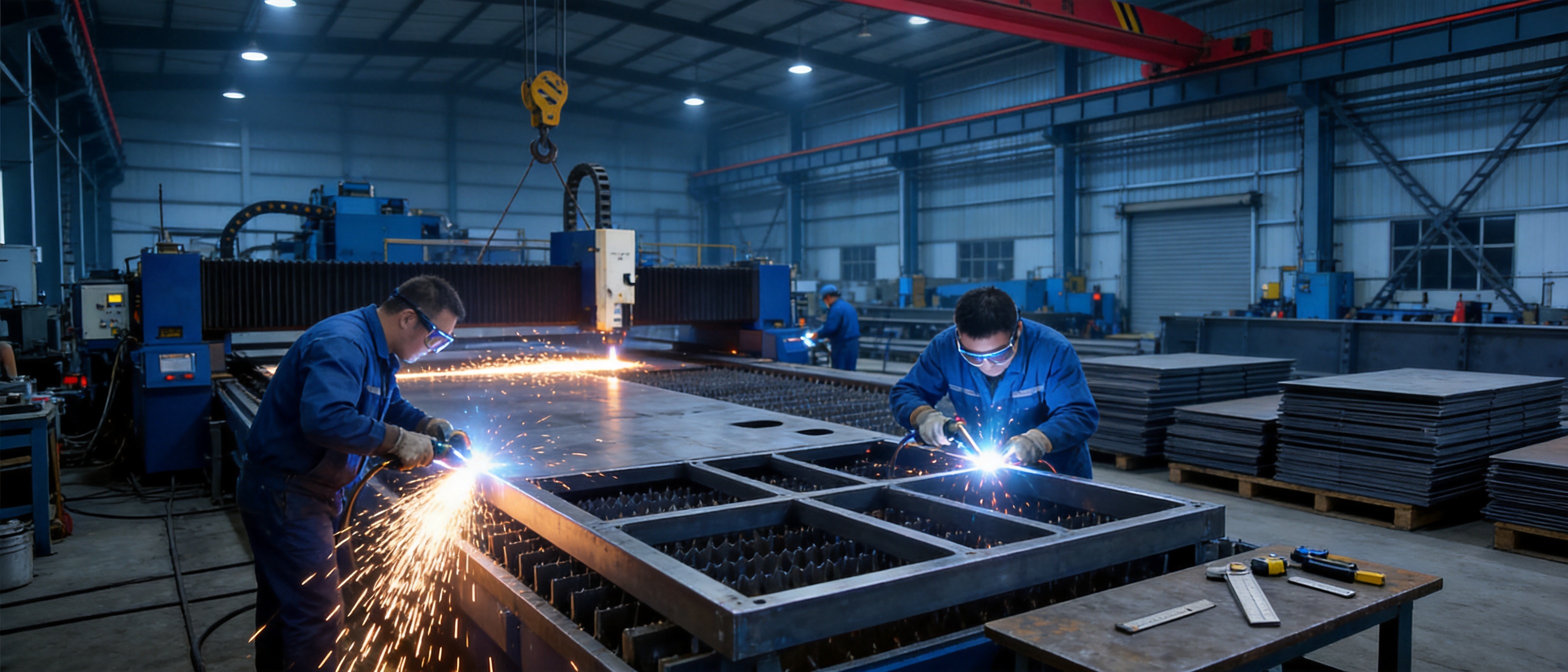
Manufacturing Strengths That Create a Competitive Advantage
Integrated Cutting, Bending, and Welding
One advantage of an integrated fabrication supplier is the ability to coordinate multiple processes within one production system. When cutting, forming, welding, inspection, and packing are managed by the same organization, technical information can move more efficiently between departments.
This reduces the risks associated with fragmented outsourcing, including inconsistent tolerances, duplicated handling, unclear responsibility, and delays between processes. It also simplifies communication for customers who require a complete fabricated assembly rather than individual raw materials.
Experience with Non-Standard Components
Many general steel suppliers focus on standard beams, channels, plates, and simple frames. However, major engineering projects frequently require non-standard parts. These may include large welded boxes, irregular stiffened plates, bridge formwork sections, hydraulic trolley frames, embedded assemblies, equipment supports, and customized access structures.
Experience with non-standard components is a competitive advantage because the supplier must solve practical manufacturing issues rather than simply sell catalog products. The ability to interpret drawings, suggest manufacturability improvements, and control complex weldments can significantly reduce project risk.
Infrastructure Project Experience
Suppliers that have served major infrastructure projects understand the importance of schedule, documentation, inspection, packaging, and site coordination. Bridge and road projects often involve strict milestones and limited installation windows. Manufacturing delays can affect multiple downstream activities.
Hyson has supplied solutions for major projects such as the Sutong Yangtze River Bridge, Taizhou Bridge, and Sudan Thermal Power Plant. This type of project background supports a disciplined approach to heavy structural manufacturing and helps the company understand the expectations of large contractors and engineering organizations.
International Standards and Quality Systems
Hyson operates under ISO 9001 quality management principles and provides products associated with BS1139 and EN74 requirements for relevant scaffolding applications. Its welding activities apply AWS and EN craftsmanship according to project needs.
Standards do not replace engineering judgment, but they provide a structured basis for design coordination, manufacturing control, inspection, and documentation. Internationally oriented quality systems also make communication easier for overseas buyers and project teams.
Patented and Developed Manufacturing Knowledge
Hyson is supported by 12 utility patents. Patents and internally developed production knowledge can reflect practical improvements in equipment, fabrication methods, structural details, handling systems, or product functions.
For customers, the value of manufacturing knowledge lies in its application. A supplier that continually improves its processes may be better positioned to handle unusual dimensions, reduce fabrication waste, improve assembly efficiency, and develop customized solutions.
OEM and Custom Manufacturing Support
OEM customers often need products manufactured under their own drawings, specifications, brand requirements, or project documentation. They may require confidentiality, sample approval, first-article inspection, batch consistency, customized packaging, and repeat production.
A capable OEM partner should be able to work from two-dimensional drawings, three-dimensional models, physical samples, or technical specifications. It should also be prepared to communicate about tolerances, materials, welds, coatings, inspection, and shipping details before production starts.
Comparison with Less Specialized Steel Suppliers
Not all steel fabricators offer the same level of capability. A general workshop may be suitable for simple railings, light brackets, or basic frames, but it may lack the equipment and systems needed for heavy structural components.
| Evaluation Area | Specialized Heavy-Steel Manufacturer | Less Specialized Workshop |
|---|---|---|
| Material handling | Plans for thick plates, large assemblies, lifting requirements, and traceability | May be limited by equipment capacity and available handling space |
| Cutting accuracy | Uses CNC laser cutting and digital production files for repeatable profiles | May rely more heavily on manual marking and adjustment |
| Welding control | Applies qualified procedures, trained personnel, and controlled sequences | Process control may vary between operators and projects |
| Non-standard fabrication | Experienced with complex welded assemblies and customized components | Often focuses on simpler standard products |
| Quality documentation | Can provide inspection records, material information, and production documentation | Documentation may be limited or inconsistent |
| Project coordination | Supports drawing review, packaging plans, installation sequence, and OEM requirements | May focus mainly on workshop production |
| Surface protection | Coordinates preparation and coating requirements with structural use | May offer limited coating options or less process control |
| Large-project experience | Understands infrastructure schedules, milestones, and construction interfaces | May have limited experience with major engineering projects |
The right choice depends on the project. For a small and simple frame, a basic workshop may be sufficient. For large structural components, complex weldments, infrastructure assemblies, or repeat OEM production, a specialized supplier generally provides greater control and lower overall risk.
Quality Control from Raw Material to Delivery
Quality control should be treated as a complete process rather than a final inspection only. The most reliable approach combines preventive controls, in-process verification, and final inspection.
Incoming Material Control
Incoming steel should be checked against purchase documents, material grades, dimensions, surface condition, and certificates. Plates and sections should be identified and stored in a way that prevents mix-ups.
Process Control
During cutting, forming, fit-up, and welding, operators and inspectors should confirm that the work follows approved drawings and procedures. Critical dimensions should be measured before they become difficult to correct.
Weld Quality Control
Welds should be checked for appearance, profile, continuity, and visible defects. Additional testing should be completed when required by the project. Welding consumables should be properly stored and used according to their technical requirements.
Final Inspection
Final inspection verifies the overall dimensions, connection locations, surface condition, coating, marking, accessories, and packing. The completed inspection package should correspond to the actual shipment and component identification.
Continuous Improvement
Quality systems become more effective when nonconformities are analyzed rather than simply corrected. Root-cause analysis can identify problems in drawing interpretation, cutting files, fixtures, welding sequence, inspection timing, or packaging. Corrective actions then improve future production.
Design Considerations for Buyers
Buyers can improve project outcomes by providing complete technical information at the quotation stage. Important information includes steel grade, plate thickness, component dimensions, estimated weight, quantity, weld requirements, coating system, tolerance, inspection requirements, delivery location, and expected production schedule.
Drawings should show connection details, hole sizes, reference datums, weld symbols, surface treatment, and assembly orientation. If the structure interfaces with concrete, machinery, pipes, or other systems, those interface dimensions should be clearly identified.
Buyers should also consider transportation from the beginning. A component may need to be divided into transportable sections, fitted with lifting points, or designed for field bolting instead of complete factory welding. Early coordination can prevent expensive redesign later.
For repeat orders, customers should establish a controlled revision system. Changes in material, dimensions, hole locations, coating, or welding details must be clearly recorded. This is particularly important for OEM products and projects with multiple production batches.
Cost Efficiency Beyond the Purchase Price
The lowest quoted fabrication price does not always represent the lowest project cost. Steel structure value should be assessed across the complete project lifecycle.
Accurate cutting can reduce material waste and minimize rework. Correct fit-up can lower site adjustment costs. Proper welding can reduce repair and inspection delays. Organized packing can reduce missing parts and installation interruptions. Suitable surface treatment can reduce maintenance expenses and extend service life.
Factory fabrication may also reduce site labor, equipment rental, hot-work permits, temporary facilities, and safety risks. When the components arrive ready for installation, contractors can dedicate more time to erection and less time to basic fabrication.
A specialized supplier can therefore create savings through process reliability, not only through the price of steel or labor. The most useful comparison evaluates total installed cost, schedule impact, quality risk, maintenance, and future support.
Environmental and Operational Benefits
Steel is a recyclable material, and steel components can often be reused, modified, or recycled at the end of their service life. Efficient CNC nesting can reduce offcuts during plate cutting, while accurate production helps reduce rework and discarded components.
Factory production can also improve resource efficiency by concentrating equipment, labor, inspection, and surface treatment in a controlled environment. Compared with extensive field fabrication, this may reduce local disruption and improve control of welding fumes, debris, and material storage.
From an operational perspective, durable steel structures support longer service intervals when properly designed and protected. Strong access platforms, maintenance frames, and equipment supports can improve the safety and efficiency of industrial operations.
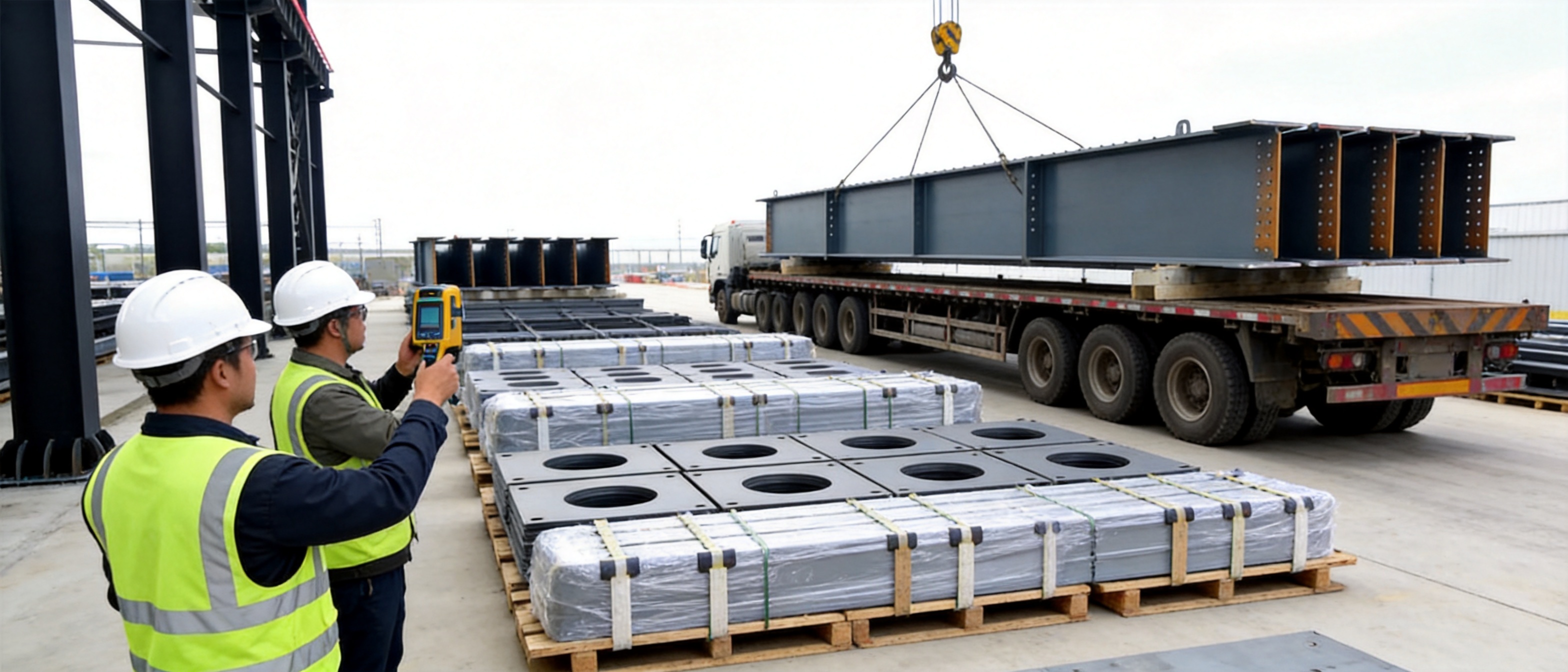
Technical Support and Project Communication
Successful steel structure projects require communication among the buyer, designer, fabricator, contractor, logistics provider, and installation team. The manufacturer should be prepared to clarify questions about dimensions, material grades, welds, coatings, lifting, packaging, and assembly.
Hyson provides OEM and customized manufacturing services for global customers. Its technical and production teams can coordinate steel fabrication requirements for construction, mining, agriculture, transportation, and industrial applications.
Good communication is especially important when the customer’s drawings were prepared for a different manufacturing method. A fabricator may identify opportunities to simplify a weld, change a joint preparation, divide a large assembly, improve lifting access, or reduce unnecessary machining while preserving the design intent.
Any proposed change should be reviewed and approved through the proper engineering process. Manufacturing convenience must never override structural performance or contractual requirements.
How to Select a Steel Structure Manufacturing Partner
When evaluating a supplier, buyers should consider more than workshop photographs or a basic product list. The following questions can help determine whether the manufacturer is suitable for a demanding project.
- Can the supplier manufacture large and heavy welded assemblies?
- Does it have CNC cutting and suitable plate-processing equipment?
- Can it work from custom drawings and non-standard designs?
- Are welding procedures and inspection practices clearly controlled?
- Can it provide material and quality documentation?
- Does it understand international standards relevant to the project?
- Can it manage surface treatment, marking, packing, and shipping preparation?
- Has it supplied components for infrastructure or industrial projects?
- Can it support repeat OEM production and design revisions?
- Does it communicate clearly before and during manufacturing?
A site visit, sample inspection, production audit, or review of previous project documentation may be appropriate for major orders. Buyers can also request a manufacturing plan showing material control, inspection stages, welding requirements, coating, packing, and delivery milestones.
Steel Structure Solutions from Nantong Hyson Road And Bridge Formwork
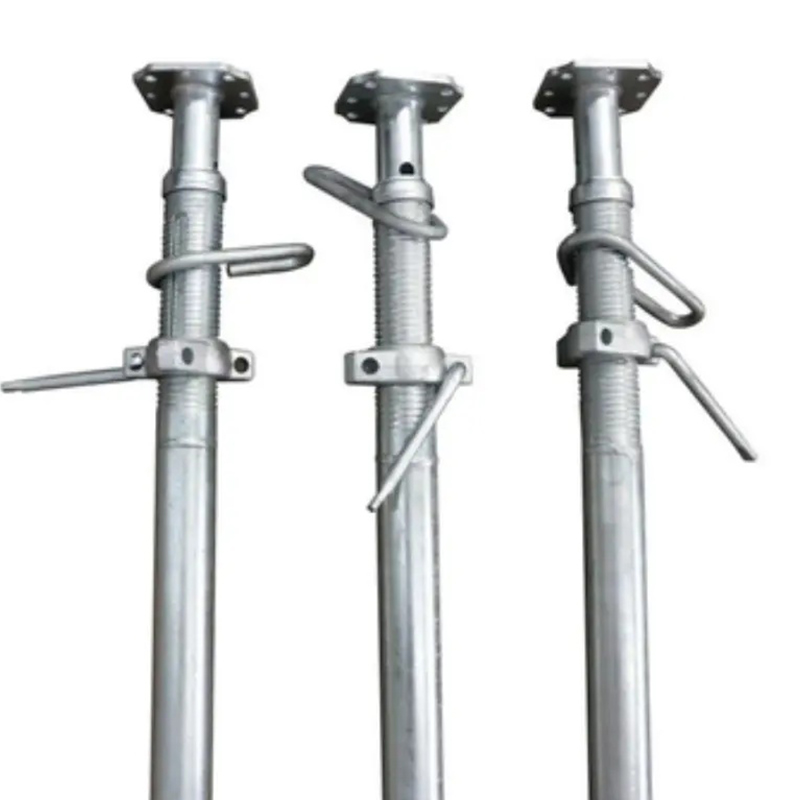
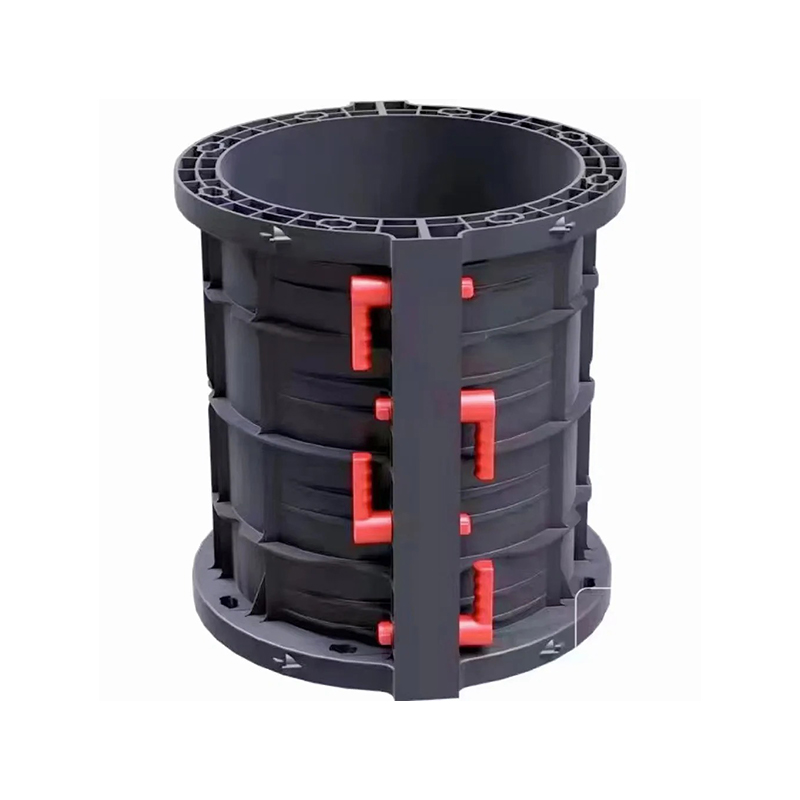
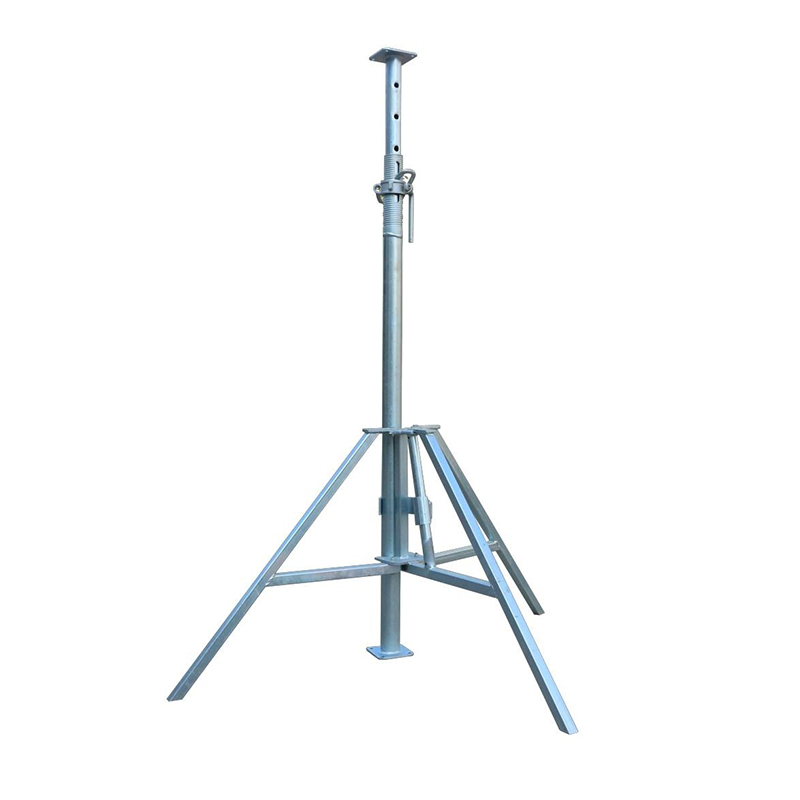
Nantong Hyson Road And Bridge Formwork Co., Ltd. provides heavy-duty steel structure manufacturing supported by experience in road and bridge construction. The company’s product range includes industrial steel structures, custom bridge and infrastructure formwork, hydraulic tunnel trolleys, certified scaffolding, steel props, embedded components, and heavy steel OEM fabrication.
Its manufacturing approach combines automated processing with experienced welding and assembly. CNC laser cutting supports accurate plate profiles, while standardized production lines help maintain consistent workflow. AWS and EN welding craftsmanship supports projects requiring internationally recognized fabrication practices.
The company’s capabilities are suitable for customers seeking large steel structural components, custom structural assemblies, fabricated equipment supports, warehouse and workshop structures, infrastructure components, and integrated cutting, bending, and welding services.
Hyson’s project experience includes work associated with major infrastructure and energy developments. Its stated customers include CCCC, CRCC, and other central state-owned enterprises. This background reflects familiarity with demanding procurement processes, project documentation, quality control, and delivery coordination.
For global customers, the company offers a practical combination of custom engineering support, heavy fabrication capacity, standardized production, and OEM flexibility. The objective is to deliver precise, safe, durable, and cost-effective steel components that can be installed efficiently and perform reliably in service.
Frequently Asked Questions
What types of steel structures can be manufactured?
Custom industrial frames, warehouse and workshop structures, bridge and infrastructure components, equipment supports, platforms, brackets, embedded parts, heavy welded assemblies, formwork systems, hydraulic tunnel trolley components, and other non-standard steel structures can be manufactured according to approved drawings and specifications.
Can steel structures be produced according to customer drawings?
Yes. OEM and custom fabrication projects can be based on two-dimensional drawings, three-dimensional models, technical specifications, samples, or a combination of these documents. The drawings should include material, dimensions, welds, tolerances, coating, inspection, and packaging requirements whenever possible.
What is the advantage of CNC laser cutting?
CNC laser cutting provides accurate and repeatable profiles, holes, slots, and notches. It reduces manual layout work, supports efficient nesting, improves consistency between batches, and can reduce the amount of grinding and adjustment required during assembly.
What welding standards are used?
Hyson applies AWS and EN welding craftsmanship according to project requirements. The applicable standard, welding procedure, inspection level, and acceptance criteria should be confirmed during technical review and included in the project documentation.
Can large components be divided for transportation?
Yes. Large structures can be reviewed for transport dimensions, lifting capacity, road restrictions, container limitations, and installation sequence. When necessary, the assembly may be divided into subassemblies with bolted or welded field connections.
How is dimensional accuracy controlled?
Accuracy is controlled through drawing review, CNC cutting, fit-up inspection, fixtures, in-process measurement, welding sequence control, final dimensional inspection, and correction where required. Critical connection points should be checked before shipment.
What surface treatments are available?
Surface treatment depends on the project environment and specification. Options may include cleaning, abrasive blasting, primer and paint systems, protective coating systems, zinc-rich coatings, galvanizing, or other approved methods. The required coating should be defined before production.
Can the supplier provide inspection documentation?
Documentation may include material information, dimensional inspection records, welding records, non-destructive testing reports, coating records, photographs, packing lists, and other quality documents required by the project. The exact package should be agreed before manufacturing begins.
Which industries use these steel structures?
Applications include construction, bridges, transportation, industrial buildings, warehouses, mining, agriculture, energy, power generation, material handling, equipment support, and infrastructure development.
What information should be provided for a quotation?
Customers should provide drawings or models, material grade, thickness, quantities, estimated weights, welding requirements, coating specifications, inspection standards, delivery location, packing requirements, and target schedule. More complete information allows the manufacturer to prepare a more accurate quotation and production plan.
Conclusion
Heavy-duty steel structures require a combination of engineering understanding, advanced equipment, skilled welding, dimensional control, surface protection, and disciplined project management. The final value of a fabricated structure is determined not only by its material cost, but also by its accuracy, installation readiness, service life, documentation, and ability to meet the actual needs of the project.
Professional manufacturing provides important advantages over less specialized fabrication. CNC laser cutting improves profile accuracy, integrated bending and welding simplifies production coordination, standardized lines improve repeatability, and controlled inspection reduces the risk of costly defects. Experience with infrastructure, industrial facilities, bridge systems, and OEM components further strengthens the supplier’s ability to handle complex requirements.
Nantong Hyson Road And Bridge Formwork Co., Ltd. combines heavy steel fabrication, custom engineering support, automated processing, AWS and EN welding craftsmanship, ISO 9001 quality management, and experience in major infrastructure projects. Its capabilities support customers seeking large steel structural components, industrial steel assemblies, customized formwork, equipment supports, and complete OEM metal fabrication.
For buyers comparing steel structure manufacturers, the most important considerations are manufacturing capacity, technical communication, process control, inspection, standards, packaging, delivery reliability, and long-term support. When these factors are managed together, a steel structure becomes more than a fabricated product: it becomes a dependable engineered solution for safer construction, efficient installation, and reliable performance in demanding operating environments.
References
American Welding Society. Structural Welding Code—Steel, AWS D1.1/D1.1M. Technical reference for welding requirements and quality practices.
European Committee for Standardization. EN 1090, Execution of Steel Structures and Aluminium Structures. Reference for execution and conformity considerations.
European Committee for Standardization. EN 74 and BS 1139. References associated with scaffolding couplers, fittings, and related access equipment requirements.
International Organization for Standardization. ISO 9001, Quality Management Systems—Requirements. Reference for quality management principles and process control.
International Organization for Standardization. ISO 3834, Quality Requirements for Fusion Welding of Metallic Materials. Reference for welding quality management practices.
American Institute of Steel Construction. Specification for Structural Steel Buildings. Reference for structural steel design and fabrication considerations.
International Institute of Welding. Welding Inspection and Quality Assurance Guidance. Reference for inspection planning and welded structure quality control.
Project and manufacturing information supplied for the preparation of this article.
Product: Steel Structure



- Location
- Group 3, Fangzhuang Village, Rucheng Subdistrict, Rugao City, Nantong, Jiangsu, China
- Follow us
- Phone
- +86-13646196162
- info@hysonindustry.com
