 +86-13646196162
 info@hysonindustry.com




 русский
 عربى



Tetrapod Formwork and Mold for High-Performance Coastal Protection
 2026.10.25
Content
- 1 What Is Tetrapod Formwork?
- 2 Why Tetrapod Geometry Matters in Coastal Engineering
- 3 Key Design Features of the Tetrapod Mold
- 4 Advantages Compared with Conventional Block Molds
- 5 Advanced Manufacturing Process
- 6 Quality Control for Reliable Repeated Casting
- 7 Operational Benefits for Precast Concrete Plants
- 8 Application Scenarios
- 9 Customization Options
- 10 Company Manufacturing Strengths
- 11 Safe Use and Maintenance Guidelines
- 12 How to Select a Tetrapod Mold Supplier
- 13 Project Planning and Cost Considerations
- 14 Frequently Asked Questions
- 14.1 What is the main purpose of tetrapod formwork?
- 14.2 Why is steel preferred for a tetrapod mold?
- 14.3 Can the tetrapod mold be customized?
- 14.4 How many casting cycles can the mold complete?
- 14.5 What inner-surface finish is available?
- 14.6 Does the mold prevent all concrete leakage?
- 14.7 Are tetrapods suitable for artificial reefs?
- 14.8 What information should a customer provide when requesting a quotation?
- 14.9 Can the manufacturer provide other steel products for the same project?
- 14.10 How should a tetrapod mold be maintained?
- 15 Conclusion
- 16 References
- 17 Product: Tetrapod Formwork/Mold
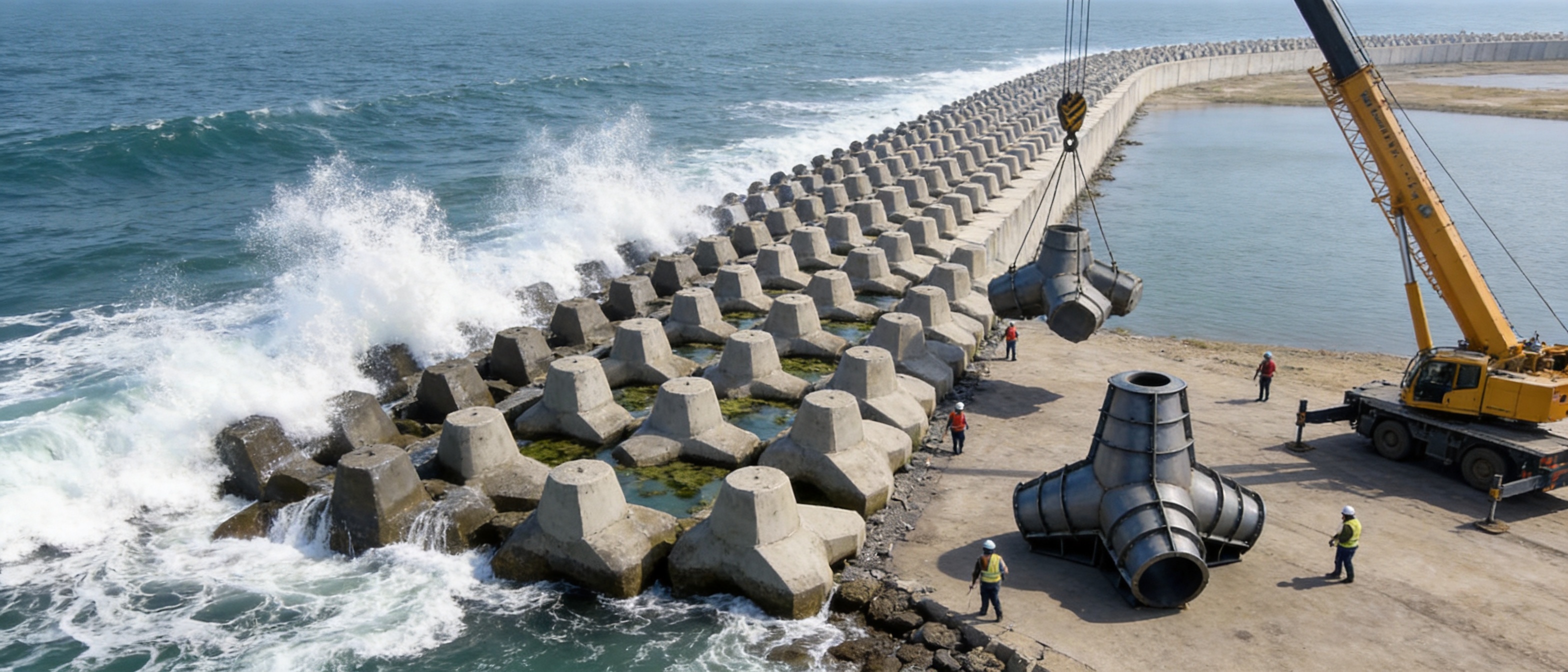
Coastal infrastructure is exposed to some of the most demanding conditions in civil engineering. Breakwaters, seawalls, riverbank defenses, estuary protection systems, artificial reefs, and land-reclamation projects must withstand repeated wave impact, tidal movement, currents, storms, saltwater corrosion, temperature changes, and continuous mechanical loading. The reliability of these structures depends not only on engineering design, concrete quality, and construction supervision, but also on the accuracy and durability of the formwork used to manufacture their protective concrete units.
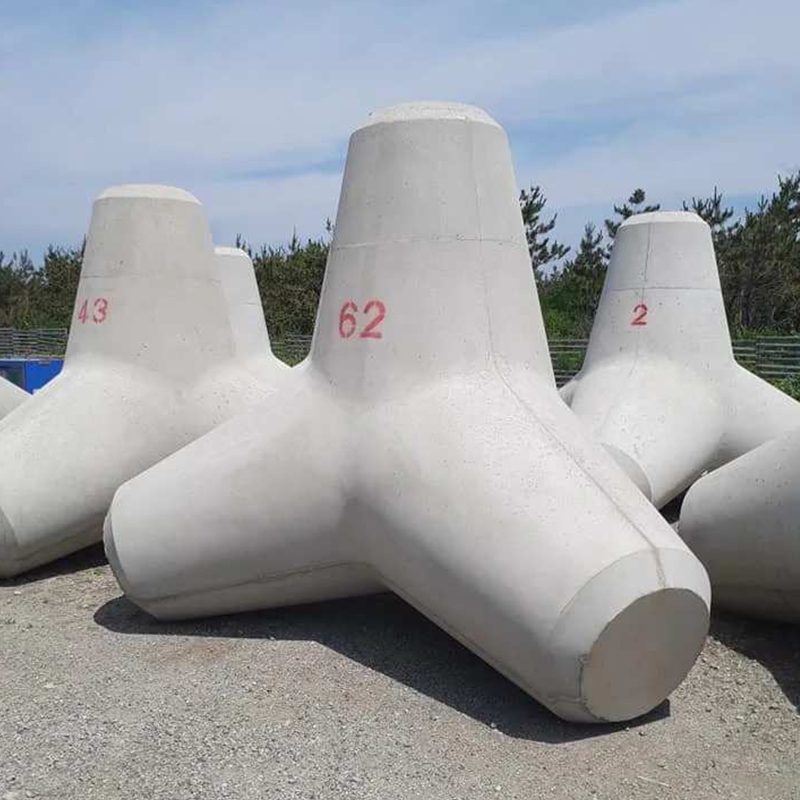
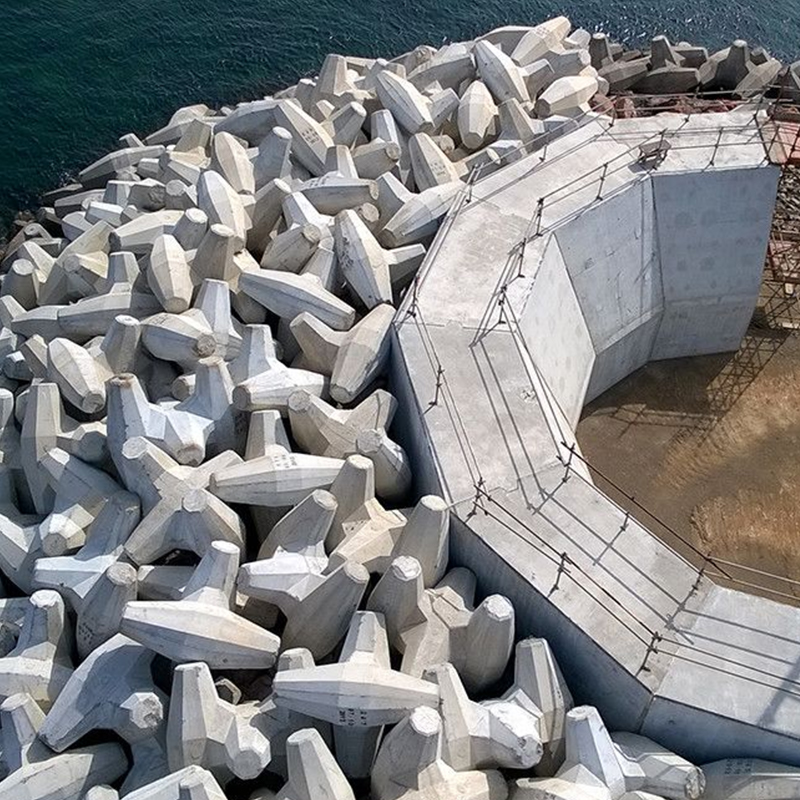
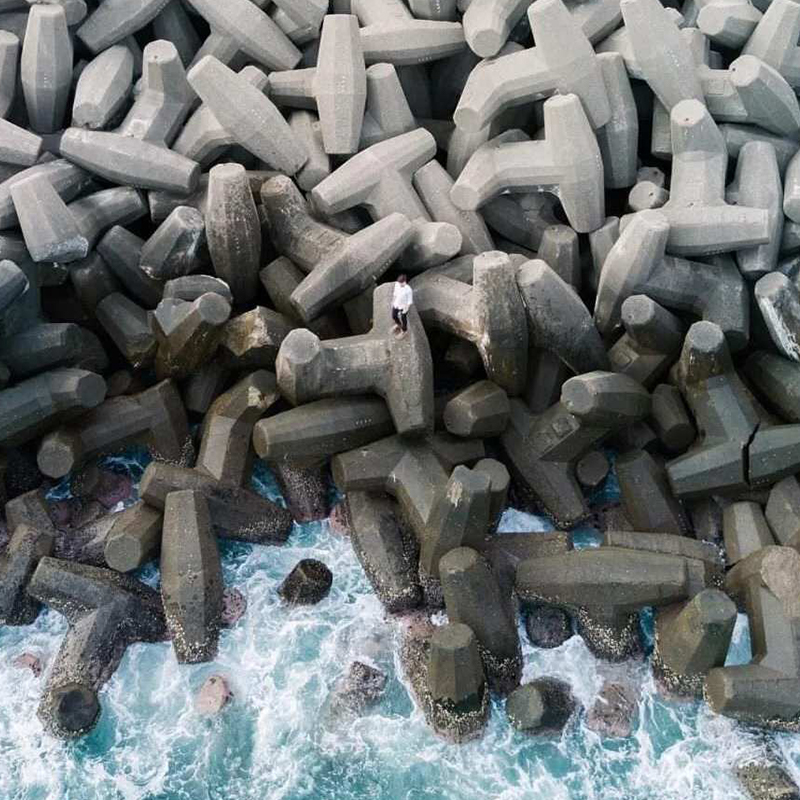
Tetrapod formwork is a specialized steel mold developed for casting interlocking concrete armor units. The resulting tetrapod blocks are designed to dissipate wave energy through their irregular, permeable arrangement rather than forming a completely solid barrier. Their four-legged geometry allows individual units to connect naturally, distribute loads, and resist displacement. When manufactured with accurate dimensions and consistent surface quality, tetrapods can provide an efficient and durable solution for coastal and hydraulic engineering projects.
A high-quality tetrapod mold must do more than reproduce a basic shape. It must maintain dimensional stability during repeated casting cycles, resist deformation during concrete placement, prevent grout leakage at joints, release the cured unit efficiently, and remain safe and practical for workers. It must also be compatible with the production methods used by precast concrete plants, including lifting, positioning, vibration, cleaning, inspection, and maintenance.
Nantong Hyson Road And Bridge Formwork Co., Ltd. manufactures customized tetrapod formwork and other heavy steel products for infrastructure and industrial applications. Its production capabilities include steel plate laser cutting, precision fabrication, robotic and certified welding, bending, assembly, inspection, and customized OEM manufacturing. Through standardized processes and project-oriented quality control, the company supplies steel molds intended for demanding precast production environments.
Tetrapod Formwork/Mold
What Is Tetrapod Formwork?
Tetrapod formwork, also called a tetrapod concrete mold or tetrapod steel mold, is a reusable steel casting system for producing four-legged concrete armor units. The mold is assembled around a carefully engineered cavity that defines the external geometry of the finished tetrapod. After reinforcement, concrete placement, vibration, curing, and demolding, the completed unit is transported to the construction site and positioned with other units to form a breakwater or protective layer.
The tetrapod shape is based on an interconnected geometric form. Unlike a conventional rectangular block, a tetrapod has projecting legs that create contact points and voids when units are placed together. These spaces help reduce direct wave reflection and promote energy dissipation. The interlocking arrangement also increases resistance to sliding and overturning when compared with many simple block configurations.
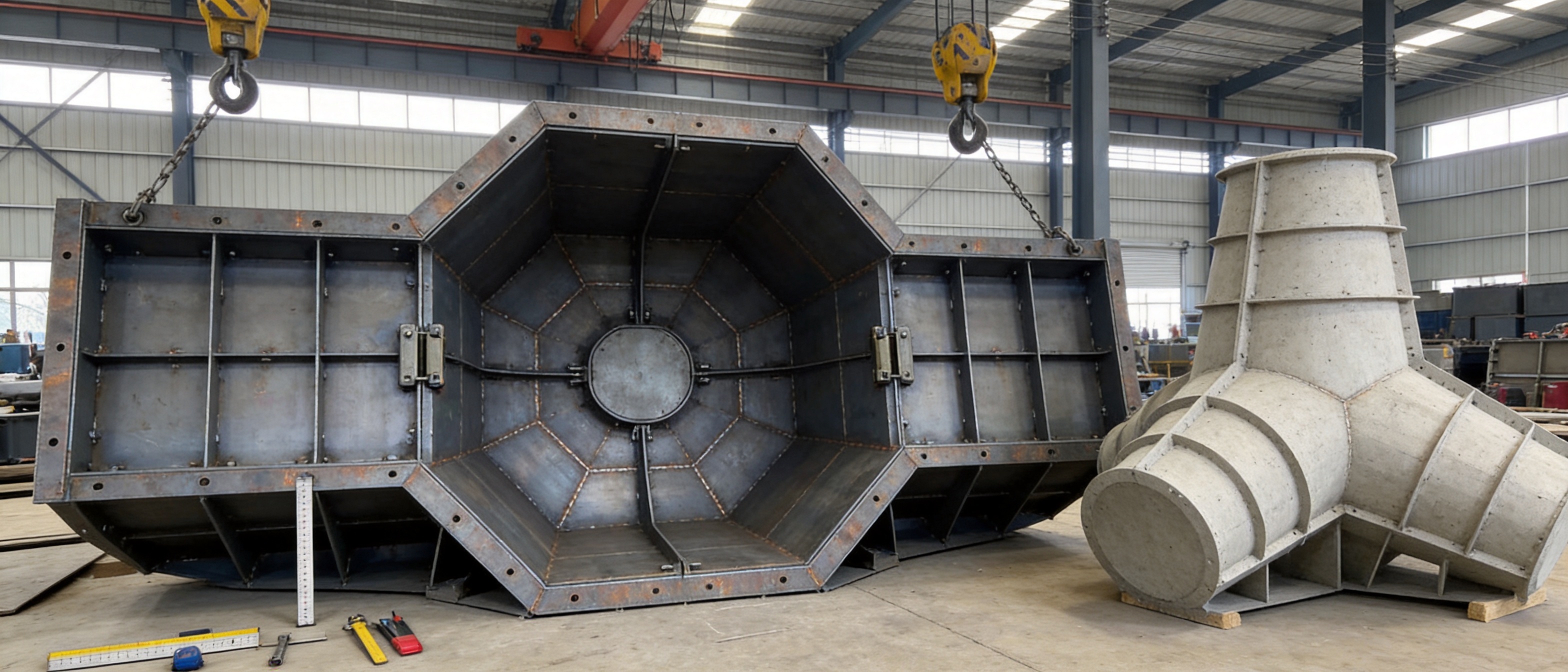
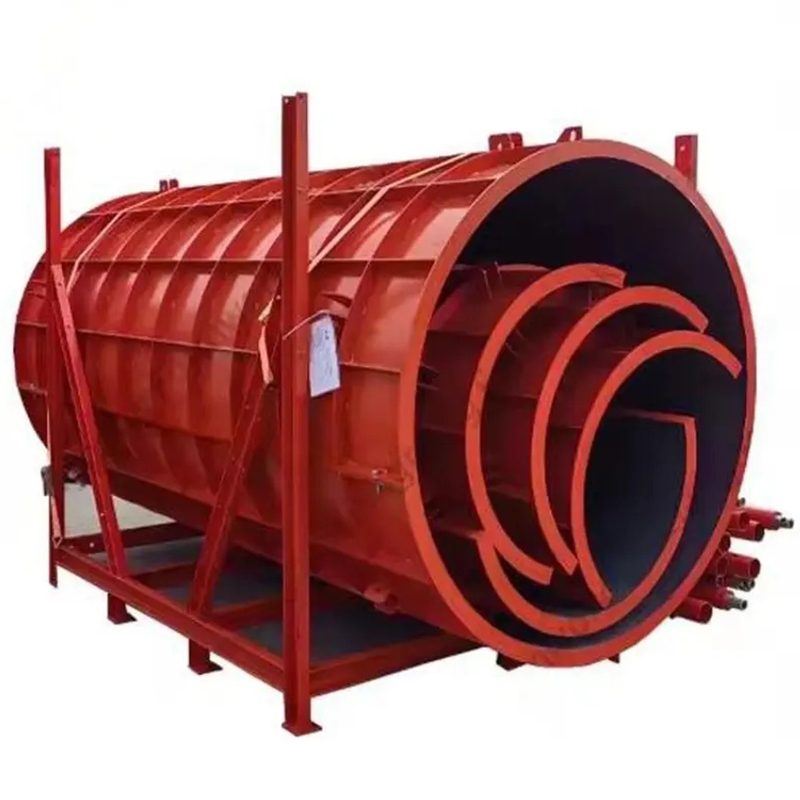
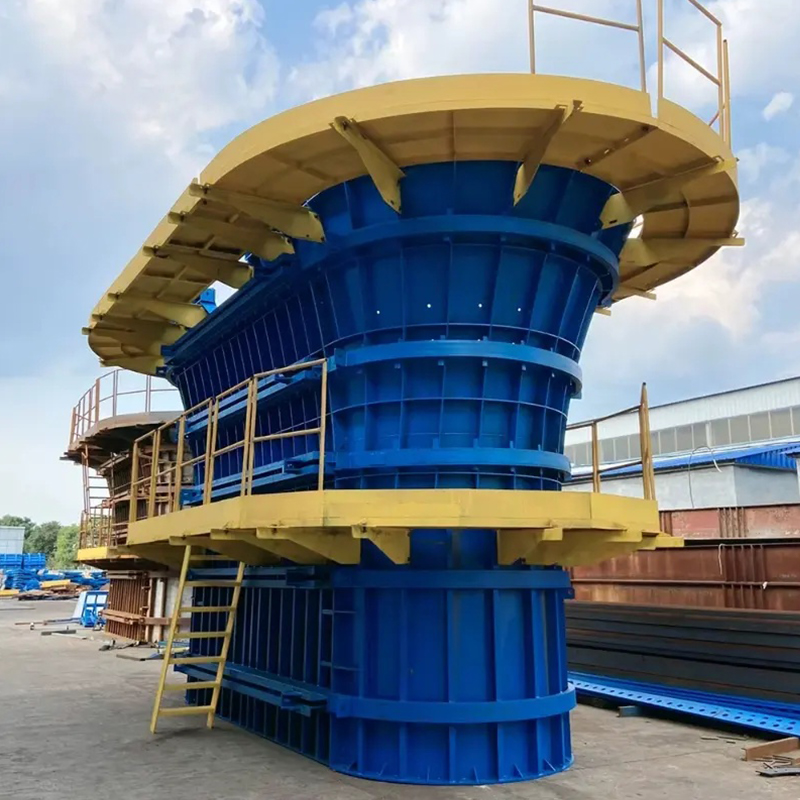
The mold itself generally consists of multiple steel sections, reinforced connection points, hinges or removable fasteners, lifting or handling provisions, and carefully machined or fabricated contact surfaces. The exact arrangement depends on the required tetrapod size, production method, concrete mix, plant equipment, and project specifications. A modular construction allows the mold to be opened after curing and reused for the next unit.
Formwork accuracy is essential because a small error in one section can become a larger problem when many finished units are placed together. Inconsistent dimensions may affect the contact between blocks, reduce the designed porosity of the protective layer, increase installation difficulty, or create uneven load distribution. For this reason, the manufacturing process must combine accurate cutting, controlled welding, rigid reinforcement, and final dimensional inspection.
Why Tetrapod Geometry Matters in Coastal Engineering
Traditional solid barriers can reflect a significant amount of wave energy back toward the sea. Although reflection is sometimes part of a coastal design, excessive reflection may contribute to scour, turbulence, and unstable seabed conditions. A tetrapod armor layer works differently. The irregular arrangement of units creates a permeable surface that breaks up incoming waves and converts a portion of their energy into turbulence and friction within the voids.
The four-legged profile also creates multiple contact points between neighboring units. When properly designed and installed, these contacts form a mechanically stable layer that can tolerate localized movement without immediately losing overall integrity. The units do not need to form a perfectly flat wall. Instead, the natural staggered arrangement supports the basic hydrodynamic purpose of the system.
According to the supplied product specifications, the cast tetrapod geometry is designed with a low center of gravity, stated as approximately one-third of the edge height. This geometry supports stable placement and helps reduce the likelihood of overturning under severe environmental conditions. The product information also indicates that the resulting breakwater can have porosity of approximately 45 percent, although the final porosity depends on unit geometry, placement pattern, layer thickness, and site-specific design.
These characteristics make tetrapods suitable for a range of applications. They may be used as external armor units on breakwaters, protective layers for seawalls, erosion-control elements along riverbanks, or ecological structures where the spaces between units can provide shelter for marine organisms. The formwork therefore contributes to both construction performance and the functional behavior of the completed coastal system.
Key Design Features of the Tetrapod Mold
Modular Construction
The mold uses a modular configuration that allows its sections to be opened, closed, aligned, and secured for repeated production. Modular formwork is easier to handle than a permanently fixed cavity, particularly when the finished tetrapod is large and must be released without damaging its legs or edges.
A practical modular design also reduces downtime between casting cycles. Once the concrete has reached the required demolding strength, workers can remove the fasteners or release the connections, separate the mold sections, inspect the unit, clean the inner surfaces, and reassemble the mold. The process can be organized as a repeatable production sequence, helping precast plants maintain consistent output.
Reinforced Connection Points
Connection areas are among the most highly stressed components of a reusable mold. They are exposed to repeated assembly forces, vibration, concrete pressure, lifting, impact from handling tools, and thermal expansion. Reinforced connection plates, gussets, ribs, and accurately fitted fasteners help keep the mold aligned through repeated cycles.
Strong connections also reduce the risk of joint movement during concrete placement. If a section shifts under vibration, the final unit may develop dimensional errors or a visible seam. Reinforced joints help maintain the intended cavity geometry and contribute to more reliable production quality.
Rigid Steel Structure
The steel body of the mold must resist deformation while remaining practical to handle. Excessive flexibility can cause the mold to bulge under fresh concrete pressure, especially around the legs and junctions of the tetrapod. Reinforcing ribs and strategically positioned stiffeners provide structural support without unnecessarily increasing the overall weight.
The use of heavy-duty structural steel is especially valuable in precast factories where molds are moved, cleaned, stacked, and reused frequently. The supplied specifications describe a reinforced steel construction intended to withstand severe vibration and more than 500 casting cycles. Actual service life depends on concrete mix, release-agent practice, storage, handling, inspection, and operating conditions, but a high cycle target demonstrates the importance placed on durability.
Polished Inner Surfaces
The inner surface directly influences the appearance and release behavior of the concrete unit. A smooth, properly finished cavity reduces mechanical adhesion between steel and concrete. The supplied information identifies an inner-wall roughness of Ra no greater than 3.2 micrometers for rapid demolding. Such a surface can help reduce sticking and make cleaning more efficient.
Surface quality also affects the appearance of the finished tetrapod. Smooth mold faces can produce a cleaner concrete surface with fewer irregularities, reducing the need for secondary grinding or patching. Nevertheless, surface treatment should be combined with suitable concrete mix design, correct vibration, appropriate curing, and a compatible release agent.
Leak-Resistant Joints
Fresh concrete can escape through even small gaps in formwork joints. Leakage may create fins, honeycombing, dimensional defects, and contaminated working surfaces. A precise tetrapod mold therefore requires accurately cut and fitted joint faces, consistent fastening pressure, and sufficient rigidity to maintain closure during vibration.
The production information describes the use of laser cutting with an accuracy of approximately ±0.1 millimeter and robotic welding for tight, consistent fabrication. These capabilities support accurate fit-up and reduce the likelihood of open seams. Final sealing performance still depends on assembly, cleaning, fastener condition, and the viscosity of the concrete mix, so operators should inspect every closure before pouring.
Advantages Compared with Conventional Block Molds
A conventional box-shaped mold is comparatively simple to manufacture, but a cubic or rectangular block does not automatically provide the same interlocking behavior as a tetrapod. Blocks may require more controlled placement patterns and can be more vulnerable to sliding if the surface becomes uneven or the wave load is highly directional.
Tetrapod formwork offers a geometry specifically intended for hydraulic protection. The four projecting legs create voids and multiple contact interfaces between units. This can improve the mechanical stability of the armor layer and help distribute wave forces over a broader arrangement of blocks. The geometry also reduces the need to create a completely continuous face, allowing the completed protective structure to remain permeable.
Another advantage is repeatability. A professionally fabricated steel mold produces units with consistent dimensions, which supports predictable placement, storage, transport planning, and quantity estimation. When the same cavity is reused under controlled conditions, variation between units can be reduced compared with ad hoc or low-precision casting methods.
The tetrapod system can also support ecological objectives. The openings between units provide sheltered spaces where algae, shellfish, small fish, and other organisms may establish themselves. The mold does not independently guarantee ecological restoration, because habitat performance depends on water quality, material selection, local species, tidal conditions, and site design. However, the permeable shape is compatible with projects that seek to combine coastal defense with ecological considerations.
| Performance factor | Tetrapod formwork and units | Simple box-block formwork |
|---|---|---|
| Hydraulic behavior | Interlocking, irregular profile supports wave dissipation and permeability | More continuous faces may generate higher reflection depending on placement |
| Stability | Multiple legs create contact points and resistance to sliding and overturning | Stability depends heavily on block arrangement, friction, and external restraints |
| Production repeatability | Reusable precision steel mold produces standardized units | Generally repeatable, but simple molds may not address complex interlocking geometry |
| Demolding | Modular opening sequence is designed around the four-legged shape | Usually straightforward, but may require different handling arrangements for large blocks |
| Ecological potential | Voids can create shelter and water-exchange spaces | More limited void formation unless blocks are specially arranged |
| Project flexibility | Can be customized for different unit dimensions and engineering requirements | Suitable for basic barriers but may offer fewer geometric options |
The comparison does not mean that tetrapods are appropriate for every coastal project. Design engineers must consider wave height, storm conditions, water depth, seabed material, slope, armor-layer thickness, unit weight, transport limitations, and installation equipment. The benefit of tetrapod formwork is that it provides a precise manufacturing tool for a proven class of interlocking armor geometry.
Advanced Manufacturing Process
Engineering Review and Customization
Manufacturing begins with a review of project requirements. These may include the target tetrapod dimensions, concrete unit weight, expected casting cycle, mold quantity, plant layout, lifting method, desired surface finish, connection arrangement, and delivery conditions. The mold can then be developed as a custom steel fabrication rather than treated as a generic product.
Customization is important because a mold that works well for one project may not be suitable for another. Large tetrapods may require additional stiffening and specialized lifting provisions. Smaller units may prioritize fast handling and storage density. Some customers may request multiple molds for high-volume production, while others may need a limited number for a short-term project or rental fleet.
Engineering review also considers how the mold will be opened and where the joints will be located. The opening sequence should avoid locking the cured concrete unit inside the cavity. It should also allow workers to remove sections without striking the concrete legs or applying excessive force to the steel shell.
CNC and Laser Plate Cutting
Accurate steel plate cutting is the foundation of a precise mold. Computer-controlled laser cutting can produce repeatable profiles and clean edges for plates, connection components, ribs, gussets, and other parts. The supplied manufacturing information identifies laser cutting accuracy of approximately ±0.1 millimeter, subject to material thickness, machine calibration, thermal effects, and production conditions.
Laser cutting offers several advantages over less controlled manual methods. It reduces the amount of secondary trimming, supports consistent part dimensions, and improves the fit-up of complex components. Clean edges also make it easier for fabricators to prepare joints and control welding distortion.
For heavy steel manufacturing, the cutting process must be coordinated with material traceability. Plate grade, thickness, heat number, and inspection documentation should be recorded according to the project quality plan. Correct nesting can improve material utilization while preserving the dimensional accuracy of critical components.
Bending, Forming, and Fit-Up
Some mold components require bending or forming to match the designed curvature or angle. Controlled bending ensures that sections meet the intended geometry without excessive force during assembly. Incorrectly formed plates can create gaps, stress concentrations, or inconsistent wall thickness.
Fit-up is performed before final welding. Components are positioned using fixtures, temporary supports, measuring tools, and reference marks. The assembly team checks diagonal dimensions, joint alignment, connection locations, and the relationship between the cavity and the external reinforcement structure.
Proper fit-up is particularly important around the tetrapod legs. These areas contain multiple intersecting surfaces and may experience uneven pressure during casting. A controlled assembly sequence minimizes cumulative errors and helps the final mold open and close smoothly.
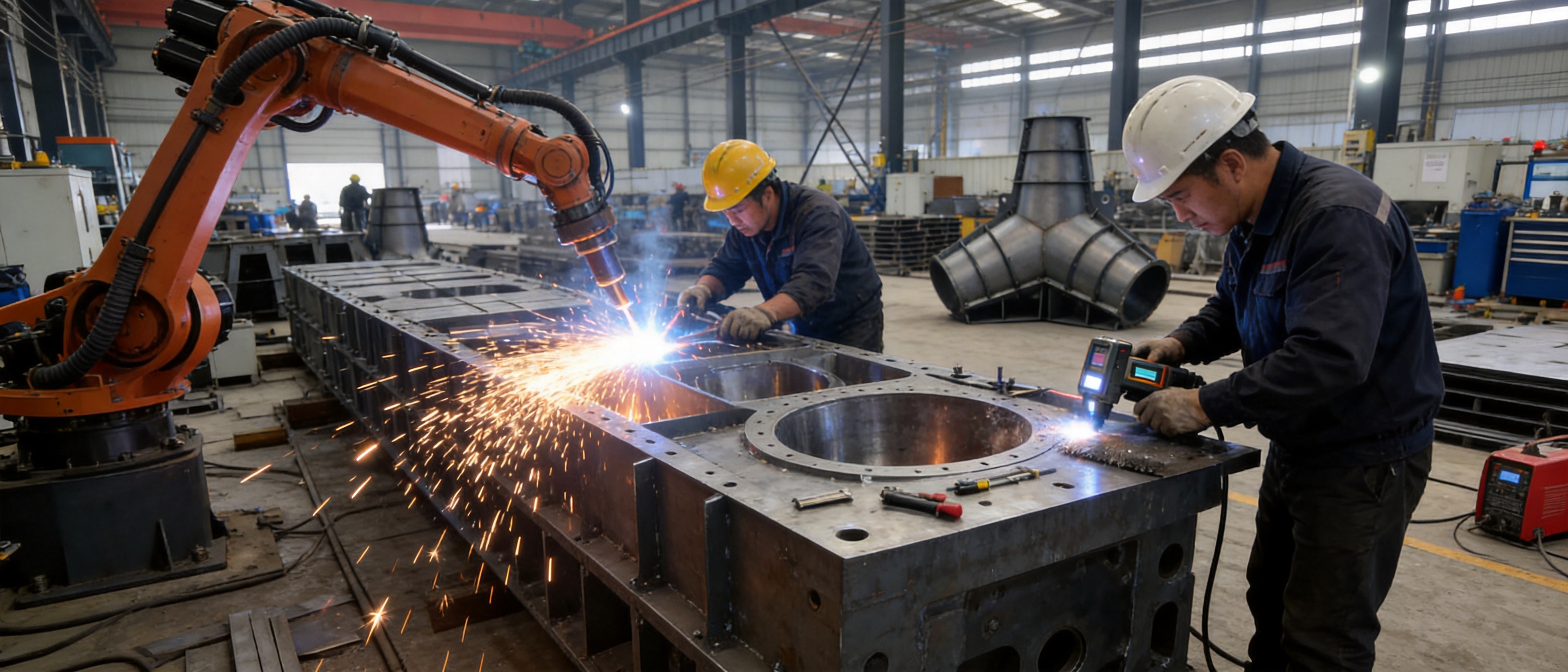
Certified and Robotic Welding
Welding provides the permanent structural connection between many mold components. The manufacturing information identifies AWS and EN welding craftsmanship as part of the company’s capabilities. Welding procedures should be selected according to the steel grade, thickness, joint design, loading condition, and applicable inspection requirements.
Robotic welding can improve repeatability on suitable components by maintaining consistent travel speed, torch position, and weld geometry. Manual welding remains important for complex areas, non-standard joints, reinforcement details, and final assembly. The combination of automated and skilled welding allows the manufacturer to balance production efficiency with fabrication flexibility.
Welding distortion must be controlled because excessive heat can change the shape of the cavity or alter the alignment of connection points. Typical controls include balanced welding sequences, temporary fixtures, measured tack welding, interpass inspection, and planned cooling. After welding, critical dimensions should be checked again rather than assumed to remain unchanged.
Grinding and Surface Treatment
After welding, selected surfaces may be ground, dressed, or finished to remove sharp projections and prepare the mold for safe handling. The inner cavity receives particular attention because weld spatter, uneven seams, or rough areas can affect demolding and concrete appearance.
Surface preparation may be followed by cleaning, corrosion protection, primer, and a durable coating system appropriate for the expected environment. Areas that contact concrete may be treated differently from external steel surfaces. The coating selection should be compatible with release agents and should not interfere with the required concrete finish.
Assembly and Dimensional Inspection
The completed components are assembled to verify that all sections close correctly. Inspectors check cavity dimensions, leg alignment, connection fit, joint contact, overall squareness, lifting provisions, and reinforcement stability. Measuring tools may include calibrated tapes, vernier instruments, laser measurement systems, templates, and three-dimensional inspection equipment where required.
A practical inspection program should record both dimensional results and visual observations. Any correction should be documented and verified after repair. This provides traceability and helps the customer understand the condition of the mold before shipment.
Quality Control for Reliable Repeated Casting
Quality control begins with incoming material inspection. Steel plates, sections, fasteners, hinges, lifting components, and consumables should be checked against the approved bill of materials. Material certificates and identification records help confirm that the mold has been made from the specified steel grades.
During fabrication, inspection points may include cut dimensions, edge preparation, fit-up, weld appearance, weld size, reinforcement location, and assembly alignment. Non-destructive testing can be applied where required by the project specification or risk assessment. The exact method may include visual testing, magnetic particle testing, ultrasonic testing, or other suitable procedures.
Final inspection should confirm that the mold is structurally sound, clean, safely handleable, and ready for operation. The inner surfaces should be free of excessive weld spatter, burrs, sharp edges, and debris. Moving or removable sections should function without binding. Fasteners should be correctly identified and supplied in the required quantity.
Quality control is especially important when molds are manufactured in sets. A project may require multiple molds that must produce interchangeable tetrapods. In that case, the manufacturer should compare the molds against common reference dimensions and avoid relying only on individual inspection records.
Operational Benefits for Precast Concrete Plants
Faster Demolding
The modular opening sequence and smooth inner surfaces are intended to support rapid demolding. The supplied product information states that experienced teams can complete the operation within minutes under suitable conditions. Actual cycle time depends on concrete strength, curing temperature, release agent, mold size, crane access, worker training, and the number of sections to be removed.
Faster demolding can increase daily output without requiring a proportional increase in mold quantity. It also allows the mold to return to the casting station sooner, improving equipment utilization. However, speed should never replace strength verification and safe working procedures. Removing a mold too early can damage both the concrete unit and the formwork.
Reduced Concrete Leakage
Accurate laser-cut components, controlled welding, and rigid joints help minimize leakage at the mold connections. Reduced leakage means fewer surface defects, less cleaning around the production area, and less time spent repairing concrete edges. It can also improve the dimensional consistency of the finished tetrapod.
Operators should still inspect the mold before every pour. Concrete residue, damaged fasteners, worn seals, or incomplete closure can create leakage even when the original fabrication was precise. A simple pre-pour checklist can protect the productivity advantages of the mold.
Lower Maintenance Requirements
Reinforced ribs, wear-resistant steel, and durable connections can extend the useful life of the mold. Maintenance generally includes removing concrete residue, checking for deformation, lubricating moving components, inspecting fasteners, repairing coating damage, and storing the mold on stable supports.
Preventive maintenance is more economical than waiting for a major failure. A small crack in a weld, a bent connection plate, or a worn fastener can become a larger alignment problem if ignored. Recording casting cycles and inspection observations helps the plant plan repairs and replacement parts.
Improved Production Consistency
Consistent molds help standardize the dimensions and appearance of the units. This supports more predictable handling and installation. It also reduces the chance that different units will create abnormal gaps or unstable contact points within the breakwater armor layer.
Consistency is influenced by more than the mold. Concrete batching, aggregate grading, water-cement ratio, vibration, curing, lifting, and storage all affect the finished product. The mold provides a stable foundation for quality production, but it should be integrated into a complete precast quality system.
Application Scenarios
Coastal Breakwaters
The most direct application is the construction of coastal breakwaters. Tetrapod units can be placed as an armor layer on the seaward face, crest, or other engineered sections of the structure. The interlocking geometry helps resist the forces generated by waves and storm surge, while the voids support energy dissipation and water exchange.
Project engineers determine the appropriate unit size and placement based on wave climate, water depth, slope, foundation conditions, and required design life. The formwork manufacturer contributes by producing molds that meet the specified geometry and withstand the planned casting volume.
Seawalls and Land-Reclamation Defense
Newly reclaimed land is vulnerable to wave attack and erosion before vegetation or permanent infrastructure is established. Tetrapods can form a protective outer layer on a seawall or revetment, helping shield the reclaimed edge from hydraulic forces.
The mold supports the large-scale production needed for such projects. Multiple units can be cast, cured, inspected, transported, and installed according to a controlled construction schedule. Accurate units are valuable when the project requires a regular armor thickness or a specific placement density.
Riverbanks and Estuaries
Strong river currents, tidal exchange, and seasonal flooding can erode riverbanks and estuary margins. Tetrapod units may be used in selected areas where a permeable, interlocking protective layer is preferred over a continuous concrete surface.
Hydraulic conditions in rivers differ from those at open coasts. Designers must assess flow velocity, local scour, sediment transport, navigation requirements, and foundation stability before selecting tetrapods. The formwork remains useful because it can produce durable units with repeatable geometry for controlled installation.
Artificial Reefs and Ecological Restoration
The cavities and spaces created by tetrapod arrangements can provide shelter for marine organisms. Algae, oysters, small fish, crustaceans, and other organisms may use the rough and protected surfaces as habitat, depending on local environmental conditions.
For ecological projects, material cleanliness and coating selection deserve special attention. The finished concrete should be suitable for the intended environment, and the placement design should promote water movement without creating unacceptable scour. Tetrapod formwork supports the physical structure, while ecological performance depends on broader environmental planning and monitoring.
Customization Options
Different projects require different mold dimensions, steel thicknesses, reinforcement patterns, and handling systems. Customization can include the overall tetrapod size, number of mold sections, joint configuration, lifting points, hinge arrangement, access openings, external stiffeners, surface treatment, and identification marks.
The number of molds can also be tailored to the project schedule. A small coastal repair may require only a few molds, while a major breakwater may need a large production fleet. Manufacturing multiple molds to a common inspection standard helps maintain uniformity across the entire project.
Customers may also request packaging suitable for export or long-distance transportation. Protective packing can reduce coating damage, prevent loose components from being lost, and allow efficient loading into containers or onto heavy transport vehicles. The manufacturer can coordinate packing dimensions with the customer’s logistics plan.
| Customization item | Typical consideration | Project benefit |
|---|---|---|
| Unit dimensions | Required mass, wave conditions, and installation equipment | Matches the hydraulic and structural design |
| Steel thickness | Casting pressure, vibration, handling frequency, and target service life | Balances rigidity, durability, and mold weight |
| Joint arrangement | Demolding sequence and access for workers | Supports safe and efficient release |
| Reinforcement layout | High-stress areas around legs, corners, and connections | Reduces deformation during repeated casting |
| Surface finish | Concrete appearance and release-agent compatibility | Reduces sticking and surface repair |
| Handling provisions | Crane, forklift, or plant lifting method | Improves workshop safety and workflow |
| Quantity and packaging | Production volume, delivery schedule, and shipping method | Supports project logistics and output planning |
Company Manufacturing Strengths
Nantong Hyson Road And Bridge Formwork Co., Ltd. is positioned as a heavy steel manufacturing partner for construction, infrastructure, transportation, mining, agricultural, and industrial customers. Its product range includes custom bridge formwork, tunnel hydraulic trolleys, ringlock scaffolding, steel props, industrial steel structures, and OEM metal fabrication.
The company’s manufacturing approach combines automated processing with experienced fabrication teams. Laser cutting supports accurate plate preparation, while bending, assembly, and welding provide the flexibility needed for non-standard steel products. This combination is valuable for tetrapod molds because the product includes both repeatable components and complex three-dimensional intersections.
The company reports compliance with ISO 9001 and experience with BS1139 and EN74-related scaffolding requirements. It also reports AWS and EN welding capabilities, 12 utility patents, and supply experience for major infrastructure contractors. These qualifications and project records indicate an established quality-oriented manufacturing environment, although customers should always confirm the specific certifications, inspection scope, and documentation required for their own project.
Hyson has supplied steel products for major infrastructure works, including bridge and power-generation projects. Experience with large engineering projects can help a manufacturer understand the importance of dimensional control, traceability, delivery coordination, documentation, and response to site requirements. These same disciplines are relevant to the production of tetrapod molds for coastal projects.
As an OEM supplier, the company can work from customer drawings, engineering data, samples, or project specifications. A successful OEM process requires clear communication about tolerances, materials, welding standards, coating requirements, inspection points, packaging, and acceptance criteria. Early technical coordination reduces the risk of changes after fabrication begins.
Safe Use and Maintenance Guidelines
Before the first casting cycle, workers should inspect every mold section for shipping damage, distortion, missing fasteners, loose welds, and coating defects. The cavity should be cleaned and coated with an approved release agent. Contact surfaces must be free of concrete residue, oil contamination, rust scale, and foreign objects that could affect closure.
During assembly, workers should follow the intended sequence and use the correct fasteners. Improvised bolts, incomplete tightening, or forced alignment can damage connection points and create unsafe conditions. The mold should be supported on a stable, level base capable of carrying the weight of the steel and fresh concrete.
Concrete should be placed in a way that avoids sudden unbalanced loading. Vibration should be sufficient to consolidate the mix but controlled to prevent excessive movement or impact. Operators should monitor the mold during filling for leakage, unusual deformation, or movement at the connections.
Demolding should begin only after the concrete has reached the required strength. The release sequence should be controlled and should not rely on heavy impact against the mold or concrete. If a section does not release normally, workers should stop and investigate rather than applying excessive force.
After demolding, the inner surfaces should be cleaned before the concrete residue hardens. Scrapers and tools should be selected to avoid gouging the steel. The mold should then be inspected for cracks, deformation, worn fasteners, damaged hinges, or coating deterioration. Findings should be recorded, especially when the mold is used in a high-volume production program.
Long-term storage should protect the mold from standing water, uncontrolled corrosion, accidental impact, and unstable stacking. Removable parts should be labeled and stored with the correct mold assembly. A dry, organized storage area improves retrieval and reduces the risk of missing components during production.
How to Select a Tetrapod Mold Supplier
Buyers should begin by evaluating whether the supplier understands both steel fabrication and precast concrete production. A supplier may be capable of welding steel but still lack experience with demolding behavior, concrete leakage, cavity finishing, or repeated casting cycles. The ideal partner should be able to discuss the full operating sequence rather than only the fabrication price.
Technical questions should cover steel grades, plate thickness, reinforcement design, dimensional tolerances, weld standards, surface roughness, inspection methods, lifting provisions, release-agent compatibility, expected cycle life, spare parts, and repair support. Customers should also request drawings for approval before production.
Manufacturing capacity is another important consideration. The supplier should be able to confirm its cutting, welding, assembly, inspection, and packing capabilities. For urgent projects, production scheduling and shipping coordination may be just as important as the design itself.
Documentation should include, where applicable, material certificates, welding records, inspection reports, dimensional records, packing lists, operating instructions, and maintenance recommendations. Clear documentation helps the customer integrate the mold into its own quality system and provides useful evidence if replacement parts or additional molds are required later.
Project Planning and Cost Considerations
The purchase price of a tetrapod mold is only one part of the total project cost. Buyers should consider the number of units to be produced, the required production period, labor availability, crane and lifting capacity, concrete cycle time, maintenance resources, transport distance, and expected reuse after the initial project.
A durable mold with a higher initial cost may provide a lower cost per unit when used over many cycles. Smooth surfaces, reliable joints, and fast demolding can also reduce labor and repair expenses. For contractors that operate multiple coastal projects, reusable molds may become part of a long-term equipment fleet.
Rental and leasing scenarios place additional emphasis on durability and easy maintenance. The mold must be robust enough to tolerate different operators and sites while remaining simple to inspect and repair. Standardized components and clear part identification can reduce downtime when equipment is transferred between projects.
Transportation should be planned early because assembled molds may have unusual dimensions. Modular packing can reduce shipping volume, but the customer must be able to reassemble the mold accurately at the destination. Packaging should protect machined or finished surfaces and keep fasteners, hinges, and accessories organized.
Frequently Asked Questions
What is the main purpose of tetrapod formwork?
The main purpose is to cast standardized four-legged concrete armor units for breakwaters, seawalls, riverbank defenses, estuary protection, artificial reefs, and land-reclamation projects. The mold creates a repeatable geometry intended to support interlocking placement and wave-energy dissipation.
Why is steel preferred for a tetrapod mold?
Steel provides the rigidity, wear resistance, dimensional stability, and repairability required for repeated casting. A properly designed steel mold can withstand fresh concrete pressure, vibration, handling, cleaning, and repeated opening and closing more effectively than many temporary or low-strength alternatives.
Can the tetrapod mold be customized?
Yes. Customization may include unit size, cavity geometry, plate thickness, reinforcement, number of mold sections, joint layout, lifting provisions, surface finish, coating, and packaging. The final design should be based on the engineering requirements and the customer’s production equipment.
How many casting cycles can the mold complete?
The supplied product information states a service life exceeding 500 cycles under appropriate operating conditions. Actual performance depends on mold design, steel quality, casting pressure, vibration, release-agent use, cleaning, storage, handling, and maintenance. A cycle-life target should be confirmed in the technical quotation or purchase specification.
What inner-surface finish is available?
The product information specifies a polished inner wall with roughness of Ra no greater than 3.2 micrometers. This finish is intended to support clean concrete surfaces and efficient release. The result also depends on concrete mix design, curing, and correct use of release agent.
Does the mold prevent all concrete leakage?
No mold can compensate for incorrect assembly or damaged joints. Precision fabrication, laser-cut components, robotic welding, and rigid connections help reduce leakage, but operators must still clean the contact surfaces, install all fasteners correctly, and inspect the mold before each pour.
Are tetrapods suitable for artificial reefs?
They can be suitable for some artificial reef and ecological restoration projects because the spaces between units may provide shelter and support water exchange. Site-specific environmental assessment is necessary to determine whether the concrete composition, surface treatment, geometry, and placement pattern are appropriate.
What information should a customer provide when requesting a quotation?
Useful information includes the required tetrapod dimensions, estimated unit weight, quantity of molds, target production volume, concrete casting method, vibration method, demolding equipment, steel and coating requirements, inspection standards, delivery location, and desired schedule. Drawings or reference samples are helpful when available.
Can the manufacturer provide other steel products for the same project?
The company also manufactures custom formwork, scaffolding, steel props, heavy steel structures, hydraulic tunnel trolleys, and OEM metal components. Customers can discuss integrated steel fabrication requirements, including laser cutting, bending, welding, assembly, and project-specific inspection.
How should a tetrapod mold be maintained?
Maintenance includes cleaning concrete residue, inspecting joints and welds, checking fasteners and hinges, repairing coating damage, lubricating moving components, protecting the mold from corrosion, and storing it on stable supports. Inspection results should be recorded throughout the mold’s service life.
Conclusion
Tetrapod formwork is a purpose-built manufacturing solution for producing interlocking concrete units used in demanding coastal and hydraulic engineering environments. Its value comes from the relationship between accurate geometry, structural rigidity, leak-resistant joints, smooth inner surfaces, efficient demolding, and long-term reusability.
Compared with simple block molds, tetrapod molds support a more specialized armor-unit design. The resulting four-legged units can create permeable, interlocking protective layers that dissipate wave energy, resist movement, and provide potential ecological benefits. Their effectiveness depends on complete engineering design and proper installation, but reliable formwork is an essential part of achieving consistent unit quality.
The manufacturing process is equally important. Laser cutting, controlled bending, accurate fit-up, robotic and certified welding, reinforcement, surface finishing, dimensional inspection, and documented quality control all contribute to the performance of the finished mold. These processes help the mold withstand repeated casting cycles while maintaining the precision required for large infrastructure projects.
Nantong Hyson Road And Bridge Formwork Co., Ltd. combines heavy steel fabrication capacity with experience in custom formwork, infrastructure components, scaffolding, steel structures, and OEM manufacturing. Its ability to integrate cutting, bending, welding, assembly, and quality management makes it a suitable partner for customers seeking customized tetrapod molds and related steel solutions.
For contractors, precast concrete plants, coastal engineering companies, and infrastructure developers, selecting the right mold is an investment in production reliability. A well-designed and professionally manufactured tetrapod mold can help improve casting consistency, reduce demolding time, limit concrete leakage, lower maintenance demands, and support the long-term performance of the completed coastal protection system.
References
1. Coastal Engineering Manual, United States Army Corps of Engineers, principles of breakwater design, armor units, wave transformation, and coastal stability.
2. Hydraulic Design of Seawalls and Breakwaters, standard engineering guidance on wave loading, armor-layer behavior, and coastal protection structures.
3. Concrete Institute Guidance on Formwork for Concrete, recommendations concerning formwork rigidity, dimensional control, release, safety, and reuse.
4. ISO 9001, Quality Management Systems, principles for documented manufacturing processes, inspection, corrective action, and continual improvement.
5. AWS Structural Welding Code, requirements and practices for welded steel fabrication, welding procedures, inspection, and welder qualification.
6. EN 74 and BS 1139 Scaffolding Standards, reference standards related to steel component manufacturing, dimensional control, and construction equipment quality.
7. Marine and Coastal Infrastructure Engineering References, general guidance on erosion control, artificial reefs, breakwaters, seawalls, estuary protection, and ecological restoration.
Product: Tetrapod Formwork/Mold



- Location
- Group 3, Fangzhuang Village, Rucheng Subdistrict, Rugao City, Nantong, Jiangsu, China
- Follow us
- Phone
- +86-13646196162
- info@hysonindustry.com
