 +86-13646196162
 info@hysonindustry.com




 русский
  عربى
عربى 


High-Precision Pier Column Formwork for Modern Bridge and Infrastructure Construction
 2026.07.19
Content
- 1 Understanding Pier Column Formwork
- 2 Why Steel Pier Column Formwork Is Critical for Bridge Engineering
- 3 Main Features of High-Performance Pier Column Formwork
- 4 Advantages Over Ordinary or Low-Cost Competitor Products
- 5 Manufacturing Strength Behind Reliable Pier Column Formwork
- 6 Advanced Production Process
- 7 Technical Comparison Table
- 8 Applications in Infrastructure and Industrial Construction
- 9 Custom Formwork for Different Pier Shapes
- 10 Quality Control Throughout the Manufacturing Chain
- 11 Surface Quality and Fair-Faced Concrete Performance
- 12 Safety Considerations in Pier Column Formwork
- 13 Economic Value and Life-Cycle Cost
- 14 Integration with Scaffolding, Steel Structures, and OEM Fabrication
- 15 Project Experience and Engineering Reliability
- 16 Procurement Guidance for Buyers
- 17 Maintenance and Reuse Recommendations
- 18 Q&A Section
- 18.1 What is pier column formwork used for?
- 18.2 Why choose steel formwork instead of timber or low-cost temporary molds?
- 18.3 What steel materials are commonly used?
- 18.4 Can pier column formwork be customized?
- 18.5 How does good formwork prevent grout leakage?
- 18.6 How does formwork affect concrete appearance?
- 18.7 What makes a pier column formwork system durable?
- 18.8 How should buyers evaluate a formwork supplier?
- 18.9 Is modular formwork better for repeated bridge pier construction?
- 18.10 What maintenance is needed after each concrete pour?
- 19 Conclusion
- 20 References
- 21 Product: Pier Column Formwork
In bridge, highway, railway, municipal elevated road, water conservancy, port, and industrial infrastructure projects, the quality of pier and column construction directly affects structural safety, service life, appearance, and overall project efficiency. Pier column formwork is not simply a temporary mold for concrete; it is a precision-engineered steel system that controls geometry, verticality, surface quality, casting stability, and repeated construction productivity. A well-designed pier column formwork system helps contractors reduce rework, improve concrete finish, shorten installation cycles, and maintain consistent dimensional accuracy across multiple casting operations.
Nantong Hyson Road And Bridge Formwork Co., Ltd. manufactures custom steel formwork, steel structures, scaffolding systems, steel plate cutting and processing products, and heavy metal fabrication components for infrastructure and industrial applications. Its pier column formwork is designed for casting bridge piers, columns, pillars, support structures, and similar concrete components in precast and cast-in-place construction. Built from high-strength Q235B and Q355B steel plates, the system combines thickened panels, rigid reinforcing ribs, accurate joint positioning, and modular segmentation to provide strong deformation resistance and dependable concrete forming performance.
The purpose of this article is to explain how high-quality pier column formwork works, why it matters in modern infrastructure projects, and how advanced manufacturing processes give a professional supplier a clear advantage over ordinary fabricators. It also introduces the technical strengths, application scenarios, customization options, quality control methods, and long-term economic value of steel pier column formwork for contractors, project owners, engineering companies, and procurement teams.
Understanding Pier Column Formwork
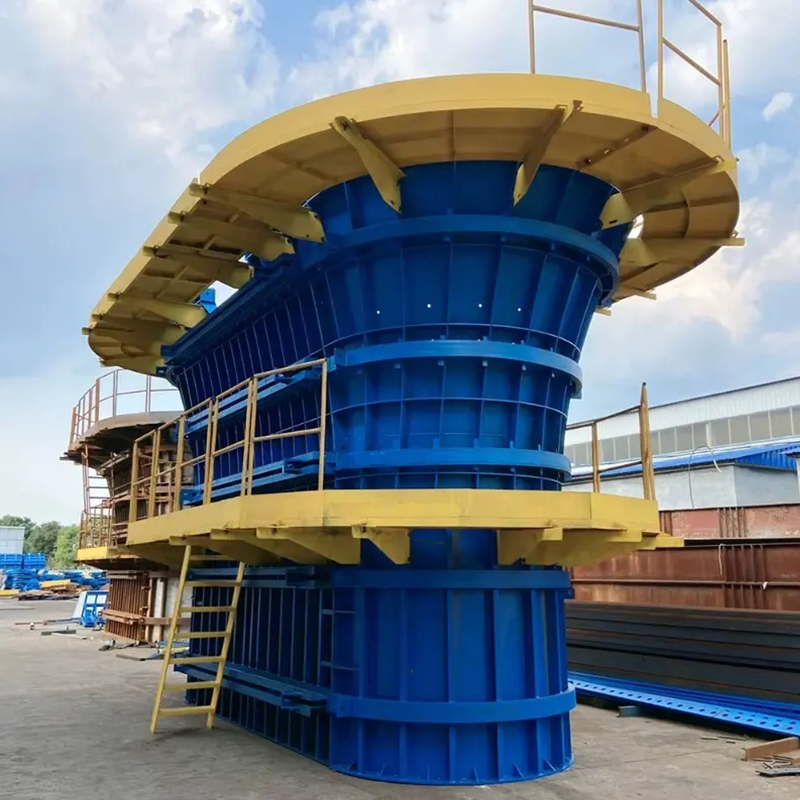
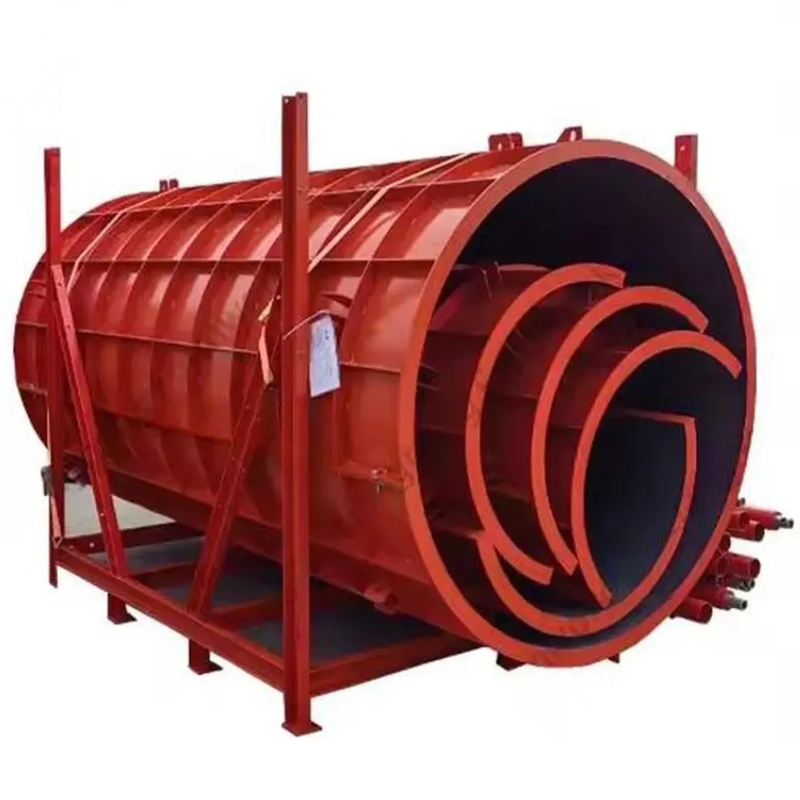
Pier column formwork is a steel mold system used to shape freshly poured concrete into bridge piers, structural columns, support pillars, and similar vertical concrete members. During casting, the formwork must withstand the lateral pressure of wet concrete, vibration impact, construction loads, and positioning forces while maintaining the designed shape. If the formwork is weak, poorly sealed, or inaccurately manufactured, the final concrete pier may suffer from bulging, misalignment, honeycomb defects, leakage marks, poor verticality, and excessive dimensional deviation.
Compared with timber formwork or low-grade fabricated molds, steel pier column formwork offers higher strength, better reuse capability, superior surface quality, and more stable accuracy. It is especially suitable for projects involving repeated pier casting, large concrete volumes, strict appearance requirements, or tight construction schedules. Steel formwork can be cleaned, maintained, adjusted, and reused many times, which makes it cost-effective over the full project cycle.
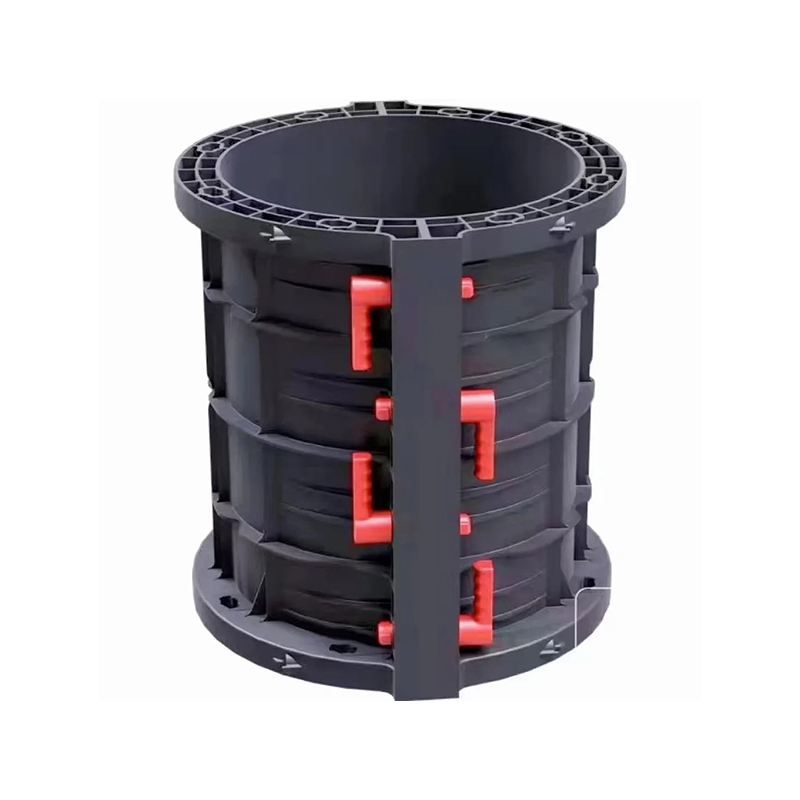
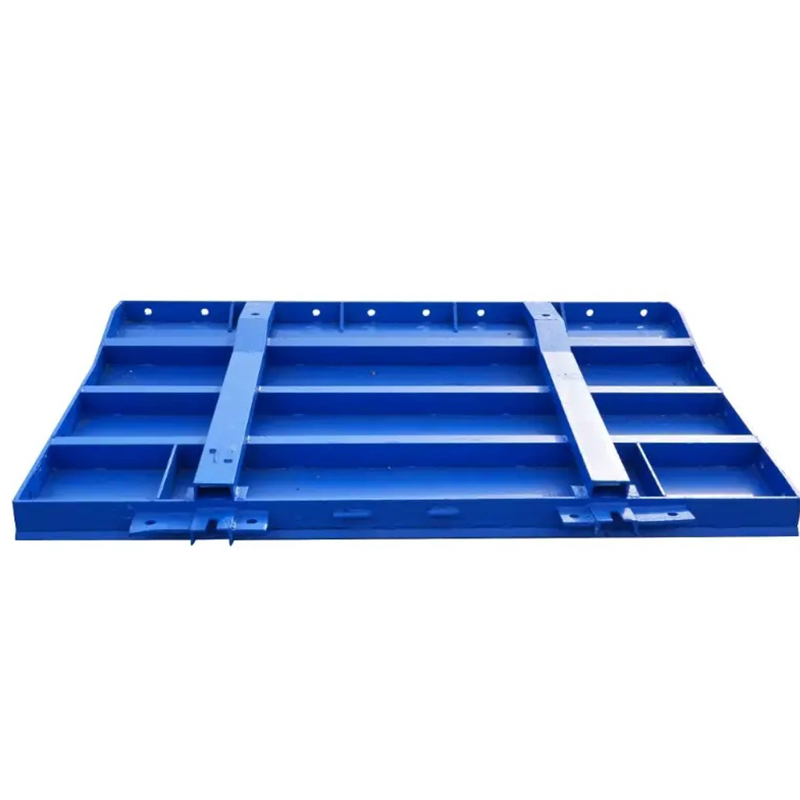
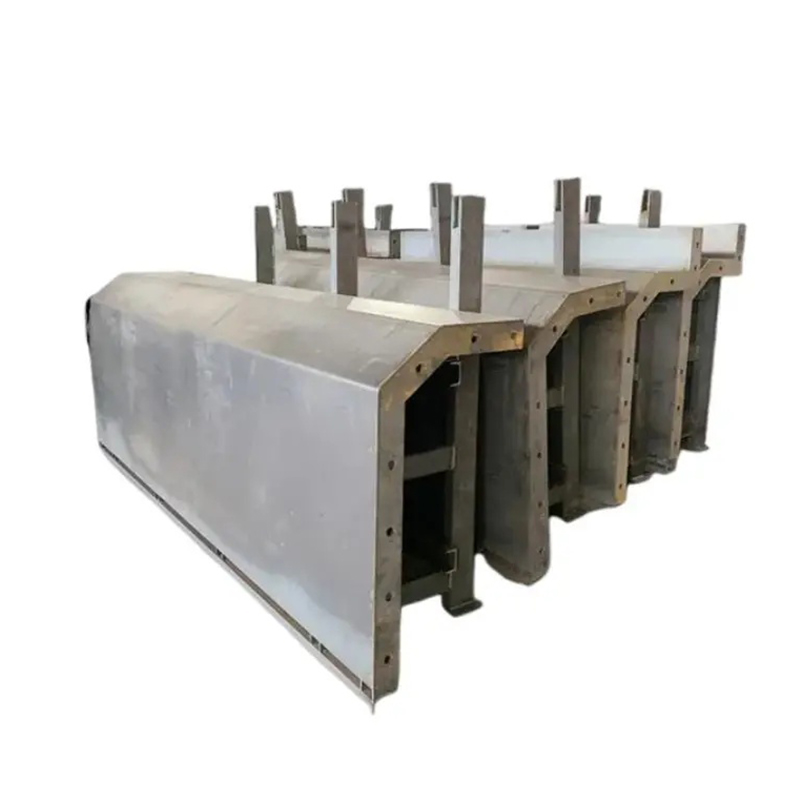
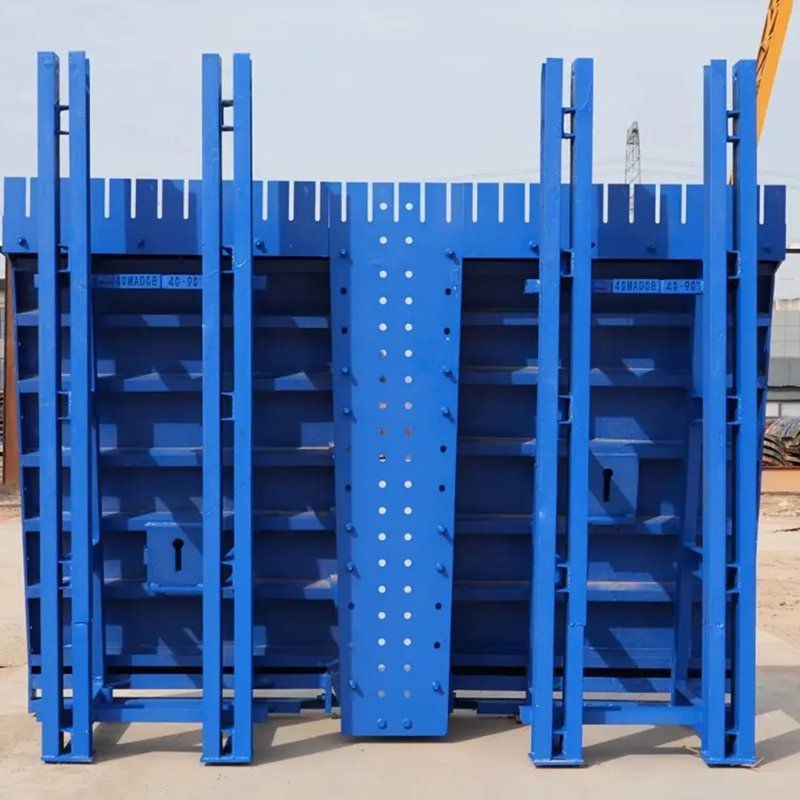
The formwork usually consists of steel face panels, longitudinal and transverse stiffening ribs, flange plates, connectors, bolts, locating pins, lifting points, working brackets, and sealing structures. Depending on the pier design, it may be made into circular, rectangular, oval, tapered, chamfered, variable-section, or irregular shapes. A modular segmented structure allows the same system to be assembled at different heights or modified for similar sections, improving flexibility and reducing the need to produce a separate mold for every casting condition.
For road and bridge engineering, pier column formwork is a core part of the bridge substructure construction process. The accuracy of the mold determines the accuracy of the pier, and the rigidity of the mold determines whether the concrete can be poured safely and efficiently. A high-performance system can help ensure a smooth concrete surface, stable vertical alignment, clean edges, and repeatable quality from the first casting to the last.
Why Steel Pier Column Formwork Is Critical for Bridge Engineering
Bridge piers and columns are load-bearing components that transfer loads from the superstructure to the foundation. They resist dead loads, live traffic loads, wind forces, seismic effects, water flow, temperature changes, and long-term durability challenges. Because these components are essential to safety, their geometry and quality must be controlled from the earliest construction stages. Formwork is one of the most important tools for achieving that control.
During concrete placement, the fresh concrete behaves like a heavy fluid and exerts pressure on the formwork surface. The pressure increases with casting height, pouring speed, concrete slump, vibration intensity, and temperature conditions. If the formwork lacks sufficient stiffness, the panels may deform outward, causing enlarged dimensions or irregular surfaces. If the joints are poorly machined, grout may leak out, creating honeycomb, sand lines, and weak surface zones. If the positioning structure is inaccurate, the pier may deviate from its design axis, leading to correction difficulties in later construction stages.
Steel formwork helps solve these problems by providing high rigidity and precise fabrication. Thick steel panels distribute concrete pressure, while reinforcing ribs improve bending resistance. Machined joints and standardized fastening systems help prevent leakage and misalignment. Lifting points and segment connections improve assembly efficiency and safety. When properly designed, steel pier column formwork allows contractors to pour faster, vibrate more confidently, and obtain a better concrete finish with less repair work.
In large bridge projects, repeated pier construction is common. A contractor may need to cast dozens or hundreds of piers with similar shapes. In such cases, formwork turnover becomes a major economic factor. A durable steel system can be reused many times, spreading its initial cost across multiple pours. This is one reason why high-quality steel formwork often provides better total value than cheaper but less durable alternatives.
Main Features of High-Performance Pier Column Formwork
High Strength and Deformation Resistance
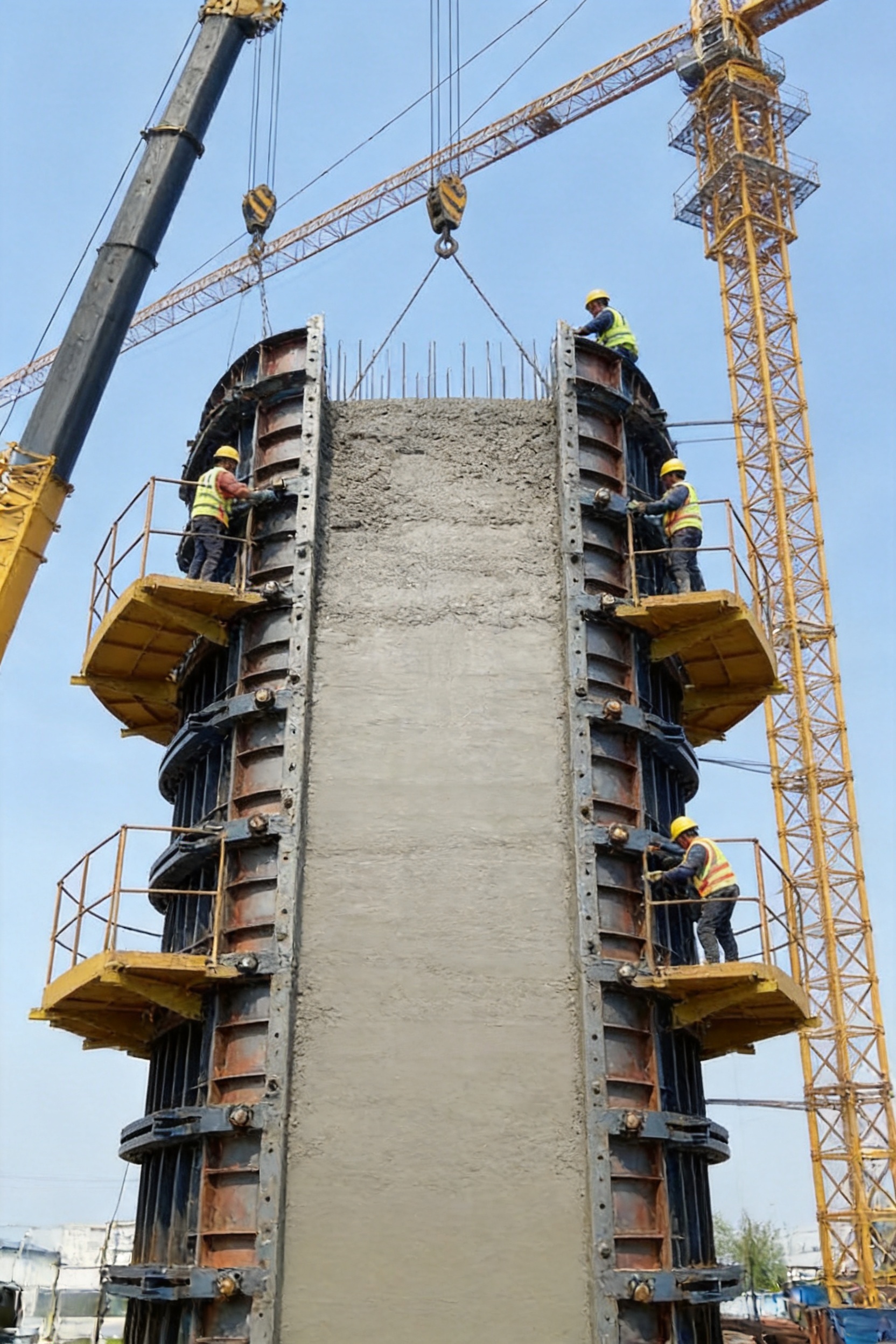
The pier column formwork produced by Nantong Hyson Road And Bridge Formwork Co., Ltd. uses high-strength Q235B and Q355B steel plates selected according to project requirements. Thickened panels are combined with a reinforced rib frame to create a rigid overall structure. This design helps resist lateral concrete pressure and vibration impact during casting, reducing the risk of panel bulging, seam opening, and shape distortion.
Deformation control is essential for maintaining pier dimensions. In bridge construction, even small deviations can accumulate and affect bearing installation, girder alignment, expansion joint setting, and overall construction tolerance. A rigid formwork system protects the geometric accuracy of the pier and helps ensure that the completed component matches design drawings.
Accurate Positioning and Dimensional Stability
Precision manufacturing and standardized positioning devices are used to ensure accurate assembly. Locating structures, bolt connections, flange surfaces, and panel joints are designed to align quickly and repeatedly. This reduces human error on site and improves consistency between different casting cycles.
Dimensional stability is particularly important for tall piers and columns. As height increases, small assembly errors may create larger vertical deviations. A segmented steel system with reliable positioning helps keep each section aligned, supporting better verticality and straightness during the entire pour.
Excellent Sealing and Leakage Prevention
Concrete grout leakage is a common problem in low-quality formwork. When cement paste escapes through joints, the concrete surface may show honeycomb, sand streaks, rough edges, and color inconsistency. Leakage also weakens the local surface layer and may require grinding, patching, or cosmetic repair.
High-quality pier column formwork uses precision-machined joints and sealing structures to reduce leakage. Flange plates are processed to maintain contact accuracy, and fastening systems provide strong clamping force. Better sealing produces a smoother concrete appearance and supports fair-faced concrete requirements, especially for exposed bridge piers in urban or landmark projects.
Modular and Adjustable Design
Modern infrastructure projects often involve different pier heights, sections, and transition forms. A modular segmented formwork system allows the contractor to combine standard sections flexibly. Height can be adjusted by adding or removing segments, and similar cross-sectional designs can share certain components where feasible.
This modularity reduces unnecessary fabrication, improves transportation efficiency, and makes on-site assembly more manageable. It also allows formwork to adapt to circular, rectangular, oval, tapered, and irregular pier structures. For contractors working on complex projects, flexibility can be as important as strength.
Efficient Assembly and Disassembly
Construction schedules are often demanding, and formwork installation can become a bottleneck if the system is difficult to handle. Standardized fastening devices, lifting points, clear segmentation, and accurate connection interfaces help speed up installation and removal. Efficient assembly reduces crane time, labor intensity, and waiting periods between construction steps.
Fast disassembly also protects the concrete surface. A well-designed formwork system separates cleanly from the hardened concrete, reducing edge damage and surface scarring. This is especially valuable when concrete appearance is important or when the project requires rapid turnover.
High Turnover and Long Service Life
Steel formwork is designed for repeated use. With proper cleaning, anti-rust treatment, storage, and maintenance, it can complete many casting cycles while maintaining stable performance. This high turnover capability reduces average cost per use and supports better project cost control.
The durability of the system depends on material quality, welding quality, structural design, surface treatment, and maintenance. Compared with cheaper alternatives that may deform after several pours, professionally manufactured steel formwork provides long-term reliability and more predictable construction results.
Advantages Over Ordinary or Low-Cost Competitor Products
In procurement, contractors may compare formwork suppliers mainly by initial price. However, pier column formwork should be evaluated by total project value, not only purchase cost. A low-cost formwork product may appear economical at first but can create hidden expenses through deformation, leakage, slow installation, repair work, safety risks, and shortened service life. High-quality steel formwork provides advantages that become clear during repeated use and demanding construction conditions.
First, advanced steel formwork offers better rigidity. Ordinary products may use thinner panels, insufficient rib spacing, or weak welding. Under concrete pressure, they can bulge or twist, causing dimensional errors. A stronger system with properly designed ribs and high-strength steel plates maintains shape more effectively.
Second, precision processing improves joint accuracy. Some competitors rely on rough manual cutting or inconsistent welding, resulting in gaps at the seams. These gaps allow grout leakage and create poor concrete surfaces. CNC cutting, standardized fabrication, controlled welding, and accurate flange machining produce better joint fit and sealing performance.
Third, modular design improves construction efficiency. Simple, non-standard molds may require extensive adjustment on site. Workers spend more time aligning panels, correcting bolt holes, and sealing joints. A standardized modular system reduces these problems, allowing faster installation and safer operation.
Fourth, quality welding and inspection increase service life. Weak welds, poor penetration, and uncontrolled distortion can compromise formwork performance. A manufacturer with certified welding capability, process control, and inspection standards can produce more reliable components. Nantong Hyson Road And Bridge Formwork Co., Ltd. combines automated processing with AWS and EN welding craftsmanship, supporting stable production quality for demanding projects.
Fifth, professional customization provides better engineering compatibility. Many infrastructure projects have unique pier shapes, height arrangements, embedded parts, access requirements, and lifting conditions. A supplier experienced in road and bridge engineering can design practical formwork solutions rather than providing generic products. Customization helps avoid mismatches between drawings, site needs, and mold performance.
Manufacturing Strength Behind Reliable Pier Column Formwork
The performance of pier column formwork is determined before it reaches the construction site. It depends on design calculation, material selection, cutting accuracy, bending precision, welding quality, assembly control, surface treatment, and final inspection. A professional manufacturer must control each stage to ensure that the finished formwork performs reliably under real casting conditions.
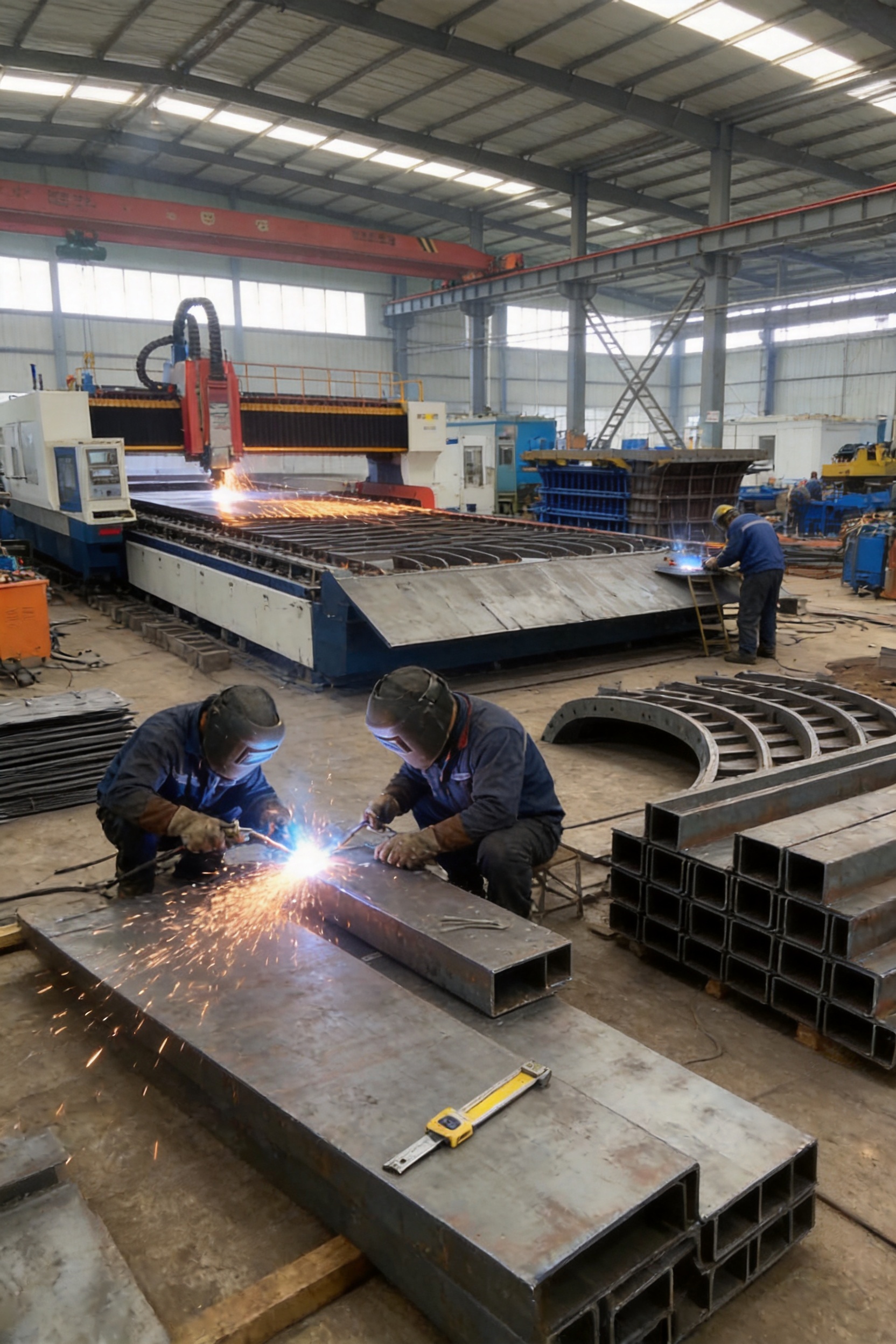
Nantong Hyson Road And Bridge Formwork Co., Ltd. is equipped with advanced laser cutting equipment and standardized production lines. Its manufacturing capabilities include steel plate cutting, bending, welding, assembly, surface treatment, and quality inspection. These capabilities allow the company to deliver custom steel formwork, heavy-duty steel structures, scaffolding components, and OEM fabricated parts for clients in construction, transportation, mining, agricultural, and industrial sectors.
The company has experience as a strategic supplier for major Chinese infrastructure enterprises, including central state-owned contractors. Its products and solutions have served large projects such as the Sutong Yangtze River Bridge, Taizhou Bridge, and Sudan Thermal Power Plant. This project background supports a manufacturing culture focused on strength, precision, safety, and timely delivery.
Supported by 12 utility patents and quality systems aligned with ISO 9001, BS1139, and EN74 standards, the company applies full-process quality control to its products. Although formwork is temporary in function, it must be manufactured with the seriousness of permanent engineering equipment because it directly shapes permanent concrete structures.
Advanced Production Process
Engineering Design and Technical Review
The manufacturing process begins with project drawings and technical requirements. Engineers study the pier geometry, height, section dimensions, concrete pressure assumptions, casting sequence, lifting method, working platform needs, and site assembly conditions. Based on these factors, they determine panel thickness, rib layout, connection methods, segment sizes, reinforcement arrangement, and sealing details.
For custom pier column formwork, early technical review is especially important. It helps identify potential risks such as difficult stripping angles, excessive lifting weight, bolt interference, transportation limitations, or insufficient access for workers. By solving these issues during design, the manufacturer reduces site problems and improves construction efficiency.
Material Selection and Plate Preparation
Q235B and Q355B steel plates are commonly used because they provide good strength, weldability, and fabrication performance. Material selection depends on structural demand, panel size, expected casting pressure, turnover requirements, and customer specifications. Plates must meet dimensional and mechanical requirements before entering production.
Proper material preparation reduces later deformation. Steel plates are checked, leveled where necessary, and organized according to cutting plans. Material traceability and batch control support quality consistency, especially for large orders involving multiple segments and repeated formwork units.
CNC and Laser Cutting
Advanced laser cutting improves edge accuracy, hole positioning, and part consistency. Compared with rough flame cutting or manual processing, laser cutting can produce cleaner edges, more accurate contours, and better repeatability. This matters for formwork because inaccurate parts lead to assembly gaps, misaligned bolt holes, and additional correction work.
Precise cutting also improves welding quality. When parts fit correctly before welding, the welder can maintain proper gaps and alignment. This reduces distortion and produces a stronger final assembly. For irregular or variable-section piers, CNC processing is especially valuable because it can accurately produce complex shapes from digital drawings.
Bending and Forming
Certain pier column formwork components require bending or forming, especially circular panels, curved plates, chamfers, and special transition sections. Accurate bending ensures that the final formwork surface matches the required concrete profile. If curvature is inconsistent, the pier surface may show unevenness or dimensional error.
Controlled forming also helps maintain panel smoothness. For exposed concrete, the formwork face quality is directly reflected in the final appearance. Smooth, accurate steel surfaces help produce clean concrete finishes and reduce the need for post-casting repair.
Welding and Structural Assembly
Welding is one of the most important steps in steel formwork production. Reinforcing ribs, flanges, lifting points, connectors, and positioning devices must be welded securely to the panels. The welds must provide strength without causing excessive thermal distortion.
Nantong Hyson Road And Bridge Formwork Co., Ltd. combines standardized welding procedures with certified AWS and EN welding craftsmanship. Skilled welders and controlled process parameters help ensure stable weld appearance, penetration, and structural reliability. For heavy-duty formwork, consistent welding is essential because repeated lifting, assembly, vibration, and concrete pressure create cyclic stress on welded joints.
Dimensional Inspection and Trial Assembly
After welding and assembly, dimensional inspection verifies that the formwork matches design requirements. Important checkpoints include panel flatness, curvature, flange alignment, bolt hole position, segment height, diagonal dimensions, connection accuracy, and vertical matching between sections. For complex systems, trial assembly can confirm that all parts fit together before shipment.
Trial assembly reduces site risk. If a mismatch is discovered after delivery, it can delay construction and increase costs. By checking assembly in the factory, the supplier helps ensure smooth installation at the project site.
Surface Treatment and Anti-Rust Protection
Steel formwork must resist corrosion during storage, transportation, and repeated site use. Surface treatment may include cleaning, grinding, rust removal, protective coating, or other anti-rust measures depending on project needs. A clean and protected surface improves service life and helps maintain concrete finish quality.
Good surface treatment also makes maintenance easier. After each pour, the formwork can be cleaned and prepared for reuse. When the steel surface is properly protected, it is less likely to develop severe corrosion, pitting, or adhesion problems.
Technical Comparison Table
| Evaluation Item | High-Quality Steel Pier Column Formwork | Ordinary Low-Cost Formwork | Project Impact |
|---|---|---|---|
| Panel Strength | Thickened Q235B or Q355B steel panels with reinforced ribs | Thin panels or insufficient stiffening | Better resistance to bulging and dimensional deviation |
| Joint Accuracy | Precision cutting, machining, and standardized positioning | Rough cutting and inconsistent hole alignment | Reduced grout leakage and faster assembly |
| Concrete Finish | Smooth steel surface and effective sealing | Surface defects, leakage marks, and honeycomb risk | Lower repair cost and better appearance |
| Assembly Efficiency | Modular segmented design with reliable connectors | Frequent adjustment and site modification | Shorter installation cycle and reduced labor cost |
| Durability | Robust welding, anti-rust treatment, high turnover | Short service life and easy deformation | Lower average cost per casting cycle |
| Customization | Engineered for circular, rectangular, tapered, and irregular piers | Limited adaptability | Better fit for complex bridge projects |
| Quality Control | Full-process inspection and standardized production | Inconsistent workshop practices | More predictable project performance |
Applications in Infrastructure and Industrial Construction
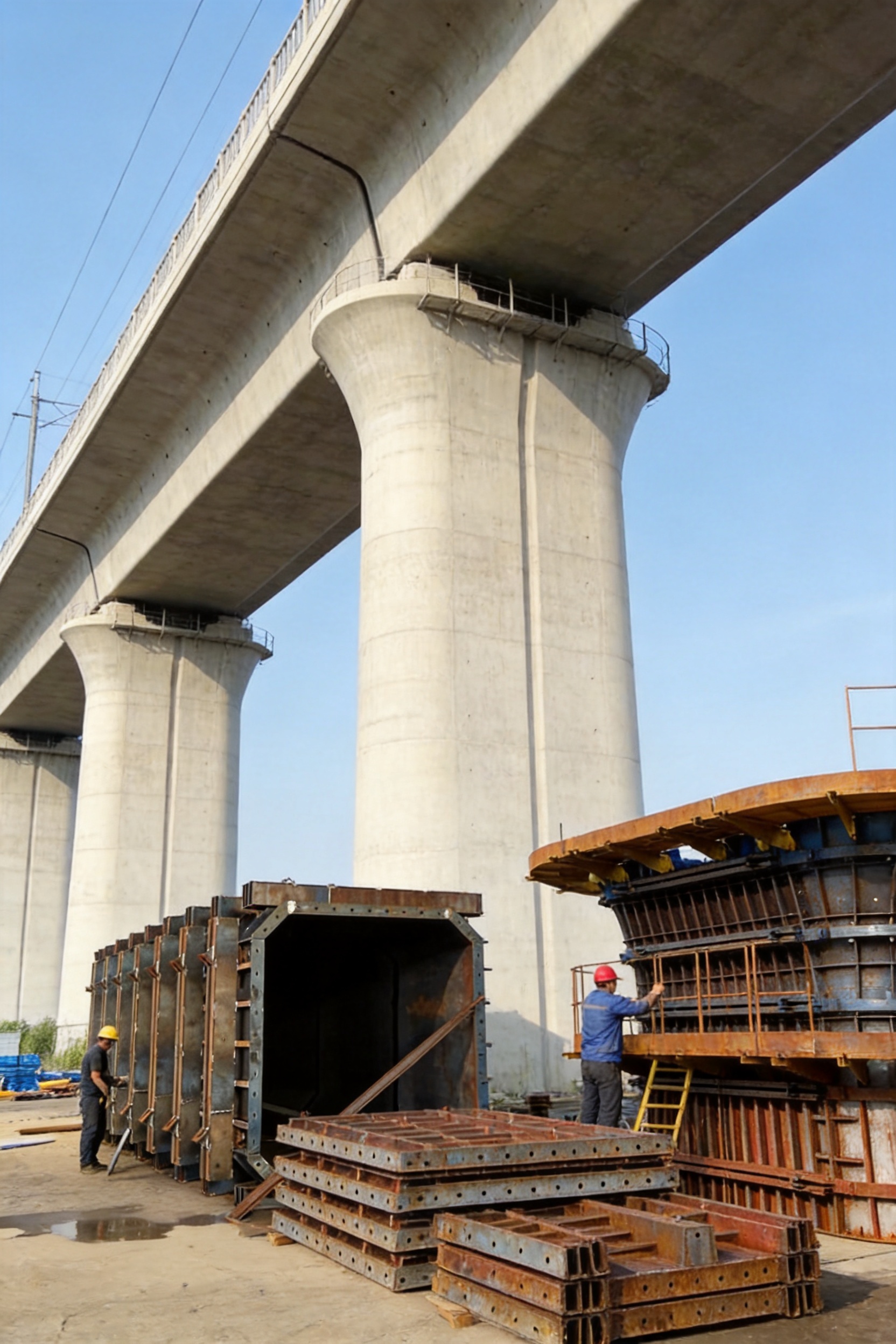
Pier column formwork is widely used in highway bridges, railway bridges, municipal elevated roads, overpasses, viaducts, water conservancy projects, port structures, and precast component factories. Each application has different requirements, but all require reliable geometry control, safe concrete casting, and efficient turnover.
In highway bridge construction, piers are often repeated along long route sections. A modular steel system can be reused many times, helping contractors maintain consistent quality while controlling cost. For railway bridges, accuracy and structural reliability are especially important because track alignment and dynamic loads impose strict tolerances. High-rigidity formwork supports stable pier dimensions and verticality.
Municipal elevated and overpass projects often have strict appearance requirements because the piers are visible to the public. Smooth concrete surfaces, clean edges, and consistent shapes are important for urban aesthetics. Steel formwork with excellent sealing and surface quality can reduce cosmetic repair and improve the final visual result.
Water conservancy and port engineering may involve wet, humid, or corrosive environments. Formwork used in these projects must be durable and easy to maintain. Anti-rust treatment and robust steel construction support longer service life under challenging conditions.
Precast component factories benefit from standardized and high-turnover formwork. Because production is repetitive, formwork quality directly affects production efficiency. Durable steel molds help factories maintain stable dimensions and smooth surfaces for mass-produced pier components.
Custom Formwork for Different Pier Shapes
Bridge piers are not all the same. Some are circular, some are rectangular, some are hollow, some are solid, and some have tapered or curved geometry. Urban bridges may use decorative or irregular column sections for architectural effect. High-speed rail projects may require standardized sections with strict tolerance control. A competent formwork manufacturer must be able to customize solutions for these different needs.
Circular pier column formwork requires accurate curvature and tight vertical joint control. If the curved panels are not formed correctly, the final concrete may appear oval, uneven, or misaligned. Rectangular pier formwork requires strong corner structures and reliable chamfer details to prevent edge leakage and damage. Tapered pier formwork requires careful segmentation so that each panel matches the changing section. Irregular pier formwork requires advanced design and CNC processing to maintain shape accuracy.
Nantong Hyson Road And Bridge Formwork Co., Ltd. provides OEM and custom formwork services based on customer drawings and project requirements. Its manufacturing capacity allows the production of non-standard steel components, including bridge formwork, tunnel trolley structures, heavy steel assemblies, and related support systems. This integrated capability helps clients obtain formwork that fits actual site conditions instead of forcing the site to adapt to a generic mold.
Quality Control Throughout the Manufacturing Chain
Quality control for pier column formwork should not be limited to final inspection. It must run through the full manufacturing chain. At the design stage, engineers verify that the formwork can resist concrete pressure and meet project requirements. At the material stage, plates and structural parts are checked for suitability. During cutting, dimensional accuracy is controlled. During welding, procedures and workmanship are monitored. During assembly, dimensions and fit are checked. Before shipment, the product is inspected to confirm readiness for site use.
Full-process quality control reduces uncertainty. Contractors depend on formwork to perform under time pressure, often with large concrete pours scheduled around crane availability, concrete delivery, weather, and labor coordination. A defective formwork system can cause delays and safety hazards. Reliable manufacturing helps protect the construction schedule.
ISO 9001-oriented management supports consistency by standardizing procedures, responsibilities, inspection points, and documentation. Compliance with BS1139 and EN74 standards in relevant scaffolding and connection products also reflects a broader manufacturing culture of safety and engineering discipline. For customers, these systems provide confidence that products are produced under controlled conditions rather than informal workshop practices.
Surface Quality and Fair-Faced Concrete Performance
Fair-faced concrete construction requires the concrete surface to remain visible without heavy plastering or decorative covering. For bridge piers in urban environments, scenic areas, landmark structures, or high-standard transportation corridors, appearance is often a major evaluation factor. The formwork surface, joint sealing, release process, and concrete vibration all influence the final result.
Steel pier column formwork supports fair-faced concrete by providing a smooth and stable contact surface. Accurate joints reduce leakage lines. Rigid panels prevent uneven bulging. Clean stripping reduces surface damage. When combined with proper release agents and construction techniques, steel formwork can produce clean, smooth, and consistent concrete surfaces.
Compared with plywood or roughly fabricated molds, steel formwork better maintains its surface quality over repeated use. Plywood can absorb moisture, warp, delaminate, or deteriorate at edges. Low-grade molds may dent or deform easily. High-quality steel panels can be cleaned, polished, and reused, making them suitable for projects where repeated fair-faced concrete quality is required.
Safety Considerations in Pier Column Formwork
Formwork safety is essential during lifting, assembly, concrete pouring, vibration, and dismantling. A pier column formwork system must be strong enough to resist design loads and stable enough to prevent sudden movement. Lifting points must be properly designed and welded. Connections must be tightened correctly. Working platforms and access systems must be compatible with site safety procedures.
High-quality manufacturing contributes to safety by ensuring reliable welds, accurate connections, and predictable load behavior. Poorly fabricated formwork may fail at weak welds, misaligned bolts, or distorted panels. Such failures can endanger workers and damage fresh concrete. Professional manufacturing reduces these risks.
Contractors should also follow safe operation practices. Before pouring, the formwork should be inspected for alignment, bolt tightness, support stability, sealing, and cleanliness. During pouring, concrete placement speed should match the formwork design assumptions. Vibration should be controlled to consolidate the concrete without overloading or damaging the system. After curing, dismantling should be carried out in the correct sequence to protect both workers and the concrete surface.
Economic Value and Life-Cycle Cost
The economic value of pier column formwork should be evaluated over its full life cycle. Initial purchase price is only one part of the total cost. Other factors include assembly labor, crane time, concrete repair work, casting speed, project delay risk, maintenance cost, number of reuse cycles, storage convenience, and resale or reuse value after project completion.
A high-quality steel formwork system may have a higher initial cost than a low-grade alternative, but it can provide a lower average cost per pour. Faster assembly reduces labor cost. Better sealing reduces repair cost. Higher rigidity reduces dimensional correction. Longer service life increases turnover. Fewer site problems reduce schedule risk. These benefits can exceed the difference in purchase price, especially on projects with repeated piers or strict deadlines.
For contractors working internationally, reliable formwork also reduces communication and replacement risks. When equipment is shipped across borders, correcting manufacturing defects can be expensive and time-consuming. Choosing a professional OEM manufacturer with strong production capacity and inspection control helps prevent these problems before shipment.
Integration with Scaffolding, Steel Structures, and OEM Fabrication
Bridge construction often requires more than formwork alone. Contractors may need scaffolding, steel props, temporary platforms, embedded steel parts, working brackets, structural frames, cutting services, bending services, and welded assemblies. A supplier with integrated steel processing capability can support multiple project needs and reduce coordination complexity.
Nantong Hyson Road And Bridge Formwork Co., Ltd. manufactures custom steel formwork, ringlock scaffolding, heavy-duty steel structures, industrial steel components, and OEM metal fabrication products. Its services include laser cutting, bending, welding, and ready-to-install component supply. This broad capability is useful for clients who need a complete steel fabrication partner rather than a single-product supplier.
For example, a bridge contractor may require pier formwork, cap beam formwork, access scaffolding, steel working platforms, and custom brackets. Coordinating these items with one experienced manufacturer can improve compatibility and simplify procurement. Similarly, industrial clients may require large steel structural components with tight cutting and welding tolerances. The same manufacturing discipline used for bridge formwork can be applied to heavy metal fabrication.
Project Experience and Engineering Reliability
Manufacturing experience matters because infrastructure projects are complex and unforgiving. A supplier that has served major bridges and large industrial projects understands the importance of precision, documentation, schedule coordination, and practical site usability. Project experience helps the manufacturer anticipate construction challenges and design formwork that is strong, efficient, and easy to operate.
Nantong Hyson Road And Bridge Formwork Co., Ltd. has supplied solutions for major projects such as the Sutong Yangtze River Bridge, Taizhou Bridge, and Sudan Thermal Power Plant. These references demonstrate experience in demanding environments where product reliability and schedule performance are essential. The company applies mega-project manufacturing standards to custom OEM products for global clients, helping bring high-level production discipline to a wide range of infrastructure and industrial applications.
Such experience also supports better communication with engineering teams. Bridge projects often involve design institutes, contractors, supervision engineers, and owners. A formwork supplier must understand drawings, tolerances, material requirements, welding standards, and site constraints. The ability to communicate technically is a major advantage over purely price-driven suppliers.
Procurement Guidance for Buyers
When purchasing pier column formwork, buyers should evaluate several key factors. The first is material quality. Confirm the steel grade, plate thickness, and reinforcement layout. The second is structural design. The formwork should be designed according to concrete pressure, casting height, and site conditions. The third is processing accuracy. Ask about CNC cutting, machining, trial assembly, and inspection procedures.
The fourth factor is welding quality. Buyers should consider whether the supplier has qualified welders, standardized procedures, and inspection capability. The fifth factor is surface treatment and maintenance guidance. Proper anti-rust protection and cleaning instructions help extend service life. The sixth factor is customization ability. If the pier shape is special, the supplier must be able to produce accurate non-standard components.
Buyers should also examine the supplier’s project experience, production capacity, quality management system, delivery record, and export communication ability. A professional supplier should be able to discuss drawings, propose practical improvements, provide manufacturing documentation, and support after-sales communication.
Maintenance and Reuse Recommendations
To maximize the value of steel pier column formwork, contractors should implement proper maintenance practices. Before first use, the formwork should be checked for completeness, cleaned, and coated with a suitable release agent. During assembly, workers should avoid forcing misaligned components because this may damage bolt holes or flanges. All connectors should be tightened according to site procedures.
After concrete stripping, the formwork should be cleaned promptly. Concrete residue, especially at joints and corners, should be removed before it hardens completely. The steel surface should be inspected for dents, scratches, corrosion, weld damage, and deformation. Minor defects should be repaired before the next use. Sealing areas should be checked and maintained to prevent leakage in later pours.
During storage, formwork should be placed on stable supports and protected from standing water, heavy impact, and severe corrosion. Segments should be organized clearly to avoid confusion during the next assembly. Proper maintenance can greatly extend service life and preserve concrete finish quality across many turnover cycles.
Q&A Section
What is pier column formwork used for?
Pier column formwork is used to cast concrete bridge piers, columns, pillars, and vertical support structures. It shapes fresh concrete, controls dimensions, supports verticality, and helps produce a smooth concrete surface during precast or cast-in-place construction.
Why choose steel formwork instead of timber or low-cost temporary molds?
Steel formwork provides higher rigidity, better dimensional accuracy, improved sealing, smoother concrete finish, and longer reuse life. Although the initial investment may be higher, the average cost per use is often lower because steel formwork can be reused many times and reduces repair work.
What steel materials are commonly used?
High-quality pier column formwork often uses Q235B or Q355B steel plates. These materials offer suitable strength, weldability, and fabrication performance for bridge and infrastructure formwork systems.
Can pier column formwork be customized?
Yes. Professional manufacturers can customize formwork for circular, rectangular, oval, tapered, hollow, solid, chamfered, and irregular pier shapes. Customization can include segment height, panel thickness, rib layout, lifting points, access platforms, and special connection details.
How does good formwork prevent grout leakage?
Leakage prevention depends on accurate joint processing, tight flange contact, reliable bolt fastening, proper sealing design, and stable panel rigidity. When joints fit closely and remain stable under pressure, cement grout is less likely to escape.
How does formwork affect concrete appearance?
The concrete surface reflects the quality of the formwork face and joints. Smooth steel panels, clean surfaces, accurate connections, and good sealing help produce fair-faced concrete with fewer honeycomb defects, leakage marks, and surface irregularities.
What makes a pier column formwork system durable?
Durability comes from proper material selection, strong structural design, high-quality welding, accurate assembly, anti-rust surface treatment, and correct maintenance. A robust system can withstand repeated lifting, pouring, vibration, stripping, and storage cycles.
How should buyers evaluate a formwork supplier?
Buyers should consider engineering design ability, steel processing equipment, cutting precision, welding quality, inspection procedures, project experience, quality management systems, customization capability, and after-sales support. Price should be evaluated together with life-cycle value.
Is modular formwork better for repeated bridge pier construction?
Yes. Modular segmented formwork improves flexibility and reuse. It allows contractors to adjust height, simplify transportation, speed up installation, and reuse standard sections across multiple piers with similar designs.
What maintenance is needed after each concrete pour?
After stripping, the formwork should be cleaned, inspected, repaired if necessary, treated against rust, and stored properly. Joints and sealing areas should receive special attention because they directly affect the next casting quality.
Conclusion
Pier column formwork plays a decisive role in bridge and infrastructure construction. It controls the shape, alignment, surface quality, and repeatability of concrete piers and columns. A high-quality steel formwork system provides strength, accuracy, sealing performance, modular flexibility, efficient assembly, and long service life. These advantages directly support safer construction, faster progress, better concrete appearance, and lower total project cost.
Nantong Hyson Road And Bridge Formwork Co., Ltd. combines advanced laser cutting, standardized production, certified welding craftsmanship, full-process quality control, and extensive mega-project experience to manufacture reliable pier column formwork and related steel fabrication products. Its capabilities in custom steel formwork, scaffolding, heavy-duty steel structures, and OEM metal fabrication allow it to serve contractors and industrial clients with integrated steel solutions.
For highway bridges, railway bridges, municipal elevated roads, port structures, water conservancy projects, and precast component factories, choosing professional steel pier column formwork is an investment in construction efficiency and structural quality. Compared with ordinary low-cost molds, a precision-engineered system provides better deformation resistance, cleaner concrete surfaces, faster turnover, and stronger long-term value. In modern infrastructure construction, where quality, safety, and schedule control are all essential, high-performance pier column formwork is not merely a temporary construction tool; it is a critical engineering asset.
References
American Concrete Institute. Guide to Formwork for Concrete, ACI 347R.
American Welding Society. Structural Welding Code, AWS D1.1.
International Organization for Standardization. ISO 9001 Quality Management Systems Requirements.
European Committee for Standardization. Temporary Works Equipment and Scaffolding Standards Related to EN 74.
British Standards Institution. BS 1139 Metal Scaffolding and Temporary Works Components.
China National Standards for Structural Steel Materials, including Q235B and Q355B specifications.
Bridge Engineering Handbook: Substructure Design and Construction Practices.
Concrete Construction Engineering Manuals on Formwork Pressure, Vibration, and Surface Quality Control.
Product: Pier Column Formwork


- Location
- Group 3, Fangzhuang Village, Rucheng Subdistrict, Rugao City, Nantong, Jiangsu, China
- Follow us
- Phone
- +86-13646196162
- info@hysonindustry.com
